
Articles liés à The Rhythms Of Life: The Biological Clocks That Control...
The Rhythms Of Life: The Biological Clocks That Control the Daily Lives of Every Living Thing - Couverture rigide
Synopsis
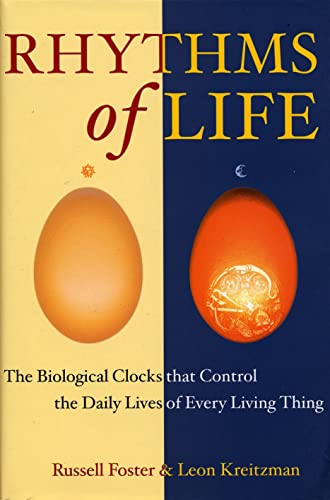
Popular science at its most exciting: the breaking new world of chronobiology - understanding the rhythm of life in humans and all plants and animals. The entire natural world is full of rhythms. The early bird catches the worm -and migrates to an internal calendar. Dormice hibernate away the winter. Plants open and close their flowers at the same hour each day. Bees search out nectar-rich flowers day after day. There are cicadas that can breed for only two weeks every 17 years. And in humans: why are people who work anti-social shifts more illness prone and die younger? What is jet-lag and can anything help? Why do teenagers refuse to get up in the morning, and are the rest of us really 'larks' or 'owls'? Why are most people born (and die) between 3am-5am? And should patients be given medicines (and operations) at set times of day, because the body reacts so differently in the morning, evening and at night? The answers lie in our biological clocks the mechanisms which give order to all living things. They impose a structure that enables us to change our behaviour in relation to the time of day, month or year. They are reset at sunrise and sunset each day to link astronomical time with an organism's internal time.
Les informations fournies dans la section « Synopsis » peuvent faire référence à une autre édition de ce titre.
À propos des auteurs
Leon Kreitzman is a consultant and biologist and the author of 24 Hour Society.
Russell Foster is professor of Biology at Imperial College, London and the world's leading expert on chronobiology.
Les informations fournies dans la section « A propos du livre » peuvent faire référence à une autre édition de ce titre.
Résultats de recherche pour The Rhythms Of Life: The Biological Clocks That Control...

Image d'archives
The Rhythms Of Life: The Biological Clocks That Control the Daily Lives of Every Living Thing
Edité par
Profile Books Ltd, 2004
ISBN 10 : 1861972350
ISBN 13 : 9781861972354
Ancien ou d'occasion
Couverture rigide
Vendeur : World of Books (was SecondSale), Montgomery, IL, Etats-Unis
Évaluation du vendeur 5 sur 5 étoiles

Hardback. Etat : Good. Illustrated (illustrateur). Popular science at its most exciting: the breaking new world of chronobiology - understanding the rhythm of life in humans and all plants and animals. The entire natural world is full of rhythms. The early bird catches the worm -and migrates to an internal calendar. Dormice hibernate away the winter. Plants open and close their flowers at the same hour each day. Bees search out nectar-rich flowers day after day. There are cicadas that can breed for only two weeks every 17 years. And in humans: why are people who work anti-social shifts more illness prone and die younger? What is jet-lag and can anything help? Why do teenagers refuse to get up in the morning, and are the rest of us really 'larks' or 'owls'? Why are most people born (and die) between 3am-5am? And should patients be given medicines (and operations) at set times of day, because the body reacts so differently in the morning, evening and at night? The answers lie in our biological clocks the mechanisms which give order to all living things. They impose a structure that enables us to change our behaviour in relation to the time of day, month or year. They are reset at sunrise and sunset each day to link astronomical time with an organism's internal time. N° de réf. du vendeur 00102334579
Acheter D'occasion
EUR 6,35
Livraison gratuite
Expédition nationale : Etats-Unis
Expédition nationale : Etats-Unis
Quantité disponible : 1 disponible(s)
Image d'archives
The Rhythms Of Life: The Biological Clocks That Control the Daily Lives of Every Living Thing
Edité par
Profile Books Ltd, 2004
ISBN 10 : 1861972350
ISBN 13 : 9781861972354
Ancien ou d'occasion
Couverture rigide
Vendeur : World of Books (was SecondSale), Montgomery, IL, Etats-Unis
Évaluation du vendeur 5 sur 5 étoiles
Hardback. Etat : Very Good. Illustrated (illustrateur). Popular science at its most exciting: the breaking new world of chronobiology - understanding the rhythm of life in humans and all plants and animals. The entire natural world is full of rhythms. The early bird catches the worm -and migrates to an internal calendar. Dormice hibernate away the winter. Plants open and close their flowers at the same hour each day. Bees search out nectar-rich flowers day after day. There are cicadas that can breed for only two weeks every 17 years. And in humans: why are people who work anti-social shifts more illness prone and die younger? What is jet-lag and can anything help? Why do teenagers refuse to get up in the morning, and are the rest of us really 'larks' or 'owls'? Why are most people born (and die) between 3am-5am? And should patients be given medicines (and operations) at set times of day, because the body reacts so differently in the morning, evening and at night? The answers lie in our biological clocks the mechanisms which give order to all living things. They impose a structure that enables us to change our behaviour in relation to the time of day, month or year. They are reset at sunrise and sunset each day to link astronomical time with an organism's internal time. N° de réf. du vendeur 00098640432
Acheter D'occasion
EUR 6,35
Livraison gratuite
Expédition nationale : Etats-Unis
Expédition nationale : Etats-Unis
Quantité disponible : 1 disponible(s)
Image fournie par le vendeur
The Rhythms of Life
Edité par
Profile Books, 2004
ISBN 10 : 1861972350
ISBN 13 : 9781861972354
Ancien ou d'occasion
Couverture rigide
Vendeur : Bay State Book Company, North Smithfield, RI, Etats-Unis
Évaluation du vendeur 5 sur 5 étoiles
Etat : very_good. Illustrated (illustrateur). N° de réf. du vendeur BSM.1C70M
Acheter D'occasion
EUR 6,36
Livraison gratuite
Expédition nationale : Etats-Unis
Expédition nationale : Etats-Unis
Quantité disponible : 1 disponible(s)
Image d'archives
The Rhythms of Life
Edité par
Profile Books, 2004
ISBN 10 : 1861972350
ISBN 13 : 9781861972354
Ancien ou d'occasion
Couverture rigide
Vendeur : Wonder Book, Frederick, MD, Etats-Unis
Évaluation du vendeur 5 sur 5 étoiles
Etat : Good. Illustrated (illustrateur). Good condition. Very Good dust jacket. A copy that has been read but remains intact. May contain markings such as bookplates, stamps, limited notes and highlighting, or a few light stains. N° de réf. du vendeur K10P-0734
Acheter D'occasion
EUR 6,61
Livraison gratuite
Expédition nationale : Etats-Unis
Expédition nationale : Etats-Unis
Quantité disponible : 1 disponible(s)
Image d'archives
The Rhythms Of Life: The Biological Clocks That Control the Daily Lives of Every Living Thing
Edité par
Profile Books Ltd, 2004
ISBN 10 : 1861972350
ISBN 13 : 9781861972354
Ancien ou d'occasion
Couverture rigide
Vendeur : World of Books Inc, Montgomery, IL, Etats-Unis
Évaluation du vendeur 4 sur 5 étoiles

Hardback. Etat : Good. Illustrated (illustrateur). Popular science at its most exciting: the breaking new world of chronobiology - understanding the rhythm of life in humans and all plants and animals. The entire natural world is full of rhythms. The early bird catches the worm -and migrates to an internal calendar. Dormice hibernate away the winter. Plants open and close their flowers at the same hour each day. Bees search out nectar-rich flowers day after day. There are cicadas that can breed for only two weeks every 17 years. And in humans: why are people who work anti-social shifts more illness prone and die younger? What is jet-lag and can anything help? Why do teenagers refuse to get up in the morning, and are the rest of us really 'larks' or 'owls'? Why are most people born (and die) between 3am-5am? And should patients be given medicines (and operations) at set times of day, because the body reacts so differently in the morning, evening and at night? The answers lie in our biological clocks the mechanisms which give order to all living things. They impose a structure that enables us to change our behaviour in relation to the time of day, month or year. They are reset at sunrise and sunset each day to link astronomical time with an organism's internal time. N° de réf. du vendeur CIN1861972350G
Acheter D'occasion
EUR 8,18
Livraison gratuite
Expédition nationale : Etats-Unis
Expédition nationale : Etats-Unis
Quantité disponible : 1 disponible(s)
Image d'archives
The Rhythms Of Life: The Biological Clocks That Control the Daily Lives of Every Living Thing
Edité par
Profile Books Ltd, 2004
ISBN 10 : 1861972350
ISBN 13 : 9781861972354
Ancien ou d'occasion
Couverture rigide
Vendeur : World of Books Inc, Montgomery, IL, Etats-Unis
Évaluation du vendeur 4 sur 5 étoiles
Hardback. Etat : Very Good. Illustrated (illustrateur). Popular science at its most exciting: the breaking new world of chronobiology - understanding the rhythm of life in humans and all plants and animals. The entire natural world is full of rhythms. The early bird catches the worm -and migrates to an internal calendar. Dormice hibernate away the winter. Plants open and close their flowers at the same hour each day. Bees search out nectar-rich flowers day after day. There are cicadas that can breed for only two weeks every 17 years. And in humans: why are people who work anti-social shifts more illness prone and die younger? What is jet-lag and can anything help? Why do teenagers refuse to get up in the morning, and are the rest of us really 'larks' or 'owls'? Why are most people born (and die) between 3am-5am? And should patients be given medicines (and operations) at set times of day, because the body reacts so differently in the morning, evening and at night? The answers lie in our biological clocks the mechanisms which give order to all living things. They impose a structure that enables us to change our behaviour in relation to the time of day, month or year. They are reset at sunrise and sunset each day to link astronomical time with an organism's internal time. N° de réf. du vendeur CIN1861972350VG
Acheter D'occasion
EUR 8,18
Livraison gratuite
Expédition nationale : Etats-Unis
Expédition nationale : Etats-Unis
Quantité disponible : 1 disponible(s)
Image d'archives
The Rhythms Of Life: The Biological Clocks That Control the Daily Lives of Every Living Thing
Edité par
-, 2004
ISBN 10 : 1861972350
ISBN 13 : 9781861972354
Ancien ou d'occasion
Couverture rigide
Vendeur : AwesomeBooks, Wallingford, Royaume-Uni
Évaluation du vendeur 5 sur 5 étoiles
Hardcover. Etat : Very Good. Illustrated (illustrateur). The Rhythms Of Life: The Biological Clocks That Control the Daily Lives of Every Living Thing This book is in very good condition and will be shipped within 24 hours of ordering. The cover may have some limited signs of wear but the pages are clean, intact and the spine remains undamaged. This book has clearly been well maintained and looked after thus far. Money back guarantee if you are not satisfied. See all our books here, order more than 1 book and get discounted shipping. N° de réf. du vendeur 7719-9781861972354
Acheter D'occasion
EUR 5,07
Expédition à EUR 4,91
Expédition depuis Royaume-Uni vers Etats-Unis
Expédition depuis Royaume-Uni vers Etats-Unis
Quantité disponible : 2 disponible(s)
Image d'archives
The Rhythms of Life
Edité par
Profile Books Ltd, United Kingdom, London, 2004
ISBN 10 : 1861972350
ISBN 13 : 9781861972354
Ancien ou d'occasion
Paperback
Vendeur : WorldofBooks, Goring-By-Sea, WS, Royaume-Uni
Évaluation du vendeur 5 sur 5 étoiles
Paperback. Etat : Very Good. Illustrated (illustrateur). Popular science at its most exciting: the breaking new world of chronobiology - understanding the rhythm of life in humans and all plants and animals. The entire natural world is full of rhythms. The early bird catches the worm -and migrates to an internal calendar. Dormice hibernate away the winter. Plants open and close their flowers at the same hour each day. Bees search out nectar-rich flowers day after day. There are cicadas that can breed for only two weeks every 17 years. And in humans: why are people who work anti-social shifts more illness prone and die younger? What is jet-lag and can anything help? Why do teenagers refuse to get up in the morning, and are the rest of us really 'larks' or 'owls'? Why are most people born (and die) between 3am-5am? And should patients be given medicines (and operations) at set times of day, because the body reacts so differently in the morning, evening and at night? The answers lie in our biological clocks the mechanisms which give order to all living things. They impose a structure that enables us to change our behaviour in relation to the time of day, month or year. They are reset at sunrise and sunset each day to link astronomical time with an organism's internal time. The book has been read, but is in excellent condition. Pages are intact and not marred by notes or highlighting. The spine remains undamaged. N° de réf. du vendeur GOR002640101
Acheter D'occasion
EUR 3,32
Expédition à EUR 6,68
Expédition depuis Royaume-Uni vers Etats-Unis
Expédition depuis Royaume-Uni vers Etats-Unis
Quantité disponible : 4 disponible(s)
Image fournie par le vendeur
The Rhythms Of Life: The Biological Clocks That Control the Daily Lives of Every Living Thing
Edité par
Profile Books, 2004
ISBN 10 : 1861972350
ISBN 13 : 9781861972354
Ancien ou d'occasion
Couverture rigide
Vendeur : WeBuyBooks, Rossendale, LANCS, Royaume-Uni
Évaluation du vendeur 5 sur 5 étoiles
hardcover. Etat : Like New. Illustrated (illustrateur). Most items will be dispatched the same or the next working day. An apparently unread copy in perfect condition. Dust cover is intact with no nicks or tears. Spine has no signs of creasing. Pages are clean and not marred by notes or folds of any kind. N° de réf. du vendeur rev2894831355
Acheter D'occasion
EUR 2,64
Expédition à EUR 8,48
Expédition depuis Royaume-Uni vers Etats-Unis
Expédition depuis Royaume-Uni vers Etats-Unis
Quantité disponible : 1 disponible(s)
Image d'archives
Rhythms of Life : The Biological Clocks That Control the Daily Lives of Every Living Thing
Edité par
Profile Books Limited, 2004
ISBN 10 : 1861972350
ISBN 13 : 9781861972354
Ancien ou d'occasion
Couverture rigide
Vendeur : Better World Books Ltd, Dunfermline, Royaume-Uni
Évaluation du vendeur 5 sur 5 étoiles
Etat : Good. Illustrated (illustrateur). Former library copy. Pages intact with minimal writing/highlighting. The binding may be loose and creased. Dust jackets/supplements are not included. Includes library markings. Stock photo provided. Product includes identifying sticker. Better World Books: Buy Books. Do Good. N° de réf. du vendeur GRP11850103
Acheter D'occasion
EUR 5,75
Expédition à EUR 5,96
Expédition depuis Royaume-Uni vers Etats-Unis
Expédition depuis Royaume-Uni vers Etats-Unis
Quantité disponible : 1 disponible(s)