
Articles liés à Hidden Histories of Science
Synopsis
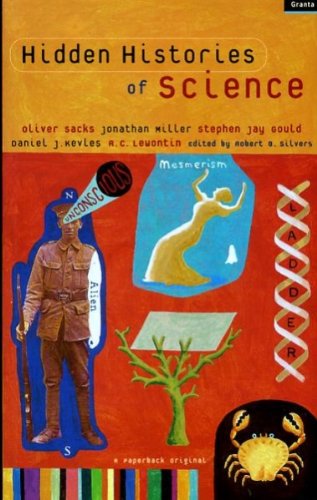
This volume examines the ways in which science is influenced by culture. It highlights the misleading images that have distorted people's view of the history of life. It explores areas of darkness and forgetting in scientific research, and the use of inappropriate mechanistic metaphors in the understanding of biological systems. It also considers the neglect of useful research that does not fit the current intellectual fashion in science. Stephen Jay Gould gives a summary of his critique of conventional "progressive" pictures of evolutionary change, using trees, ladders and cones. Richard Lewontin rejects the attempt to reduce the complexity of living things to the simplicity of physics. Oliver Sacks offers tour of scientific roads not taken, or taken too late. The history of science, Daniel Kevles recounts the the strange story of resistance to the idea that viruses can cause cancer. Jonathan Miller, with typical wit and insight, shows how the discredited panacea of hypnotism could have helped to reveal a non-Freudian view of the unconscious - an unconscious that is not simply the dark underside of the mind, but a powerfully enabling form of knowledge.
Les informations fournies dans la section « Synopsis » peuvent faire référence à une autre édition de ce titre.
Présentation de l'éditeur
We often think of science as continuously advancing. In this collection of essays, five world-renowned writers explore obscure and neglected episodes in the history of science which suggest instead that the process of understanding the significance of scientific discoveries can be erratic, contradictory, even irrational. Jonathan Miller, Oliver Sacks, and Daniel Kevles show how promising new ideas may at first fail to be noticed or accepted, and then, years after they have been dismissed or forgotten, are recognized in a different form as important. R.C. Lewontin and Stephen Jay Gould discuss the ways that words and images used by scientists and popularizers alike, from the murals on the walls of natural history museums to such ubiquitous terms as "adaptation" and "environment," reflect serious and often unacknowledged distortions in the way we conceive of both individual organisms and the natural history of the world.
These essays demonstrate that science is, in the words of Oliver Sacks, "a human enterprise through and through, an organic, evolving, human growth, with sudden spurts and arrests, and strange deviations, too. It grows out of its past, but never outgrows it, any more than we outgrow our childhood."
Les informations fournies dans la section « A propos du livre » peuvent faire référence à une autre édition de ce titre.
Résultats de recherche pour Hidden Histories of Science

Image d'archives
Hidden Histories of Science
Edité par
Granta Books, 1995
ISBN 10 : 1862070059
ISBN 13 : 9781862070059
Ancien ou d'occasion
Couverture souple
Vendeur : Wonder Book, Frederick, MD, Etats-Unis
Évaluation du vendeur 5 sur 5 étoiles

Etat : Very Good. Very Good condition. A copy that may have a few cosmetic defects. May also contain light spine creasing or a few markings such as an owner's name, short gifter's inscription or light stamp. N° de réf. du vendeur B05A-02811
Acheter D'occasion
EUR 6,43
Livraison gratuite
Expédition nationale : Etats-Unis
Expédition nationale : Etats-Unis
Quantité disponible : 1 disponible(s)
Image d'archives
Hidden Histories of Science
Edité par
Edwards Famous Remainders, 1995
ISBN 10 : 1862070059
ISBN 13 : 9781862070059
Ancien ou d'occasion
paperback
Vendeur : HPB-Movies, Dallas, TX, Etats-Unis
Évaluation du vendeur 5 sur 5 étoiles
paperback. Etat : Very Good. Connecting readers with great books since 1972! Used books may not include companion materials, and may have some shelf wear or limited writing. We ship orders daily and Customer Service is our top priority! N° de réf. du vendeur S_412500816
Acheter D'occasion
EUR 3,68
Expédition à EUR 3,35
Expédition nationale : Etats-Unis
Expédition nationale : Etats-Unis
Quantité disponible : 1 disponible(s)
Image d'archives
Hidden Histories of Science
Edité par
Granta Books 04/01/1997, 1997
ISBN 10 : 1862070059
ISBN 13 : 9781862070059
Ancien ou d'occasion
Couverture souple
Vendeur : AwesomeBooks, Wallingford, Royaume-Uni
Évaluation du vendeur 5 sur 5 étoiles
Etat : Very Good. This book is in very good condition and will be shipped within 24 hours of ordering. The cover may have some limited signs of wear but the pages are clean, intact and the spine remains undamaged. This book has clearly been well maintained and looked after thus far. Money back guarantee if you are not satisfied. See all our books here, order more than 1 book and get discounted shipping. . N° de réf. du vendeur 7719-9781862070059
Acheter D'occasion
EUR 3,76
Expédition à EUR 4,87
Expédition depuis Royaume-Uni vers Etats-Unis
Expédition depuis Royaume-Uni vers Etats-Unis
Quantité disponible : 3 disponible(s)
Image fournie par le vendeur
Hidden Histories of Science
Edité par
Edwards Famous Remainders, 1995
ISBN 10 : 1862070059
ISBN 13 : 9781862070059
Ancien ou d'occasion
Couverture souple
Vendeur : MusicMagpie, Stockport, Royaume-Uni
Évaluation du vendeur 5 sur 5 étoiles
Etat : Very Good. 1774265616. 3/23/2026 11:33:36 AM. N° de réf. du vendeur U9781862070059
Acheter D'occasion
EUR 3,21
Expédition à EUR 6,49
Expédition depuis Royaume-Uni vers Etats-Unis
Expédition depuis Royaume-Uni vers Etats-Unis
Quantité disponible : 1 disponible(s)
Image d'archives
Hidden Histories of Science
Edité par
Granta Books 04/01/1997, 1997
ISBN 10 : 1862070059
ISBN 13 : 9781862070059
Ancien ou d'occasion
Couverture souple
Vendeur : Bahamut Media, Reading, Royaume-Uni
Évaluation du vendeur 4 sur 5 étoiles

Etat : Very Good. Shipped within 24 hours from our UK warehouse. Clean, undamaged book with no damage to pages and minimal wear to the cover. Spine still tight, in very good condition. Remember if you are not happy, you are covered by our 100% money back guarantee. N° de réf. du vendeur 6545-9781862070059
Acheter D'occasion
EUR 3,23
Expédition à EUR 8,25
Expédition depuis Royaume-Uni vers Etats-Unis
Expédition depuis Royaume-Uni vers Etats-Unis
Quantité disponible : 3 disponible(s)
Image d'archives
Hidden Histories of Science
Edité par
Granta Books, 1997
ISBN 10 : 1862070059
ISBN 13 : 9781862070059
Ancien ou d'occasion
Couverture souple
Vendeur : Better World Books Ltd, Dunfermline, Royaume-Uni
Évaluation du vendeur 5 sur 5 étoiles
Etat : Very Good. Former library copy. Pages intact with possible writing/highlighting. Binding strong with minor wear. Dust jackets/supplements may not be included. Includes library markings. Stock photo provided. Product includes identifying sticker. Better World Books: Buy Books. Do Good. N° de réf. du vendeur GRP85890289
Acheter D'occasion
EUR 5,72
Expédition à EUR 5,91
Expédition depuis Royaume-Uni vers Etats-Unis
Expédition depuis Royaume-Uni vers Etats-Unis
Quantité disponible : 1 disponible(s)
Image d'archives
Hidden Histories of Science
Edité par
Granta Books, 1997
ISBN 10 : 1862070059
ISBN 13 : 9781862070059
Ancien ou d'occasion
Couverture souple
Vendeur : Better World Books Ltd, Dunfermline, Royaume-Uni
Évaluation du vendeur 5 sur 5 étoiles
Etat : Good. Pages intact with minimal writing/highlighting. The binding may be loose and creased. Dust jackets/supplements are not included. Stock photo provided. Product includes identifying sticker. Better World Books: Buy Books. Do Good. N° de réf. du vendeur GRP14742729
Acheter D'occasion
EUR 5,72
Expédition à EUR 5,91
Expédition depuis Royaume-Uni vers Etats-Unis
Expédition depuis Royaume-Uni vers Etats-Unis
Quantité disponible : 1 disponible(s)
Image d'archives
Hidden Histories of Science
Edité par
Edwards Famous Remainders, 1995
ISBN 10 : 1862070059
ISBN 13 : 9781862070059
Ancien ou d'occasion
Couverture souple
Vendeur : medimops, Berlin, Allemagne
Évaluation du vendeur 5 sur 5 étoiles
Etat : very good. Gut/Very good: Buch bzw. Schutzumschlag mit wenigen Gebrauchsspuren an Einband, Schutzumschlag oder Seiten. / Describes a book or dust jacket that does show some signs of wear on either the binding, dust jacket or pages. N° de réf. du vendeur M01862070059-V
Acheter D'occasion
EUR 4,69
Expédition à EUR 10
Expédition depuis Allemagne vers Etats-Unis
Expédition depuis Allemagne vers Etats-Unis
Quantité disponible : 1 disponible(s)
Image d'archives
Hidden Histories of Science
Edité par
Granta Books, 1997
ISBN 10 : 1862070059
ISBN 13 : 9781862070059
Ancien ou d'occasion
Couverture souple
Vendeur : Anybook.com, Lincoln, Royaume-Uni
Évaluation du vendeur 5 sur 5 étoiles
Etat : Good. This is an ex-library book and may have the usual library/used-book markings inside.This book has soft covers. In good all round condition. Please note the Image in this listing is a stock photo and may not match the covers of the actual item,400grams, ISBN:9781862070059. N° de réf. du vendeur 8495786
Acheter D'occasion
EUR 3,05
Expédition à EUR 15,41
Expédition depuis Royaume-Uni vers Etats-Unis
Expédition depuis Royaume-Uni vers Etats-Unis
Quantité disponible : 1 disponible(s)
Image d'archives
Hidden Histories of Science
Edité par
Edwards Famous Remainders, 1995
ISBN 10 : 1862070059
ISBN 13 : 9781862070059
Ancien ou d'occasion
Paperback
Vendeur : WorldofBooks, Goring-By-Sea, WS, Royaume-Uni
Évaluation du vendeur 5 sur 5 étoiles
Paperback. Etat : Very Good. The book has been read, but is in excellent condition. Pages are intact and not marred by notes or highlighting. The spine remains undamaged. N° de réf. du vendeur GOR008470461
Acheter D'occasion
EUR 12,44
Expédition à EUR 6,62
Expédition depuis Royaume-Uni vers Etats-Unis
Expédition depuis Royaume-Uni vers Etats-Unis
Quantité disponible : 2 disponible(s)