
Articles liés à Much Ado About Nothing
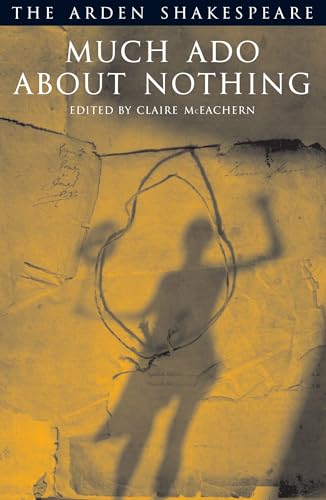
Synopsis
Much Ado About Nothing boasts one of Shakespeare's most delightful heroines, most dancing wordplay, and the endearing spectacle of intellectual and social self-importance bested by the desire to love and be loved in return. It offers both the dancing wit of the "merry war" between the sexes, and a sobering vision of the costs of that combat for both men and women. Shakespeare dramatizes a social world in all of its vibrant particulars, in which characters are shaped by the relations between social convention and individual choice.This edition of the play offers in its introduction and commentary an extensive discussion of the materials that informed Shakespeare's compositional choices, both those conventional sources and other contexts, from cuckold jokes to conduct books, which inform the ideas and identities of this play. Particular attention is devoted to Renaissance understandings of gender identity and social rank, as well as to the social valences of Shakespeare's stylistic choices. A treatment of staging possibilities offers illustrations drawn from the earliest and recent theatrical practices, and a critical history examines the fate of the play in the changing trends of academic scholarship. "The text is superb...the critical introduction is predictably smart and engaging, exactly the sort of essay one would recommend to students."Eric Rasmussen, Shakespeare Survey
Les informations fournies dans la section « Synopsis » peuvent faire référence à une autre édition de ce titre.
À propos de l'auteur
Claire McEachern is Professor of English Literature at the University of California, Los Angeles. She has edited "The Cambridge Companion to Shakespearean Tragedy," and co-edited "Religion and Culture in the English Renaissance," as well as five volumes of the Pelican Shakespeare ("1" and "2" "Henry IV," "Henry V," "King John," and "All's Well That Ends Well"). Her other previous publications include "Poetics of English Nationhood 1590-1612."
Les informations fournies dans la section « A propos du livre » peuvent faire référence à une autre édition de ce titre.
Résultats de recherche pour Much Ado About Nothing

Image d'archives
Much Ado about Nothing (Arden Shakespeare: Third Series)
Edité par
Arden Shakespeare (edition 3rd), 2005
ISBN 10 : 1903436834
ISBN 13 : 9781903436837
Ancien ou d'occasion
Paperback
Vendeur : BooksRun, Philadelphia, PA, Etats-Unis
Évaluation du vendeur 5 sur 5 étoiles

Paperback. Etat : Fair. 3rd. The item might be beaten up but readable. May contain markings or highlighting, as well as stains, bent corners, or any other major defect, but the text is not obscured in any way. N° de réf. du vendeur 1903436834-7-1
Acheter D'occasion
EUR 5,39
Livraison gratuite
Expédition nationale : Etats-Unis
Expédition nationale : Etats-Unis
Quantité disponible : 1 disponible(s)
Image d'archives
Much Ado about Nothing (Arden Shakespeare: Third Series)
Edité par
Bloomsbury Publishing PLC, 2005
ISBN 10 : 1903436834
ISBN 13 : 9781903436837
Ancien ou d'occasion
Paperback
Vendeur : World of Books (was SecondSale), Montgomery, IL, Etats-Unis
Évaluation du vendeur 5 sur 5 étoiles
Paperback. Etat : Fair. Much Ado About Nothing of the Ratna Sagar Shakespeare Series is enriched with complete text of the original play, plenty of short notes that explain and interpret the text, summary of each scene, as well as useful commentary on the life and times of Shakespeare, Elizabethan theatre, sources and genre, characters, plot, themes, and motifs, literary devices and figures of speech. A comedy of errors, the title of the play is justified by the utter confusion in the plot that arises out of nothing. Replete with sparkling dialogues, the play has also been described as a comedy of wit. This edition of Much Ado About Nothing is enriched with exhaustive annotations and notes.This enriched edition of Much Ado About Nothing has exhaustive annotations and notes. As suggested by its title, the play is a comedy of errors in which a lot of fuss and confusion is created over nothing. The title also plays on the word 'nothing', pronounced as 'noting' in Elizabethan English. 'Noting' refers to the manner in which people note or eavesdrop, and pass on information. The action over the course of the play largely arises because of noting and deceit, as the characters are directly or indirectly affected by eavesdropping and gossip. Claudio and Hero's relationship suffers due to the malicious misinformation of Don John and Borachio. On the other hand, Benedick and Beatrice's relationship develops as a result of the well-intended deceit and gossip of Don Pedro, Claudio, Leonato, Hero, and Ursula. Set in Messina, Italy, the action of the play mostly takes place in and around the house of Leonato, the Governor of Messina, who lives with his daughter, Hero, and his witty niece, Beatrice. The play commences with Don Pedro, the Prince of Arragon, and his followers Benedick and Claudio visiting Leonato with the prince's illegitimate brother Don John, who had rebelled against him but is now reconciled. It is revealed that Claudio loves Hero and wishes to propose to her. While the Claudio-Hero relationship forms the main plot of the play, the sub-plot is provided by the love-hate relationship between Benedick and Beatrice, whose interactions oscillate between fondness and witty sarcasm from the very beginning. In the initial part of the play, there is a masked dance in which Don Pedro pretends to be Claudio, woos Hero on his behalf, and asks Leonato for Hero's hand in marriage to Claudio. As all is settled for the prospective marriage of Claudio and Hero within a week, the bitter and sullen Don John concocts a plan with his underling Borachio to spoil the happiness of Claudio, the 'young start-up' who 'hath all the glory of my overthrow'. As a game of deceit and manipulation begins, Don John and Borachio execute their plan to lead Claudio into believing Hero's infidelity. An enraged Claudio shames and rejects Hero in front of the wedding congregation the next day. Leonato is devastated, and Hero faints, at which Claudio and Don Pedro leave her for dead. Friar Francis believes in Hero's innocence, and devises the plan to publish the report of her death so as to convert the slander against her into pity, and make Claudio realize her worth and repent for disgracing her. Meanwhile, the scene shifts to the members of the Watch, with the head constable Dogberry, his partner Verges, and two watchmen. Although they are the comedians of the play, these farcical detectives are the ones who finally uncover the truth of Don John's villainy. Once Don John's plot is revealed, Don Pedro and Claudio repent for their action and apologize to Leonato, who asks Claudio to hang an epitaph on Hero's 'tomb', and then marry his 'niece', who is 'the copy of my child that's dead', as penance. Claudio agrees, and on the day of the wedding the lady is revealed to be none other than Hero herself. With the resolution of the Claudio-Hero relationship, Benedick and Beatrice too confess their love for each other, but not without the customary bout of wit. A messenger arrives to inform all th. N° de réf. du vendeur 00109330851
Acheter D'occasion
EUR 5,51
Livraison gratuite
Expédition nationale : Etats-Unis
Expédition nationale : Etats-Unis
Quantité disponible : 1 disponible(s)
Image d'archives
Much Ado about Nothing (Arden Shakespeare: Third Series)
Edité par
Bloomsbury Publishing PLC, 2005
ISBN 10 : 1903436834
ISBN 13 : 9781903436837
Ancien ou d'occasion
Paperback
Vendeur : World of Books (was SecondSale), Montgomery, IL, Etats-Unis
Évaluation du vendeur 5 sur 5 étoiles
Paperback. Etat : Good. Much Ado About Nothing of the Ratna Sagar Shakespeare Series is enriched with complete text of the original play, plenty of short notes that explain and interpret the text, summary of each scene, as well as useful commentary on the life and times of Shakespeare, Elizabethan theatre, sources and genre, characters, plot, themes, and motifs, literary devices and figures of speech. A comedy of errors, the title of the play is justified by the utter confusion in the plot that arises out of nothing. Replete with sparkling dialogues, the play has also been described as a comedy of wit. This edition of Much Ado About Nothing is enriched with exhaustive annotations and notes.This enriched edition of Much Ado About Nothing has exhaustive annotations and notes. As suggested by its title, the play is a comedy of errors in which a lot of fuss and confusion is created over nothing. The title also plays on the word 'nothing', pronounced as 'noting' in Elizabethan English. 'Noting' refers to the manner in which people note or eavesdrop, and pass on information. The action over the course of the play largely arises because of noting and deceit, as the characters are directly or indirectly affected by eavesdropping and gossip. Claudio and Hero's relationship suffers due to the malicious misinformation of Don John and Borachio. On the other hand, Benedick and Beatrice's relationship develops as a result of the well-intended deceit and gossip of Don Pedro, Claudio, Leonato, Hero, and Ursula. Set in Messina, Italy, the action of the play mostly takes place in and around the house of Leonato, the Governor of Messina, who lives with his daughter, Hero, and his witty niece, Beatrice. The play commences with Don Pedro, the Prince of Arragon, and his followers Benedick and Claudio visiting Leonato with the prince's illegitimate brother Don John, who had rebelled against him but is now reconciled. It is revealed that Claudio loves Hero and wishes to propose to her. While the Claudio-Hero relationship forms the main plot of the play, the sub-plot is provided by the love-hate relationship between Benedick and Beatrice, whose interactions oscillate between fondness and witty sarcasm from the very beginning. In the initial part of the play, there is a masked dance in which Don Pedro pretends to be Claudio, woos Hero on his behalf, and asks Leonato for Hero's hand in marriage to Claudio. As all is settled for the prospective marriage of Claudio and Hero within a week, the bitter and sullen Don John concocts a plan with his underling Borachio to spoil the happiness of Claudio, the 'young start-up' who 'hath all the glory of my overthrow'. As a game of deceit and manipulation begins, Don John and Borachio execute their plan to lead Claudio into believing Hero's infidelity. An enraged Claudio shames and rejects Hero in front of the wedding congregation the next day. Leonato is devastated, and Hero faints, at which Claudio and Don Pedro leave her for dead. Friar Francis believes in Hero's innocence, and devises the plan to publish the report of her death so as to convert the slander against her into pity, and make Claudio realize her worth and repent for disgracing her. Meanwhile, the scene shifts to the members of the Watch, with the head constable Dogberry, his partner Verges, and two watchmen. Although they are the comedians of the play, these farcical detectives are the ones who finally uncover the truth of Don John's villainy. Once Don John's plot is revealed, Don Pedro and Claudio repent for their action and apologize to Leonato, who asks Claudio to hang an epitaph on Hero's 'tomb', and then marry his 'niece', who is 'the copy of my child that's dead', as penance. Claudio agrees, and on the day of the wedding the lady is revealed to be none other than Hero herself. With the resolution of the Claudio-Hero relationship, Benedick and Beatrice too confess their love for each other, but not without the customary bout of wit. A messenger arrives to inform all th. N° de réf. du vendeur 00106140566
Acheter D'occasion
EUR 5,51
Livraison gratuite
Expédition nationale : Etats-Unis
Expédition nationale : Etats-Unis
Quantité disponible : 2 disponible(s)
Image d'archives
Much Ado about Nothing (Arden Shakespeare: Third Series)
Edité par
Arden Shakespeare, 2005
ISBN 10 : 1903436834
ISBN 13 : 9781903436837
Ancien ou d'occasion
Couverture souple
Vendeur : More Than Words, Waltham, MA, Etats-Unis
Évaluation du vendeur 5 sur 5 étoiles
Etat : Good. . . All orders guaranteed and ship within 24 hours. Before placing your order for please contact us for confirmation on the book's binding. Check out our other listings to add to your order for discounted shipping. N° de réf. du vendeur WAL-E-2f-002986
Acheter D'occasion
EUR 2,20
Expédition à EUR 3,56
Expédition nationale : Etats-Unis
Expédition nationale : Etats-Unis
Quantité disponible : 1 disponible(s)
Image d'archives
Much Ado about Nothing (Arden Shakespeare: Third Series)
Edité par
Arden Shakespeare, 2005
ISBN 10 : 1903436834
ISBN 13 : 9781903436837
Ancien ou d'occasion
Paperback
Vendeur : HPB Inc., Dallas, TX, Etats-Unis
Évaluation du vendeur 5 sur 5 étoiles
Paperback. Etat : Very Good. Connecting readers with great books since 1972! Used books may not include companion materials, and may have some shelf wear or limited writing. We ship orders daily and Customer Service is our top priority! N° de réf. du vendeur S_482500059
Acheter D'occasion
EUR 2,94
Expédition à EUR 3,35
Expédition nationale : Etats-Unis
Expédition nationale : Etats-Unis
Quantité disponible : 1 disponible(s)
Image fournie par le vendeur
Much Ado about Nothing (Arden Shakespeare: Third Series)
Edité par
Arden Shakespeare, 2005
ISBN 10 : 1903436834
ISBN 13 : 9781903436837
Ancien ou d'occasion
Couverture souple
Vendeur : Greenworld Books, Arlington, TX, Etats-Unis
Évaluation du vendeur 5 sur 5 étoiles
Etat : very_good. Fast Free Shipping â" Very Good condition book with a firm cover and clean pages. Shows normal use and some light wear or limited notes markings. A solid, nice copy to enjoy. N° de réf. du vendeur GWV.1903436834.VG
Acheter D'occasion
EUR 6,84
Livraison gratuite
Expédition nationale : Etats-Unis
Expédition nationale : Etats-Unis
Quantité disponible : 1 disponible(s)
Image d'archives
Much Ado about Nothing (Arden Shakespeare: Third Series)
Edité par
Bloomsbury Publishing PLC, 2005
ISBN 10 : 1903436834
ISBN 13 : 9781903436837
Ancien ou d'occasion
Paperback
Vendeur : World of Books Inc, Montgomery, IL, Etats-Unis
Évaluation du vendeur 4 sur 5 étoiles

Paperback. Etat : Good. Much Ado About Nothing of the Ratna Sagar Shakespeare Series is enriched with complete text of the original play, plenty of short notes that explain and interpret the text, summary of each scene, as well as useful commentary on the life and times of Shakespeare, Elizabethan theatre, sources and genre, characters, plot, themes, and motifs, literary devices and figures of speech. A comedy of errors, the title of the play is justified by the utter confusion in the plot that arises out of nothing. Replete with sparkling dialogues, the play has also been described as a comedy of wit. This edition of Much Ado About Nothing is enriched with exhaustive annotations and notes.This enriched edition of Much Ado About Nothing has exhaustive annotations and notes. As suggested by its title, the play is a comedy of errors in which a lot of fuss and confusion is created over nothing. The title also plays on the word 'nothing', pronounced as 'noting' in Elizabethan English. 'Noting' refers to the manner in which people note or eavesdrop, and pass on information. The action over the course of the play largely arises because of noting and deceit, as the characters are directly or indirectly affected by eavesdropping and gossip. Claudio and Hero's relationship suffers due to the malicious misinformation of Don John and Borachio. On the other hand, Benedick and Beatrice's relationship develops as a result of the well-intended deceit and gossip of Don Pedro, Claudio, Leonato, Hero, and Ursula. Set in Messina, Italy, the action of the play mostly takes place in and around the house of Leonato, the Governor of Messina, who lives with his daughter, Hero, and his witty niece, Beatrice. The play commences with Don Pedro, the Prince of Arragon, and his followers Benedick and Claudio visiting Leonato with the prince's illegitimate brother Don John, who had rebelled against him but is now reconciled. It is revealed that Claudio loves Hero and wishes to propose to her. While the Claudio-Hero relationship forms the main plot of the play, the sub-plot is provided by the love-hate relationship between Benedick and Beatrice, whose interactions oscillate between fondness and witty sarcasm from the very beginning. In the initial part of the play, there is a masked dance in which Don Pedro pretends to be Claudio, woos Hero on his behalf, and asks Leonato for Hero's hand in marriage to Claudio. As all is settled for the prospective marriage of Claudio and Hero within a week, the bitter and sullen Don John concocts a plan with his underling Borachio to spoil the happiness of Claudio, the 'young start-up' who 'hath all the glory of my overthrow'. As a game of deceit and manipulation begins, Don John and Borachio execute their plan to lead Claudio into believing Hero's infidelity. An enraged Claudio shames and rejects Hero in front of the wedding congregation the next day. Leonato is devastated, and Hero faints, at which Claudio and Don Pedro leave her for dead. Friar Francis believes in Hero's innocence, and devises the plan to publish the report of her death so as to convert the slander against her into pity, and make Claudio realize her worth and repent for disgracing her. Meanwhile, the scene shifts to the members of the Watch, with the head constable Dogberry, his partner Verges, and two watchmen. Although they are the comedians of the play, these farcical detectives are the ones who finally uncover the truth of Don John's villainy. Once Don John's plot is revealed, Don Pedro and Claudio repent for their action and apologize to Leonato, who asks Claudio to hang an epitaph on Hero's 'tomb', and then marry his 'niece', who is 'the copy of my child that's dead', as penance. Claudio agrees, and on the day of the wedding the lady is revealed to be none other than Hero herself. With the resolution of the Claudio-Hero relationship, Benedick and Beatrice too confess their love for each other, but not without the customary bout of wit. A messenger arrives to inform all th. N° de réf. du vendeur CIN1903436834G
Acheter D'occasion
EUR 7,35
Livraison gratuite
Expédition nationale : Etats-Unis
Expédition nationale : Etats-Unis
Quantité disponible : 2 disponible(s)
Image d'archives
Much Ado about Nothing (Arden Shakespeare: Third Series)
Edité par
Bloomsbury Publishing PLC, 2005
ISBN 10 : 1903436834
ISBN 13 : 9781903436837
Ancien ou d'occasion
Paperback
Vendeur : World of Books Inc, Montgomery, IL, Etats-Unis
Évaluation du vendeur 4 sur 5 étoiles
Paperback. Etat : Fair. Much Ado About Nothing of the Ratna Sagar Shakespeare Series is enriched with complete text of the original play, plenty of short notes that explain and interpret the text, summary of each scene, as well as useful commentary on the life and times of Shakespeare, Elizabethan theatre, sources and genre, characters, plot, themes, and motifs, literary devices and figures of speech. A comedy of errors, the title of the play is justified by the utter confusion in the plot that arises out of nothing. Replete with sparkling dialogues, the play has also been described as a comedy of wit. This edition of Much Ado About Nothing is enriched with exhaustive annotations and notes.This enriched edition of Much Ado About Nothing has exhaustive annotations and notes. As suggested by its title, the play is a comedy of errors in which a lot of fuss and confusion is created over nothing. The title also plays on the word 'nothing', pronounced as 'noting' in Elizabethan English. 'Noting' refers to the manner in which people note or eavesdrop, and pass on information. The action over the course of the play largely arises because of noting and deceit, as the characters are directly or indirectly affected by eavesdropping and gossip. Claudio and Hero's relationship suffers due to the malicious misinformation of Don John and Borachio. On the other hand, Benedick and Beatrice's relationship develops as a result of the well-intended deceit and gossip of Don Pedro, Claudio, Leonato, Hero, and Ursula. Set in Messina, Italy, the action of the play mostly takes place in and around the house of Leonato, the Governor of Messina, who lives with his daughter, Hero, and his witty niece, Beatrice. The play commences with Don Pedro, the Prince of Arragon, and his followers Benedick and Claudio visiting Leonato with the prince's illegitimate brother Don John, who had rebelled against him but is now reconciled. It is revealed that Claudio loves Hero and wishes to propose to her. While the Claudio-Hero relationship forms the main plot of the play, the sub-plot is provided by the love-hate relationship between Benedick and Beatrice, whose interactions oscillate between fondness and witty sarcasm from the very beginning. In the initial part of the play, there is a masked dance in which Don Pedro pretends to be Claudio, woos Hero on his behalf, and asks Leonato for Hero's hand in marriage to Claudio. As all is settled for the prospective marriage of Claudio and Hero within a week, the bitter and sullen Don John concocts a plan with his underling Borachio to spoil the happiness of Claudio, the 'young start-up' who 'hath all the glory of my overthrow'. As a game of deceit and manipulation begins, Don John and Borachio execute their plan to lead Claudio into believing Hero's infidelity. An enraged Claudio shames and rejects Hero in front of the wedding congregation the next day. Leonato is devastated, and Hero faints, at which Claudio and Don Pedro leave her for dead. Friar Francis believes in Hero's innocence, and devises the plan to publish the report of her death so as to convert the slander against her into pity, and make Claudio realize her worth and repent for disgracing her. Meanwhile, the scene shifts to the members of the Watch, with the head constable Dogberry, his partner Verges, and two watchmen. Although they are the comedians of the play, these farcical detectives are the ones who finally uncover the truth of Don John's villainy. Once Don John's plot is revealed, Don Pedro and Claudio repent for their action and apologize to Leonato, who asks Claudio to hang an epitaph on Hero's 'tomb', and then marry his 'niece', who is 'the copy of my child that's dead', as penance. Claudio agrees, and on the day of the wedding the lady is revealed to be none other than Hero herself. With the resolution of the Claudio-Hero relationship, Benedick and Beatrice too confess their love for each other, but not without the customary bout of wit. A messenger arrives to inform all th. N° de réf. du vendeur CIN1903436834A
Acheter D'occasion
EUR 7,35
Livraison gratuite
Expédition nationale : Etats-Unis
Expédition nationale : Etats-Unis
Quantité disponible : 1 disponible(s)
Image d'archives
Much Ado about Nothing (Arden Shakespeare: Third Series)
Edité par
Arden Shakespeare, 2005
ISBN 10 : 1903436834
ISBN 13 : 9781903436837
Ancien ou d'occasion
Paperback
Vendeur : ThriftBooks-Reno, Reno, NV, Etats-Unis
Évaluation du vendeur 5 sur 5 étoiles
Paperback. Etat : Fair. No Jacket. Readable copy. Pages may have considerable notes/highlighting. ~ ThriftBooks: Read More, Spend Less. N° de réf. du vendeur G1903436834I5N00
Acheter D'occasion
EUR 7,39
Livraison gratuite
Expédition nationale : Etats-Unis
Expédition nationale : Etats-Unis
Quantité disponible : 1 disponible(s)
Image d'archives
Much Ado about Nothing (Arden Shakespeare: Third Series)
Edité par
Arden Shakespeare, 2005
ISBN 10 : 1903436834
ISBN 13 : 9781903436837
Ancien ou d'occasion
Paperback
Vendeur : ThriftBooks-Atlanta, AUSTELL, GA, Etats-Unis
Évaluation du vendeur 5 sur 5 étoiles
Paperback. Etat : Good. No Jacket. Pages can have notes/highlighting. Spine may show signs of wear. ~ ThriftBooks: Read More, Spend Less. N° de réf. du vendeur G1903436834I3N00
Acheter D'occasion
EUR 7,39
Livraison gratuite
Expédition nationale : Etats-Unis
Expédition nationale : Etats-Unis
Quantité disponible : 1 disponible(s)