
Articles liés à Your Brain Is Playing Tricks On You: How the Brain...
Your Brain Is Playing Tricks On You: How the Brain Shapes Opinions and Perceptions - Couverture souple
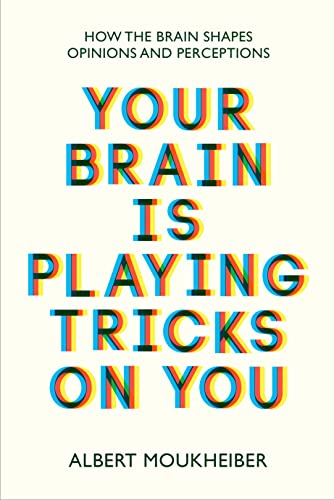
Synopsis
Why are we often convinced that we’re right even when we’re wrong?
Why are we jealous, or paranoid, even when we have absolutely no reason to be?
Why is it so easy for fake news to spread around the globe and fool us?
It’s because we don’t see the world as it is, rather we reconstruct it in our mind. Reality is way too complex and multiple to be apprehended by our capacities of attention, which are quite limited, as well as our brain abilities. That is why our perception of the world is subjective and various elements influence the way we acquire knowledge and form opinions. Our brain is recreating the world in its own way – most of the time for our own good: how hard would it be if, before making a choice, we had to know about all the options available in a given situation? It would take us forever to choose an item of clothing in a store, or a meal in a restaurant! Luckily, our brain can estimate: even if it makes us imperfect and subject to illusion, delusion and error, it allows us to reconstruct the world as we know it, and live in it.
However, these very useful mechanisms can sometimes mislead us and have a rather negative impact on our actions, beliefs and opinions: when our brain behaves that way, we say it is biased. Albert Moukheiber gives us tips and tricks to fight against these cognitive biases – the first one being not to trust ourselves too much and to always doubt our thinking processes, especially in this era where social networks spread information like an epidemic. In this book, filled with multiple examples from our daily lives and psychosocial experiments, Moukheiber explores the building blocks of our perception, cognition and behaviour, which are involved in acquiring knowledge or forming opinions.
Les informations fournies dans la section « Synopsis » peuvent faire référence à une autre édition de ce titre.
À propos de l'auteur
Dr. Albert Moukheiber is a neuroscientist and clinical psychologist. He has worked for 10 years in the psychiatry department at the Hôpital Pitié-Salpêtrière, focusing mainly on anxiety disorders and resilience. He now works as a clinician at his practice and teaches at the University Paris 8 in the clinical psychology department. He has also founded Chiasma, a structure that is interested in how our brain reconstructs reality to confirm our prior beliefs and how to promote mental flexibility. Chiasma focuses on how we form opinions and the impact of these mechanisms on our decision making. Albert is also a lecturer and a lead workshop developer for businesses and shares the latest scientific discoveries on behaviour and cognition and how they impact our daily lives.
Les informations fournies dans la section « A propos du livre » peuvent faire référence à une autre édition de ce titre.
Résultats de recherche pour Your Brain Is Playing Tricks On You: How the Brain...

Image d'archives
Your Brain Is Playing Tricks On You: How the Brain Shapes Opinions and Perceptions
Edité par
Legend Press, 2024
ISBN 10 : 1915054702
ISBN 13 : 9781915054708
Ancien ou d'occasion
paperback
Vendeur : HPB-Emerald, Dallas, TX, Etats-Unis
Évaluation du vendeur 5 sur 5 étoiles

paperback. Etat : Very Good. Connecting readers with great books since 1972! Used books may not include companion materials, and may have some shelf wear or limited writing. We ship orders daily and Customer Service is our top priority! N° de réf. du vendeur S_482761781
Acheter D'occasion
EUR 7,53
Expédition à EUR 3,23
Expédition nationale : Etats-Unis
Expédition nationale : Etats-Unis
Quantité disponible : 1 disponible(s)
Image d'archives
Your Brain Is Playing Tricks On You
impression à la demandeVendeur : Majestic Books, Hounslow, Royaume-Uni
Évaluation du vendeur 4 sur 5 étoiles

Etat : New. Print on Demand pp. 192. N° de réf. du vendeur 401763118
Acheter neuf
EUR 12,50
Expédition à EUR 7,56
Expédition depuis Royaume-Uni vers Etats-Unis
Expédition depuis Royaume-Uni vers Etats-Unis
Quantité disponible : 4 disponible(s)
Image d'archives
Your Brain Is Playing Tricks On You
Vendeur : Books Puddle, New York, NY, Etats-Unis
Évaluation du vendeur 4 sur 5 étoiles
Etat : New. pp. 192. N° de réf. du vendeur 26394646769
Acheter neuf
EUR 17,65
Expédition à EUR 3,44
Expédition nationale : Etats-Unis
Expédition nationale : Etats-Unis
Quantité disponible : 4 disponible(s)
Image d'archives
Your Brain Is Playing Tricks On You
impression à la demandeVendeur : Biblios, Frankfurt am main, HESSE, Allemagne
Évaluation du vendeur 4 sur 5 étoiles
Etat : New. PRINT ON DEMAND pp. 192. N° de réf. du vendeur 18394646779
Acheter neuf
EUR 13,14
Expédition à EUR 9,95
Expédition depuis Allemagne vers Etats-Unis
Expédition depuis Allemagne vers Etats-Unis
Quantité disponible : 4 disponible(s)
Image d'archives
Your Brain Is Playing Tricks On You: How the Brain Shapes Opinions and Perceptions
Edité par
Legend Press, 2024
ISBN 10 : 1915054702
ISBN 13 : 9781915054708
Ancien ou d'occasion
Paperback
Vendeur : WorldofBooks, Goring-By-Sea, WS, Royaume-Uni
Évaluation du vendeur 5 sur 5 étoiles
Paperback. Etat : Very Good. The book has been read, but is in excellent condition. Pages are intact and not marred by notes or highlighting. The spine remains undamaged. N° de réf. du vendeur GOR012345482
Acheter D'occasion
EUR 25,29
Expédition à EUR 6,52
Expédition depuis Royaume-Uni vers Etats-Unis
Expédition depuis Royaume-Uni vers Etats-Unis
Quantité disponible : 1 disponible(s)
Image fournie par le vendeur
Your Brain Is Playing Tricks On You: How the Brain Shapes Opinions and Perceptions
Edité par
Legend Press, 2024
ISBN 10 : 1915054702
ISBN 13 : 9781915054708
Ancien ou d'occasion
paperback
Vendeur : WeBuyBooks, Rossendale, LANCS, Royaume-Uni
Évaluation du vendeur 5 sur 5 étoiles
paperback. Etat : Like New. Most items will be dispatched the same or the next working day. An apparently unread copy in perfect condition. Dust cover is intact with no nicks or tears. Spine has no signs of creasing. Pages are clean and not marred by notes or folds of any kind. N° de réf. du vendeur rev1894365398
Acheter D'occasion
EUR 24,39
Expédition à EUR 8,15
Expédition depuis Royaume-Uni vers Etats-Unis
Expédition depuis Royaume-Uni vers Etats-Unis
Quantité disponible : 1 disponible(s)
Image d'archives
Your Brain Is Playing Tricks on You: How the Brain Shapes Opinions and Perceptions
Vendeur : Revaluation Books, Exeter, Royaume-Uni
Évaluation du vendeur 5 sur 5 étoiles
Paperback. Etat : Brand New. 192 pages. 8.50x5.30x0.67 inches. In Stock. N° de réf. du vendeur 1915054702
Acheter neuf
EUR 53,99
Expédition à EUR 11,64
Expédition depuis Royaume-Uni vers Etats-Unis
Expédition depuis Royaume-Uni vers Etats-Unis
Quantité disponible : 1 disponible(s)