
Articles liés à So Much More Than the ABCs: The Early Phases of Reading...
Synopsis
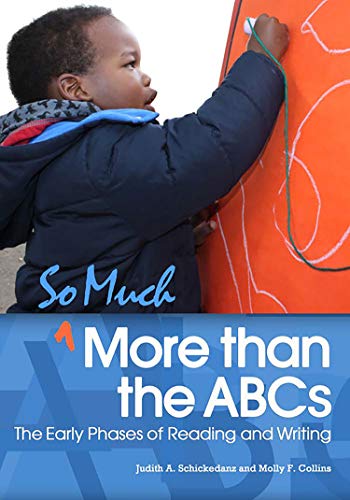
The foundation for success in learning to read and write begins in infancyAs early childhood professionals, we have both the opportunity and the privilege to shape the progress young children make in acquiring the literacy skills, oral language skills, and background knowledge vital to their later success in learning to read and write. By engaging infants, toddlers, and preschoolers in experiences that foster oral language and content knowledge, literacy skills, and cognitive ability, we build a foundation for children’s later academic success.Promoting children’s desire to read and write is as important as helping children develop the necessary understandings and skills essential for learning how to read and write. Without motivation, children will read and write relatively little and only what and when they must. This book addresses four main points:1. What children need to learn in these early years2. The strategies that teachers can use to help children acquire these foundations3. The features of emergent literacy and language understandings and skills4. How to design the physical environment in early childhood classrooms to support language and literacy learningThis book will help early childhood professionals and families support young children in acquiring the understandings, knowledge, and skills needed for later success in learning to read and write.
Les informations fournies dans la section « Synopsis » peuvent faire référence à une autre édition de ce titre.
À propos de l'auteur
Judith A. Schickedanz, PhD, is professor emerita at Boston University. She has authored numerous articles and books, including Increasing the Power of Instruction (NAEYC, 2008); Writing in Preschool (International Reading Association, 2009); and Understanding Children and Adolescents (Allyn & Bacon, 2000).Molly F. Collins, EdD, is a lecturer in the Department of Teaching and Learning, Peabody College, Vanderbilt University. Her articles include “Sagacious, Sophisticated, and Sedulous: The Importance of Discussing 50-Cent Words with Young Children” (Young Children, 2012).
Extrait. © Reproduit sur autorisation. Tous droits réservés.
If asked when children learn to read and write, the average person would probably say, “in first grade.” Although this is indeed true for most children, success in first grade relies on more than just the instruction provided then; it also depends heavily on the knowledge and skills acquired long before. In fact, the experiences that build a foundation for learning to read and write have a history stretching all the way back to infancy.Children who struggle in learning to read often enter first grade without the foundational knowledge they need. This situation is not easily overcome. Only about 25 percent of children who struggle in learning to read in first grade ever read within the typical range for their grade level! The other children in this group continue to experience major reading difficulties throughout all of their years of schooling (Juel 1988; Spira, Bracken, & Fischel 2005).
Les informations fournies dans la section « A propos du livre » peuvent faire référence à une autre édition de ce titre.
Résultats de recherche pour So Much More Than the ABCs: The Early Phases of Reading...

Image d'archives
So Much More than the ABCs: The Early Phases of Reading and Writing
Edité par
National Association for the Education of Young Children, 2012
ISBN 10 : 192889688X
ISBN 13 : 9781928896883
Ancien ou d'occasion
Paperback
Vendeur : World of Books (was SecondSale), Montgomery, IL, Etats-Unis
Évaluation du vendeur 5 sur 5 étoiles

Paperback. Etat : Good. The foundation for success in learning to read and write begins in infancy As early childhood professionals, we have both the opportunity and the privilege to shape the progress young children make in acquiring the literacy skills, oral language skills, and background knowledge vital to their later success in learning to read and write. By engaging infants, toddlers, and preschoolers in experiences that foster oral language and content knowledge, literacy skills, and cognitive ability, we build a foundation for children's later academic success. Promoting children's desire to read and write is as important as helping children develop the necessary understandings and skills essential for learning how to read and write. Without motivation, children will read and write relatively little and only what and when they must. This book addresses four main points: 1. What children need to learn in these early years 2. The strategies that teachers can use to help children acquire these foundations 3. The features of emergent literacy and language understandings and skills 4. How to design the physical environment in early childhood classrooms to support language and literacy learning This book will help early childhood professionals and families support young children in acquiring the understandings, knowledge, and skills needed for later success in learning to read and write. N° de réf. du vendeur 00100044896
Acheter D'occasion
EUR 4,05
Livraison gratuite
Expédition nationale : Etats-Unis
Expédition nationale : Etats-Unis
Quantité disponible : 13 disponible(s)
Image d'archives
So Much More than the ABCs: The Early Phases of Reading and Writing
Edité par
National Association for the Education of Young Children, 2012
ISBN 10 : 192889688X
ISBN 13 : 9781928896883
Ancien ou d'occasion
Paperback
Vendeur : World of Books (was SecondSale), Montgomery, IL, Etats-Unis
Évaluation du vendeur 5 sur 5 étoiles
Paperback. Etat : Fair. The foundation for success in learning to read and write begins in infancy As early childhood professionals, we have both the opportunity and the privilege to shape the progress young children make in acquiring the literacy skills, oral language skills, and background knowledge vital to their later success in learning to read and write. By engaging infants, toddlers, and preschoolers in experiences that foster oral language and content knowledge, literacy skills, and cognitive ability, we build a foundation for children's later academic success. Promoting children's desire to read and write is as important as helping children develop the necessary understandings and skills essential for learning how to read and write. Without motivation, children will read and write relatively little and only what and when they must. This book addresses four main points: 1. What children need to learn in these early years 2. The strategies that teachers can use to help children acquire these foundations 3. The features of emergent literacy and language understandings and skills 4. How to design the physical environment in early childhood classrooms to support language and literacy learning This book will help early childhood professionals and families support young children in acquiring the understandings, knowledge, and skills needed for later success in learning to read and write. N° de réf. du vendeur 00109349255
Acheter D'occasion
EUR 4,05
Livraison gratuite
Expédition nationale : Etats-Unis
Expédition nationale : Etats-Unis
Quantité disponible : 1 disponible(s)
Image d'archives
So Much More than the ABCs: The Early Phases of Reading and Writing
ISBN 10 : 192889688X
ISBN 13 : 9781928896883
Ancien ou d'occasion
Paperback
Vendeur : BooksRun, Philadelphia, PA, Etats-Unis
Évaluation du vendeur 5 sur 5 étoiles
Paperback. Etat : Fair. Illustrated. The item might be beaten up but readable. May contain markings or highlighting, as well as stains, bent corners, or any other major defect, but the text is not obscured in any way. N° de réf. du vendeur 192889688X-7-1
Acheter D'occasion
EUR 4,06
Livraison gratuite
Expédition nationale : Etats-Unis
Expédition nationale : Etats-Unis
Quantité disponible : 3 disponible(s)
Image d'archives
So Much More than the ABCs: The Early Phases of Reading and Writing
Edité par
The National Association for the Education of Young Children, 2012
ISBN 10 : 192889688X
ISBN 13 : 9781928896883
Ancien ou d'occasion
paperback
Vendeur : Gulf Coast Books, Cypress, TX, Etats-Unis
Évaluation du vendeur 5 sur 5 étoiles
paperback. Etat : Very Good. N° de réf. du vendeur 192889688X-2-37960150
Acheter D'occasion
EUR 4,06
Livraison gratuite
Expédition nationale : Etats-Unis
Expédition nationale : Etats-Unis
Quantité disponible : 1 disponible(s)
Image d'archives
So Much More than the ABCs: The Early Phases of Reading and Writing
Edité par
The National Association for the Education of Young Children, 2012
ISBN 10 : 192889688X
ISBN 13 : 9781928896883
Ancien ou d'occasion
paperback
Vendeur : Your Online Bookstore, Houston, TX, Etats-Unis
Évaluation du vendeur 5 sur 5 étoiles
paperback. Etat : Very Good. N° de réf. du vendeur 192889688X-2-37850664
Acheter D'occasion
EUR 4,06
Livraison gratuite
Expédition nationale : Etats-Unis
Expédition nationale : Etats-Unis
Quantité disponible : 1 disponible(s)
Image fournie par le vendeur
So Much More than the ABCs: The Early Phases of Reading and Writing
Edité par
The National Association for the Education of Young Children, 2012
ISBN 10 : 192889688X
ISBN 13 : 9781928896883
Ancien ou d'occasion
Couverture souple
Vendeur : Zoom Books East, Glendale Heights, IL, Etats-Unis
Évaluation du vendeur 5 sur 5 étoiles
Etat : good. Book is in good condition and may include underlining highlighting and minimal wear. The book can also include "From the library of" labels. May not contain miscellaneous items toys, dvds, etc. . We offer 100% money back guarantee and 24 7 customer service. N° de réf. du vendeur ZEV.192889688X.G
Acheter D'occasion
EUR 4,07
Livraison gratuite
Expédition nationale : Etats-Unis
Expédition nationale : Etats-Unis
Quantité disponible : 1 disponible(s)
Image fournie par le vendeur
So Much More than the ABCs: The Early Phases of Reading and Writing
Edité par
The National Association for the Education of Young Children, 2012
ISBN 10 : 192889688X
ISBN 13 : 9781928896883
Ancien ou d'occasion
Couverture souple
Vendeur : Zoom Books Company, Lynden, WA, Etats-Unis
Évaluation du vendeur 5 sur 5 étoiles
Etat : very_good. Book is in very good condition and may include minimal underlining highlighting. The book can also include "From the library of" labels. May not contain miscellaneous items toys, dvds, etc. . We offer 100% money back guarantee and 24 7 customer service. N° de réf. du vendeur ZBV.192889688X.VG
Acheter D'occasion
EUR 4,07
Livraison gratuite
Expédition nationale : Etats-Unis
Expédition nationale : Etats-Unis
Quantité disponible : 2 disponible(s)
Image d'archives
So Much More than the ABCs: The Early Phases of Reading and Writing
Edité par
The National Association for the Education of Young Children, 2012
ISBN 10 : 192889688X
ISBN 13 : 9781928896883
Ancien ou d'occasion
Couverture souple
Vendeur : Indiana Book Company, Marion, IN, Etats-Unis
Évaluation du vendeur 5 sur 5 étoiles
Etat : Good. Ships same or next business day with delivery confirmation. Good condition. May or may not contain highlighting. Expedited shipping available. N° de réf. du vendeur 1000011620508-623
Acheter D'occasion
EUR 1,71
Expédition à EUR 2,91
Expédition nationale : Etats-Unis
Expédition nationale : Etats-Unis
Quantité disponible : 3 disponible(s)
Image fournie par le vendeur
So Much More than the ABCs: The Early Phases of Reading and Writing
Edité par
The National Association for the Education of Young Children, 2012
ISBN 10 : 192889688X
ISBN 13 : 9781928896883
Ancien ou d'occasion
Couverture souple
Vendeur : Greenworld Books, Arlington, TX, Etats-Unis
Évaluation du vendeur 5 sur 5 étoiles
Etat : good. Fast Free Shipping â" Good condition. It may show normal signs of use, such as light writing, highlighting, or library markings, but all pages are intact and the book is fully readable. A solid, complete copy that's ready to enjoy. N° de réf. du vendeur GWV.192889688X.G
Acheter D'occasion
EUR 4,71
Livraison gratuite
Expédition nationale : Etats-Unis
Expédition nationale : Etats-Unis
Quantité disponible : 3 disponible(s)
Image d'archives
So Much More than the ABCs: The Early Phases of Reading and Writing
Edité par
The National Association for the, 2012
ISBN 10 : 192889688X
ISBN 13 : 9781928896883
Ancien ou d'occasion
paperback
Vendeur : Evergreen Goodwill, Seattle, WA, Etats-Unis
Évaluation du vendeur 5 sur 5 étoiles
paperback. Etat : Good. N° de réf. du vendeur mon0000059569
Acheter D'occasion
EUR 1,61
Expédition à EUR 3,57
Expédition nationale : Etats-Unis
Expédition nationale : Etats-Unis
Quantité disponible : 2 disponible(s)