A Year with the Emperor: Daily Readings from The Meditations of Marcus Aurelius with Commentary, Analysis, and Questions for Personal Growth and Insight - Couverture souple
Livre 3 sur 3: Freud Library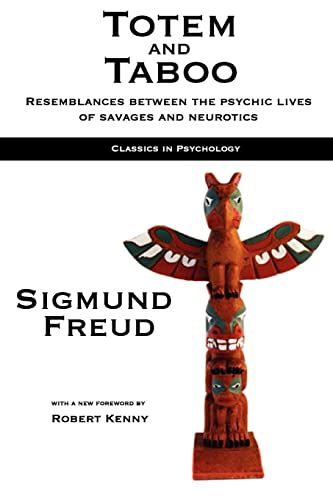
Synopsis
Imagine how much you could learn - about life as well as yourself - by spending a few minutes every day reading the private thoughts of the most powerful emperor in Ancient Rome. Although Marcus Aurelius lived nearly two millennia ago, he speaks to us as a contemporary dealing with the same problems we all face throughout life:
What should I be doing with my life and the time I have left?
What do we owe to our family, our friends, and our community?
How do you make your “best life” a reality?
How should you make decisions in complex situations?
How should you deal with criticism?
How do you live knowing that we all inevitably die?
It can be daunting to undertake reading the Meditations from start to finish, especially if you haven’t had a classical education and knowledge of Greek and Roman history and philosophy. What are you missing by not knowing the context of Marcus’s time? Compounding this problem is the fact that Marcus wrote the Meditations for himself rather than the public, and so doesn’t bother to explain the identities, philosophy, or history of the people he talks about. That’s the purpose of A Year with the Emperor - to provide a daily reading from the Meditations with an explanation of the context, along with questions you can apply to your own life.
For example, Marcus describes Sextus of Chaeronea as someone who had “a knack for accepting everyone without judgment, and a normal conversation with him was better than any flattery.” Okay, but who was Sextus of Chaeronea? He was a nephew of the famous Roman historian and biographer Plutarch, and was so esteemed by Marcus that he would visit Sextus for instruction even after he became emperor, and would consult him about legal questions too. The historian Philostratus described an occasion where someone asked Marcus where he was going and he replied “It’s good even for an old man to learn. I’m on my way to visit Sextus the philosopher to learn what I don’t already know!”. Obviously, this provides more information and understanding than Marcus’s brief description, and this is included as “Commentary” after each daily selection, and is followed by questions for personal growth in the “Analysis” section. For this passage, the question is “Who in your life provides (or has provided) a ‘normal conservation’ that is ‘better than any flattery?’ What was it about the conversations that made them so special?” In this way, every daily entry (this one, from Book 1, Verse 9, is the entry for June 4th) follows the pattern of passage, commentary, and analysis, allowing the reader to apply Marcus’s thoughts to their own life.
Les informations fournies dans la section « Synopsis » peuvent faire référence à une autre édition de ce titre.
Présentation de l'éditeur
The two principle themes, totem and taboo, which gave the name to this small book are not treated alike here. The problem of taboo is presented more exhaustively, and the effort to solve it is approached with perfect confidence. The investigation of totemism may be modestly expressed as: "This is all that psychoanalytic study can contribute at present to the elucidation of the problem of totemism." This difference in the treatment of the two subjects is due to the fact that taboo still exists in our midst. To be sure, it is negatively conceived and directed to different contents, but according to its psychological nature, it is still nothing else than Kant's "Categorical Imperative” which tends to act compulsively and rejects all conscious motivations. On the other hand, totemism is a religio-social institution which is alien to our present feelings; it has long been abandoned and replaced by new forms. In the religions, morals, and customs of the civilized races of today it has left only slight traces, and even among those races where it is still retained, it has had to undergo great changes. The social and material progress of the history of mankind could obviously change taboo much less than totemism. In this book the attempt is ventured to find the original meaning of totemism through its infantile traces, that is, through the indications in which it reappears in the development of our own children. The close connection between totem and taboo indicates the further paths to the hypothesis maintained here. And although this hypothesis leads to somewhat improbable conclusions, there is no reason for rejecting the possibility that it comes more or less near to the reality which is so hard to reconstruct.
Biographie de l'auteur
Sigmund Freud was born in 1856 in Moravia, Austrian Empire (now the Czech Republic). Between the ages of four and eighty-two his home was in Vienna; in 1938 Hitler's invasion of Austria forced him to seek asylum in London, where he died in the following year.His career began with several years of brilliant work on the anatomy and physiology of the nervous system. He was almost thirty when, after a period of study under Charcot in Paris, his interests first turned to psychology, and another ten years of clinical work in Vienna (at first in collaboration with Breuer, an older colleague) saw the birth of his creation, psychoanalysis. This began simply as a method of treating neurotic patients by investigating their minds, but it quickly grew into an accumulation of knowledge about the workings of the mind in general, whether sick or healthy. Freud was thus able to demonstrate the normal development of the sexual instinct in childhood and, largely on the basis of an examination of dreams, arrived at his fundamental discovery of the unconscious forces that influence our everyday thoughts and actions. Freud's life was uneventful, but his ideas have shaped not only many specialist disciplines, but the whole intellectual climate of the last half century.
Les informations fournies dans la section « A propos du livre » peuvent faire référence à une autre édition de ce titre.
Autres éditions populaires du même titre

Résultats de recherche pour A Year with the Emperor: Daily Readings from The Meditations...

Image fournie par le vendeur
Totem and Taboo (Paperback or Softback)
Edité par
Greentop Academic Press 4/1/2011, 2011
ISBN 10 : 1933167920
ISBN 13 : 9781933167923
Neuf
Paperback or Softback
Vendeur : BargainBookStores, Grand Rapids, MI, Etats-Unis
Évaluation du vendeur 5 sur 5 étoiles

Paperback or Softback. Etat : New. Totem and Taboo. Book. N° de réf. du vendeur BBS-9781933167923
Acheter neuf
EUR 12,42
Frais de port :
Gratuit
Vers Etats-Unis
Quantité disponible : 5 disponible(s)
Image d'archives
A Year with the Emperor: Daily Readings from The Meditations of Marcus Aurelius with Commentary, Analysis, and Questions for Personal Growth and Insight
Edité par
Greentop Academic Press, 2025
ISBN 10 : 1933167920
ISBN 13 : 9781933167923
Neuf
Couverture souple
Vendeur : Lucky's Textbooks, Dallas, TX, Etats-Unis
Évaluation du vendeur 5 sur 5 étoiles
Etat : New. N° de réf. du vendeur ABLIING23Mar2912160324686
Acheter neuf
EUR 9,69
Frais de port :
EUR 3,43
Vers Etats-Unis
Quantité disponible : Plus de 20 disponibles
Image fournie par le vendeur
Totem and Taboo
Vendeur : Rarewaves USA, OSWEGO, IL, Etats-Unis
Évaluation du vendeur 5 sur 5 étoiles
Paperback. Etat : New. N° de réf. du vendeur LU-9781933167923
Acheter neuf
EUR 13,32
Frais de port :
Gratuit
Vers Etats-Unis
Quantité disponible : Plus de 20 disponibles
Image fournie par le vendeur
Totem and Taboo
Vendeur : Rarewaves.com USA, London, LONDO, Royaume-Uni
Évaluation du vendeur 5 sur 5 étoiles
Paperback. Etat : New. N° de réf. du vendeur LU-9781933167923
Acheter neuf
EUR 16,61
Frais de port :
Gratuit
De Royaume-Uni vers Etats-Unis
Quantité disponible : Plus de 20 disponibles
Image fournie par le vendeur
Totem and Taboo
Vendeur : moluna, Greven, Allemagne
Évaluation du vendeur 4 sur 5 étoiles

Etat : New. KlappentextrnrnOriginally published in 1913, this classic treatise by Sigmund Freud applies psychoanalytic theory to the anthropological study of primitive peoples in order to explain the invention of religion, incest taboos, and civilization . N° de réf. du vendeur 905845465
Acheter neuf
EUR 14,21
Frais de port :
EUR 48,99
De Allemagne vers Etats-Unis
Quantité disponible : Plus de 20 disponibles
Image fournie par le vendeur
Totem and Taboo
Vendeur : Rarewaves USA United, OSWEGO, IL, Etats-Unis
Évaluation du vendeur 5 sur 5 étoiles
Paperback. Etat : New. N° de réf. du vendeur LU-9781933167923
Acheter neuf
EUR 22,95
Frais de port :
EUR 42,95
Vers Etats-Unis
Quantité disponible : Plus de 20 disponibles
Image fournie par le vendeur
Totem and Taboo
Edité par
HATALA GEROPRODUCTS Apr 2011, 2011
ISBN 10 : 1933167920
ISBN 13 : 9781933167923
Neuf
Taschenbuch
Vendeur : AHA-BUCH GmbH, Einbeck, Allemagne
Évaluation du vendeur 5 sur 5 étoiles
Taschenbuch. Etat : Neu. Neuware - Originally published in 1913, this classic treatise by Sigmund Freud applies psychoanalytic theory to the anthropological study of 'primitive' peoples in order to explain the invention of religion, incest taboos, and civilization itself. As controversial as it has been influential, its impact continues to be felt a century after its initial publication. In a new foreword, the historian Robert Kenny puts the work in contextand suggests why it remains iconic. Dr. Kenny in an Australian Research Councilfellow at La Trobe University currently researching the relationship between psychology and anthropology. His The Lamb Enters the Dreaming won the Prime Minister's Prize for Australian History in 2008. N° de réf. du vendeur 9781933167923
Acheter neuf
EUR 16,05
Frais de port :
EUR 60,99
De Allemagne vers Etats-Unis
Quantité disponible : 2 disponible(s)
Image fournie par le vendeur
Totem and Taboo
Vendeur : Rarewaves.com UK, London, Royaume-Uni
Évaluation du vendeur 5 sur 5 étoiles
Paperback. Etat : New. N° de réf. du vendeur LU-9781933167923
Acheter neuf
EUR 22,95
Frais de port :
EUR 74,41
De Royaume-Uni vers Etats-Unis
Quantité disponible : Plus de 20 disponibles