
Articles liés à El Zarco
Synopsis
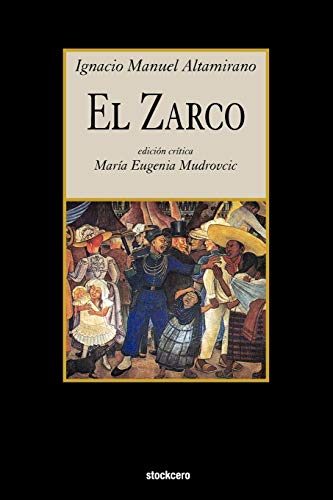
El Zarco by Ignacio Atamirano in a US printed edition with preliminary study and notes by Maria Eugenia Mudrovcic Ignacio Manuel Altamirano's posthumous novel, El Zarco (1901), is much more than a novel about bandits. Written amidst the «pax porfiriana», at the height of Altamirano's reputation within the cultural elite, the novel is a narrative that deals with the chaos and the banditry that prevailed in the 1860s to celebrate the insertion of Mexico into the international markets undertaken by Porfirio Díaz. Considered to be «the first Mexican novel» because of its carefully constructed structure, El Zarco is also "original" in its approach to race: green-eyed white characters are the villains, while the heroes are Indian or mestizos. What makes a heroe, however, is not a matter of race, but the strict adherence to honor, family and hard work, the «civil» values guiding the actions and the ethos of each and every good citizen or "hombre de bien" of Yautepec. The nineteenth century bourgeois obsession with "crime" emerges in El Zarco as the matrix of the two stories that end up being one: "crime" is the cause for the fear and «insecurity» that paralyze Yautepec middle classes as well as the reason for the glorification of the rural police. Altamirano presents the «good love» between Nicolas and Pilar as a counternarrative of the sexually undisciplined story of lust enacted by Manuela and el Zarco. But this narrative line seems to be, nonetheless, only a frame to celebrate Sanchez Chagollan as the heroic founding father of the police created by Benito Juárez in 1861 that later became an icon of the institutional order of the Diaz regime. In the study that introduces this edition, Maria Eugenia Mudrovcic reads the «unorthodoxies» of Altamirano's novel as part of the propaganda apparatus set by Porfirio Diaz in his effort to change the image of Mexico as a «bandit nation» that dominated the press at the time. Why Altamirano talks of «violence» in «times of peace», thus, becomes the starting-point for a reading of El Zarco that pays attention not so much to bandits but rather to the police that was created as the only way to combat them.
Les informations fournies dans la section « Synopsis » peuvent faire référence à une autre édition de ce titre.
Présentation de l'éditeur
acción, que transcurre entre los años 1861 - 1862, se desarrolla en Yautepec, Morelos, donde se ubicaban las haciendas de Cocoyoc, Atlihuayán y San Carlos, todas ellas dedicadas al cultivo de la caña de azúcar. La población de la zona era asolada por las bandas de forajidos que habitaban la región. Manuela vive con su madre viuda y es cortejada por Nicolás, a quien desprecia por su aspecto indígena. Es amante del Zarco, comandante de un grupo de bandidos con el que finalmente huye. Cuando Manuela llega a vivir a Xochimancas, lugar donde se refugiaban los bandidos, se enfrenta al ambiente degradante que rodea a su amado y al mismo tiempo descubre otras facetas de él, por lo que se arrepiente de haber huido. Cuando el Zarco se entera de la situación y comprende que Manuela está interesada en Nicolás, la trata con rudeza y decide asesinar a Nicolás.4 Mientras tanto, doña Antonia, madre de Manuela y madrina de Pilar, acongojada por la fuga de su hija, enferma y muere. Antes de morir, doña Antonia pide ayuda a Nicolás y a las autoridades para rescatar a Manuela. En lugar de responder a la petición de auxilio, las autoridades apresan a Nicolás y es en la cárcel donde este se entera de los sentimientos de Pilar, que está dispuesta a ofrecer su vida a cambio de la de él. Una vez libre y después de sepultar a doña Antonia, Pilar y Nicolás se casan. El mismo día de la boda, el Zarco es capturado por Martín Sánchez Chagollán y sus hombres, quienes lo matan y luego lo cuelgan de un árbol. Manuela enloquece y muere al pie del árbol donde está colgado el Zarco.
Biographie de l'auteur
Fecha de nacimiento: 1834, Tixtla de Guerrero, México Fecha de la muerte: 13 de febrero de 1893, Nació en Tixtla, Guerrero, en el seno de una familia indígena; su padre tenía una posición de mando entre los chontales y en 1848 fue nombrado alcalde de Tixtla, lo cual dio al niño Ignacio Manuel, que a la sazón tenía 14 años, la oportunidad de ir a la escuela. Aprendió a leer y a escribir en su pueblo natal. Hizo sus primeros estudios en Toluca, gracias a una beca otorgada por Ignacio Ramírez, de quien fue discípulo. Estudió en el Instituto Literario de Toluca, y derecho en el Colegio de San Juan de Letrán. Perteneció a asociaciones académicas y literarias como el Conservatorio Dramático Mexicano, la Sociedad Nezahualcóyotl, la Sociedad Mexicana de Geografía y Estadística, el Liceo Hidalgo y el Club Álvarez.
Les informations fournies dans la section « A propos du livre » peuvent faire référence à une autre édition de ce titre.
Résultats de recherche pour El Zarco

Image d'archives
El Zarco (Spanish Edition)
Edité par
Stockcero (edition ), 2012
ISBN 10 : 1934768553
ISBN 13 : 9781934768556
Ancien ou d'occasion
Paperback
Vendeur : BooksRun, Philadelphia, PA, Etats-Unis
Évaluation du vendeur 5 sur 5 étoiles

Paperback. Etat : Very Good. It's a well-cared-for item that has seen limited use. The item may show minor signs of wear. All the text is legible, with all pages included. It may have slight markings and/or highlighting. N° de réf. du vendeur 1934768553-8-1
Acheter D'occasion
EUR 6,76
Livraison gratuite
Expédition nationale : Etats-Unis
Expédition nationale : Etats-Unis
Quantité disponible : 2 disponible(s)
Image fournie par le vendeur
El Zarco -Language: Spanish
Vendeur : GreatBookPrices, Columbia, MD, Etats-Unis
Évaluation du vendeur 5 sur 5 étoiles
Etat : New. N° de réf. du vendeur 18652655-n
Acheter neuf
EUR 20,37
Expédition à EUR 2,37
Expédition nationale : Etats-Unis
Expédition nationale : Etats-Unis
Quantité disponible : Plus de 20 disponibles
Image fournie par le vendeur
El Zarco (Paperback or Softback)
Edité par
Stockcero 8/15/2012, 2012
ISBN 10 : 1934768553
ISBN 13 : 9781934768556
Neuf
Paperback or Softback
Vendeur : BargainBookStores, Grand Rapids, MI, Etats-Unis
Évaluation du vendeur 5 sur 5 étoiles
Paperback or Softback. Etat : New. El Zarco. Book. N° de réf. du vendeur BBS-9781934768556
Acheter neuf
EUR 22,82
Livraison gratuite
Expédition nationale : Etats-Unis
Expédition nationale : Etats-Unis
Quantité disponible : 5 disponible(s)
Image fournie par le vendeur
El Zarco -Language: Spanish
Edité par
Stockcero, 2012
ISBN 10 : 1934768553
ISBN 13 : 9781934768556
Ancien ou d'occasion
Couverture souple
Vendeur : GreatBookPrices, Columbia, MD, Etats-Unis
Évaluation du vendeur 5 sur 5 étoiles
Etat : As New. Unread book in perfect condition. N° de réf. du vendeur 18652655
Acheter D'occasion
EUR 21,99
Expédition à EUR 2,37
Expédition nationale : Etats-Unis
Expédition nationale : Etats-Unis
Quantité disponible : Plus de 20 disponibles
Image d'archives
El Zarco (Spanish Edition)
Vendeur : California Books, Miami, FL, Etats-Unis
Évaluation du vendeur 5 sur 5 étoiles
Etat : New. N° de réf. du vendeur I-9781934768556
Acheter neuf
EUR 25,87
Expédition à EUR 2,69
Expédition nationale : Etats-Unis
Expédition nationale : Etats-Unis
Quantité disponible : Plus de 20 disponibles
Image fournie par le vendeur
El Zarco
Vendeur : Rarewaves.com USA, London, LONDO, Royaume-Uni
Évaluation du vendeur 5 sur 5 étoiles
Paperback. Etat : New. N° de réf. du vendeur LU-9781934768556
Acheter neuf
EUR 29,58
Livraison gratuite
Expédition depuis Royaume-Uni vers Etats-Unis
Expédition depuis Royaume-Uni vers Etats-Unis
Quantité disponible : Plus de 20 disponibles
Image d'archives
El Zarco
impression à la demandeVendeur : Chiron Media, Wallingford, Royaume-Uni
Évaluation du vendeur 5 sur 5 étoiles
PF. Etat : New. This item is printed on demand. Brand new book, sourced directly from publisher. Dispatch time is 6-7 days from our warehouse. Book will be sent in robust, secure packaging to ensure it reaches you securely. N° de réf. du vendeur 6666-IUK-9781934768556
Acheter neuf
EUR 23,79
Expédition à EUR 5,98
Expédition depuis Royaume-Uni vers Etats-Unis
Expédition depuis Royaume-Uni vers Etats-Unis
Quantité disponible : 20 disponible(s)
Image d'archives
El Zarco
impression à la demandeVendeur : PBShop.store US, Wood Dale, IL, Etats-Unis
Évaluation du vendeur 5 sur 5 étoiles
PAP. Etat : New. New Book. Shipped from UK. THIS BOOK IS PRINTED ON DEMAND. Established seller since 2000. N° de réf. du vendeur L0-9781934768556
Acheter neuf
EUR 30,56
Livraison gratuite
Expédition nationale : Etats-Unis
Expédition nationale : Etats-Unis
Quantité disponible : Plus de 20 disponibles
Image d'archives
El Zarco
impression à la demandeVendeur : PBShop.store UK, Fairford, GLOS, Royaume-Uni
Évaluation du vendeur 5 sur 5 étoiles
PAP. Etat : New. New Book. Delivered from our UK warehouse in 4 to 14 business days. THIS BOOK IS PRINTED ON DEMAND. Established seller since 2000. N° de réf. du vendeur L0-9781934768556
Acheter neuf
EUR 28,55
Expédition à EUR 4,99
Expédition depuis Royaume-Uni vers Etats-Unis
Expédition depuis Royaume-Uni vers Etats-Unis
Quantité disponible : Plus de 20 disponibles
Image d'archives
El Zarco
Edité par
Stockcero, Incorporated, 2012
ISBN 10 : 1934768553
ISBN 13 : 9781934768556
Neuf
Couverture souple
Vendeur : Majestic Books, Hounslow, Royaume-Uni
Évaluation du vendeur 4 sur 5 étoiles

Etat : New. Print on Demand pp. 204 2:B&W 6 x 9 in or 229 x 152 mm Perfect Bound on Creme w/Gloss Lam. N° de réf. du vendeur 95162291
Acheter neuf
EUR 33,49
Expédition à EUR 7,79
Expédition depuis Royaume-Uni vers Etats-Unis
Expédition depuis Royaume-Uni vers Etats-Unis
Quantité disponible : 4 disponible(s)