
Articles liés à Spring 90: Jung and India Fall 2013
Résultats de recherche pour Spring 90: Jung and India Fall 2013

Image d'archives
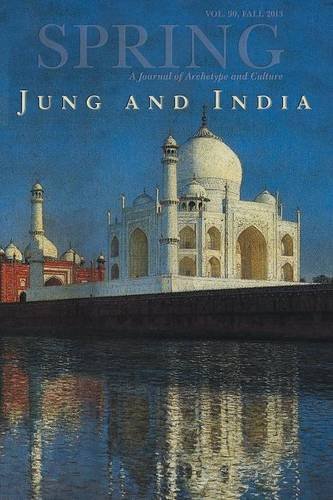
Spring, a Journal of Archetype and Culture, Vol. 90, Fall 2013, Jung and India
Edité par
Spring Journal, 2013
ISBN 10 : 1935528602
ISBN 13 : 9781935528609
Ancien ou d'occasion
Paperback
Vendeur : World of Books (was SecondSale), Montgomery, IL, Etats-Unis
Évaluation du vendeur 5 sur 5 étoiles

Paperback. Etat : Very Good. Carl Jung's interest in India, and specifically in Hinduism and Buddhism, will be obvious to anyone who has even superficially read his work. Nevertheless, its significance is often ignored or minimized. This issue of Spring aims to show just how extensive and fraught Jung's ties to India were and to present attempts from a number of directions to plumb the meaning of the relationship and, in the spirit of active imagination, to dream it onward into the present and future. In this issue we will focus mostly on Jung's connections with Hindu thought. Buddhism and Hinduism in complex ways grew out of one another, so it is inevitable that there will be some overlap between the two. However, in spite of Jung's professed preference for Buddhism, he made much more use of Hindu (and pre-Hindu and pre-Buddhist Vedic) thought, as will be evident from the papers in this issue. We hope that Jung and India will open channels of thinking and practice with the potential to enrich Jungian understanding of Indian traditions and, equally, to stimulate creative interpretations and extensions of Jungian thought. The papers for this volume fall rather clearly into four categories: (1) historical and comparative work integrating India and Jung (2) papers comparing and contrasting Jungian ideas with specific Indian traditions (3) Jungian interpretations of Hindu myths and rituals, and (4) personal memoirs combining Jungian and Indian themes. Despite the neat taxonomy, many of the papers touch on more than one category, and all in some way broach the fundamental questions that motivated this work in the first place: What unconscious, implied, nascent, or potential dialogue hangs poised in the field of thought and practice between Carl Jung's psychology and the 3500-year-old tradition of Indian thought? And what can we do to help it emerge for the benefit of both? N° de réf. du vendeur 00104656601
Acheter D'occasion
EUR 112,60
Livraison gratuite
Expédition nationale : Etats-Unis
Expédition nationale : Etats-Unis
Quantité disponible : 1 disponible(s)
Image d'archives
Spring 90: Jung and India Fall 2013
Edité par
Spring Journal (edition ), 2013
ISBN 10 : 1935528602
ISBN 13 : 9781935528609
Ancien ou d'occasion
Paperback
Vendeur : BooksRun, Philadelphia, PA, Etats-Unis
Évaluation du vendeur 5 sur 5 étoiles
Paperback. Etat : Very Good. It's a well-cared-for item that has seen limited use. The item may show minor signs of wear. All the text is legible, with all pages included. It may have slight markings and/or highlighting. N° de réf. du vendeur 1935528602-11-1
Acheter D'occasion
EUR 112,61
Livraison gratuite
Expédition nationale : Etats-Unis
Expédition nationale : Etats-Unis
Quantité disponible : 1 disponible(s)
Image d'archives
Spring, a Journal of Archetype and Culture, Vol. 90, Fall 2013, Jung and India
Edité par
Spring Journal, 2013
ISBN 10 : 1935528602
ISBN 13 : 9781935528609
Ancien ou d'occasion
Paperback
Vendeur : World of Books Inc, Montgomery, IL, Etats-Unis
Évaluation du vendeur 4 sur 5 étoiles

Paperback. Etat : Very Good. Carl Jung's interest in India, and specifically in Hinduism and Buddhism, will be obvious to anyone who has even superficially read his work. Nevertheless, its significance is often ignored or minimized. This issue of Spring aims to show just how extensive and fraught Jung's ties to India were and to present attempts from a number of directions to plumb the meaning of the relationship and, in the spirit of active imagination, to dream it onward into the present and future. In this issue we will focus mostly on Jung's connections with Hindu thought. Buddhism and Hinduism in complex ways grew out of one another, so it is inevitable that there will be some overlap between the two. However, in spite of Jung's professed preference for Buddhism, he made much more use of Hindu (and pre-Hindu and pre-Buddhist Vedic) thought, as will be evident from the papers in this issue. We hope that Jung and India will open channels of thinking and practice with the potential to enrich Jungian understanding of Indian traditions and, equally, to stimulate creative interpretations and extensions of Jungian thought. The papers for this volume fall rather clearly into four categories: (1) historical and comparative work integrating India and Jung (2) papers comparing and contrasting Jungian ideas with specific Indian traditions (3) Jungian interpretations of Hindu myths and rituals, and (4) personal memoirs combining Jungian and Indian themes. Despite the neat taxonomy, many of the papers touch on more than one category, and all in some way broach the fundamental questions that motivated this work in the first place: What unconscious, implied, nascent, or potential dialogue hangs poised in the field of thought and practice between Carl Jung's psychology and the 3500-year-old tradition of Indian thought? And what can we do to help it emerge for the benefit of both? N° de réf. du vendeur CIN1935528602VG
Acheter D'occasion
EUR 118,24
Livraison gratuite
Expédition nationale : Etats-Unis
Expédition nationale : Etats-Unis
Quantité disponible : 1 disponible(s)