
Articles liés à Equitable Access to Human Biological Resources in Developing...
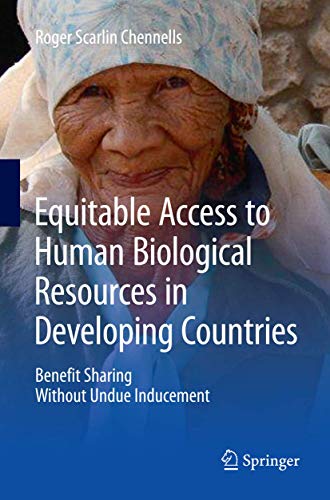
Equitable Access to Human Biological Resources in Developing Countries: Benefit Sharing Without Undue Inducement - Couverture souple
Synopsis
The main question explored by the book is: How can cross-border access to human genetic resources, such as blood or DNA samples, be governed in such a way as to achieve equity for vulnerable populations in developing countries? The book situates the field of genomic and genetic research within global health and research frameworks, describing the concerns that have been raised about the potential unfairness in exchanges during recent decades. Access to and sharing in the benefits of human biological resources are aspects not regulated by any international legal framework such as the Convention on Biological Diversity, which applies only to the exchange of plants, animals and microorganisms, as well as to associated traditional knowledge. Examples of genetic research perceived as exploitative are provided in order to illustrate the legal vacuum concerning the global governance of human genetic resources. The main conclusions drawn from the legal and ethical analysis are:
- Benefit sharing is crucial in order to avoid the exploitation of developing countries in human genetic research.
- With functioning research ethics committees, undue inducement is less of a concern in genetic research than in other areas of medical research (e.g. clinical trials).
- Concerns remain over research involving indigenous populations; accordingly, recommendations are provided.
In drawing these conclusions, the book addresses in detail a highly pressing topic in global bioethics and international law. In this regard, it combines bioethical arguments with jurisprudence, in particular with reference to thelaw of equity and the legal concepts of duress (coercion), unconscionable dealing, and undue inducement.
Les informations fournies dans la section « Synopsis » peuvent faire référence à une autre édition de ce titre.
Résultats de recherche pour Equitable Access to Human Biological Resources in Developing...

Image d'archives
Chennells:Equitable Access to Human Bio (eng)
impression à la demandeVendeur : Brook Bookstore On Demand, Napoli, NA, Italie
Évaluation du vendeur 5 sur 5 étoiles

Etat : new. Questo è un articolo print on demand. N° de réf. du vendeur 4ff4ecb594373559e136be09a3eb4b61
Acheter neuf
EUR 86,24
Expédition à EUR 24,20
Expédition depuis Italie vers Etats-Unis
Expédition depuis Italie vers Etats-Unis
Quantité disponible : Plus de 20 disponibles
Image fournie par le vendeur
Equitable Access to Human Biological Resources in Developing Countries
Edité par
Springer International Publishing Okt 2016, 2016
ISBN 10 : 3319369741
ISBN 13 : 9783319369747
Neuf
Taschenbuch
Vendeur : BuchWeltWeit Ludwig Meier e.K., Bergisch Gladbach, Allemagne
Évaluation du vendeur 5 sur 5 étoiles
Taschenbuch. Etat : Neu. This item is printed on demand - it takes 3-4 days longer - Neuware -The main question explored by the book is: How can cross-border access to human genetic resources, such as blood or DNA samples, be governed in such a way as to achieve equity for vulnerable populations in developing countries The book situates the field of genomic and genetic research within global health and research frameworks, describing the concerns that have been raised about the potential unfairness in exchanges during recent decades. Access to and sharing in the benefits of human biological resources are aspects not regulated by any international legal framework such as the Convention on Biological Diversity, which applies only to the exchange of plants, animals and microorganisms, as well as to associated traditional knowledge. Examples of genetic research perceived as exploitative are provided in order to illustrate the legal vacuum concerning the global governance of human genetic resources. The main conclusions drawn from the legal and ethical analysis are:- Benefit sharing is crucial in order to avoid the exploitation of developing countries in human genetic research.- With functioning research ethics committees, undue inducement is less of a concern in genetic research than in other areas of medical research (e.g. clinical trials).- Concerns remain over research involving indigenous populations; accordingly, recommendations are provided. In drawing these conclusions, the book addresses in detail a highly pressing topic in global bioethics and international law. In this regard, it combines bioethical arguments with jurisprudence, in particular with reference to the law of equity and the legal concepts of duress (coercion), unconscionable dealing, and undue inducement. 220 pp. Englisch. N° de réf. du vendeur 9783319369747
Acheter neuf
EUR 106,99
Expédition à EUR 23
Expédition depuis Allemagne vers Etats-Unis
Expédition depuis Allemagne vers Etats-Unis
Quantité disponible : 2 disponible(s)
Image d'archives
Equitable Access to Human Biological Resources in Developing Countries: Benefit Sharing Without Undue Inducement
Vendeur : Ria Christie Collections, Uxbridge, Royaume-Uni
Évaluation du vendeur 5 sur 5 étoiles
Etat : New. In English. N° de réf. du vendeur ria9783319369747_new
Acheter neuf
EUR 128,22
Expédition à EUR 10,93
Expédition depuis Royaume-Uni vers Etats-Unis
Expédition depuis Royaume-Uni vers Etats-Unis
Quantité disponible : Plus de 20 disponibles
Image fournie par le vendeur
Equitable Access to Human Biological Resources in Developing Countries
Edité par
Springer International Publishing, 2016
ISBN 10 : 3319369741
ISBN 13 : 9783319369747
Neuf
Couverture souple
Vendeur : moluna, Greven, Allemagne
Évaluation du vendeur 5 sur 5 étoiles
Etat : New. Dieser Artikel ist ein Print on Demand Artikel und wird nach Ihrer Bestellung fuer Sie gedruckt. Provides a revealing explanation of and argument for the importance of benefit sharing in genetic researchPresents a condensed summary of the specific concerns faced by indigenous peoples in genetic research, including recommendations. N° de réf. du vendeur 385704153
Acheter neuf
EUR 92,27
Expédition à EUR 48,99
Expédition depuis Allemagne vers Etats-Unis
Expédition depuis Allemagne vers Etats-Unis
Quantité disponible : Plus de 20 disponibles
Image fournie par le vendeur
Equitable Access to Human Biological Resources in Developing Countries : Benefit Sharing Without Undue Inducement
Vendeur : AHA-BUCH GmbH, Einbeck, Allemagne
Évaluation du vendeur 5 sur 5 étoiles
Taschenbuch. Etat : Neu. Druck auf Anfrage Neuware - Printed after ordering - The main question explored by the book is: How can cross-border access to human genetic resources, such as blood or DNA samples, be governed in such a way as to achieve equity for vulnerable populations in developing countries The book situates the field of genomic and genetic research within global health and research frameworks, describing the concerns that have been raised about the potential unfairness in exchanges during recent decades. Access to and sharing in the benefits of human biological resources are aspects not regulated by any international legal framework such as the Convention on Biological Diversity, which applies only to the exchange of plants, animals and microorganisms, as well as to associated traditional knowledge. Examples of genetic research perceived as exploitative are provided in order to illustrate the legal vacuum concerning the global governance of human genetic resources. The main conclusions drawn from the legal and ethical analysis are:- Benefit sharing is crucial in order to avoid the exploitation of developing countries in human genetic research.- With functioning research ethics committees, undue inducement is less of a concern in genetic research than in other areas of medical research (e.g. clinical trials).- Concerns remain over research involving indigenous populations; accordingly, recommendations are provided. In drawing these conclusions, the book addresses in detail a highly pressing topic in global bioethics and international law. In this regard, it combines bioethical arguments with jurisprudence, in particular with reference to thelaw of equity and the legal concepts of duress (coercion), unconscionable dealing, and undue inducement. N° de réf. du vendeur 9783319369747
Acheter neuf
EUR 117,28
Expédition à EUR 35
Expédition depuis Allemagne vers Etats-Unis
Expédition depuis Allemagne vers Etats-Unis
Quantité disponible : 1 disponible(s)
Image fournie par le vendeur
Equitable Access to Human Biological Resources in Developing Countries | Benefit Sharing Without Undue Inducement
Vendeur : preigu, Osnabrück, Allemagne
Évaluation du vendeur 5 sur 5 étoiles
Taschenbuch. Etat : Neu. Equitable Access to Human Biological Resources in Developing Countries | Benefit Sharing Without Undue Inducement | Roger Scarlin Chennells | Taschenbuch | xix | Englisch | 2016 | Springer | EAN 9783319369747 | Verantwortliche Person für die EU: Springer Verlag GmbH, Tiergartenstr. 17, 69121 Heidelberg, juergen[dot]hartmann[at]springer[dot]com | Anbieter: preigu. N° de réf. du vendeur 102727470
Acheter neuf
EUR 95,25
Expédition à EUR 70
Expédition depuis Allemagne vers Etats-Unis
Expédition depuis Allemagne vers Etats-Unis
Quantité disponible : 5 disponible(s)
Image d'archives
Equitable Access to Human Biological Resources in Developing Countries: Benefit Sharing Without Undue Inducement
Vendeur : Books Puddle, Woodside, NY, Etats-Unis
Évaluation du vendeur 4 sur 5 étoiles

Etat : New. pp. 220 Reprint edition NO-PA16APR2015-KAP. N° de réf. du vendeur 26378354874
Acheter neuf
EUR 162,48
Expédition à EUR 3,52
Expédition nationale : Etats-Unis
Expédition nationale : Etats-Unis
Quantité disponible : 4 disponible(s)
Image fournie par le vendeur
Equitable Access to Human Biological Resources in Developing Countries
Edité par
Springer, Springer Okt 2016, 2016
ISBN 10 : 3319369741
ISBN 13 : 9783319369747
Neuf
Taschenbuch
Vendeur : buchversandmimpf2000, Emtmannsberg, BAYE, Allemagne
Évaluation du vendeur 5 sur 5 étoiles
Taschenbuch. Etat : Neu. This item is printed on demand - Print on Demand Titel. Neuware -The main question explored by the book is: How can cross-border access to human genetic resources, such as blood or DNA samples, be governed in such a way as to achieve equity for vulnerable populations in developing countries The book situates the field of genomic and genetic research within global health and research frameworks, describing the concerns that have been raised about the potential unfairness in exchanges during recent decades. Access to and sharing in the benefits of human biological resources are aspects not regulated by any international legal framework such as the Convention on Biological Diversity, which applies only to the exchange of plants, animals and microorganisms, as well as to associated traditional knowledge. Examples of genetic research perceived as exploitative are provided in order to illustrate the legal vacuum concerning the global governance of human genetic resources. The main conclusions drawn from the legal and ethical analysis are:¿ Benefit sharing is crucial in order to avoid the exploitation of developing countries in human genetic research.¿ With functioning research ethics committees, undue inducement is less of a concern in genetic research than in other areas of medical research (e.g. clinical trials).¿ Concerns remain over research involving indigenous populations; accordingly, recommendations are provided.In drawing these conclusions, the book addresses in detail a highly pressing topic in global bioethics and international law. In this regard, it combines bioethical arguments with jurisprudence, in particular with reference to thelaw of equity and the legal concepts of duress (coercion), unconscionable dealing, and undue inducement.Springer-Verlag GmbH, Tiergartenstr. 17, 69121 Heidelberg 220 pp. Englisch. N° de réf. du vendeur 9783319369747
Acheter neuf
EUR 106,99
Expédition à EUR 60
Expédition depuis Allemagne vers Etats-Unis
Expédition depuis Allemagne vers Etats-Unis
Quantité disponible : 1 disponible(s)
Image d'archives
Equitable Access to Human Biological Resources in Developing Countries: Benefit Sharing Without Undue Inducement
Vendeur : Revaluation Books, Exeter, Royaume-Uni
Évaluation du vendeur 5 sur 5 étoiles
Paperback. Etat : Brand New. reprint edition. 216 pages. 9.25x6.10x0.50 inches. In Stock. N° de réf. du vendeur x-3319369741
Acheter neuf
EUR 154,97
Expédition à EUR 29,17
Expédition depuis Royaume-Uni vers Etats-Unis
Expédition depuis Royaume-Uni vers Etats-Unis
Quantité disponible : 2 disponible(s)
Image d'archives
Equitable Access to Human Biological Resources in Developing Countries: Benefit Sharing Without Undue Inducement
Edité par
Springer, 2016
ISBN 10 : 3319369741
ISBN 13 : 9783319369747
Ancien ou d'occasion
Paperback
Vendeur : Mispah books, Redhill, SURRE, Royaume-Uni
Évaluation du vendeur 4 sur 5 étoiles
Paperback. Etat : Like New. LIKE NEW. SHIPS FROM MULTIPLE LOCATIONS. book. N° de réf. du vendeur ERICA79633193697416
Acheter D'occasion
EUR 240,32
Expédition à EUR 29,17
Expédition depuis Royaume-Uni vers Etats-Unis
Expédition depuis Royaume-Uni vers Etats-Unis
Quantité disponible : 1 disponible(s)