
Articles liés à Ecological Building Design; Fuzzy Approach: An Eco-Design...
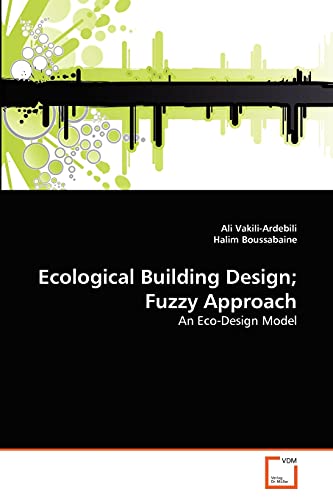
Synopsis
Current sustainable design paradigms do not represent the time dimension of design nor do they deal with the balance between needs and limitations of user through the life cycle of the building design process. Designers try to find optimum design solutions from a system point of view, as stabilizing structures to filter and control the diffusion of variations between the end-users' dynamic values and real-world environment. Hence, Eco-design ultimate objective is to find a balance between real-world systems and end-users' values with the lowest rate of impacts on the natural environment. This book presents a new conceptual paradigm towards sustainable building design through placing the emphasize on time dimension and human factor in building design. The book extracts, ranks and analyzes the most significant building design eco-indicators. Then a fuzzy assessment model, applying fuzzy logic and techniques, is developed. Students and academics of architecture, applied science and engineering, green building councils, consultants, researchers, educators, model developers in various fields could benefit from contents of this book.
Les informations fournies dans la section « Synopsis » peuvent faire référence à une autre édition de ce titre.
Présentation de l'éditeur
Current sustainable design paradigms do not represent the time dimension of design nor do they deal with the balance between needs and limitations of user through the life cycle of the building design process. Designers try to find optimum design solutions from a system point of view, as stabilizing structures to filter and control the diffusion of variations between the end-users' dynamic values and real-world environment. Hence, Eco-design ultimate objective is to find a balance between real-world systems and end-users' values with the lowest rate of impacts on the natural environment. This book presents a new conceptual paradigm towards sustainable building design through placing the emphasize on time dimension and human factor in building design. The book extracts, ranks and analyzes the most significant building design eco-indicators. Then a fuzzy assessment model, applying fuzzy logic and techniques, is developed. Students and academics of architecture, applied science and engineering, green building councils, consultants, researchers, educators, model developers in various fields could benefit from contents of this book.
Biographie de l'auteur
Dr. Ali VAkili-Ardebili is a consultant and researcher in sustainable building design, lecturing in Ryerson University and University of Toronto. He has published more than 30 Papers. Dr. Halim Boussabaine is a senior lecturer in project management in the University of Liverpool. He has published more than 90 articles and authored two books.
Les informations fournies dans la section « A propos du livre » peuvent faire référence à une autre édition de ce titre.
Résultats de recherche pour Ecological Building Design; Fuzzy Approach: An Eco-Design...

Image fournie par le vendeur
Ecological Building Design; Fuzzy Approach
Edité par
VDM Verlag Dr. Müller, 2010
ISBN 10 : 3639046811
ISBN 13 : 9783639046816
Neuf
Couverture souple
Vendeur : GreatBookPrices, Columbia, MD, Etats-Unis
Évaluation du vendeur 5 sur 5 étoiles

Etat : New. N° de réf. du vendeur 11627369-n
Acheter neuf
EUR 80,23
Expédition à EUR 2,36
Expédition nationale : Etats-Unis
Expédition nationale : Etats-Unis
Quantité disponible : Plus de 20 disponibles
Image d'archives
Ecological Building Design Fuzzy Approach An EcoDesign Model
impression à la demandeVendeur : PBShop.store US, Wood Dale, IL, Etats-Unis
Évaluation du vendeur 5 sur 5 étoiles
PAP. Etat : New. New Book. Shipped from UK. THIS BOOK IS PRINTED ON DEMAND. Established seller since 2000. N° de réf. du vendeur L0-9783639046816
Acheter neuf
EUR 82,66
Livraison gratuite
Expédition nationale : Etats-Unis
Expédition nationale : Etats-Unis
Quantité disponible : Plus de 20 disponibles
Image d'archives
Ecological Building Design Fuzzy Approach An EcoDesign Model
impression à la demandeVendeur : PBShop.store UK, Fairford, GLOS, Royaume-Uni
Évaluation du vendeur 5 sur 5 étoiles
PAP. Etat : New. New Book. Delivered from our UK warehouse in 4 to 14 business days. THIS BOOK IS PRINTED ON DEMAND. Established seller since 2000. N° de réf. du vendeur L0-9783639046816
Acheter neuf
EUR 78,28
Expédition à EUR 5,93
Expédition depuis Royaume-Uni vers Etats-Unis
Expédition depuis Royaume-Uni vers Etats-Unis
Quantité disponible : Plus de 20 disponibles
Image fournie par le vendeur
Ecological Building Design; Fuzzy Approach
Edité par
VDM Verlag Dr. Müller, 2010
ISBN 10 : 3639046811
ISBN 13 : 9783639046816
Ancien ou d'occasion
Couverture souple
Vendeur : GreatBookPrices, Columbia, MD, Etats-Unis
Évaluation du vendeur 5 sur 5 étoiles
Etat : As New. Unread book in perfect condition. N° de réf. du vendeur 11627369
Acheter D'occasion
EUR 82,41
Expédition à EUR 2,36
Expédition nationale : Etats-Unis
Expédition nationale : Etats-Unis
Quantité disponible : Plus de 20 disponibles
Image d'archives
Ecological Building Design; Fuzzy Approach: An Eco-Design Model
Edité par
VDM Verlag Dr. Müller, 2010
ISBN 10 : 3639046811
ISBN 13 : 9783639046816
Neuf
Couverture souple
Vendeur : California Books, Miami, FL, Etats-Unis
Évaluation du vendeur 5 sur 5 étoiles
Etat : New. N° de réf. du vendeur I-9783639046816
Acheter neuf
EUR 90,11
Livraison gratuite
Expédition nationale : Etats-Unis
Expédition nationale : Etats-Unis
Quantité disponible : Plus de 20 disponibles
Image d'archives
Ecological Building Design; Fuzzy Approach: An Eco-Design Model
Edité par
VDM Verlag Dr. M�ller 2010-10-01, 2010
ISBN 10 : 3639046811
ISBN 13 : 9783639046816
Neuf
Paperback
Vendeur : Chiron Media, Wallingford, Royaume-Uni
Évaluation du vendeur 5 sur 5 étoiles
Paperback. Etat : New. N° de réf. du vendeur 6666-IUK-9783639046816
Acheter neuf
EUR 73,90
Expédition à EUR 18,30
Expédition depuis Royaume-Uni vers Etats-Unis
Expédition depuis Royaume-Uni vers Etats-Unis
Quantité disponible : 10 disponible(s)
Image fournie par le vendeur
Ecological Building Design; Fuzzy Approach
Edité par
VDM Verlag Dr. Müller, 2010
ISBN 10 : 3639046811
ISBN 13 : 9783639046816
Neuf
Couverture souple
Vendeur : GreatBookPricesUK, Woodford Green, Royaume-Uni
Évaluation du vendeur 5 sur 5 étoiles
Etat : New. N° de réf. du vendeur 11627369-n
Acheter neuf
EUR 76,92
Expédition à EUR 17,72
Expédition depuis Royaume-Uni vers Etats-Unis
Expédition depuis Royaume-Uni vers Etats-Unis
Quantité disponible : Plus de 20 disponibles
Image d'archives
Ecological Building Design; Fuzzy Approach: An Eco-Design Model
Edité par
VDM Verlag Dr. Müller, 2010
ISBN 10 : 3639046811
ISBN 13 : 9783639046816
Neuf
Couverture souple
Vendeur : Ria Christie Collections, Uxbridge, Royaume-Uni
Évaluation du vendeur 5 sur 5 étoiles
Etat : New. In English. N° de réf. du vendeur ria9783639046816_new
Acheter neuf
EUR 85,09
Expédition à EUR 13,34
Expédition depuis Royaume-Uni vers Etats-Unis
Expédition depuis Royaume-Uni vers Etats-Unis
Quantité disponible : Plus de 20 disponibles
Image fournie par le vendeur
Ecological Building Design; Fuzzy Approach
Edité par
VDM Verlag Dr. Müller, 2010
ISBN 10 : 3639046811
ISBN 13 : 9783639046816
Ancien ou d'occasion
Couverture souple
Vendeur : GreatBookPricesUK, Woodford Green, Royaume-Uni
Évaluation du vendeur 5 sur 5 étoiles
Etat : As New. Unread book in perfect condition. N° de réf. du vendeur 11627369
Acheter D'occasion
EUR 84,81
Expédition à EUR 17,72
Expédition depuis Royaume-Uni vers Etats-Unis
Expédition depuis Royaume-Uni vers Etats-Unis
Quantité disponible : Plus de 20 disponibles
Image fournie par le vendeur
Ecological Building Design Fuzzy Approach
Edité par
VDM Verlag Dr. Müller, 2010
ISBN 10 : 3639046811
ISBN 13 : 9783639046816
Neuf
Kartoniert / Broschiert
Vendeur : moluna, Greven, Allemagne
Évaluation du vendeur 5 sur 5 étoiles
Kartoniert / Broschiert. Etat : New. Dieser Artikel ist ein Print on Demand Artikel und wird nach Ihrer Bestellung fuer Sie gedruckt. Autor/Autorin: Vakili-Ardebili AliDr. Ali VAkili-Ardebili is a consultant and researcher in sustainable building design, lecturing in Ryerson University and University of Toronto. He has published more than 30 Papers. Dr. Halim Boussabaine is a se. N° de réf. du vendeur 4952443
Acheter neuf
EUR 60,51
Expédition à EUR 48,99
Expédition depuis Allemagne vers Etats-Unis
Expédition depuis Allemagne vers Etats-Unis
Quantité disponible : Plus de 20 disponibles