
Articles liés à Sensory and Metabolic Control of Energy Balance
Sensory and Metabolic Control of Energy Balance - Couverture rigide
Livre 29 sur 66: Results and Problems in Cell Differentiation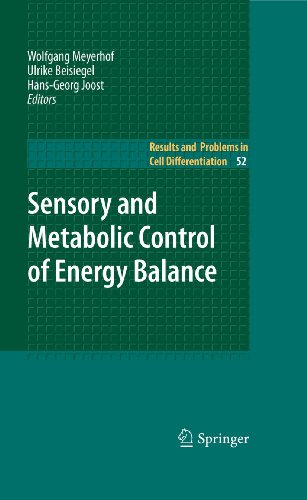
Synopsis
Sensory and Metabolic Control of Energy Balance
Les informations fournies dans la section « Synopsis » peuvent faire référence à une autre édition de ce titre.
Présentation de l'éditeur
The prevalence of obesity has dramatically increased in western and westernized societies, making the disease the second leading cause of unnecessary deaths in the US. Obesity results from imbalanced metabolic regulation leading to excessive lipid storage. As important novel entities in metabolic regulation, taste receptors and their cells are critical elements that adapt the gustatory system to metabolic signals and vice versa. The role of taste receptor genes in gastrointestinal tissues, as well as their dynamic regulation in gustatory and non-gustatory tissues in response to metabolic cues, has become the focus of an entirely new and rapidly developing research field with impacts on fuel sensing, metabolic control, and ingestive behavior. This book reflects the recent scientific progress in the field of fuel sensing in the mouth, GI tract, and brain and examines the olfactory bulb as a potential metabolic sensor and the brain-gut endocrine axis. It also touches on relevant novel molecular and cellular mechanisms regulating lipid storage and metabolism and covers the identification and functional characterization of obesity genes. Lastly, it illustrates the use of insect models to study relevant problems of energy homeostasis.
Les informations fournies dans la section « A propos du livre » peuvent faire référence à une autre édition de ce titre.
Résultats de recherche pour Sensory and Metabolic Control of Energy Balance

Image d'archives
Sensory and Metabolic Control of Energy Balance (eng)
impression à la demandeVendeur : Brook Bookstore On Demand, Napoli, NA, Italie
Évaluation du vendeur 5 sur 5 étoiles

Etat : new. Questo è un articolo print on demand. N° de réf. du vendeur 9ff40c26d1450410e996dd2032a9ff56
Acheter neuf
EUR 126,26
Expédition à EUR 5,50
Expédition depuis Italie vers Etats-Unis
Expédition depuis Italie vers Etats-Unis
Quantité disponible : Plus de 20 disponibles
Image fournie par le vendeur
Sensory and Metabolic Control of Energy Balance
Edité par
Springer Berlin Heidelberg Sep 2010, 2010
ISBN 10 : 364214425X
ISBN 13 : 9783642144257
Neuf
Couverture rigide
Vendeur : BuchWeltWeit Ludwig Meier e.K., Bergisch Gladbach, Allemagne
Évaluation du vendeur 5 sur 5 étoiles
Buch. Etat : Neu. This item is printed on demand - it takes 3-4 days longer - Neuware -During the last two decades, the prevalence of obesity has dramatically increased in western and westernized societies. Its devastating health consequences include hypertension, cardiovascular diseases, or diabetes and make obesity the second leading cause of unnecessary deaths in the USA. As a consequence, obesity has a strong negative impact on the public health care systems. Recently emerging scienti c insight has helped understanding obesity as a complex chronic disease with multiple causes. A multileveled gene-environment interaction appears to involve a substantial number of susceptibility genes, as well as associations with low physical activity levels and intake of high-calorie, low-cost, foods. Unfor- nately, therapeutic options to prevent or cure this disease are extremely limited, posing an extraordinary challenge for today's biomedical research community. Obesity results from imbalanced energy metabolism leading to lipid storage. Only detailed understanding of the multiple molecular underpinnings of energy metabolism can provide the basis for future therapeutic options. Numerous aspects of obesity are currently studied, including the essential role of neural and endocrine control circuits, adaptive responses of catabolic and anabolic pathways, metabolic fuel sensors, regulation of appetite and satiation, sensory information processing, transcriptional control of metabolic processes, and the endocrine role of adipose tissue. These studies are predominantly fuelled by basic research on mammalian models or clinical studies, but these ndings were paralleled by important insights, which have emerged from studying invertebrate models. 216 pp. Englisch. N° de réf. du vendeur 9783642144257
Acheter neuf
EUR 160,49
Expédition à EUR 23
Expédition depuis Allemagne vers Etats-Unis
Expédition depuis Allemagne vers Etats-Unis
Quantité disponible : 1 disponible(s)
Image fournie par le vendeur
Sensory and Metabolic Control of Energy Balance
Edité par
Springer Berlin Heidelberg, 2010
ISBN 10 : 364214425X
ISBN 13 : 9783642144257
Neuf
Couverture rigide
Vendeur : moluna, Greven, Allemagne
Évaluation du vendeur 5 sur 5 étoiles
Gebunden. Etat : New. Dieser Artikel ist ein Print on Demand Artikel und wird nach Ihrer Bestellung fuer Sie gedruckt. Up-to-date account of the scientific progress made in the understanding of molecular mechanisms regulating energy metabolismSpecial emphasis on obesityWritten by experts in the fieldUp-to-date account of the scientific progress made in the understand. N° de réf. du vendeur 5050505
Acheter neuf
EUR 136,16
Expédition à EUR 48,99
Expédition depuis Allemagne vers Etats-Unis
Expédition depuis Allemagne vers Etats-Unis
Quantité disponible : Plus de 20 disponibles
Image d'archives
Sensory and Metabolic Control of Energy Balance
Vendeur : GreatBookPrices, Columbia, MD, Etats-Unis
Évaluation du vendeur 5 sur 5 étoiles
Etat : New. N° de réf. du vendeur 10256419-n
Acheter neuf
EUR 191,73
Expédition à EUR 2,35
Expédition nationale : Etats-Unis
Expédition nationale : Etats-Unis
Quantité disponible : 15 disponible(s)
Image d'archives
Sensory and Metabolic Control of Energy Balance (Results and Problems in Cell Differentiation, 52)
Vendeur : Ria Christie Collections, Uxbridge, Royaume-Uni
Évaluation du vendeur 5 sur 5 étoiles
Etat : New. In English. N° de réf. du vendeur ria9783642144257_new
Acheter neuf
EUR 185,76
Expédition à EUR 13,41
Expédition depuis Royaume-Uni vers Etats-Unis
Expédition depuis Royaume-Uni vers Etats-Unis
Quantité disponible : Plus de 20 disponibles
Image fournie par le vendeur
Sensory and Metabolic Control of Energy Balance
Vendeur : AHA-BUCH GmbH, Einbeck, Allemagne
Évaluation du vendeur 5 sur 5 étoiles
Buch. Etat : Neu. Druck auf Anfrage Neuware - Printed after ordering - During the last two decades, the prevalence of obesity has dramatically increased in western and westernized societies. Its devastating health consequences include hypertension, cardiovascular diseases, or diabetes and make obesity the second leading cause of unnecessary deaths in the USA. As a consequence, obesity has a strong negative impact on the public health care systems. Recently emerging scienti c insight has helped understanding obesity as a complex chronic disease with multiple causes. A multileveled gene-environment interaction appears to involve a substantial number of susceptibility genes, as well as associations with low physical activity levels and intake of high-calorie, low-cost, foods. Unfor- nately, therapeutic options to prevent or cure this disease are extremely limited, posing an extraordinary challenge for today's biomedical research community. Obesity results from imbalanced energy metabolism leading to lipid storage. Only detailed understanding of the multiple molecular underpinnings of energy metabolism can provide the basis for future therapeutic options. Numerous aspects of obesity are currently studied, including the essential role of neural and endocrine control circuits, adaptive responses of catabolic and anabolic pathways, metabolic fuel sensors, regulation of appetite and satiation, sensory information processing, transcriptional control of metabolic processes, and the endocrine role of adipose tissue. These studies are predominantly fuelled by basic research on mammalian models or clinical studies, but these ndings were paralleled by important insights, which have emerged from studying invertebrate models. N° de réf. du vendeur 9783642144257
Acheter neuf
EUR 183,30
Expédition à EUR 35
Expédition depuis Allemagne vers Etats-Unis
Expédition depuis Allemagne vers Etats-Unis
Quantité disponible : 1 disponible(s)
Image fournie par le vendeur
Sensory and Metabolic Control of Energy Balance
Edité par
Springer Berlin Heidelberg, Springer Sep 2010, 2010
ISBN 10 : 364214425X
ISBN 13 : 9783642144257
Neuf
Couverture rigide
Vendeur : buchversandmimpf2000, Emtmannsberg, BAYE, Allemagne
Évaluation du vendeur 5 sur 5 étoiles
Buch. Etat : Neu. This item is printed on demand - Print on Demand Titel. Neuware -During the last two decades, the prevalence of obesity has dramatically increased in western and westernized societies. Its devastating health consequences include hypertension, cardiovascular diseases, or diabetes and make obesity the second leading cause of unnecessary deaths in the USA. As a consequence, obesity has a strong negative impact on the public health care systems. Recently emerging scienti c insight has helped understanding obesity as a complex chronic disease with multiple causes. A multileveled gene¿environment interaction appears to involve a substantial number of susceptibility genes, as well as associations with low physical activity levels and intake of high-calorie, low-cost, foods. Unfor- nately, therapeutic options to prevent or cure this disease are extremely limited, posing an extraordinary challenge for today¿s biomedical research community. Obesity results from imbalanced energy metabolism leading to lipid storage. Only detailed understanding of the multiple molecular underpinnings of energy metabolism can provide the basis for future therapeutic options. Numerous aspects of obesity are currently studied, including the essential role of neural and endocrine control circuits, adaptive responses of catabolic and anabolic pathways, metabolic fuel sensors, regulation of appetite and satiation, sensory information processing, transcriptional control of metabolic processes, and the endocrine role of adipose tissue. These studies are predominantly fuelled by basic research on mammalian models or clinical studies, but these ndings were paralleled by important insights, which have emerged from studying invertebrate models.Springer-Verlag GmbH, Tiergartenstr. 17, 69121 Heidelberg 216 pp. Englisch. N° de réf. du vendeur 9783642144257
Acheter neuf
EUR 160,49
Expédition à EUR 60
Expédition depuis Allemagne vers Etats-Unis
Expédition depuis Allemagne vers Etats-Unis
Quantité disponible : 1 disponible(s)
Image d'archives
Sensory and Metabolic Control of Energy Balance
Edité par
Springer Spektrum, 2010
ISBN 10 : 364214425X
ISBN 13 : 9783642144257
Ancien ou d'occasion
Couverture rigide
Vendeur : Buchpark, Trebbin, Allemagne
Évaluation du vendeur 5 sur 5 étoiles
Etat : Gut. Zustand: Gut | Sprache: Englisch | Produktart: Bücher | During the last two decades, the prevalence of obesity has dramatically increased in western and westernized societies. Its devastating health consequences include hypertension, cardiovascular diseases, or diabetes and make obesity the second leading cause of unnecessary deaths in the USA. As a consequence, obesity has a strong negative impact on the public health care systems. Recently emerging scienti?c insight has helped understanding obesity as a complex chronic disease with multiple causes. A multileveled gene¿environment interaction appears to involve a substantial number of susceptibility genes, as well as associations with low physical activity levels and intake of high-calorie, low-cost, foods. Unfor- nately, therapeutic options to prevent or cure this disease are extremely limited, posing an extraordinary challenge for today¿s biomedical research community. Obesity results from imbalanced energy metabolism leading to lipid storage. Only detailed understanding of the multiple molecular underpinnings of energy metabolism can provide the basis for future therapeutic options. Numerous aspects of obesity are currently studied, including the essential role of neural and endocrine control circuits, adaptive responses of catabolic and anabolic pathways, metabolic fuel sensors, regulation of appetite and satiation, sensory information processing, transcriptional control of metabolic processes, and the endocrine role of adipose tissue. These studies are predominantly fuelled by basic research on mammalian models or clinical studies, but these ?ndings were paralleled by important insights, which have emerged from studying invertebrate models. N° de réf. du vendeur 8212412/13
Acheter D'occasion
EUR 123,45
Expédition à EUR 105
Expédition depuis Allemagne vers Etats-Unis
Expédition depuis Allemagne vers Etats-Unis
Quantité disponible : 1 disponible(s)
Image d'archives
Sensory and Metabolic Control of Energy Balance
Edité par
Springer Spektrum, 2010
ISBN 10 : 364214425X
ISBN 13 : 9783642144257
Ancien ou d'occasion
Couverture rigide
Vendeur : Buchpark, Trebbin, Allemagne
Évaluation du vendeur 5 sur 5 étoiles
Etat : Hervorragend. Zustand: Hervorragend | Sprache: Englisch | Produktart: Bücher | During the last two decades, the prevalence of obesity has dramatically increased in western and westernized societies. Its devastating health consequences include hypertension, cardiovascular diseases, or diabetes and make obesity the second leading cause of unnecessary deaths in the USA. As a consequence, obesity has a strong negative impact on the public health care systems. Recently emerging scienti?c insight has helped understanding obesity as a complex chronic disease with multiple causes. A multileveled gene¿environment interaction appears to involve a substantial number of susceptibility genes, as well as associations with low physical activity levels and intake of high-calorie, low-cost, foods. Unfor- nately, therapeutic options to prevent or cure this disease are extremely limited, posing an extraordinary challenge for today¿s biomedical research community. Obesity results from imbalanced energy metabolism leading to lipid storage. Only detailed understanding of the multiple molecular underpinnings of energy metabolism can provide the basis for future therapeutic options. Numerous aspects of obesity are currently studied, including the essential role of neural and endocrine control circuits, adaptive responses of catabolic and anabolic pathways, metabolic fuel sensors, regulation of appetite and satiation, sensory information processing, transcriptional control of metabolic processes, and the endocrine role of adipose tissue. These studies are predominantly fuelled by basic research on mammalian models or clinical studies, but these ?ndings were paralleled by important insights, which have emerged from studying invertebrate models. N° de réf. du vendeur 8212412/1
Acheter D'occasion
EUR 127,15
Expédition à EUR 105
Expédition depuis Allemagne vers Etats-Unis
Expédition depuis Allemagne vers Etats-Unis
Quantité disponible : 1 disponible(s)
Image d'archives
Sensory and Metabolic Control of Energy Balance
Vendeur : Books Puddle, Woodside, NY, Etats-Unis
Évaluation du vendeur 4 sur 5 étoiles

Etat : New. pp. 216. N° de réf. du vendeur 261782805
Acheter neuf
EUR 229,46
Expédition à EUR 3,55
Expédition nationale : Etats-Unis
Expédition nationale : Etats-Unis
Quantité disponible : 4 disponible(s)