
Articles liés à State and Market: Partners, Collaborators, Competitors...
State and Market: Partners, Collaborators, Competitors and Regulators: Impact of Drug Trafficking in Asia - Couverture souple
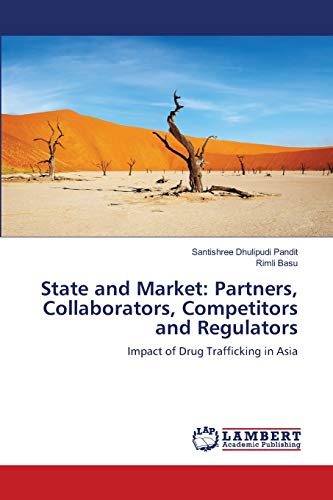
Synopsis
This book argues that after the advent of globalization the agenda based policies followed by the ‘nation-states’ are more 'market-centric' and hence 'pre-determined' by the politics of the 'International Economic Relations'. Thus, 'States' are today more ‘ market-driven’. In these circumstances, the illicit drug trade is in itself is a determinant for the survival of some states. Therefore, the 'eradication' policy , will neither be successful, nor will it be allowed to succeed, since the live idea of ‘ illicit drug’, and ‘combat methodology’ and the subsequent financial inflow from the assisting countries serves both the host and the donor. It also argues the changing role of the 'State' vis-a-vis the 'Market' in the context of 'Drug-Trade in Asia'. This poses a threat to the present architecture of the 'State' as well as interrogates the linkages between terrorism, 'trans-national criminal groups' and 'drug cartels'. SANTISHREE. D. PANDIT & RIMLI BASU
Les informations fournies dans la section « Synopsis » peuvent faire référence à une autre édition de ce titre.
Présentation de l'éditeur
This book argues that after the advent of globalization the agenda based policies followed by the ‘nation-states’ are more 'market-centric' and hence 'pre-determined' by the politics of the 'International Economic Relations'. Thus, 'States' are today more ‘ market-driven’. In these circumstances, the illicit drug trade is in itself is a determinant for the survival of some states. Therefore, the 'eradication' policy , will neither be successful, nor will it be allowed to succeed, since the live idea of ‘ illicit drug’, and ‘combat methodology’ and the subsequent financial inflow from the assisting countries serves both the host and the donor. It also argues the changing role of the 'State' vis-a-vis the 'Market' in the context of 'Drug-Trade in Asia'. This poses a threat to the present architecture of the 'State' as well as interrogates the linkages between terrorism, 'trans-national criminal groups' and 'drug cartels'. SANTISHREE. D. PANDIT & RIMLI BASU
Biographie de l'auteur
Santishree . Dhulipudi . Pandit – M.A, M.Phil, PhD, - Professor, Department of Politics & Public Administration, University of Pune, Maharashtra, India and ‘Director’, ‘Centre on the Asian Studies’. Field of Specialization and Areas of Interest – ‘International Relations’, International Politics’, ‘International Security’, ‘Foreign Policy’.
Les informations fournies dans la section « A propos du livre » peuvent faire référence à une autre édition de ce titre.
Résultats de recherche pour State and Market: Partners, Collaborators, Competitors...

Image fournie par le vendeur
State and Market: Partners, Collaborators, Competitors and Regulators
Edité par
LAP LAMBERT Academic Publishing, 2012
ISBN 10 : 3659128961
ISBN 13 : 9783659128967
Neuf
Couverture souple
Vendeur : moluna, Greven, Allemagne
Évaluation du vendeur 5 sur 5 étoiles

Etat : New. N° de réf. du vendeur 5133483
Acheter neuf
EUR 64,43
Expédition à EUR 48,99
Expédition depuis Allemagne vers Etats-Unis
Expédition depuis Allemagne vers Etats-Unis
Quantité disponible : Plus de 20 disponibles
Image fournie par le vendeur
State and Market: Partners, Collaborators, Competitors and Regulators : Impact of Drug Trafficking in Asia
Edité par
LAP LAMBERT Academic Publishing, 2012
ISBN 10 : 3659128961
ISBN 13 : 9783659128967
Neuf
Taschenbuch
Vendeur : AHA-BUCH GmbH, Einbeck, Allemagne
Évaluation du vendeur 5 sur 5 étoiles
Taschenbuch. Etat : Neu. nach der Bestellung gedruckt Neuware - Printed after ordering - This book argues that after the advent of globalization the agenda based policies followed by the nation-states are more 'market-centric' and hence 'pre-determined' by the politics of the 'International Economic Relations'. Thus, 'States' are today more market-driven . In these circumstances, the illicit drug trade is in itself is a determinant for the survival of some states. Therefore, the 'eradication' policy , will neither be successful, nor will it be allowed to succeed, since the live idea of illicit drug , and combat methodology and the subsequent financial inflow from the assisting countries serves both the host and the donor. It also argues the changing role of the 'State' vis-a-vis the 'Market' in the context of 'Drug-Trade in Asia'. This poses a threat to the present architecture of the 'State' as well as interrogates the linkages between terrorism, 'trans-national criminal groups' and 'drug cartels'. SANTISHREE. D. PANDIT & RIMLI BASU. N° de réf. du vendeur 9783659128967
Acheter neuf
EUR 79
Expédition à EUR 35
Expédition depuis Allemagne vers Etats-Unis
Expédition depuis Allemagne vers Etats-Unis
Quantité disponible : 1 disponible(s)
Image fournie par le vendeur
State and Market: Partners, Collaborators, Competitors and Regulators
Edité par
LAP LAMBERT Academic Publishing Mai 2012, 2012
ISBN 10 : 3659128961
ISBN 13 : 9783659128967
Neuf
Taschenbuch
Vendeur : buchversandmimpf2000, Emtmannsberg, BAYE, Allemagne
Évaluation du vendeur 5 sur 5 étoiles
Taschenbuch. Etat : Neu. This item is printed on demand - Print on Demand Titel. Neuware -This book argues that after the advent of globalization the agenda based policies followed by the 'nation-states' are more 'market-centric' and hence 'pre-determined' by the politics of the 'International Economic Relations'. Thus, 'States' are today more ' market-driven'. In these circumstances, the illicit drug trade is in itself is a determinant for the survival of some states. Therefore, the 'eradication' policy , will neither be successful, nor will it be allowed to succeed, since the live idea of ' illicit drug', and 'combat methodology' and the subsequent financial inflow from the assisting countries serves both the host and the donor. It also argues the changing role of the 'State' vis-a-vis the 'Market' in the context of 'Drug-Trade in Asia'. This poses a threat to the present architecture of the 'State' as well as interrogates the linkages between terrorism, 'trans-national criminal groups' and 'drug cartels'. SANTISHREE. D. PANDIT & RIMLI BASUOmniScriptum SRL, Str. Armeneasca 28/1, office 1, 2012 Chisinau 380 pp. Englisch. N° de réf. du vendeur 9783659128967
Acheter neuf
EUR 316
Expédition à EUR 60
Expédition depuis Allemagne vers Etats-Unis
Expédition depuis Allemagne vers Etats-Unis
Quantité disponible : 1 disponible(s)
Image fournie par le vendeur
State and Market: Partners, Collaborators, Competitors and Regulators | Impact of Drug Trafficking in Asia
Edité par
LAP LAMBERT Academic Publishing, 2012
ISBN 10 : 3659128961
ISBN 13 : 9783659128967
Neuf
Taschenbuch
Vendeur : preigu, Osnabrück, Allemagne
Évaluation du vendeur 5 sur 5 étoiles
Taschenbuch. Etat : Neu. State and Market: Partners, Collaborators, Competitors and Regulators | Impact of Drug Trafficking in Asia | Santishree Dhulipudi Pandit (u. a.) | Taschenbuch | 380 S. | Englisch | 2012 | LAP LAMBERT Academic Publishing | EAN 9783659128967 | Verantwortliche Person für die EU: preigu GmbH & Co. KG, Lengericher Landstr. 19, 49078 Osnabrück, mail[at]preigu[dot]de | Anbieter: preigu. N° de réf. du vendeur 106420896
Acheter neuf
EUR 316
Expédition à EUR 70
Expédition depuis Allemagne vers Etats-Unis
Expédition depuis Allemagne vers Etats-Unis
Quantité disponible : 5 disponible(s)