
Articles liés à Formless Furniture /anglais/allemand
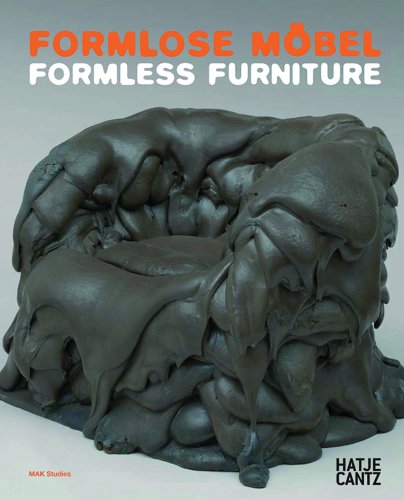
Synopsis
Book by Rbel Dietmar Hackenschmidt Sebastian
Les informations fournies dans la section « Synopsis » peuvent faire référence à une autre édition de ce titre.
Résultats de recherche pour Formless Furniture /anglais/allemand

Image d'archives
Formlose Möbel / Formless Furniture (Mak Studies): Katalog zur Ausstellung im MAK Wien, 2008. Dtsch.-Engl.
Edité par
Hatje Cantz, 2009
ISBN 10 : 3775722475
ISBN 13 : 9783775722476
Ancien ou d'occasion
Couverture souple
Vendeur : medimops, Berlin, Allemagne
Évaluation du vendeur 5 sur 5 étoiles

Etat : very good. Gut/Very good: Buch bzw. Schutzumschlag mit wenigen Gebrauchsspuren an Einband, Schutzumschlag oder Seiten. / Describes a book or dust jacket that does show some signs of wear on either the binding, dust jacket or pages. N° de réf. du vendeur M03775722475-V
Acheter D'occasion
EUR 22,08
Expédition à EUR 10
Expédition depuis Allemagne vers Etats-Unis
Expédition depuis Allemagne vers Etats-Unis
Quantité disponible : 1 disponible(s)
Image d'archives
Formlose Möbel / Formless Furniture (Mak Studies): Katalog zur Ausstellung im MAK Wien, 2008. Dtsch.-Engl.
Edité par
Hatje Cantz, 2009
ISBN 10 : 3775722475
ISBN 13 : 9783775722476
Ancien ou d'occasion
Couverture souple
Vendeur : medimops, Berlin, Allemagne
Évaluation du vendeur 5 sur 5 étoiles
Etat : good. Befriedigend/Good: Durchschnittlich erhaltenes Buch bzw. Schutzumschlag mit Gebrauchsspuren, aber vollständigen Seiten. / Describes the average WORN book or dust jacket that has all the pages present. N° de réf. du vendeur M03775722475-G
Acheter D'occasion
EUR 22,08
Expédition à EUR 10
Expédition depuis Allemagne vers Etats-Unis
Expédition depuis Allemagne vers Etats-Unis
Quantité disponible : 1 disponible(s)
Image d'archives
Formlose Mobel / Formless Furniture
Vendeur : BWS BKS, Ferndale, NY, Etats-Unis
Évaluation du vendeur 2 sur 5 étoiles

Paperback. Etat : New. In the mid-1960s, artists like Robert Morris, Joseph Beuys, Michelangelo Pistoletto and Lynda Benglis began to experiment with formlessness in their materials. The maxim Form follows material, however, was not only proclaimed in the era's avant-garde art: it had a distinct impact on furniture design as well--for example, on Gunnar A. Andersen's experimental polyurethane Portrait of My Mother's Chesterfield Chair of 1964 and Zanotta's famous Sacco beanbag chair of 1968. Edited by Peter Noever, Director of Vienna's MAK museum of applied and contemporary art, this volume is the first to concentrate on formlessness in furniture design. Featuring work from the 1960s through today by such revolutionary figures as Frank Gehry, Gaetano Pesce, Ron Arad and Karim Rashid, it illuminates connections between the historical avant-garde and the applied arts, and tracks the various manifestations of design formlessness to have emerged over the past half century--from Robert Dean's 1967 Sea Urchin chair to today's computer-assisted "blobjects.". N° de réf. du vendeur 78108
Acheter neuf
EUR 1 812,66
Expédition à EUR 2,67
Expédition nationale : Etats-Unis
Expédition nationale : Etats-Unis
Quantité disponible : 1 disponible(s)