
Articles liés à Monet Lights, Shadows and Reflection
Synopsis
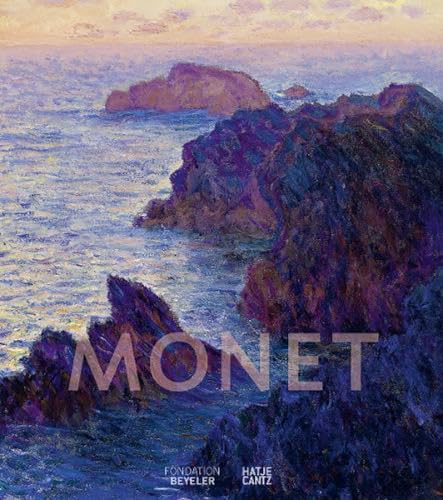
Pour son vingtième anniversaire, la Fondation Beyeler expose 50 toiles exceptionnelles de Claude Monet, allant de 1880 jusqu'au début du XXe siècle et ses nymphéas. Tandis que la plupart des expositions se concentrent sur les débuts ou la fin de carrière de l'artiste, cette rétrospective retrace tout le développement et l'évolution de sa peinture entre ces deux périodes. Les toiles proviennent de la collection Beyeler ainsi que de prestigieuses institutions comme le Musée d'Orsay, le Metropolitan Museum of Art de New York, le Pola Museum of Art de Hakone au Japon et l'Art Institute de Chicago.
Les informations fournies dans la section « Synopsis » peuvent faire référence à une autre édition de ce titre.
À propos de l'auteur
Claude Monet (1840-1926) trained with the plein-air painter Eugene Boudin among others, continuing his studies from 1859 onward in Paris, where he met Pissarro, Bazille, Sisley and Renoir. At their first exhibition in Paris in 1874, Monet's painting Impression, soleil levant prompted critics to mockingly describe him as an impressionist.
À propos de la quatrième de couverture
The painter of light, newly discovered
"The world's appearance would be shaken if we succeeded in perceiving the spaces in between things as things." These words from the philosopher Maurice Merleau-Ponty apply to the core of Claude Monet's art in the years between 1880 and the beginning of the twentieth century. While interest usually lies only on the early and late work of this exceptional artist, the catalogue, containing more than fifty works of art, traces the development between these two periods. Accompanied by texts by well-known art historians, the reader is invited to follow Monet's unusual treatment of reflections and shadows in his paintings. It allowed him to break loose from the modalities of representational logic and the pictorial object. And they made room for an aesthetic that helped to do justice to perception itself and to enforce a painting's self-reflexive momentum.
Les informations fournies dans la section « A propos du livre » peuvent faire référence à une autre édition de ce titre.
Résultats de recherche pour Monet Lights, Shadows and Reflection

Image d'archives
Monet: Reflections and Shadows
Edité par
Hatje Cantz, 2017
ISBN 10 : 3775742395
ISBN 13 : 9783775742399
Ancien ou d'occasion
Couverture rigide
Vendeur : Midtown Scholar Bookstore, Harrisburg, PA, Etats-Unis
Évaluation du vendeur 5 sur 5 étoiles

Hardcover. Etat : Good. Good - Bumped and creased book with tears to the extremities, but not affecting the text block, may have remainder mark or previous owner's name - GOOD Oversized. N° de réf. du vendeur M3775742395Z3
Acheter D'occasion
EUR 60,93
Expédition à EUR 5,30
Expédition nationale : Etats-Unis
Expédition nationale : Etats-Unis
Quantité disponible : 11 disponible(s)
Image d'archives
Monet: Light, Shadow, and Reflection
Edité par
Hatje Cantz Verlag, 2017
ISBN 10 : 3775742395
ISBN 13 : 9783775742399
Ancien ou d'occasion
Couverture rigide
Edition originale
Vendeur : Church Street Bookshop, London, Royaume-Uni
Évaluation du vendeur 5 sur 5 étoiles
Hardcover. Etat : Good. 1st Edition. 180 pages. Exhibition catalogue, Fondation Beyeler, 2017. Text in English. Pictorial board cover with wear to edges and corners. Internally unmarked. N° de réf. du vendeur 010315
Acheter D'occasion
EUR 33,77
Expédition à EUR 41,98
Expédition depuis Royaume-Uni vers Etats-Unis
Expédition depuis Royaume-Uni vers Etats-Unis
Quantité disponible : 1 disponible(s)