
Articles liés à Images of the Body in Architecture: Anthropology and...
Synopsis
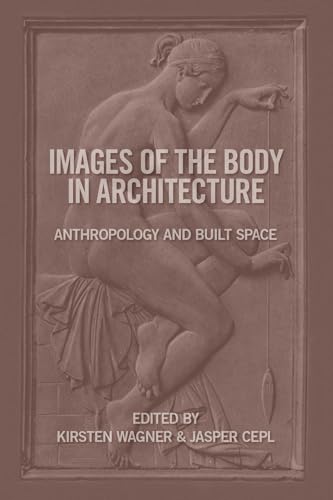
The human body has a fundamental impact on the organization and interpretation of the world, and the built environment has accordingly been conceptualized in terms of the human body since ancient times, in theory and in practice. From Leonardo da Vinci's Vitruvian Man to Le Corbusier's "Modulor" (Corbusier's attempt to unite the imperial and metric measuring systems through a scale based on the figure of a man with his arm raised), the human body has inspired and confounded attempts to rationally construct the world. Since the 19th century, the findings of the human sciences, like physiology and psychology, have produced new understandings of the body and its relationship to the environment. The contributors to this volume aim to stimulate research in the anthropology of architecture by contributing to a critical history of the body and its cultural constructions.
Les informations fournies dans la section « Synopsis » peuvent faire référence à une autre édition de ce titre.
Présentation de l'éditeur
The essays collected in this volume are intended to stimulate research in the anthropology of architecture on the basis of a critical history of the body and its cultural constructions. The analogy between architecture and the human body is rooted in the fundamental impact the latter has on ordering, symbolising, and interpreting the world. Correspondingly, the metaphorical conceptualisation of the built environment in terms of the human body was already practiced in early cultures and has determined architectural theory since antiquity. While the architectural treatises of early modern times vividly imagine anthropomorphic and anthropometric figures, they seem to be overcome by an architectural theory that is based on purely rational as well as mechanical laws. However, these figures were never totally abandoned, and Le Corbusier's Modulor is only one, if not the most prominent example, for their ongoing reception and transformation in modern times. The human sciences of the 19th century played a significant role in this process. Physiology and psychology brought about not only new experimental devices for analysing the human body and its physiological functions, but also new images of the body that directly went into aesthetics, art history, and architectural theory. This new understanding of the body had a large impact on the production and reception of modern architecture. Due to this background the arts eventually became anthropologically grounded. The book includes contributions from: Tobias Cheung, Scott Drake, Gunter Feuerstein, Tanja Jankowiak, Eckhard Leuschner, Harry Francis Mallgrave, Indra Kagis McEwen, Irene Nierhaus, Philipp Osten, Heleni Porfyriou, Paolo Sanvito, Christoph Schnoor, Sven-Olov Wallenstein, Frank Zollner, Beatrix Zug-Rosenblatt, and others.
Les informations fournies dans la section « A propos du livre » peuvent faire référence à une autre édition de ce titre.
Résultats de recherche pour Images of the Body in Architecture: Anthropology and...

Image d'archives
Images of the Body in Architecture (Hardcover)
Edité par
Ernst Wasmuth Verlag, Turbingen, 2015
ISBN 10 : 3803007313
ISBN 13 : 9783803007315
Neuf
Couverture rigide
Vendeur : Grand Eagle Retail, Bensenville, IL, Etats-Unis
Évaluation du vendeur 5 sur 5 étoiles

Hardcover. Etat : new. Hardcover. The essays collected in this volume are intended to stimulate research in the anthropology of architecture on the basis of a critical history of the body and its cultural constructions.The analogy between architecture and the human body is rooted in the fundamental impact the latter has on ordering, symbolising, and interpreting the world. Correspondingly, the metaphorical conceptualisation of the built environment in terms of the human body was already practiced in early cultures and has determined architectural theory since antiquity. While the architectural treatises of early modern times vividly imagine anthropomorphic and anthropometric figures, they seem to be overcome by an architectural theory that is based on purely rational as well as mechanical laws. However, these figures were never totally abandoned, and Le Corbusiers Modulor is only one, if not the most prominent example, for their ongoing reception and transformation in modern times.The human sciences of the 19th century played a significant role in this process. Physiology and psychology brought about not only new experimental devices for analysing the human body and its physiological functions, but also new images of the body that directly went into aesthetics, art history, and architectural theory. This new understanding of the body had a large impact on the production and reception of modern architecture. Due to this background the arts eventually became anthropologically grounded.The book includes contributions from: Tobias Cheung, Scott Drake, Guenter Feuerstein, Tanja Jankowiak, Eckhard Leuschner, Harry Francis Mallgrave, Indra Kagis McEwen, Irene Nierhaus, Philipp Osten, Heleni Porfyriou, Paolo Sanvito, Christoph Schnoor, Sven-Olov Wallenstein, Frank Zoellner, Beatrix Zug-Rosenblatt, and others. Shipping may be from multiple locations in the US or from the UK, depending on stock availability. N° de réf. du vendeur 9783803007315
Acheter neuf
EUR 65,97
Livraison gratuite
Expédition nationale : Etats-Unis
Expédition nationale : Etats-Unis
Quantité disponible : 1 disponible(s)
Image fournie par le vendeur
Images of the Body in Architecture
Vendeur : moluna, Greven, Allemagne
Évaluation du vendeur 5 sur 5 étoiles
Etat : New. Der Band Images of the Body in Architecture. Anthropology and Built Space thematisiert das Verhaeltnis zwischen dem menschlichen Koerper und dem gebauten Raum, das die Architektur in Praxis und Theorie auf elementare Art und Weise bestimmt. Mit den drei Schwe. N° de réf. du vendeur 5324004
Acheter neuf
EUR 30,36
Expédition à EUR 48,99
Expédition depuis Allemagne vers Etats-Unis
Expédition depuis Allemagne vers Etats-Unis
Quantité disponible : Plus de 20 disponibles
Image d'archives
Images of the Body in Architecture Anthropology and Built Space
Edité par
Wasmuth Ernst Verlag, 2015
ISBN 10 : 3803007313
ISBN 13 : 9783803007315
Ancien ou d'occasion
Couverture rigide
Vendeur : Mooney's bookstore, Den Helder, Pays-Bas
Évaluation du vendeur 4 sur 5 étoiles

Etat : Very Good. N° de réf. du vendeur DAE1BD8CEE23B83
Acheter D'occasion
EUR 65,90
Expédition à EUR 14,95
Expédition depuis Pays-Bas vers Etats-Unis
Expédition depuis Pays-Bas vers Etats-Unis
Quantité disponible : 1 disponible(s)
Image fournie par le vendeur
Images of the Body in Architecture : Anthropology and Built Space
Edité par
Wasmuth Berlin Dez 2014, 2014
ISBN 10 : 3803007313
ISBN 13 : 9783803007315
Neuf
Couverture rigide
Vendeur : AHA-BUCH GmbH, Einbeck, Allemagne
Évaluation du vendeur 5 sur 5 étoiles
Buch. Etat : Neu. Neuware - Der Band Images of the Body in Architecture. Anthropology and Built Space thematisiert das Verhältnis zwischen dem menschlichen Körper und dem gebauten Raum, das die Architektur in Praxis und Theorie auf elementare Art und Weise bestimmt. Mit den drei Schwerpunkten zum anthropometrischen, physiologischen und disziplinierten Körper wird an die jüngere Körpergeschichte angeschlossen, deren Ergebnisse erst in Ansätzen auf die Architektur bezogen worden sind. Intendiert ist eine kritische Anthropologie der Architektur. Dabei wird zum einen nach den der Architektur historisch zugrunde liegenden Körperbildern gefragt, nach ihren Visualisierungen und ihrer Bedeutung für den gebauten Raum. Zum anderen wird die Architektur selbst als eine soziale Praxis betrachtet, die in ihrer Materialität und räumlichen Ordnung den Körper bedingt. Der Band versammelt Beiträge aus der Kulturwissenschaft, Architekturtheorie, Kunstgeschichte, Medizingeschichte, Soziologie und Philosophie. The essays collected in this volume are intended to stimulate research in the anthropology of architecture on the basis of a critical history of the body and its cultural constructions. The analogy between architecture and the human body is rooted in the fundamental impact the latter has on ordering, symbolizing, and interpreting the world. Correspondingly, the metaphorical conceptualization of the built environment in terms of the human body was already practiced in early cultures and has determined architectural theory since antiquity. While the architectural treatises of early modern times vividly imagine anthropomorphic and anthropometric figures, they seem to be overcome by an architectural theory that is based on purely rational as well as mechanical laws. However, these figures were never totally abandoned, and Le Corbusier s Modulor is only one, if not the most prominent example, for their ongoing reception and transformation in modern times. The human sciences of the 19th century played a significant role in this process. Physiology and psychology brought about not only new experimental devices for analyzing the human body and its physiological functions, but also new images of the body that directly went into aesthetics, art history, and architectural theory. This new understanding of the body had a large impact on the production and reception of modern architecture. Due to this background the arts eventually became anthropologically grounded. With contributions by Tobias Cheung, Scott Drake, Günter Feuerstein, Tanja Jankowiak, Eckhard Leuschner, Harry Francis Mallgrave, Indra Kagis McEwen, Irene Nierhaus, Philipp Osten, Heleni Porfyriou, Paolo Sanvito, Christoph Schnoor, Sven-Olov Wallenstein, Frank Zöllner, Beatrix Zug-Rosenblatt, and others. On the editors: Kirsten Wagner is professor for cultural studies and communication science at the University of Applied Sciences in Bielefeld. She studied art history, German literature, sociology, and cultural studies in Braunschweig, Oldenburg, and Berlin. She received a PhD for a dissertation on the spatialization of knowledge in the computer era. From 2002 to 2010 she was a research fellow at the Institute for Cultural Studies at Humboldt-Universität zu Berlin. Her research focuses on images of the body in architecture, the theory and history of spatial knowledge organization, aesthetics and theories of perception in modernity, and the image of the city. Jasper Cepl is assistant professor at the Technische Universität Berlin, where he has taught architectural theory since 2003. He studied architecture in Aachen and Berlin. He is the author of Oswald Mathias Ungers. Eine intellektuelle Biographie (Cologne 2007), for which he received a PhD in 2006. Having published widely on the history and theory of architecture, he has also, among other things, edited a monograph on Hans Kollhoff in 2004 and the anthology Quellentexte zur Architekturtheorie (with Fritz Neumeyer) in 2002. N° de réf. du vendeur 9783803007315
Acheter neuf
EUR 42,01
Expédition à EUR 43,25
Expédition depuis Allemagne vers Etats-Unis
Expédition depuis Allemagne vers Etats-Unis
Quantité disponible : 2 disponible(s)
Image fournie par le vendeur
Images of the Body in Architecture. Anthropology and Built Space.
Edité par
Berlin: Wasmuth Vlg, 2013
ISBN 10 : 3803007313
ISBN 13 : 9783803007315
Ancien ou d'occasion
Couverture rigide
Vendeur : Antiquariat Bergische Bücherstube Mewes, Overath, Allemagne
Évaluation du vendeur 5 sur 5 étoiles
fester Einband. 360 S., mit ca. 190 Abb. Kart. *neuwertig* Der Band Images of the Body in Architecture. Anthropology and Built Space" thematisiert das Verhältnis zwischen dem menschlichen Körper und dem gebauten Raum, das die Architektur in Praxis und Theorie auf elementare Art und Weise bestimmt. Mit den drei Schwerpunkten zum anthropometrischen, physiologischen und disziplinierten Körper wird an die jüngere Körpergeschichte angeschlossen, deren Ergebnisse erst in Ansätzen auf die Architektur bezogen worden sind. Intendiert ist eine kritische Anthropologie der Architektur. Dabei wird zum einen nach den der Architektur historisch zugrunde liegenden Körperbildern gefragt, nach ihren Visualisierungen und ihrer Bedeutung für den gebauten Raum. Zum anderen wird die Architektur selbst als eine soziale Praxis betrachtet, die in ihrer Materialität und räumlichen Ordnung den Körper bedingt. Der Band versammelt Beiträge aus der Kulturwissenschaft, Architekturtheorie, Kunstgeschichte, Medizingeschichte, Soziologie und Philosophie. The essays collected in this volume are intended to stimulate research in the anthropology of architecture on the basis of a critical history of the body and its cultural constructions. The analogy between architecture and the human body is rooted in the fundamental impact the latter has on ordering, symbolizing, and interpreting the world. Correspondingly, the metaphorical conceptualization of the built environment in terms of the human body was already practiced in early cultures and has determined architectural theory since antiquity. While the architectural treatises of early modern times vividly imagine anthropomorphic and anthropometric figures, they seem to be overcome by an architectural theory that is based on purely rational as well as mechanical laws. However, these figures were never totally abandoned, and Le Corbusier's Modulor is only one, if not the most prominent example, for their ongoing reception and transformation in modern times. The human sciences of the 19th century played a significant role in this process. Physiology and psychology brought about not only new experimental devices for analyzing the human body and its physiological functions, but also new images of the body that directly went into aesthetics, art history, and architectural theory. This new understanding of the body had a large impact on the production and reception of modern architecture. Due to this background the arts eventually became anthropologically grounded. With contributions by Tobias Cheung, Scott Drake, Günter Feuerstein, Tanja Jankowiak, Eckhard Leuschner, Harry Francis Mallgrave, Indra Kagis McEwen, Irene Nierhaus, Philipp Osten, Heleni Porfyriou, Paolo Sanvito, Christoph Schnoor, Sven-Olov Wallenstein, Frank Zöllner, Beatrix Zug-Rosenblatt, and others. Sprache: Englisch. N° de réf. du vendeur 213120
Acheter D'occasion
EUR 45
Expédition à EUR 54
Expédition depuis Allemagne vers Etats-Unis
Expédition depuis Allemagne vers Etats-Unis
Quantité disponible : 1 disponible(s)
Image d'archives
Images Of The Body In Architecture: Anthropology And Built Space
Vendeur : Revaluation Books, Exeter, Royaume-Uni
Évaluation du vendeur 5 sur 5 étoiles
Hardcover. Etat : Brand New. 394 pages. 10.00x7.00x1.25 inches. In Stock. N° de réf. du vendeur xi3803007313
Acheter neuf
EUR 83,74
Expédition à EUR 17,79
Expédition depuis Royaume-Uni vers Etats-Unis
Expédition depuis Royaume-Uni vers Etats-Unis
Quantité disponible : 2 disponible(s)
Image fournie par le vendeur
Images of the Body in Architecture | Anthropology and Built Space
Vendeur : preigu, Osnabrück, Allemagne
Évaluation du vendeur 5 sur 5 étoiles
Buch. Etat : Neu. Images of the Body in Architecture | Anthropology and Built Space | Kirsten Wagner (u. a.) | Buch | 404 S., 200 Fotos | Gebunden | Englisch | 2014 | Wasmuth Berlin | EAN 9783803007315 | Verantwortliche Person für die EU: preigu GmbH & Co. KG, Lengericher Landstr. 19, 49078 Osnabrück, mail[at]preigu[dot]de | Anbieter: preigu. N° de réf. du vendeur 135982104
Acheter neuf
EUR 34,10
Expédition à EUR 70
Expédition depuis Allemagne vers Etats-Unis
Expédition depuis Allemagne vers Etats-Unis
Quantité disponible : 2 disponible(s)