
Articles liés à Caravaggio
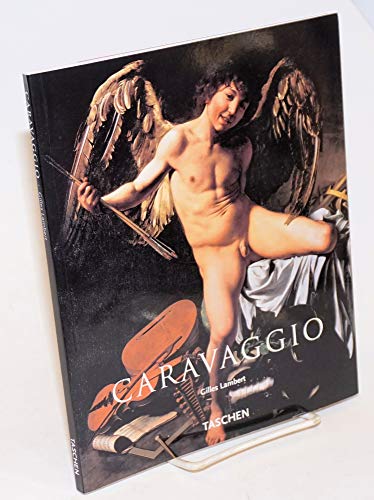
Synopsis
Notorious bad boy of Italian Baroque painting, Caravaggio (1571-1610) is finally getting the recognition he deserves. Though his name may be familiar to all of us, his work has been habitually detested and forced into obscurity. Not only was his theatrical realism unfashionable in his time, but his sacrilegious subject matter and use of lower class models were violently scorned. Michelangelo Mirisi de Caravaggio lived a life riddled with crime and scandal, producing a body of work that wouldn't be appreciated until centuries after his mysterious death. Though his body was never found, he is assumed to have been murdered by ruffians on a beach south of Rome-a fate strangely similar to that of controversial Italian director Pier Paolo Pasolini who was, like Caravaggio, a homosexual.
Caravaggio's reputation was decidedly poor during his lifetime; sometimes rich, sometimes penniless, when he wasn't in prison he was running away from the police or his enemies. Perhaps no other painter has suffered such injustice: his works were often attributed to more respected painters while he was given the credit for just about anything vulgar painted in the chiaroscuro style. Caravaggio's great work had the misfortune of enduring centuries of disrepute. It wasn't until the end of the 19th century that he was rediscovered and, quite posthumously, deemed a great master.
Les informations fournies dans la section « Synopsis » peuvent faire référence à une autre édition de ce titre.
Présentation de l'éditeur
His life was sulphurous and his painting scandalous. Michelangelo Merisi, known as Caravaggio (the name of his native village ner Bergamo), was a downright villian. Other artists had had brushes with justice before him: Duccio was a drunkard and a brawler. The quarrelsome Perugino was involved in street fights, and, as a young man, spent time in prison. And the sculptor and goldsmith Benvenuto Cellini, accused of embezzlement, murder and sodomy, was incarcerated in the Castel Sant'Angelo. Caravaggio was repeatedly arrested and imprisoned. He confessed to the murder of an opponent at tennis whom he suspected of cheating, and he was rumoured to have committed other crimes. He was a painter of genius, who worked with extraordinary speed, painting directly onto the canvas without even sketching out the main figures. His powerful patrons found it increasingly difficult to extract him from the prison cells in which he so often languished. Caravaggio risked his life escaping from his last prison, on the island of Malta, as Cellini had done escaping from Castel Sant'Angelo. The evidence suggests that he was we would now term paedophilia. He died, a persecuted outlaw, on a beach south of Rome, perhaps, like 1975 the film-director Pier Paolo Pasolini, a victim of murder.
Présentation de l'éditeur
HAZIRLANIYOR
Les informations fournies dans la section « A propos du livre » peuvent faire référence à une autre édition de ce titre.
Résultats de recherche pour Caravaggio

Image d'archives
Caravaggio Basic Art
Edité par
Taschen GmbH, 2000
ISBN 10 : 382286305X
ISBN 13 : 9783822863053
Ancien ou d'occasion
Paperback
Vendeur : World of Books (was SecondSale), Montgomery, IL, Etats-Unis
Évaluation du vendeur 5 sur 5 étoiles

Paperback. Etat : Good. Caravaggio - A genius beyond his time Notorious bad boy of Italian Baroque painting, Caravaggio (1571-1610) is finally getting the recognition he deserves. Though his name may be familiar to all of us, his work has been habitually detested and forced into obscurity. Not only was his theatrical realism unfashionable in his time, but his sacrilegious subject matter and use of lower class models were violently scorned. Caravaggio's great work had the misfortune of enduring centuries of disrepute. It wasn't until the end of the 19th century that he was rediscovered and, quite posthumously, deemed a great master. He is now considered the most important painter of the early Baroque period; without him there would have been no Ribera, Zurburan, Velazquez, Vermeer or Georges de la Tour. Franz Hals, Rembrandt, Delacroix, and Manet would have been different. In this new book you'll find over 50 of Caravaggio's best paintings; we think you'll agree that he was a genius beyond his time. N° de réf. du vendeur 00107229628
Acheter D'occasion
EUR 4,70
Livraison gratuite
Expédition nationale : Etats-Unis
Expédition nationale : Etats-Unis
Quantité disponible : 1 disponible(s)
Image d'archives
Caravaggio 15711610 Art Albums
Edité par
Taschen, 2000
ISBN 10 : 382286305X
ISBN 13 : 9783822863053
Ancien ou d'occasion
Couverture souple
Vendeur : World of Books (was SecondSale), Montgomery, IL, Etats-Unis
Évaluation du vendeur 5 sur 5 étoiles
Etat : Very Good. Item in very good condition! Textbooks may not include supplemental items i.e. CDs, access codes etc. N° de réf. du vendeur 00107506080
Acheter D'occasion
EUR 4,70
Livraison gratuite
Expédition nationale : Etats-Unis
Expédition nationale : Etats-Unis
Quantité disponible : 1 disponible(s)
Image d'archives
Caravaggio
Edité par
TASCHEN (edition First Edition), 2000
ISBN 10 : 382286305X
ISBN 13 : 9783822863053
Ancien ou d'occasion
Paperback
Edition originale
Vendeur : BooksRun, Philadelphia, PA, Etats-Unis
Évaluation du vendeur 5 sur 5 étoiles
Paperback. Etat : Fair. First Edition. The item might be beaten up but readable. May contain markings or highlighting, as well as stains, bent corners, or any other major defect, but the text is not obscured in any way. N° de réf. du vendeur 382286305X-7-1
Acheter D'occasion
EUR 4,71
Livraison gratuite
Expédition nationale : Etats-Unis
Expédition nationale : Etats-Unis
Quantité disponible : 1 disponible(s)
Image d'archives
Caravaggio
Vendeur : HPB-Ruby, Dallas, TX, Etats-Unis
Évaluation du vendeur 5 sur 5 étoiles
Paperback. Etat : Very Good. Connecting readers with great books since 1972! Used books may not include companion materials, and may have some shelf wear or limited writing. We ship orders daily and Customer Service is our top priority! N° de réf. du vendeur S_471779897
Acheter D'occasion
EUR 2,30
Expédition à EUR 3,34
Expédition nationale : Etats-Unis
Expédition nationale : Etats-Unis
Quantité disponible : 1 disponible(s)
Image d'archives
Caravaggio
Vendeur : ThriftBooks-Atlanta, AUSTELL, GA, Etats-Unis
Évaluation du vendeur 5 sur 5 étoiles
Paperback. Etat : Good. No Jacket. Pages can have notes/highlighting. Spine may show signs of wear. ~ ThriftBooks: Read More, Spend Less. N° de réf. du vendeur G382286305XI3N00
Acheter D'occasion
EUR 6,10
Livraison gratuite
Expédition nationale : Etats-Unis
Expédition nationale : Etats-Unis
Quantité disponible : 1 disponible(s)
Image d'archives
Caravaggio
Vendeur : ThriftBooks-Atlanta, AUSTELL, GA, Etats-Unis
Évaluation du vendeur 5 sur 5 étoiles
Paperback. Etat : Very Good. No Jacket. Former library book; May have limited writing in cover pages. Pages are unmarked. ~ ThriftBooks: Read More, Spend Less. N° de réf. du vendeur G382286305XI4N10
Acheter D'occasion
EUR 6,10
Livraison gratuite
Expédition nationale : Etats-Unis
Expédition nationale : Etats-Unis
Quantité disponible : 1 disponible(s)
Image d'archives
Caravaggio
Vendeur : ThriftBooks-Reno, Reno, NV, Etats-Unis
Évaluation du vendeur 5 sur 5 étoiles
Paperback. Etat : Good. No Jacket. Former library book; Pages can have notes/highlighting. Spine may show signs of wear. ~ ThriftBooks: Read More, Spend Less. N° de réf. du vendeur G382286305XI3N10
Acheter D'occasion
EUR 6,10
Livraison gratuite
Expédition nationale : Etats-Unis
Expédition nationale : Etats-Unis
Quantité disponible : 1 disponible(s)
Image d'archives
Caravaggio
Vendeur : ThriftBooks-Atlanta, AUSTELL, GA, Etats-Unis
Évaluation du vendeur 5 sur 5 étoiles
Paperback. Etat : Fair. No Jacket. Readable copy. Pages may have considerable notes/highlighting. ~ ThriftBooks: Read More, Spend Less. N° de réf. du vendeur G382286305XI5N00
Acheter D'occasion
EUR 6,10
Livraison gratuite
Expédition nationale : Etats-Unis
Expédition nationale : Etats-Unis
Quantité disponible : 1 disponible(s)
Image d'archives
Caravaggio
Vendeur : ThriftBooks-Dallas, Dallas, TX, Etats-Unis
Évaluation du vendeur 5 sur 5 étoiles
Paperback. Etat : Good. No Jacket. Former library book; Pages can have notes/highlighting. Spine may show signs of wear. ~ ThriftBooks: Read More, Spend Less. N° de réf. du vendeur G382286305XI3N10
Acheter D'occasion
EUR 6,13
Livraison gratuite
Expédition nationale : Etats-Unis
Expédition nationale : Etats-Unis
Quantité disponible : 1 disponible(s)
Image d'archives
Caravaggio
Vendeur : ThriftBooks-Dallas, Dallas, TX, Etats-Unis
Évaluation du vendeur 5 sur 5 étoiles
Paperback. Etat : Good. No Jacket. Pages can have notes/highlighting. Spine may show signs of wear. ~ ThriftBooks: Read More, Spend Less. N° de réf. du vendeur G382286305XI3N00
Acheter D'occasion
EUR 6,13
Livraison gratuite
Expédition nationale : Etats-Unis
Expédition nationale : Etats-Unis
Quantité disponible : 1 disponible(s)