
Articles liés à Mark Rothko: 1903-1970: Pictures As Drama
Synopsis
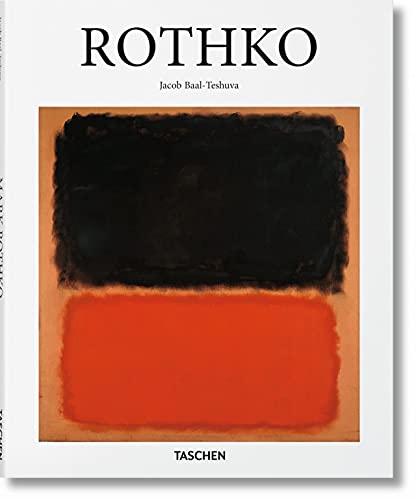
Resisting interpretation or classification, Mark Rothko (1903–1970) was a prominent advocate for the artist’s consummate freedom of expression. Although identified as a key protagonist of the Abstract Expressionist movement, first formed in New York City, Rothko rejected the label and insisted instead on “a consummated experience between picture and onlooker.”
Following a repertoire of figurative works, Rothko developed his now iconic canvases of bold color blocks in red, yellow, ochre, maroon, black, or green. With these shimmering, pulsating color masses, Rothko stressed that he had not removed the human figure but rather put symbols or shapes in its place. These intense color forms contained all the tragedy of the human condition. At the same time, Rothko explicitly empowered the viewer in the expressive potential of his work. He believed “A picture lives by companionship, expanding and quickening in the eyes of the sensitive observer.”
From his early development through to his most famous color fields, this book introduces the intellect and influence of Rothko’s dramatic, intimate, and revolutionary work.
Les informations fournies dans la section « Synopsis » peuvent faire référence à une autre édition de ce titre.
À propos de l'auteur
Jacob Baal-Teshuva (1929-2022) was an author, critic, and independent curator of museum shows. He studied at the Hebrew University in Jerusalem and at New York University. His numerous publications include works on Marc Chagall, Alexander Calder, Jean-Michel Basquiat, Andy Warhol and Christo and Jeanne-Claude.
À propos de la quatrième de couverture
Mark Rothko (1903-1970) fue un gran defensor de la total libertad de expresión del artista y rehuyó las clasificaciones y cualquier intento de interpretación de sus cuadros. Aunque se le considera una figura clave del expresionismo abstracto, formado en la ciudad de Nueva York, Rothko rechazaba las etiquetas e insistía en la creación de ?una experiencia plena entre el cuadro y el espectador?.Tras una etapa figurativa, Rothko desarrolló sus emblemáticos lienzos de bloques de vivos colores en rojo, amarillo, ocre, marrón, negro o verde. Subrayó que no había eliminado la figura humana con esos brillantes y vívidos espacios de color, sino que la había sustituido por símbolos o formas que contenían toda la tragedia de la condición humana. Al mismo tiempo atribuía explícitamente al espectador el poder de interpretar su obra. Según decía: ?Un cuadro vive en compañía, expandiéndose y cobrando vida ante los ojos del espectador sensible?.Desde sus tempranos inicios hasta sus campos de color más famosos, este libro descubre la inteligencia e influencia de la obra dramática, íntima y revolucionaria de Rothko.
Les informations fournies dans la section « A propos du livre » peuvent faire référence à une autre édition de ce titre.
Autres éditions populaires du même titre

Résultats de recherche pour Mark Rothko: 1903-1970: Pictures As Drama

Image d'archives
Rothko
Edité par
TASCHEN, 2015
ISBN 10 : 383650426X
ISBN 13 : 9783836504263
Ancien ou d'occasion
Couverture rigide
Vendeur : Better World Books, Mishawaka, IN, Etats-Unis
Évaluation du vendeur 5 sur 5 étoiles

Etat : Good. Pages intact with minimal writing/highlighting. The binding may be loose and creased. Dust jackets/supplements are not included. Stock photo provided. Product includes identifying sticker. Better World Books: Buy Books. Do Good. N° de réf. du vendeur 67402469-6
Acheter D'occasion
EUR 17,67
Livraison gratuite
Expédition nationale : Etats-Unis
Expédition nationale : Etats-Unis
Quantité disponible : 1 disponible(s)
Image d'archives
Mark Rothko: 1903-1970: Pictures As Drama
Edité par
Taschen America Llc, New York, NY, USA, 2015
ISBN 10 : 383650426X
ISBN 13 : 9783836504263
Ancien ou d'occasion
Couverture rigide
Vendeur : Stillwaters Environmental Ctr of the Great Peninsula Conservancy, Kingston, WA, Etats-Unis
Évaluation du vendeur 5 sur 5 étoiles
Hardcover. Etat : Fine. Etat de la jaquette : Fine. This book and jacket are in fine condition. The edges show slight wear but there are no tears or stains. This book presents Mark Rothko's work.From his early development through to his most famous color fields, this book introduces the intellect and influence of Rothko's dramatic, intimate, and revolutionary work. There are 8 chapters and the paintings are accompanied by comments from Baal-Teshuva. There is a time line of Rothko's life at the end. Proceeds from the sale of this book benefit environmental restoration and education. N° de réf. du vendeur 007701
Acheter D'occasion
EUR 13,40
Expédition à EUR 5,20
Expédition nationale : Etats-Unis
Expédition nationale : Etats-Unis
Quantité disponible : 1 disponible(s)
Image fournie par le vendeur
Mark Rothko : 1903-1970: Pictures As Drama
Vendeur : GreatBookPrices, Columbia, MD, Etats-Unis
Évaluation du vendeur 5 sur 5 étoiles
Etat : New. N° de réf. du vendeur 23738620-n
Acheter neuf
EUR 16,67
Expédition à EUR 2,29
Expédition nationale : Etats-Unis
Expédition nationale : Etats-Unis
Quantité disponible : 10 disponible(s)
Image d'archives
Rothko
Vendeur : PBShop.store US, Wood Dale, IL, Etats-Unis
Évaluation du vendeur 5 sur 5 étoiles
HRD. Etat : New. New Book. Shipped from UK. Established seller since 2000. N° de réf. du vendeur P0-9783836504263
Acheter neuf
EUR 19,04
Livraison gratuite
Expédition nationale : Etats-Unis
Expédition nationale : Etats-Unis
Quantité disponible : 9 disponible(s)
Image d'archives
Rothko (Basic Art Series 2.0)
Vendeur : California Books, Miami, FL, Etats-Unis
Évaluation du vendeur 4 sur 5 étoiles

Etat : New. N° de réf. du vendeur I-9783836504263
Acheter neuf
EUR 21,43
Livraison gratuite
Expédition nationale : Etats-Unis
Expédition nationale : Etats-Unis
Quantité disponible : Plus de 20 disponibles
Image d'archives
Rothko
Vendeur : PBShop.store UK, Fairford, GLOS, Royaume-Uni
Évaluation du vendeur 5 sur 5 étoiles
HRD. Etat : New. New Book. Shipped from UK. Established seller since 2000. N° de réf. du vendeur P0-9783836504263
Acheter neuf
EUR 16,12
Expédition à EUR 5,87
Expédition depuis Royaume-Uni vers Etats-Unis
Expédition depuis Royaume-Uni vers Etats-Unis
Quantité disponible : 6 disponible(s)
Image fournie par le vendeur
Rothko
Edité par
Taschen GmbH, DE, 2015
ISBN 10 : 383650426X
ISBN 13 : 9783836504263
Neuf
Couverture rigide
Vendeur : Rarewaves USA, OSWEGO, IL, Etats-Unis
Évaluation du vendeur 5 sur 5 étoiles
Hardback. Etat : New. Resisting interpretation or classification, Mark Rothko (1903-1970) was a prominent advocate for the artist's consummate freedom of expression. Although identified as a key protagonist of the Abstract Expressionist movement, first formed in New York City, Rothko rejected the label and insisted instead on "a consummated experience between picture and onlooker." Following a repertoire of figurative works, Rothko developed his now iconic canvases of bold color blocks in red, yellow, ochre, maroon, black, or green. With these shimmering, pulsating color masses, Rothko stressed that he had not removed the human figure but rather put symbols or shapes in its place. These intense color forms contained all the tragedy of the human condition. At the same time, Rothko explicitly empowered the viewer in the expressive potential of his work. He believed "A picture lives by companionship, expanding and quickening in the eyes of the sensitive observer." From his early development through to his most famous color fields, this book introduces the intellect and influence of Rothko's dramatic, intimate, and revolutionary work. N° de réf. du vendeur LU-9783836504263
Acheter neuf
EUR 22,13
Livraison gratuite
Expédition nationale : Etats-Unis
Expédition nationale : Etats-Unis
Quantité disponible : 1 disponible(s)
Image fournie par le vendeur
Rothko (Hardcover)
Edité par
Taschen, Cologne, 2015
ISBN 10 : 383650426X
ISBN 13 : 9783836504263
Neuf
Couverture rigide
Vendeur : Grand Eagle Retail, Bensenville, IL, Etats-Unis
Évaluation du vendeur 5 sur 5 étoiles
Hardcover. Etat : new. Hardcover. Mark Rothko belongs to the generation of American artists who completely revolutionized the essence of abstract painting. His stylistic evolution, from a figurative visual repertoire to an abstract style rooted in the active relationship of the observer to the painting, embodied the radical vision of a renaissance in painting. Rothko characterized this relationship as "a consummated experience between picture and onlooker". His colour formations indeed draw the observer into a space filled with an inner light. Rothko always resisted attempts to interpret his paintings. He was mainly concerned with the viewer's experience, the merging of work and recipient beyond verbal comprehension. Rothko was an intellectual, a thinker, a highly educated man. He loved music and literature and was very involved in philosophy, especially in the works of Friedrich Wilhelm Nietzsche and of ancient Greek philosophy and mythology. Rothko was a protagonist within the movement of American painters who became known as the Abstract Expressionists. First formed in New York City during the inter-war years, this group was also called the New York School. In all the history of art, they became the first American artists to receive international recognition as a significant movement. Many among them, including Rothko, have become legendary figures. Mark Rothko belongs to the generation of American artists who completely revolutionized the essence of abstract painting. His stylistic evolution, from a figurative visual repertoire to an abstract style rooted in the active relationship of the observer to the painting, embodied the radical vision of a renaissance in painting. Shipping may be from multiple locations in the US or from the UK, depending on stock availability. N° de réf. du vendeur 9783836504263
Acheter neuf
EUR 23,04
Livraison gratuite
Expédition nationale : Etats-Unis
Expédition nationale : Etats-Unis
Quantité disponible : 1 disponible(s)
Image fournie par le vendeur
Rothko
Edité par
Taschen, 2015
ISBN 10 : 383650426X
ISBN 13 : 9783836504263
Ancien ou d'occasion
Couverture rigide
Vendeur : BookAddiction (IOBA, IBooknet), Canterbury, Royaume-Uni
Évaluation du vendeur 5 sur 5 étoiles
Hardcover. Etat : As New. Etat de la jaquette : As New. As new. 4to. Still in publisher's plastic film sealed wrapper. N° de réf. du vendeur 032523
Acheter D'occasion
EUR 15,66
Expédition à EUR 8,19
Expédition depuis Royaume-Uni vers Etats-Unis
Expédition depuis Royaume-Uni vers Etats-Unis
Quantité disponible : 1 disponible(s)
Image fournie par le vendeur
Mark Rothko : 1903-1970: Pictures As Drama
Edité par
TASCHEN, 2015
ISBN 10 : 383650426X
ISBN 13 : 9783836504263
Ancien ou d'occasion
Couverture rigide
Vendeur : GreatBookPrices, Columbia, MD, Etats-Unis
Évaluation du vendeur 5 sur 5 étoiles
Etat : As New. Unread book in perfect condition. N° de réf. du vendeur 23738620
Acheter D'occasion
EUR 22,20
Expédition à EUR 2,29
Expédition nationale : Etats-Unis
Expédition nationale : Etats-Unis
Quantité disponible : 10 disponible(s)