
Articles liés à Carlo Mollino: Un Messaggio dalla Camera Oscura
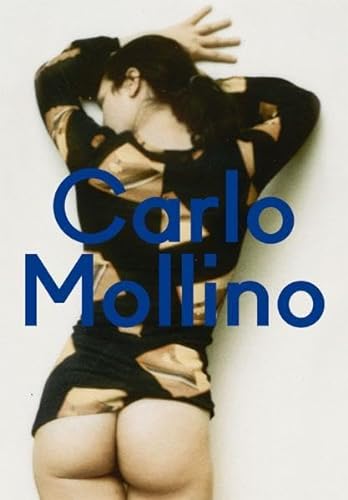
Présentation de l'éditeur
Geboren 1905 als Sohn einer wohlhabenden Turiner Baumeisterfamilie, studierte Carlo Mollino Kunstgeschichte und Architektur. Bekannt geworden ist er jedoch vor allem als Designer von Möbeln. Seine finanzielle Unabhängigkeit erlaubte ihm die detaillierte Gestaltung seiner im Geiste des Gesamtkunstwerks entwickelten Projekte. Mollinos Obsession galt der Formensprache des weiblichen Körpers. Eine Leidenschaft, der er im Geheimen nachging: Zwischen 1960 und 1973 entstehen etwa 1000 inszenierte Akt-Porträts (Polaroids) weiblicher Schönheiten des Turiner Nachtlebens. Für dieses Projekt hatte er eigens eine Villa auf den Hügeln Turins in ein Fotostudio verwandelt. Auch wenn Mollino die inszenierte Fotografie zur Kunstgattung erhoben hatte, hielt er seine Polaroids stets verborgen. Bis heute nehmen sie eine enigmatische Sonderrolle in seinem Werk ein und stehen zugleich für "die andere Seite" dieses in der Öffentlichkeit gerne als "Performer" agierenden Universalkünstlers.
Das Buch versucht, diese Ambivalenz zu durchleuchten, indem den Polaroids Objekte aus der zu seinen Lebzeiten ebenfalls der Öffentlichkeit verschlossenen Casa Mollino gegenübergestellt werden. Spiegeln seine Frauenakte allein seine männlich erotischen Fantasie wider oder verraten sie seine geistige und künstlerische Haltung? Eine Haltung, wie sie etwa in dem Leitsatz: "Alles ist erlaubt, solange es fantastisch ist" zum Ausdruck kommt?
Les informations fournies dans la section « A propos du livre » peuvent faire référence à une autre édition de ce titre.
Résultats de recherche pour Carlo Mollino: Un Messaggio dalla Camera Oscura

Image fournie par le vendeur
Carlo Mollino: Un Messaggio dalla Camera Oscura
Edité par
Moderne Kunst Nürnberg, 2011
ISBN 10 : 386984244X
ISBN 13 : 9783869842448
Ancien ou d'occasion
Couverture rigide
Vendeur : Libertine Books, Shelton, WA, Etats-Unis
Évaluation du vendeur 5 sur 5 étoiles

Hardcover. Etat : Fine. Fine copy-no flaws of this out of print book of work by Carlo Mollino. No dust jacket as issued. 220p. Edited by Kunsthalle Wien, Gerald A. Matt, Verlag für moderne Kunst Nürnberg. Text by Napoleone Ferrari, Lucas Gehrmann, Gerald A. Matt. About the book: Carlo Mollino (1905-1973) Everything we know of Carlo Mollino hints to a man of insatiable tastes. The Italian architect and designer indulged in a life of downhill skiing, stunt flying and race-car driving, augmenting his artistic pursuits with fiction and photography. The extent of his most personal obsession was discovered after his death in the form of some 1,300 Polaroid exposures of girlfriends, prostitutes and other women seduced on the grounds of his Turin residence. Carlo Mollino: Un Messaggio dalla Camera Oscura reveals the figure through images of his erotic portraiture. The hugely talented son of a wealthy engineer, Mollino led a prodigious career before taking a seat as professor of architecture at the University of Turin. Throughout his life, he became known for his elegantly styled furniture as well as a number of large-scale architectural endeavors. He published a book on alpine ski technique as well as a novel called "Vita di Oberon," which revealed his preoccupation with myth, allegory and classical influences. His endeavors were universal, an array of preoccupations that collide in his secret photographs. Staging his women in fake hair and erotic costumes, Mollino's reveals an aesthetic of contrast. Raging against an atmosphere of gilded interiors and lush fabrics is a primitive sexuality that approaches the statuesque. The faces are often expressionless, bodies lightly decorated in lace, gold chains and other opulent materials. Best known for the modernist-styled Teatro Regio of Turin, Mollino's work is best classified as "streamlined surrealism," blending embellishments with stark abstraction. The book features a series of essays on Mollino's life and work in addition to pictures of the man, his buildings and interiors. As an architect, he often looked to the female form for inspiration, using it to inform the lines on everything from luxury automobiles to lounge chairs. His work exhibits the strangulation he felt from the rationalist strictures of modernist forms, which fueled his interest in surrealism. "Mollino did not advocate purely functionalist formalism," writes Gerald Matt in the foreword, "but a style that approached the organic and placed the human being at it's center." The erotic models reflect the fantasies and subconscious exploration that informed his designs. was possessed of both tremendous energy and incredibly diverse abilities: famed as an architect and furniture designer, he was also a writer, photographer, race-car driver and downhill skier. His private life was no less intense. Mollino had a closely guarded obsession with erotic portraiture, and would regularly invite prostitutes from the streets of Turin to come to his home and pose for him. The scenes were carefully prepared: the models would dress (or partially undress) in costumes, accessories and wigs that Mollino had acquired on trips to France or Southeast Asia, and pose before backdrops of drapery, screens and sculptural furniture. Despite the furtive circumstances of their production, these portraits express the aesthetics of Mollino's more public photographs, as the models appear more statuesque than pornographic. Likewise, the opulent interiors and opulent furnishings of Mollino's private homes in Turin, the Villa Zaira and what is now known as Casa Mollino serve as crucial components of the compositions. In 1962, Mollino began to employ Polaroid film for these shoots, eventually making some 1,300 exposures before his death in 1973. Neither these nor the silver gelatin works that preceded them were published in his lifetime, and this is the first publication of these Polaroids. N° de réf. du vendeur ABE-1788194777767
Acheter D'occasion
EUR 133,33
Expédition à EUR 10,71
Expédition nationale : Etats-Unis
Expédition nationale : Etats-Unis
Quantité disponible : 1 disponible(s)
Image d'archives
Carlo Mollino: Un Messaggio dalla Camera Oscura
Edité par
Moderne Kunst Nürnberg, 2012
ISBN 10 : 386984244X
ISBN 13 : 9783869842448
Ancien ou d'occasion
Couverture rigide
Vendeur : Green Apple Books and Music, San francisco, CA, Etats-Unis
Évaluation du vendeur 4 sur 5 étoiles

hardcover. Etat : Good. Slight bumping to outer top corners, in impeccable condition,else. Green Apple Books and Music, Publisher Weekly's Bookstore of the Year 2014, has been San Francisco's favorite independent bookseller since 1967! Shipping costs on oversize / international orders will reflect actual shipping charges and may be more than quoted by ABE. We will need to contact you with true shipping costs and ask for authorization before adjusting cost. N° de réf. du vendeur mon0000013913
Acheter D'occasion
EUR 229,89
Expédition à EUR 8,93
Expédition nationale : Etats-Unis
Expédition nationale : Etats-Unis
Quantité disponible : 1 disponible(s)
Image fournie par le vendeur
Carlo Molino. Un Messagio dalla Camera Oscura.
Edité par
Nürnberg Verlag für moderne Kunst 2011, 2011
ISBN 10 : 386984244X
ISBN 13 : 9783869842448
Ancien ou d'occasion
Couverture rigide
Edition originale
Vendeur : Dieter Eckert, Bremen, Allemagne
Évaluation du vendeur 5 sur 5 étoiles
212 S. mit vielen Abbildungen, Orig.-Pappband. Erste Ausgabe.- Katalogbuch erschienen zur Ausstellung in der Kunsthalle Wien vom 31. August - 25. September 2011.- Gutes Exemplar. N° de réf. du vendeur 114576
Acheter D'occasion
EUR 190
Expédition à EUR 84,80
Expédition depuis Allemagne vers Etats-Unis
Expédition depuis Allemagne vers Etats-Unis
Quantité disponible : 1 disponible(s)
Image fournie par le vendeur
Carlo Mollino: Un Messaggio dalla Camera Oscura
Edité par
Verlag Fur Moderne Kunst, 2011
ISBN 10 : 386984244X
ISBN 13 : 9783869842448
Ancien ou d'occasion
Couverture rigide
Vendeur : Libri Preziosi, Aosta, AO, Italie
Évaluation du vendeur 5 sur 5 étoiles
Rilegato. Etat : ottimo. Book in very good condition. Check the pictures. Safe packaging and fast shipping: 1. Books will be carefully packed using protection such as foam cushions and they will be placed in a robust box. (For small books, they will be placed in an envelop with bubble foam wrap and extra strong cardboard) 2. The shipping label will be purchased and the book will be delivered to the shipping courier access point within a day from the purchase (unless is weekend) 3. We ship from Italy. Please contact us in advance if the shipping destination is to an island or to a very remote place (For example, Cyprus, Canary islands, Madeira), we will need to check if there are shipping solutions for those destinations. There is no issue with shipping to EU countries plus Nordics, UK and North America. Tracking code, delivery and purchase guarantee: 1. The book will no take weeks to arrive, but it will arrive within a week from the parcel delivery to the shipping courier (in normal situations in EU countries) 2. You will receive the tracking code and you will be able to check the status of the delivery in every step. The book will not be stolen or get lost which is common when shipping with untraceable packages Feel free to contact us for any questions! N° de réf. du vendeur 116540679254
Acheter D'occasion
EUR 250
Expédition à EUR 36
Expédition depuis Italie vers Etats-Unis
Expédition depuis Italie vers Etats-Unis
Quantité disponible : 1 disponible(s)
Image d'archives
CARLO MOLLINO: Un Messaggio dalla Camera Oscura
Edité par
2012, 2012
ISBN 10 : 386984244X
ISBN 13 : 9783869842448
Ancien ou d'occasion
Couverture rigide
Vendeur : Ursus Books, Ltd., New York, NY, Etats-Unis
Évaluation du vendeur 2 sur 5 étoiles

Matt, Gerald A. et al. CARLO MOLLINO: Un Messaggio dalla Camera Oscura. 224 pages, illustrated in color and b&w. 8vo, boards. Vienna, Kunsthalle Wien, and Nürnberg, Verlag fur Moderne Kunst Nürnberg, 2011. Exhibition in Vienna. Text in English. N° de réf. du vendeur 145154
Acheter D'occasion
EUR 289,66
Expédition à EUR 8,93
Expédition nationale : Etats-Unis
Expédition nationale : Etats-Unis
Quantité disponible : 1 disponible(s)
Image d'archives
Carlo Mollino: Un Messaggio dalla Camera Oscura
Edité par
Moderne Kunst Nürnberg, 2012
ISBN 10 : 386984244X
ISBN 13 : 9783869842448
Ancien ou d'occasion
Couverture rigide
Vendeur : Sunshine State Books, Lithia, FL, Etats-Unis
Évaluation du vendeur 4 sur 5 étoiles
hardcover. Etat : As New. Hardback--no flaws. N° de réf. du vendeur CL221217010Z118
Acheter D'occasion
EUR 320,26
Expédition à EUR 5,95
Expédition nationale : Etats-Unis
Expédition nationale : Etats-Unis
Quantité disponible : 1 disponible(s)
Image d'archives
Carlo Mollino: Un Messaggio dalla Camera Oscura
Edité par
Kunsthalle, Wien, 2011
ISBN 10 : 386984244X
ISBN 13 : 9783869842448
Neuf
Couverture rigide
Vendeur : tim hildebrand books, Janesville, WI, Etats-Unis
Évaluation du vendeur 5 sur 5 étoiles
Hardcover. Etat : New. Catalogue of exhibition at Kunsthalle, 2011. N° de réf. du vendeur A595
Acheter neuf
EUR 367,82
Expédition à EUR 6,25
Expédition nationale : Etats-Unis
Expédition nationale : Etats-Unis
Quantité disponible : 1 disponible(s)
Image d'archives
CARLO MOLLINO: UN MESSAGGIO DALLA CAMERA OSCURA / Carlo Mollino: a Message from the Darkroom
Edité par
Verlag Fur Moderne Kunst, 2012
ISBN 10 : 386984244X
ISBN 13 : 9783869842448
Neuf
Couverture rigide
Vendeur : BWS BKS, Ferndale, NY, Etats-Unis
Évaluation du vendeur 2 sur 5 étoiles
Hardcover. Etat : New. Carlo Mollino (1905-1973) was possessed of both tremendous energy and incredibly diverse abilities: famed as an architect and furniture designer, he was also a writer, photographer, race-car driver and downhill skier. His private life was no less intense. Mollino had a closely guarded obsession with erotic portraiture, and would regularly invite prostitutes from the streets of Turin to come to his home and pose for him. The scenes were carefully prepared: the models would dress (or partially undress) in costumes, accessories and wigs that Mollino had acquired on trips to France or Southeast Asia, and pose before backdrops of drapery, screens and sculptural furniture. Despite the furtive circumstances of their production, these portraits express the aesthetics of Mollino's more public photographs, as the models appear more statuesque than pornographic. Likewise, the opulent interiors and opulent furnishings of Mollino's private homes in Turin, the Villa Zaira and what is now known as Casa Mollino serve as crucial components of the compositions. In 1962, Mollino began to employ Polaroid film for these shoots, eventually making some 1,300 exposures before his death in 1973. Neither these nor the silver gelatin works that preceded them were published in his lifetime, and this is the first publication of these Polaroids. N° de réf. du vendeur 98536
Acheter neuf
EUR 1 817,02
Expédition à EUR 2,68
Expédition nationale : Etats-Unis
Expédition nationale : Etats-Unis
Quantité disponible : 1 disponible(s)