
Articles liés à Thomas Zitzwitz: Moleskine orangée (E)
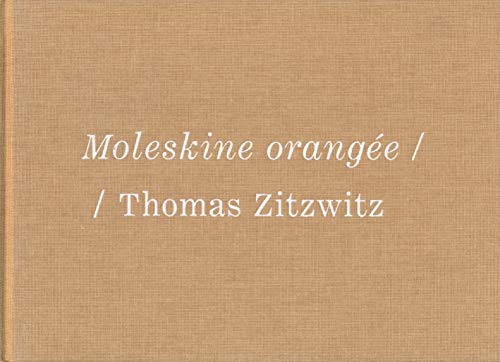
Synopsis
Kienbaum's Artists' Books, herausgegeben von | edited by Hubertus Butin und | and Jochen Kienbaum | mit einem Text (dt./engl.) von | with a text (German/English) by Hubertus Butin\n\nThe Fleetingsness of Appearance\n\nThe colours in Thomas Zitzwitz's abstract paintings schould be seen as self-referential values of visibility. Thus, the pictures refer neither mimetically nor emblematically to an external representationalism but to the intrinsic value of colours in the sense that a pure visuality evolves. The various acrylic colours Thomas Zitzwitz uses are applied with squeegees one on top of each other in numerous glazing layers. They create a complex colour space, which the contemplator's eyes can penetrate to a greater or lesser extent. The surface of such a painting there by conveys a strong illusionistic effect of depth. The top layers of paint are so transparent that they lie over the bottom layers like a delicate film. The colours in Thomas Zitzwitz's paintings react extremly sensitively to the respective light conditions. By using special interference colours, the pigments reflect completely different waves of light, depending on light direction and on the perspective of the contemplator. An example of the interference colours in nature are the wings of certain types of butterfly.\nSince 2004 Thomas Zitzwitz juxtaposed reproductions of his paintings with additional material: here private photo shots taken in the south of France in 1969. The combination of photographs gives the reproductions of paintings an associative, poetical dimension, which goes beyond the pure contemplation of the painting without taking on any specific narrative or illustrative function. What is ultimately decisive for the aesthetic experience of painting, as Johannes Meinhardt aptly put it with reference to the works of Thomas Zitzwitz, is ?that the painting defies any form of simple identification, that it does not allow itself to be seen and understood as a simple object, but involves the eye in a process.?
Les informations fournies dans la section « Synopsis » peuvent faire référence à une autre édition de ce titre.
À propos de la quatrième de couverture
Kienbaum's Artists' Books, herausgegeben von | edited by Hubertus Butin und | and Jochen Kienbaum | mit einem Text (dt./engl.) von | with a text (German/English) by Hubertus Butin\n\nThe Fleetingsness of Appearance\n\nThe colours in Thomas Zitzwitz's abstract paintings schould be seen as self-referential values of visibility. Thus, the pictures refer neither mimetically nor emblematically to an external representationalism but to the intrinsic value of colours in the sense that a pure visuality evolves. The various acrylic colours Thomas Zitzwitz uses are applied with squeegees one on top of each other in numerous glazing layers. They create a complex colour space, which the contemplator's eyes can penetrate to a greater or lesser extent. The surface of such a painting there by conveys a strong illusionistic effect of depth. The top layers of paint are so transparent that they lie over the bottom layers like a delicate film. The colours in Thomas Zitzwitz's paintings react extremly sensitively to the respective light conditions. By using special interference colours, the pigments reflect completely different waves of light, depending on light direction and on the perspective of the contemplator. An example of the interference colours in nature are the wings of certain types of butterfly.\nSince 2004 Thomas Zitzwitz juxtaposed reproductions of his paintings with additional material: here private photo shots taken in the south of France in 1969. The combination of photographs gives the reproductions of paintings an associative, poetical dimension, which goes beyond the pure contemplation of the painting without taking on any specific narrative or illustrative function. What is ultimately decisive for the aesthetic experience of painting, as Johannes Meinhardt aptly put it with reference to the works of Thomas Zitzwitz, is ?that the painting defies any form of simple identification, that it does not allow itself to be seen and understood as a simple object, but involves the eye in a process.?
Les informations fournies dans la section « A propos du livre » peuvent faire référence à une autre édition de ce titre.
Résultats de recherche pour Thomas Zitzwitz: Moleskine orangée (E)

Image fournie par le vendeur
Moleskine orangée
Edité par
Snoeck, Köln :, 2007
ISBN 10 : 3936859604
ISBN 13 : 9783936859607
Ancien ou d'occasion
Couverture rigide
Vendeur : Gebrauchtbücherlogistik H.J. Lauterbach, Gummersbach, NRW, Allemagne
Évaluation du vendeur 5 sur 5 étoiles

Leinen. Etat : Sehr gut. 18 x 25 cm 95 S. Gewebe (Goldenbrauner Leinen). überw. Ill. Zustand: Sehr Gut, eher ungelesen; Schutzumschlag fehlt, oder es gibt keinen; * Die Photos sind original von uns erstellt worden, u.a. erkennbar an einem kleinen weißen Stück Papier im oberen Schnitt. Ab und an verwenden Suchmaschinen Verlagsphotos, bei den Portalen selbst, werden aber nur unsere Originalphotos gezeigt. N° de réf. du vendeur 703940
Acheter D'occasion
EUR 8,82
Expédition à EUR 27
Expédition depuis Allemagne vers Etats-Unis
Expédition depuis Allemagne vers Etats-Unis
Quantité disponible : 1 disponible(s)
Image fournie par le vendeur
Moleskine orangée.
Edité par
Köln, Snoeck Verlag / Kienbaum artist`s books, ., 2007
ISBN 10 : 3936859604
ISBN 13 : 9783936859607
Ancien ou d'occasion
Vendeur : Antiquariat Jenischek, Bergisch Gladbach, Allemagne
Évaluation du vendeur 5 sur 5 étoiles
Durchgehend bebildert. 95 S. 18 x 25 cm, Ln. Leichte Gebrauchsspuren, sonst gut erhalten. Nachhaltige Buchlieferung - Stabile, plastikfreie Verpackung. N° de réf. du vendeur 47049
Acheter D'occasion
EUR 9,70
Expédition à EUR 34,80
Expédition depuis Allemagne vers Etats-Unis
Expédition depuis Allemagne vers Etats-Unis
Quantité disponible : 1 disponible(s)
Image fournie par le vendeur
Moleskine orangée.
Edité par
Köln, Snoeck Verlag / Kienbaum artist`s books, ., 2007
ISBN 10 : 3936859604
ISBN 13 : 9783936859607
Ancien ou d'occasion
Vendeur : Antiquariat Jenischek, Bergisch Gladbach, Allemagne
Évaluation du vendeur 5 sur 5 étoiles
Durchgehend bebildert. 95 S. 18 x 25 cm, Ln. Leichte Gebrauchsspuren, sonst gut erhalten. Nachhaltige Buchlieferung - Stabile, plastikfreie Verpackung. N° de réf. du vendeur 47048
Acheter D'occasion
EUR 9,70
Expédition à EUR 34,80
Expédition depuis Allemagne vers Etats-Unis
Expédition depuis Allemagne vers Etats-Unis
Quantité disponible : 1 disponible(s)
Image d'archives
Moleskine orangee.
Edité par
Köln. Snoeck. ., 2007
ISBN 10 : 3936859604
ISBN 13 : 9783936859607
Ancien ou d'occasion
Couverture rigide
Vendeur : Antiquariat & Verlag Jenior, Kassel, HE, Allemagne
Évaluation du vendeur 4 sur 5 étoiles

95 S. Leinen. 4° quer. Mehrsprachig: deutsch, englisch. Sauberes Exemplar ohne Stempel und Anstreichungen. Zahlreiche Abbildungen und Tafeln. Mit beiliegender Karte mit persönlicher Widmung von Künstler Thomas Zitzwitz. Sehr gut erhalten. Sprache: deu. N° de réf. du vendeur KUN60606
Acheter D'occasion
EUR 27
Expédition à EUR 19
Expédition depuis Allemagne vers Etats-Unis
Expédition depuis Allemagne vers Etats-Unis
Quantité disponible : 1 disponible(s)
Image d'archives
Moleskine Orangée. Hrsg. v. Hubertus Butin u. Jochen Kienbaum
Edité par
Snoeck Verlag / Kienbaum artist`s books, Köln, 2007
ISBN 10 : 3936859604
ISBN 13 : 9783936859607
Ancien ou d'occasion
Couverture rigide
Vendeur : Graphem. Kunst- und Buchantiquariat, Berlin, Allemagne
Évaluation du vendeur 4 sur 5 étoiles
quer gr 8°, Lwd., 95 S. - sehr gutes Exemplar. Buch. N° de réf. du vendeur 038494
Acheter D'occasion
EUR 11,60
Expédition à EUR 45
Expédition depuis Allemagne vers Etats-Unis
Expédition depuis Allemagne vers Etats-Unis
Quantité disponible : 1 disponible(s)
Image fournie par le vendeur
Moleskine Orangée. Hrsg. v. Hubertus Butin u. Jochen Kienbaum. Von Hubertus Butin gewidmetes Exemplar
Edité par
Snoeck Verlag / Kienbaum artist`s books, Köln, 2007
ISBN 10 : 3936859604
ISBN 13 : 9783936859607
Ancien ou d'occasion
Couverture rigide
Vendeur : Graphem. Kunst- und Buchantiquariat, Berlin, Allemagne
Évaluation du vendeur 4 sur 5 étoiles
quer gr 8°, Lwd., 95 S. - sehr gutes Exemplar. Buch. N° de réf. du vendeur 040292
Acheter D'occasion
EUR 12
Expédition à EUR 45
Expédition depuis Allemagne vers Etats-Unis
Expédition depuis Allemagne vers Etats-Unis
Quantité disponible : 1 disponible(s)
Image fournie par le vendeur
Moleskine Orangée
Edité par
Snoeck ;, Köln, 2007
ISBN 10 : 3936859604
ISBN 13 : 9783936859607
Ancien ou d'occasion
Couverture rigide
Vendeur : Stefan Schuelke Fine Books, Köln, NRW, Allemagne
Évaluation du vendeur 4 sur 5 étoiles
Hardcover. Verleger: Snoeck . Datum: 2007. 96 S. mit zahlr., teils ganzs. Farbabb. Deutsch ; Englisch . 17,6 x 24,5 cm. gepr. OLn. schönes Exemplar. 3-936859-60-4. N° de réf. du vendeur 92
Acheter D'occasion
EUR 33,60
Expédition à EUR 34,95
Expédition depuis Allemagne vers Etats-Unis
Expédition depuis Allemagne vers Etats-Unis
Quantité disponible : 1 disponible(s)
Image fournie par le vendeur
Moleskine orangée.
Edité par
Köln. Snoeck Verlag., 2007
ISBN 10 : 3936859604
ISBN 13 : 9783936859607
Ancien ou d'occasion
Couverture rigide
Edition originale
Signé
Vendeur : Antiquariat Querido - Frank Hermann, Düsseldorf, NRW, Allemagne
Évaluation du vendeur 5 sur 5 étoiles
Erste Ausgabe. 18 x 25 cm. 95 S. OLeinen. Sehr gutes Exemplar. Kienbaum Artist's Books. Mit einer handschriftlichen Widmung des Künstlers auf dem Vorsatz, signiert, sowie mit einer beiliegenden Einladungskarte mit einer persönlichen, handschriftlichen Widmung des Künstlers. Durchgehend mit meist farbigen Abbildungen versehen. Texte in Deutsch und Englisch. Sprache: Deutsch und Englisch. N° de réf. du vendeur 2415EB
Acheter D'occasion
EUR 22
Expédition à EUR 47
Expédition depuis Allemagne vers Etats-Unis
Expédition depuis Allemagne vers Etats-Unis
Quantité disponible : 1 disponible(s)
Image d'archives
Moleskine orangée. Zitzwitz, Thomas - Hubertus Butin und Jochen Kienbaum [ Herausgeber]
Edité par
Snoeck Verlag., 2007
ISBN 10 : 3936859604
ISBN 13 : 9783936859607
Ancien ou d'occasion
Couverture rigide
Vendeur : BUCHSERVICE / ANTIQUARIAT Lars Lutzer, Wahlstedt, Allemagne
Évaluation du vendeur 5 sur 5 étoiles
Hardcover. Etat : gut. 2007. Moleskine orangée. In deutscher Sprache. pages. N° de réf. du vendeur BN657334
Acheter D'occasion
EUR 189,90
Expédition à EUR 39,95
Expédition depuis Allemagne vers Etats-Unis
Expédition depuis Allemagne vers Etats-Unis
Quantité disponible : 1 disponible(s)