
Articles liés à Biotechnology and Intellectual Property Rights: Legal...
Synopsis
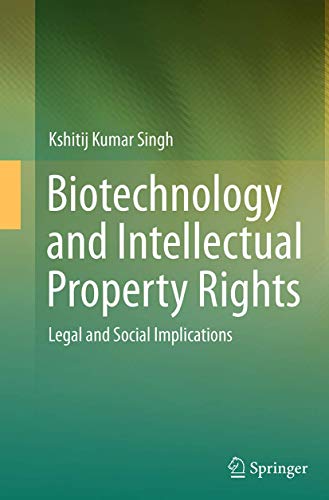
This book offers a valuable contribution to contemporary legal literature, providing deep insights into the interface between law and genetics, highlighting emerging issues and providing meaningful solutions to current problems. It will be of interest to a broad readership, including academics, lawyers, policy makers and scholars engaged in interdisciplinary research.
In the context of examining and analyzing the legal and social implications arising from the recent conjunction of biotechnology and intellectual property rights, the book particularly focuses on human genes and gene variations. Emphasis is placed on “patent law,” as a considerable percentage of genetic inventions are covered by patents. The book presents a comparative and critical examination of patent laws and practices related to biotechnology patents in the United States, Canada, European Union and India, in order to gather the common issues and the differences between them. The international patent approach regarding biotechnology is also analyzed in light of the constant conflict between differentiation and harmonization of patent laws. The book highlights the potential gaps and uncertainties as to the scope of numerous terms such as invention, microorganisms, microbiological processes, and essential biological processes under TRIPS. Also analyzed are the social and policy implications of patents relating to genetic research tools and genetic testing. The intricacies involved in providing effective intellectual property protection to bioinformatics and genomic databases are also examined. Bearing in mind the collaborative nature of bioinformatics and genomic databases, the book evaluates the pros and cons of open biotechnology and assesses the implications of extending intellectual property rights to human genetic resources, before explaining the ownership puzzle concerning human genetic material used in genetic research.
Les informations fournies dans la section « Synopsis » peuvent faire référence à une autre édition de ce titre.
À propos de l'auteur
Kshitij Kumar Singh is an Assistant Professor at the Amity Law School, Noida, India. He obtained his Ph.D. (Law) from the Banaras Hindu University Varanasi, India. During his doctoral study, he received the Canadian Commonwealth Scholarship Asia-Pacific 2010. The field of gene patenting and biotech law has been of special interest to him. Dr. Singh's LL.M. dissertation is on the topic "Human Genome and Cloning: Legal and Human Rights Issues"; he has also published many articles on biotechnology law. He gained related experience as a research intern (2009) and a visiting research fellow (2010) under the Canadian Commonwealth Scholarship 2010 at the University of Western Ontario, London, Canada. During this period he examined laws governing or needing biotechnology developments in India and Canada. The term was instrumental in expanding his research interest to the international aspect of the laws governing genetic patents and biotech research.
Les informations fournies dans la section « A propos du livre » peuvent faire référence à une autre édition de ce titre.
Résultats de recherche pour Biotechnology and Intellectual Property Rights: Legal...

Image d'archives
Biotechnology and Intellectual Property Rights : Legal and Social Implications
Vendeur : GreatBookPrices, Columbia, MD, Etats-Unis
Évaluation du vendeur 5 sur 5 étoiles

Etat : New. N° de réf. du vendeur 27004513-n
Acheter neuf
EUR 57,65
Expédition à EUR 2,36
Expédition nationale : Etats-Unis
Expédition nationale : Etats-Unis
Quantité disponible : Plus de 20 disponibles
Image fournie par le vendeur
Biotechnology and Intellectual Property Rights: Legal and Social Implications (Paperback or Softback)
Edité par
Springer 8/23/2016, 2016
ISBN 10 : 8132229754
ISBN 13 : 9788132229759
Neuf
Paperback or Softback
Vendeur : BargainBookStores, Grand Rapids, MI, Etats-Unis
Évaluation du vendeur 5 sur 5 étoiles
Paperback or Softback. Etat : New. Biotechnology and Intellectual Property Rights: Legal and Social Implications. Book. N° de réf. du vendeur BBS-9788132229759
Acheter neuf
EUR 60,08
Livraison gratuite
Expédition nationale : Etats-Unis
Expédition nationale : Etats-Unis
Quantité disponible : 5 disponible(s)
Image d'archives
Biotechnology and Intellectual Property Rights: Legal and Social Implications
Vendeur : California Books, Miami, FL, Etats-Unis
Évaluation du vendeur 5 sur 5 étoiles
Etat : New. N° de réf. du vendeur I-9788132229759
Acheter neuf
EUR 62,53
Livraison gratuite
Expédition nationale : Etats-Unis
Expédition nationale : Etats-Unis
Quantité disponible : Plus de 20 disponibles
Image d'archives
Biotechnology and Intellectual Property Rights : Legal and Social Implications
Edité par
Springer, 2016
ISBN 10 : 8132229754
ISBN 13 : 9788132229759
Ancien ou d'occasion
Couverture souple
Vendeur : GreatBookPrices, Columbia, MD, Etats-Unis
Évaluation du vendeur 5 sur 5 étoiles
Etat : As New. Unread book in perfect condition. N° de réf. du vendeur 27004513
Acheter D'occasion
EUR 63,95
Expédition à EUR 2,36
Expédition nationale : Etats-Unis
Expédition nationale : Etats-Unis
Quantité disponible : Plus de 20 disponibles
Image d'archives
Biotechnology and Intellectual Property Rights: Legal and Social Implications (eng)
impression à la demandeVendeur : Brook Bookstore On Demand, Napoli, NA, Italie
Évaluation du vendeur 5 sur 5 étoiles
Etat : new. Questo è un articolo print on demand. N° de réf. du vendeur 192b7422f820cd3d6e697dfc479c6f32
Acheter neuf
EUR 46,22
Expédition à EUR 30
Expédition depuis Italie vers Etats-Unis
Expédition depuis Italie vers Etats-Unis
Quantité disponible : Plus de 20 disponibles
Image fournie par le vendeur
Biotechnology and Intellectual Property Rights
Edité par
Springer India Aug 2016, 2016
ISBN 10 : 8132229754
ISBN 13 : 9788132229759
Neuf
Taschenbuch
Vendeur : BuchWeltWeit Ludwig Meier e.K., Bergisch Gladbach, Allemagne
Évaluation du vendeur 5 sur 5 étoiles
Taschenbuch. Etat : Neu. This item is printed on demand - it takes 3-4 days longer - Neuware -This book offers a valuable contribution to contemporary legal literature, providing deep insights into the interface between law and genetics, highlighting emerging issues and providing meaningful solutions to current problems. It will be of interest to a broad readership, including academics, lawyers, policy makers and scholars engaged in interdisciplinary research.In the context of examining and analyzing the legal and social implications arising from the recent conjunction of biotechnology and intellectual property rights, the book particularly focuses on human genes and gene variations. Emphasis is placed on 'patent law,' as a considerable percentage of genetic inventions are covered by patents. The book presents a comparative and critical examination of patent laws and practices related to biotechnology patents in the United States, Canada, European Union and India, in order to gather the common issues and the differences between them. The international patent approach regarding biotechnology is also analyzed in light of the constant conflict between differentiation and harmonization of patent laws. The book highlights the potential gaps and uncertainties as to the scope of numerous terms such as invention, microorganisms, microbiological processes, and essential biological processes under TRIPS. Also analyzed are the social and policy implications of patents relating to genetic research tools and genetic testing. The intricacies involved in providing effective intellectual property protection to bioinformatics and genomic databases are also examined. Bearing in mind the collaborative nature of bioinformatics and genomic databases, the book evaluates the pros and cons of open biotechnology and assesses the implications of extending intellectual property rights to human genetic resources, before explaining the ownership puzzle concerning human genetic material used in genetic research. 276 pp. Englisch. N° de réf. du vendeur 9788132229759
Acheter neuf
EUR 53,49
Expédition à EUR 23
Expédition depuis Allemagne vers Etats-Unis
Expédition depuis Allemagne vers Etats-Unis
Quantité disponible : 2 disponible(s)
Image d'archives
Biotechnology and Intellectual Property Rights : Legal and Social Implications
Vendeur : Chiron Media, Wallingford, Royaume-Uni
Évaluation du vendeur 5 sur 5 étoiles
PF. Etat : New. N° de réf. du vendeur 6666-IUK-9788132229759
Acheter neuf
EUR 58,23
Expédition à EUR 18,33
Expédition depuis Royaume-Uni vers Etats-Unis
Expédition depuis Royaume-Uni vers Etats-Unis
Quantité disponible : 10 disponible(s)
Image fournie par le vendeur
Biotechnology and Intellectual Property Rights : Legal and Social Implications
Vendeur : GreatBookPricesUK, Woodford Green, Royaume-Uni
Évaluation du vendeur 5 sur 5 étoiles
Etat : New. N° de réf. du vendeur 27004513-n
Acheter neuf
EUR 61,26
Expédition à EUR 17,75
Expédition depuis Royaume-Uni vers Etats-Unis
Expédition depuis Royaume-Uni vers Etats-Unis
Quantité disponible : Plus de 20 disponibles
Image d'archives
Biotechnology and Intellectual Property Rights: Legal and Social Implications
Vendeur : Ria Christie Collections, Uxbridge, Royaume-Uni
Évaluation du vendeur 5 sur 5 étoiles
Etat : New. In English. N° de réf. du vendeur ria9788132229759_new
Acheter neuf
EUR 68,15
Expédition à EUR 13,36
Expédition depuis Royaume-Uni vers Etats-Unis
Expédition depuis Royaume-Uni vers Etats-Unis
Quantité disponible : Plus de 20 disponibles
Image fournie par le vendeur
Biotechnology and Intellectual Property Rights : Legal and Social Implications
Edité par
Springer, 2016
ISBN 10 : 8132229754
ISBN 13 : 9788132229759
Ancien ou d'occasion
Couverture souple
Vendeur : GreatBookPricesUK, Woodford Green, Royaume-Uni
Évaluation du vendeur 5 sur 5 étoiles
Etat : As New. Unread book in perfect condition. N° de réf. du vendeur 27004513
Acheter D'occasion
EUR 68,20
Expédition à EUR 17,75
Expédition depuis Royaume-Uni vers Etats-Unis
Expédition depuis Royaume-Uni vers Etats-Unis
Quantité disponible : Plus de 20 disponibles