
Synopsis
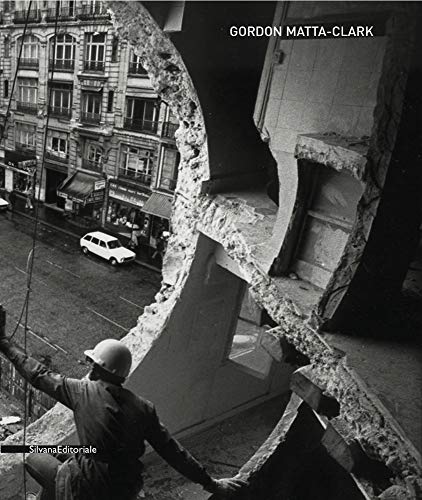
This catalogue covers the brief but groundbreaking career of the self-proclaimed "anarchitect" Gordon Matta-Clark (1943–1978), one of the most influential American artists of the 1970s. The immense ambition and scale of his projects, and their fearless reimagining of the urban landscape, challenged city-dwellers to reconsider the very notion of built structure and the fragility of seemingly unassailable edifices. Matta-Clark’s first interventions took place in abandoned, derelict structures, upon which he performed his famous "building cuts" and "intersects." First published in 2008 (for a show at SMS Contemporanea in Siena), and organized thematically and chronologically, this substantial volume looks at these and other bodies of work, such as the Food restaurant, the performances, the "estates" and the artist’s pursuit of alternative economical housing. The catalogue also includes a filmography and critical essays, plus an interview done by Judith Russi Kirshner in 1978.
Les informations fournies dans la section « Synopsis » peuvent faire référence à une autre édition de ce titre.
À propos de la quatrième de couverture
This catalogue covers the brief but groundbreaking career of the self-proclaimed "anarchitect" Gordon Matta-Clark (1943–1978), one of the most influential American artists of the 1970s. The immense ambition and scale of his projects, and their fearless reimagining of the urban landscape, challenged city-dwellers to reconsider the very notion of built structure and the fragility of seemingly unassailable edifices. Matta-Clark’s first interventions took place in abandoned, derelict structures, upon which he performed his famous "building cuts" and "intersects." First published in 2008 (for a show at SMS Contemporanea in Siena), and organized thematically and chronologically, this substantial volume looks at these and other bodies of work, such as the Food restaurant, the performances, the "estates" and the artist’s pursuit of alternative economical housing. The catalogue also includes a filmography and critical essays, plus an interview done by Judith Russi Kirshner in 1978.
Les informations fournies dans la section « A propos du livre » peuvent faire référence à une autre édition de ce titre.
Résultats de recherche pour Gordon Matta-Clark

Image fournie par le vendeur
Gordon Matta-Clark
Edité par
Silvana Editoriale, 2014
ISBN 10 : 8836611702
ISBN 13 : 9788836611706
Ancien ou d'occasion
Couverture souple
Vendeur : GreatBookPrices, Columbia, MD, Etats-Unis
Évaluation du vendeur 5 sur 5 étoiles

Etat : As New. Unread book in perfect condition. N° de réf. du vendeur 16740954
Acheter D'occasion
EUR 29,79
Expédition à EUR 2,32
Expédition nationale : Etats-Unis
Expédition nationale : Etats-Unis
Quantité disponible : 9 disponible(s)
Image fournie par le vendeur
Gordon Matta-Clark
Edité par
Silvana Editoriale, 2014
ISBN 10 : 8836611702
ISBN 13 : 9788836611706
Neuf
Couverture souple
Vendeur : GreatBookPrices, Columbia, MD, Etats-Unis
Évaluation du vendeur 5 sur 5 étoiles
Etat : New. N° de réf. du vendeur 16740954-n
Acheter neuf
EUR 31,48
Expédition à EUR 2,32
Expédition nationale : Etats-Unis
Expédition nationale : Etats-Unis
Quantité disponible : 9 disponible(s)
Image d'archives
Gordon Matta-Clark (Paperback)
Vendeur : Grand Eagle Retail, Bensenville, IL, Etats-Unis
Évaluation du vendeur 5 sur 5 étoiles
Paperback. Etat : new. Paperback. The immense ambition and scale of Gordon Matta-Clark's projects, and their fearless reimagining of the urban landscape, challenged city-dwellers to reconsider the very notion of built structure and the fragility of seemingly unassailable edifices. Matta-Clark's first interventions took place in abandoned, derelict structures, upon which he performed his famous 'building cuts' and 'intersects'. First published in 2008 (for a show at SMS Contemporanea in Siena), and organised thematically and chronologically, this substantial volume looks at these and other bodies of work, such as the Food restaurant, the performances, the 'estates' and the artist's pursuit of alternative economical housing. The catalogue also includes a filmography and critical essays, plus an interview done by Judith Russi Kirshner in 1978. Text in English and Italian. Covers the brief but groundbreaking career of the self-proclaimed 'anarchitect' Gordon Matta-Clark (1943-1978), one of the most influential American artists of the 1970s. Shipping may be from multiple locations in the US or from the UK, depending on stock availability. N° de réf. du vendeur 9788836611706
Acheter neuf
EUR 33,86
Livraison gratuite
Expédition nationale : Etats-Unis
Expédition nationale : Etats-Unis
Quantité disponible : 1 disponible(s)
Image fournie par le vendeur
Gordon Matta-Clark
Vendeur : Rarewaves.com USA, London, LONDO, Royaume-Uni
Évaluation du vendeur 5 sur 5 étoiles
Paperback. Etat : New. The immense ambition and scale of Gordon Matta-Clark's projects, and their fearless reimagining of the urban landscape, challenged city-dwellers to reconsider the very notion of built structure and the fragility of seemingly unassailable edifices. Matta-Clark's first interventions took place in abandoned, derelict structures, upon which he performed his famous 'building cuts' and 'intersects'. First published in 2008 (for a show at SMS Contemporanea in Siena), and organised thematically and chronologically, this substantial volume looks at these and other bodies of work, such as the Food restaurant, the performances, the 'estates' and the artist's pursuit of alternative economical housing. The catalogue also includes a filmography and critical essays, plus an interview done by Judith Russi Kirshner in 1978. Text in English and Italian. N° de réf. du vendeur LU-9788836611706
Acheter neuf
EUR 34,06
Livraison gratuite
Expédition depuis Royaume-Uni vers Etats-Unis
Expédition depuis Royaume-Uni vers Etats-Unis
Quantité disponible : 4 disponible(s)
Image d'archives
Gordon Matta-Clark. Catalogo della mostra (Siena, 6 giugno-19 ottobre 2008). Ediz. italiana e inglese
Vendeur : Powell's Bookstores Chicago, ABAA, Chicago, IL, Etats-Unis
Évaluation du vendeur 5 sur 5 étoiles
Paperback. Etat : Very Good. Reprint. Minor shelf wear. Else a bright, clean copy. Il volume accompagna l'evento espositivo dedicato in Italia all''anarchitetto' Gordon Matta-Clark (New York, 1943-1978), attraverso il quale si ricostruisce la parabola della sua carriera che, a partire dalla fine degli anni sessanta fino alla prematura scomparsa, ha spaziato fra i linguaggi e i mezzi espressivi più diversi. Sin dai primi esperimenti Matta Clark impronta la propria attività ai criteri della destrutturazione, della rottura, dello spostamento fisico e semantico di elementi architettonici, creando forme innovative di convivenza tra l'uomo e il reale. I primi a essere documentati come Garbage Wall (1970) - sono gli interventi che, intrapresi nei cosiddetti 'non luoghi', come cortili derelitti, discariche o zone malfamate in totale abbandono, segnano l'avvento della coscienza e della consapevolezza ecologica nell'arte e che, intersecandosi con la Land Art, aprono la strada all'indagine successiva, incentrata sui cambiamenti nel tessuto urbano e architettonico. Particolare attenzione è stata posta, infine, ai famosi 'tagli', con cui Matta Clark seziona pareti, solai e interi edifici, secondo geometrie precise che ne alterano la percezione: una sorta di chirurgia dello spazio, che scompone e ricompone la materia. Il catalogo accoglie interventi critici di James Attlee, Jane Crawford, Louise Désy e Gwendolyn Owens, Lorenzo Fusi, Marco Pierini e un'intervista all'artista realizzata nel 1978 da Judith Russi Kirscher, ed è completato da apparati biobibliografici. Annotation Supplied by Informazioni Editoriali. N° de réf. du vendeur 2040268
Acheter D'occasion
EUR 29,81
Expédition à EUR 4,39
Expédition nationale : Etats-Unis
Expédition nationale : Etats-Unis
Quantité disponible : 1 disponible(s)
Image d'archives
Gordon Matta-Clark
Vendeur : PBShop.store UK, Fairford, GLOS, Royaume-Uni
Évaluation du vendeur 5 sur 5 étoiles
PAP. Etat : New. New Book. Shipped from UK. Established seller since 2000. N° de réf. du vendeur CW-9788836611706
Acheter neuf
EUR 29,76
Expédition à EUR 6,89
Expédition depuis Royaume-Uni vers Etats-Unis
Expédition depuis Royaume-Uni vers Etats-Unis
Quantité disponible : 4 disponible(s)
Image d'archives
Gordon Matta-Clark
Vendeur : PBShop.store US, Wood Dale, IL, Etats-Unis
Évaluation du vendeur 5 sur 5 étoiles
PAP. Etat : New. New Book. Shipped from UK. Established seller since 2000. N° de réf. du vendeur CW-9788836611706
Acheter neuf
EUR 37,67
Livraison gratuite
Expédition nationale : Etats-Unis
Expédition nationale : Etats-Unis
Quantité disponible : 4 disponible(s)
Image d'archives
Gordon Matta-Clark
Edité par
Silvana Editoriale, 2014
ISBN 10 : 8836611702
ISBN 13 : 9788836611706
Neuf
Couverture souple
Vendeur : Ria Christie Collections, Uxbridge, Royaume-Uni
Évaluation du vendeur 5 sur 5 étoiles
Etat : New. In English, Italian. N° de réf. du vendeur ria9788836611706_new
Acheter neuf
EUR 31,13
Expédition à EUR 14,06
Expédition depuis Royaume-Uni vers Etats-Unis
Expédition depuis Royaume-Uni vers Etats-Unis
Quantité disponible : 14 disponible(s)
Image fournie par le vendeur
Gordon Matta-Clark
Edité par
Silvana Editoriale, 2014
ISBN 10 : 8836611702
ISBN 13 : 9788836611706
Neuf
Couverture souple
Vendeur : GreatBookPricesUK, Woodford Green, Royaume-Uni
Évaluation du vendeur 5 sur 5 étoiles
Etat : New. N° de réf. du vendeur 16740954-n
Acheter neuf
EUR 29,50
Expédition à EUR 17,60
Expédition depuis Royaume-Uni vers Etats-Unis
Expédition depuis Royaume-Uni vers Etats-Unis
Quantité disponible : 9 disponible(s)
Image fournie par le vendeur
Gordon Matta-Clark
Edité par
Silvana Editoriale, 2014
ISBN 10 : 8836611702
ISBN 13 : 9788836611706
Ancien ou d'occasion
Couverture souple
Vendeur : GreatBookPricesUK, Woodford Green, Royaume-Uni
Évaluation du vendeur 5 sur 5 étoiles
Etat : As New. Unread book in perfect condition. N° de réf. du vendeur 16740954
Acheter D'occasion
EUR 30,14
Expédition à EUR 17,60
Expédition depuis Royaume-Uni vers Etats-Unis
Expédition depuis Royaume-Uni vers Etats-Unis
Quantité disponible : 9 disponible(s)