
Articles liés à Sharing Lights on the Way to God: Muslim-Christian...
Sharing Lights on the Way to God: Muslim-Christian Dialogue and Theology in the Context of Abrahamic Partnership - Couverture souple
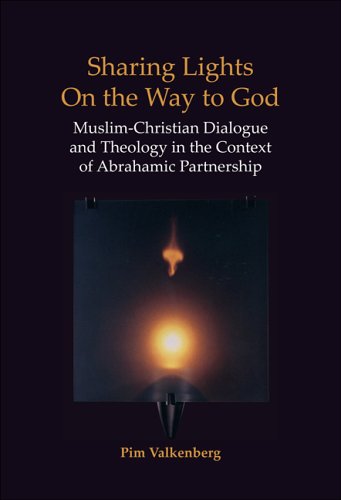
Synopsis
This book seeks to give form to a theology that hyphenates two traditions that have not only been in constant conflict during most of their historical encounters but are also presented as opposite blocks in the threatening 'clash of civilizations' at the beginning of the third millennium: Islam and Christianity. Based on experiences of dialogue between the three Abrahamic faiths, this book analyzes historical and contemporary processes of interreligious dialogue between Christians and Muslims in order to arrive at a concept of dialogue as 'mutual emulation.' It shows how, in their theologies of religious others, Judaism, Christianity and Islam have based their images of others on their self-images. This characteristic makes traditional theologies of religion quite unsuitable for interreligious dialogue. Consequently, the author of this book develops a model in which comparative theology and interreligious dialogue are connected by studying - as a Christian theologian - the theological and spiritual sources of his Muslim dialogue partners. These exercises in comparative Muslim-Christian theology comprise both the medieval (Aquinas, al-Ghazali, Rumi) and the modern periods (Said Nursi, Fethullah Gülen, Tariq Ramadan). An interlude on Teresa of Avila's poem Nada te turbe shows how Christians may recover important insights from their own tradition by reading these Muslim theological and spiritual sources.
Les informations fournies dans la section « Synopsis » peuvent faire référence à une autre édition de ce titre.
Présentation de l'éditeur
This book seeks to give form to a theology that hyphenates two traditions that have not only been in constant conflict during most of their historical encounters but are also presented as opposite blocks in the threatening clash of civilizations at the beginning of the third millennium: Islam and Christianity. Based on experiences of dialogue between the three Abrahamic faiths, this book analyzes historical and contemporary processes of interreligious dialogue between Christians and Muslims in order to arrive at a concept of dialogue as mutual emulation. It shows how, in their theologies of religious others, Judaism, Christianity and Islam have based their images of others on their self-images. This characteristic makes traditional theologies of religion quite unsuitable for interreligious dialogue. Consequently, the author of this book develops a model in which comparative theology and interreligious dialogue are connected by studying as a Christian theologian the theological and spiritual sources of his Muslim dialogue partners. These exercises in comparative Muslim-Christian theology comprise both the medieval (Aquinas, al-Ghazali, Rumi) and the modern periods (Said Nursi, Fethullah Gülen, Tariq Ramadan). An interlude on Teresa of Avilas poem Nada te turbe shows how Christians may recover important insights from their own tradition by reading these Muslim theological and spiritual sources.
Les informations fournies dans la section « A propos du livre » peuvent faire référence à une autre édition de ce titre.
Résultats de recherche pour Sharing Lights on the Way to God: Muslim-Christian...

Image d'archives
Sharing Lights on the Way to God: Muslim-Christian Dialogue and Theology in the Context of Abrahamic Partnership (Currents of Encounter 26)
Edité par
Editions Rodopi BV, 2006
ISBN 10 : 9042017996
ISBN 13 : 9789042017993
Ancien ou d'occasion
Soft cover
Edition originale
Vendeur : Antiquariaat Die Sammlung, Amsterdam Zuidoost, Pays-Bas
Évaluation du vendeur 4 sur 5 étoiles

Soft cover. Etat : Near Fine. 1st Edition. 387 p. N° de réf. du vendeur Th-6 783
Acheter D'occasion
EUR 24,50
Expédition à EUR 20
Expédition depuis Pays-Bas vers Etats-Unis
Expédition depuis Pays-Bas vers Etats-Unis
Quantité disponible : 1 disponible(s)
Image d'archives
Sharing Lights On the Way to God Muslim-Christian Dialogue and Theology in the Context of Abrahamic Partnership
Edité par
Rodopi, 2006
ISBN 10 : 9042017996
ISBN 13 : 9789042017993
Ancien ou d'occasion
Couverture souple
Vendeur : Mooney's bookstore, Den Helder, Pays-Bas
Évaluation du vendeur 4 sur 5 étoiles
Etat : Very Good. N° de réf. du vendeur 926C3019BD9C020
Acheter D'occasion
EUR 97,25
Expédition à EUR 14,95
Expédition depuis Pays-Bas vers Etats-Unis
Expédition depuis Pays-Bas vers Etats-Unis
Quantité disponible : 1 disponible(s)
Image d'archives
Sharing Lights on the Way to God
Edité par
Editions Rodopi B.V., 2006
ISBN 10 : 9042017996
ISBN 13 : 9789042017993
Neuf
Couverture souple
Vendeur : Brook Bookstore On Demand, Napoli, NA, Italie
Évaluation du vendeur 5 sur 5 étoiles

Etat : new. Questo è un articolo print on demand. N° de réf. du vendeur 3e493070a9ef1016595177c788373cd4
Acheter neuf
EUR 109,40
Expédition à EUR 6,80
Expédition depuis Italie vers Etats-Unis
Expédition depuis Italie vers Etats-Unis
Quantité disponible : Plus de 20 disponibles
Image d'archives
Sharing Lights on the Way to God: Muslim-Christian Dialogue and Theology in the Context of Abrahamic Partnership (Currents of Encounter 26) (Currents of Encounter S.)
impression à la demandeVendeur : Revaluation Books, Exeter, Royaume-Uni
Évaluation du vendeur 5 sur 5 étoiles
Paperback. Etat : Brand New. 405 pages. 8.60x5.90x1.10 inches. In Stock. This item is printed on demand. N° de réf. du vendeur __9042017996
Acheter neuf
EUR 166,37
Expédition à EUR 14,58
Expédition depuis Royaume-Uni vers Etats-Unis
Expédition depuis Royaume-Uni vers Etats-Unis
Quantité disponible : 1 disponible(s)