
Articles liés à Knowing and the Mystique of Logic and Rules
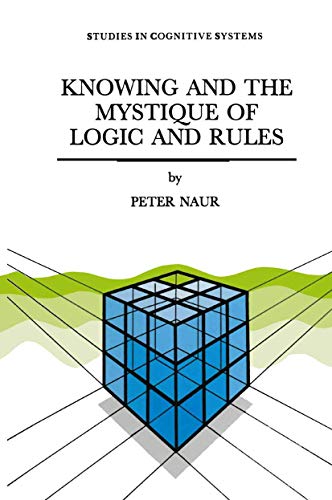
Synopsis
Human knowing is examined as it emerges from classical empirical psychology, with its ramifications into language, computing, science, and scholarship. While the discussion takes empirical support from a wide range, claims for the significance of logic and rules are challenged throughout. Highlights of the discussion:
- knowing is a matter of habits or dispositions that guide the person's stream of consciousness;
- rules of language have no significance in language production and understanding, being descriptions of linguistic styles;
- statements that may be true or false enter into ordinary linguistic activity, not as elements of messages, but merely as summaries of situations, with a view to action;
- in computer programming the significance of logic, proof, and formalized description, is incidental and subject to the programmer's personality;
- analysis of computer modelling of the mental activity shows that in describing human knowing the computer is irrelevant;
- in accounting for the scholarly/scientific activity, logic and rules are impotent;
- a novel theory: scholarship and science have coherent descriptions as their core.
Les informations fournies dans la section « Synopsis » peuvent faire référence à une autre édition de ce titre.
Présentation de l'éditeur
Human knowing is examined as it emerges from classical empirical psychology, with its ramifications into language, computing, science, and scholarship. While the discussion takes empirical support from a wide range, claims for the significance of logic and rules are challenged throughout. Highlights of the discussion: knowing is a matter of habits or dispositions that guide the person's stream of consciousness; rules of language have no significance in language production and understanding, being descriptions of linguistic styles; statements that may be true or false enter into ordinary linguistic activity, not as elements of messages, but merely as summaries of situations, with a view to action; in computer programming the significance of logic, proof, and formalized description, is incidental and subject to the programmer's personality; analysis of computer modelling of the mental activity shows that in describing human knowing the computer is irrelevant; in accounting for the scholarly/scientific activity, logic and rules are impotent; a novel theory: scholarship and science have coherent descriptions as their core. The discussion addresses questions that are basic to advanced applications of computers and to students of language and science.
Les informations fournies dans la section « A propos du livre » peuvent faire référence à une autre édition de ce titre.
Résultats de recherche pour Knowing and the Mystique of Logic and Rules

Image d'archives
Naur:Knowing and the Mystique of Logic (eng)
impression à la demandeVendeur : Brook Bookstore On Demand, Napoli, NA, Italie
Évaluation du vendeur 5 sur 5 étoiles

Etat : new. Questo è un articolo print on demand. N° de réf. du vendeur NRQ6PJVSZO
Acheter neuf
EUR 126,26
Expédition à EUR 6,80
Expédition depuis Italie vers Etats-Unis
Expédition depuis Italie vers Etats-Unis
Quantité disponible : Plus de 20 disponibles
Image fournie par le vendeur
Knowing and the Mystique of Logic and Rules
Edité par
Springer Netherlands, Springer Netherlands Dez 2010, 2010
ISBN 10 : 9048146097
ISBN 13 : 9789048146093
Neuf
Taschenbuch
Vendeur : BuchWeltWeit Ludwig Meier e.K., Bergisch Gladbach, Allemagne
Évaluation du vendeur 5 sur 5 étoiles
Taschenbuch. Etat : Neu. This item is printed on demand - it takes 3-4 days longer - Neuware -Human knowing is examined as it emerges from classical empirical psychology, with its ramifications into language, computing, science, and scholarship. While the discussion takes empirical support from a wide range, claims for the significance of logic and rules are challenged throughout. Highlights of the discussion: knowing is a matter of habits or dispositions that guide the person's stream of consciousness; rules of language have no significance in language production and understanding, being descriptions of linguistic styles; statements that may be true or false enter into ordinary linguistic activity, not as elements of messages, but merely as summaries of situations, with a view to action; in computer programming the significance of logic, proof, and formalized description, is incidental and subject to the programmer's personality; analysis of computer modelling of the mental activity shows that in describing human knowing the computer is irrelevant; in accounting for the scholarly/scientific activity, logic and rules are impotent; a novel theory: scholarship and science have coherent descriptions as their core. The discussion addresses questions that are basic to advanced applications of computers and to students of language and science. 380 pp. Englisch. N° de réf. du vendeur 9789048146093
Acheter neuf
EUR 160,49
Expédition à EUR 23
Expédition depuis Allemagne vers Etats-Unis
Expédition depuis Allemagne vers Etats-Unis
Quantité disponible : 2 disponible(s)
Image fournie par le vendeur
Knowing and the Mystique of Logic and Rules
Edité par
Springer Netherlands, 2010
ISBN 10 : 9048146097
ISBN 13 : 9789048146093
Neuf
Kartoniert / Broschiert
Vendeur : moluna, Greven, Allemagne
Évaluation du vendeur 5 sur 5 étoiles
Kartoniert / Broschiert. Etat : New. Dieser Artikel ist ein Print on Demand Artikel und wird nach Ihrer Bestellung fuer Sie gedruckt. Human knowing is examined as it emerges from classical empirical psychology, with its ramifications into language, computing, science, and scholarship. While the discussion takes empirical support from a wide range, claims for the significance of logic a. N° de réf. du vendeur 5818471
Acheter neuf
EUR 136,16
Expédition à EUR 48,99
Expédition depuis Allemagne vers Etats-Unis
Expédition depuis Allemagne vers Etats-Unis
Quantité disponible : Plus de 20 disponibles
Image fournie par le vendeur
Knowing and the Mystique of Logic and Rules : Including True Statements in Knowing and Action, Computer Modelling of Human Knowing Activity, Coherent Description As the Core of Scholarship and Science
Vendeur : GreatBookPrices, Columbia, MD, Etats-Unis
Évaluation du vendeur 5 sur 5 étoiles
Etat : New. N° de réf. du vendeur 12047316-n
Acheter neuf
EUR 183,12
Expédition à EUR 2,35
Expédition nationale : Etats-Unis
Expédition nationale : Etats-Unis
Quantité disponible : 15 disponible(s)
Image d'archives
Knowing and the Mystique of Logic and Rules: including True Statements in Knowing and Action * Computer Modelling of Human Knowing Activity * Coherent ... Science (Studies in Cognitive Systems, 18)
Vendeur : California Books, Miami, FL, Etats-Unis
Évaluation du vendeur 5 sur 5 étoiles
Etat : New. N° de réf. du vendeur I-9789048146093
Acheter neuf
EUR 185,56
Livraison gratuite
Expédition nationale : Etats-Unis
Expédition nationale : Etats-Unis
Quantité disponible : Plus de 20 disponibles
Image fournie par le vendeur
Knowing and the Mystique of Logic and Rules : Including True Statements in Knowing and Action, Computer Modelling of Human Knowing Activity, Coherent Description As the Core of Scholarship and Science
Edité par
Springer, 2010
ISBN 10 : 9048146097
ISBN 13 : 9789048146093
Ancien ou d'occasion
Couverture souple
Vendeur : GreatBookPrices, Columbia, MD, Etats-Unis
Évaluation du vendeur 5 sur 5 étoiles
Etat : As New. Unread book in perfect condition. N° de réf. du vendeur 12047316
Acheter D'occasion
EUR 192,62
Expédition à EUR 2,35
Expédition nationale : Etats-Unis
Expédition nationale : Etats-Unis
Quantité disponible : 15 disponible(s)
Image d'archives
Knowing and the Mystique of Logic and Rules: including True Statements in Knowing and Action * Computer Modelling of Human Knowing Activity * Coherent ... Science (Studies in Cognitive Systems, 18)
Vendeur : Ria Christie Collections, Uxbridge, Royaume-Uni
Évaluation du vendeur 5 sur 5 étoiles
Etat : New. In English. N° de réf. du vendeur ria9789048146093_new
Acheter neuf
EUR 185,03
Expédition à EUR 13,36
Expédition depuis Royaume-Uni vers Etats-Unis
Expédition depuis Royaume-Uni vers Etats-Unis
Quantité disponible : Plus de 20 disponibles
Image fournie par le vendeur
Knowing and the Mystique of Logic and Rules : including True Statements in Knowing and Action \* Computer Modelling of Human Knowing Activity \* Coherent Description as the Core of Scholarship and Science
Vendeur : AHA-BUCH GmbH, Einbeck, Allemagne
Évaluation du vendeur 5 sur 5 étoiles
Taschenbuch. Etat : Neu. Druck auf Anfrage Neuware - Printed after ordering - Human knowing is examined as it emerges from classical empirical psychology, with its ramifications into language, computing, science, and scholarship. While the discussion takes empirical support from a wide range, claims for the significance of logic and rules are challenged throughout. Highlights of the discussion: knowing is a matter of habits or dispositions that guide the person's stream of consciousness; rules of language have no significance in language production and understanding, being descriptions of linguistic styles; statements that may be true or false enter into ordinary linguistic activity, not as elements of messages, but merely as summaries of situations, with a view to action; in computer programming the significance of logic, proof, and formalized description, is incidental and subject to the programmer's personality; analysis of computer modelling of the mental activity shows that in describing human knowing the computer is irrelevant; in accounting for the scholarly/scientific activity, logic and rules are impotent; a novel theory: scholarship and science have coherent descriptions as their core. The discussion addresses questions that are basic to advanced applications of computers and to students of language and science. N° de réf. du vendeur 9789048146093
Acheter neuf
EUR 183,30
Expédition à EUR 35
Expédition depuis Allemagne vers Etats-Unis
Expédition depuis Allemagne vers Etats-Unis
Quantité disponible : 1 disponible(s)
Image fournie par le vendeur
Knowing and the Mystique of Logic and Rules
Edité par
Springer Netherlands, Springer Dez 2010, 2010
ISBN 10 : 9048146097
ISBN 13 : 9789048146093
Neuf
Taschenbuch
Vendeur : buchversandmimpf2000, Emtmannsberg, BAYE, Allemagne
Évaluation du vendeur 5 sur 5 étoiles
Taschenbuch. Etat : Neu. This item is printed on demand - Print on Demand Titel. Neuware -Human knowing is examined as it emerges from classical empirical psychology, with its ramifications into language, computing, science, and scholarship. While the discussion takes empirical support from a wide range, claims for the significance of logic and rules are challenged throughout. Highlights of the discussion: knowing is a matter of habits or dispositions that guide the person's stream of consciousness; rules of language have no significance in language production and understanding, being descriptions of linguistic styles; statements that may be true or false enter into ordinary linguistic activity, not as elements of messages, but merely as summaries of situations, with a view to action; in computer programming the significance of logic, proof, and formalized description, is incidental and subject to the programmer's personality; analysis of computer modelling of the mental activity shows that in describing human knowing the computer is irrelevant; in accounting for the scholarly/scientific activity, logic and rules are impotent; a novel theory: scholarship and science have coherent descriptions as their core. The discussion addresses questions that are basic to advanced applications of computers and to students of language and science.Springer-Verlag GmbH, Tiergartenstr. 17, 69121 Heidelberg 380 pp. Englisch. N° de réf. du vendeur 9789048146093
Acheter neuf
EUR 160,49
Expédition à EUR 60
Expédition depuis Allemagne vers Etats-Unis
Expédition depuis Allemagne vers Etats-Unis
Quantité disponible : 1 disponible(s)