
Articles liés à Language Policy in the Soviet Union
Synopsis
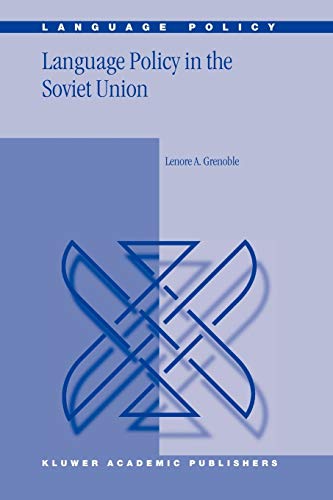
Soviet language policy provides rich material for the study of the impact of policy on language use. Moreover, it offers a unique vantage point on the tie between language and culture. While linguists and ethnographers grapple with defining the relationship of language to culture, or of language and culture to identity, the Soviets knew that language is an integral and inalienable part of culture. The former Soviet Union provides an ideal case study for examining these relationships, in that it had one of the most deliberate language policies of any nation state. This is not to say that it was constant or well-conceived; in fact it was marked by contradictions, illogical decisions, and inconsistencies. Yet it represented a conscious effort on the part of the Communist leadership to shape both ethnic identity and national consciousness through language. As a totalitarian state, the USSR represents a country where language policy, however radical, could be implemented at the will of thegovernment. Furthermore, measures (such as forced migrations) were undertaken that resulted in changing population demographics, having a direct impact on what is a central issue here: the very nature of the Soviet population. That said, it is important to keep in mind that in the Soviet Union there was a difference between stated policy and actual practice. There was no guarantee that any given policy would be implemented, even when it had been officially legislated.
Les informations fournies dans la section « Synopsis » peuvent faire référence à une autre édition de ce titre.
Présentation de l'éditeur
The former Soviet Union provides one of the most interesting examples of a nation state's deliberate use of language policy to further its political goals. Language Policy in the Soviet Union provides a comprehensive and up-to-date overview of the development of this policy at both national and local levels. It is meant for linguists, policy makers, and specialists on the USSR and Eastern Europe. The book is organized in such a way that it can be read in its entirety or selectively, with an introduction to the USSR and its ethnolinguistic makeup, followed by a chronology of Soviet language policy and its general development. Subsequent chapters are organized regionally, with surveys of the geographic and ethnolinguistic regions of the Soviet Union and a discussion of language policy and its impact in each of them.
Les informations fournies dans la section « A propos du livre » peuvent faire référence à une autre édition de ce titre.
Résultats de recherche pour Language Policy in the Soviet Union

Image d'archives
Language Policy in the Soviet Union (eng)
impression à la demandeVendeur : Brook Bookstore On Demand, Napoli, NA, Italie
Évaluation du vendeur 5 sur 5 étoiles

Etat : new. Questo è un articolo print on demand. N° de réf. du vendeur BWLMJBLPTF
Acheter neuf
EUR 142,27
Expédition à EUR 5,50
Expédition depuis Italie vers Etats-Unis
Expédition depuis Italie vers Etats-Unis
Quantité disponible : Plus de 20 disponibles
Image fournie par le vendeur
Language Policy in the Soviet Union
Edité par
Springer Netherlands, 2010
ISBN 10 : 9048162939
ISBN 13 : 9789048162932
Neuf
Couverture souple
Vendeur : moluna, Greven, Allemagne
Évaluation du vendeur 5 sur 5 étoiles
Etat : New. Dieser Artikel ist ein Print on Demand Artikel und wird nach Ihrer Bestellung fuer Sie gedruckt. Includes supplementary material: sn.pub/extrasSoviet language policy provides rich material for the study of the impact of policy on language use. Moreover, it offers a unique vantage point on the tie between language and culture. While linguists. N° de réf. du vendeur 5820143
Acheter neuf
EUR 153,73
Expédition à EUR 48,99
Expédition depuis Allemagne vers Etats-Unis
Expédition depuis Allemagne vers Etats-Unis
Quantité disponible : Plus de 20 disponibles
Image fournie par le vendeur
Language Policy in the Soviet Union
Edité par
Springer Netherlands Dez 2010, 2010
ISBN 10 : 9048162939
ISBN 13 : 9789048162932
Neuf
Taschenbuch
Vendeur : BuchWeltWeit Ludwig Meier e.K., Bergisch Gladbach, Allemagne
Évaluation du vendeur 5 sur 5 étoiles
Taschenbuch. Etat : Neu. This item is printed on demand - it takes 3-4 days longer - Neuware -Soviet language policy provides rich material for the study of the impact of policy on language use. Moreover, it offers a unique vantage point on the tie between language and culture. While linguists and ethnographers grapple with defining the relationship of language to culture, or of language and culture to identity, the Soviets knew that language is an integral and inalienable part of culture. The former Soviet Union provides an ideal case study for examining these relationships, in that it had one of the most deliberate language policies of any nation state. This is not to say that it was constant or well-conceived; in fact it was marked by contradictions, illogical decisions, and inconsistencies. Yet it represented a conscious effort on the part of the Communist leadership to shape both ethnic identity and national consciousness through language. As a totalitarian state, the USSR represents a country where language policy, however radical, could be implemented at the will of the government. Furthermore, measures (such as forced migrations) were undertaken that resulted in changing population demographics, having a direct impact on what is a central issue here: the very nature of the Soviet population. That said, it is important to keep in mind that in the Soviet Union there was a difference between stated policy and actual practice. There was no guarantee that any given policy would be implemented, even when it had been officially legislated. 252 pp. Englisch. N° de réf. du vendeur 9789048162932
Acheter neuf
EUR 181,89
Expédition à EUR 23
Expédition depuis Allemagne vers Etats-Unis
Expédition depuis Allemagne vers Etats-Unis
Quantité disponible : 2 disponible(s)
Image d'archives
Language Policy in the Soviet Union
Vendeur : GreatBookPrices, Columbia, MD, Etats-Unis
Évaluation du vendeur 5 sur 5 étoiles
Etat : New. N° de réf. du vendeur 11876760-n
Acheter neuf
EUR 211,13
Expédition à EUR 2,35
Expédition nationale : Etats-Unis
Expédition nationale : Etats-Unis
Quantité disponible : 15 disponible(s)
Image d'archives
Language Policy in the Soviet Union
Vendeur : Ria Christie Collections, Uxbridge, Royaume-Uni
Évaluation du vendeur 5 sur 5 étoiles
Etat : New. In English. N° de réf. du vendeur ria9789048162932_new
Acheter neuf
EUR 211,30
Expédition à EUR 11,03
Expédition depuis Royaume-Uni vers Etats-Unis
Expédition depuis Royaume-Uni vers Etats-Unis
Quantité disponible : Plus de 20 disponibles
Image fournie par le vendeur
Language Policy in the Soviet Union
Vendeur : AHA-BUCH GmbH, Einbeck, Allemagne
Évaluation du vendeur 5 sur 5 étoiles
Taschenbuch. Etat : Neu. Druck auf Anfrage Neuware - Printed after ordering - Soviet language policy provides rich material for the study of the impact of policy on language use. Moreover, it offers a unique vantage point on the tie between language and culture. While linguists and ethnographers grapple with defining the relationship of language to culture, or of language and culture to identity, the Soviets knew that language is an integral and inalienable part of culture. The former Soviet Union provides an ideal case study for examining these relationships, in that it had one of the most deliberate language policies of any nation state. This is not to say that it was constant or well-conceived; in fact it was marked by contradictions, illogical decisions, and inconsistencies. Yet it represented a conscious effort on the part of the Communist leadership to shape both ethnic identity and national consciousness through language. As a totalitarian state, the USSR represents a country where language policy, however radical, could be implemented at the will of thegovernment. Furthermore, measures (such as forced migrations) were undertaken that resulted in changing population demographics, having a direct impact on what is a central issue here: the very nature of the Soviet population. That said, it is important to keep in mind that in the Soviet Union there was a difference between stated policy and actual practice. There was no guarantee that any given policy would be implemented, even when it had been officially legislated. N° de réf. du vendeur 9789048162932
Acheter neuf
EUR 192,68
Expédition à EUR 35
Expédition depuis Allemagne vers Etats-Unis
Expédition depuis Allemagne vers Etats-Unis
Quantité disponible : 1 disponible(s)
Image fournie par le vendeur
Language Policy in the Soviet Union
Edité par
Springer, 2010
ISBN 10 : 9048162939
ISBN 13 : 9789048162932
Ancien ou d'occasion
Couverture souple
Vendeur : GreatBookPrices, Columbia, MD, Etats-Unis
Évaluation du vendeur 5 sur 5 étoiles
Etat : As New. Unread book in perfect condition. N° de réf. du vendeur 11876760
Acheter D'occasion
EUR 227,48
Expédition à EUR 2,35
Expédition nationale : Etats-Unis
Expédition nationale : Etats-Unis
Quantité disponible : 15 disponible(s)
Image fournie par le vendeur
Language Policy in the Soviet Union
Edité par
Springer, Springer Dez 2010, 2010
ISBN 10 : 9048162939
ISBN 13 : 9789048162932
Neuf
Taschenbuch
Vendeur : buchversandmimpf2000, Emtmannsberg, BAYE, Allemagne
Évaluation du vendeur 5 sur 5 étoiles
Taschenbuch. Etat : Neu. This item is printed on demand - Print on Demand Titel. Neuware -Soviet language policy provides rich material for the study of the impact of policy on language use. Moreover, it offers a unique vantage point on the tie between language and culture. While linguists and ethnographers grapple with defining the relationship of language to culture, or of language and culture to identity, the Soviets knew that language is an integral and inalienable part of culture. The former Soviet Union provides an ideal case study for examining these relationships, in that it had one of the most deliberate language policies of any nation state. This is not to say that it was constant or well-conceived; in fact it was marked by contradictions, illogical decisions, and inconsistencies. Yet it represented a conscious effort on the part of the Communist leadership to shape both ethnic identity and national consciousness through language. As a totalitarian state, the USSR represents a country where language policy, however radical, could be implemented at the will of thegovernment. Furthermore, measures (such as forced migrations) were undertaken that resulted in changing population demographics, having a direct impact on what is a central issue here: the very nature of the Soviet population. That said, it is important to keep in mind that in the Soviet Union there was a difference between stated policy and actual practice. There was no guarantee that any given policy would be implemented, even when it had been officially legislated.Springer-Verlag KG, Sachsenplatz 4-6, 1201 Wien 252 pp. Englisch. N° de réf. du vendeur 9789048162932
Acheter neuf
EUR 181,89
Expédition à EUR 60
Expédition depuis Allemagne vers Etats-Unis
Expédition depuis Allemagne vers Etats-Unis
Quantité disponible : 1 disponible(s)
Image d'archives
Language Policy in the Soviet Union
Vendeur : Books Puddle, Woodside, NY, Etats-Unis
Évaluation du vendeur 4 sur 5 étoiles

Etat : New. pp. 252. N° de réf. du vendeur 263071293
Acheter neuf
EUR 255,68
Expédition à EUR 3,55
Expédition nationale : Etats-Unis
Expédition nationale : Etats-Unis
Quantité disponible : 4 disponible(s)
Image d'archives
Language Policy in the Soviet Union
impression à la demandeVendeur : Majestic Books, Hounslow, Royaume-Uni
Évaluation du vendeur 4 sur 5 étoiles
Etat : New. Print on Demand pp. 252 49:B&W 6.14 x 9.21 in or 234 x 156 mm (Royal 8vo) Perfect Bound on White w/Gloss Lam. N° de réf. du vendeur 5858018
Acheter neuf
EUR 271,92
Expédition à EUR 7,65
Expédition depuis Royaume-Uni vers Etats-Unis
Expédition depuis Royaume-Uni vers Etats-Unis
Quantité disponible : 4 disponible(s)