
Articles liés à Egyptian Bioarchaeology: humans, animals, and the environmen...
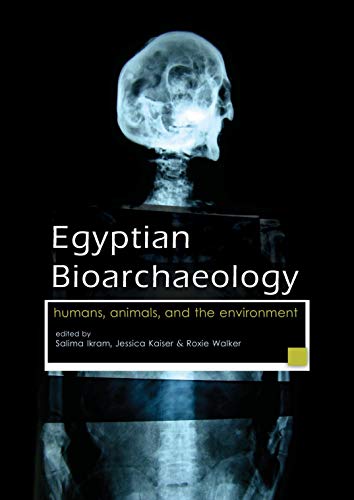
Synopsis
Although the bioarchaeology (study of biological remains in an archaeological context) of Egypt has been documented in a desultory way for many decades, it is only recently that it has become an inherent part of excavations in Egypt. This volume consists of a series of essays that explore how ancient plant, animal, and human remains should be studied, and how, when they are integrated with texts, images, and artefacts, they can contribute to our understanding of the history, environment, and culture of ancient Egypt in a holistic manner.
Topics covered in this volume relating to human remains include analyses of royal, elite and poor cemeteries of different eras, case studies on specific mummies, identification of different diseases in human remains, an overview of the state of palaeopathology in Egypt, how to analyse burials to establish season of death, the use of bodies to elucidate life stories, the potential of visceral remains in identifying individuals as well as diseases that they might have had, and a protocol for studying mummies. Faunal remains are represented by a study of a canine cemetery and a discussion of cat species that were mummified, and dendroarchaeology is represented by an overview of its potentials and pitfalls for dating Egyptian remains and revising its chronology.
Leading international specialists from varied disciplines including physical anthropology, radiology, archaeozoology, Egyptology, and dendrochronology have contributed to this groundbreaking volume of essays that will no doubt provide much fodder for thought, and will be of interest to scholars and laypeople alike.
Les informations fournies dans la section « Synopsis » peuvent faire référence à une autre édition de ce titre.
À propos des auteurs
Prof. Dr. Salima Ikram is an Egyptologist and bioarchaeologist who has worked in Egypt, Turkey and the Sudan. She has directed the Animal Mummy Project at the Egyptian Museum, directs the North Kharga Oasis Darb Ain Amur Survey, and has worked as a funerary archaeologist and archaeozoologist at sites throughout Egypt from Alexandria to Aswan. She has published extensively.
Jessica Kaiser is a bioarchaeologist currently finalizing her PhD in Human Osteology and Egyptian Archaeology at the University of California Berkeley. She spent ten years as the head osteologist of the Giza Plateau Mapping Project/AERA, where she also taught osteology. She has worked as an archaeologist and human remains specialist in Upper and Middle Egypt, Sweden, and the US. She has published on her work at Giza.
Roxie Walker is a bioarchaeologist who has worked extensively in Egypt, Peru, and Russia. She has co-directed the Qasr el-Aini Bioarchaeology Project, is the chief osteologist of the Djehuty Project (TT 11-12), the site of Tibbet el-Guesh at South Saqqara, and has been the chief osteologist for the Valley of the Kings Tombs of Horemheb and Amenemesse, as well as the excavations at Mut Temple. She continues to conduct research and fieldwork in Egypt and Peru and is a director of the Institute for Bioarchaeology at the British Museum.
À propos de la quatrième de couverture
Although the bioarchaeology (study of biological remains in an archaeological context) of Egypt has been documented in a desultory way for many decades, it is only recently that it has become an inherent part of excavations in Egypt. This volume consists of a series of essays that explore how ancient plant, animal, and human remains should be studied, and how, when they are integrated with texts, images, and artefacts, they can contribute to our understanding of the history, environment, and culture of ancient Egypt in a holistic manner.
Topics covered in this volume relating to human remains include analyses of royal, elite and poor cemeteries of different eras, case studies on specific mummies, identification of different diseases in human remains, an overview of the state of palaeopathology in Egypt, how to analyse burials to establish season of death, the use of bodies to elucidate life stories, the potential of visceral remains in identifying individuals as well as diseases that they might have had, and a protocol for studying mummies. Faunal remains are represented by a study of a canine cemetery and a discussion of cat species that were mummified, and dendroarchaeology is represented by an overview of its potentials and pitfalls for dating Egyptian remains and revising its chronology.
Leading international specialists from varied disciplines including physical anthropology, radiology, archaeozoology, Egyptology, and dendrochronology have contributed to this groundbreaking volume of essays that will no doubt provide much fodder for thought, and will be of interest to scholars and laypeople alike.
Les informations fournies dans la section « A propos du livre » peuvent faire référence à une autre édition de ce titre.
Résultats de recherche pour Egyptian Bioarchaeology: humans, animals, and the environmen...

Image fournie par le vendeur
Egyptian Bioarchaeology
Edité par
Sidestone Press Jan 2015, 2015
ISBN 10 : 9088902879
ISBN 13 : 9789088902871
Neuf
Taschenbuch
Vendeur : BuchWeltWeit Ludwig Meier e.K., Bergisch Gladbach, Allemagne
Évaluation du vendeur 5 sur 5 étoiles

Taschenbuch. Etat : Neu. This item is printed on demand - it takes 3-4 days longer - Neuware -Although the bioarchaeology (study of biological remains in an archaeological context) of Egypt has been documented in a desultory way for many decades, it is only recently that it has become an inherent part of excavations in Egypt. This volume consists of a series of essays that explore how ancient plant, animal, and human remains should be studied, and how, when they are integrated with texts, images, and artefacts, they can contribute to our understanding of the history, environment, and culture of ancient Egypt in a holistic manner. Topics covered in this volume relating to human remains include analyses of royal, elite and poor cemeteries of different eras, case studies on specific mummies, identification of different diseases in human remains, an overview of the state of palaeopathology in Egypt, how to analyse burials to establish season of death, the use of bodies to elucidate life stories, the potential of visceral remains in identifying individuals as well as diseases that they might have had, and a protocol for studying mummies. Faunal remains are represented by a study of a canine cemetery and a discussion of cat species that were mummified, and dendroarchaeology is represented by an overview of its potentials and pitfalls for dating Egyptian remains and revising its chronology. Leading international specialists from varied disciplines including physical anthropology, radiology, archaeozoology, Egyptology, and dendrochronology have contributed to this groundbreaking volume of essays that will no doubt provide much fodder for thought, and will be of interest to scholars and laypeople alike. ContentsBurials under the Temple of Millions of Years of Amenhotep II - Luxor, West Thebes - Giovanna Bellandi, Roberta De Marzo, Stefano Benazzi and Angelo SesanaBioarchaeology, TT 65 Project, Hungarian Mission in Thebes - Jerome S. Cybulski, Robert J. Stark and Tamás A. BácsThe Bioarchaeology of Akhetaten: Unexpected Results from a Capital City - Gretchen R. Dabbs, Jerome C. Rose and Melissa ZabeckiBirth in Ancient Egypt: Timing, Trauma, and Triumph Evidence from the Dakhleh Oasis - Tosha L. Dupras, Sandra M. Wheeler, Lana Williams and Peter SheldrickToward a Protocol for Studying Ancient Egyptian Mummies in the Field - Salima IkramA Case of Metastatic Carcinoma in an Old Kingdom-Period Skeleton from Saqqara - Iwona Kozieradzka-OgunmakinStudy of Growth Arrest Lines upon Human Remains from Kharga Oasis - Roger LichtenbergFrom Egypt to Lithuania: Marija Rudzinskait -Arcimavicien 's Mummy and its Radiological Investigation - Dario Piombino-Mascali, Lidija McKnight, Aldona Snitkuvien , Rimantas Jankauskas, Algirdas Tamosiunas, Ramunas Valancius, Wilfried Rosendahl and Stephanie PanzerCanopic Jars: A New Source for Old Questions - Frank J. Rühli, Abigail S. Bouwman and Michael E. HabichtA Decade of Advances in the Paleopathology of the Ancient Egyptians - Lisa SabbahyResolving a Mummy Mismatch - Bonnie M. SampsellThe People of Sayala During the Late Roman to Early Byzantine Period - Eugen StrouhalRoyal Musical Chairs: To Whom Does the New Pyramid in Saqqara Belong - Afaf Wahba'Behind Every Mask there is a Face, and Behind that a Story.' Egyptian Bioarchaeology and Ancient Identities - Sonia ZakrzewskiDogs at El Deir - Françoise Dunand, Roger Lichtenberg and Cécile CallouFeline Descendant of the Red or the Black Land: A Multidisciplinary Investigation of an unusually large Ancient Egyptian Cat Mummy - Carolin Johansson, Geoffrey Metz and Margareta UhlhornThe Potential of Dendrochronology in Egypt: Understanding Ancient Human/Environment Interactions - Pearce Paul Creasman 248 pp. Englisch. N° de réf. du vendeur 9789088902871
Acheter neuf
EUR 40
Expédition à EUR 23
Expédition depuis Allemagne vers Etats-Unis
Expédition depuis Allemagne vers Etats-Unis
Quantité disponible : 2 disponible(s)
Image fournie par le vendeur
Egyptian Bioarchaeology
impression à la demandeVendeur : AHA-BUCH GmbH, Einbeck, Allemagne
Évaluation du vendeur 5 sur 5 étoiles
Taschenbuch. Etat : Neu. nach der Bestellung gedruckt Neuware - Printed after ordering - Although the bioarchaeology (study of biological remains in an archaeological context) of Egypt has been documented in a desultory way for many decades, it is only recently that it has become an inherent part of excavations in Egypt. This volume consists of a series of essays that explore how ancient plant, animal, and human remains should be studied, and how, when they are integrated with texts, images, and artefacts, they can contribute to our understanding of the history, environment, and culture of ancient Egypt in a holistic manner. Topics covered in this volume relating to human remains include analyses of royal, elite and poor cemeteries of different eras, case studies on specific mummies, identification of different diseases in human remains, an overview of the state of palaeopathology in Egypt, how to analyse burials to establish season of death, the use of bodies to elucidate life stories, the potential of visceral remains in identifying individuals as well as diseases that they might have had, and a protocol for studying mummies. Faunal remains are represented by a study of a canine cemetery and a discussion of cat species that were mummified, and dendroarchaeology is represented by an overview of its potentials and pitfalls for dating Egyptian remains and revising its chronology. Leading international specialists from varied disciplines including physical anthropology, radiology, archaeozoology, Egyptology, and dendrochronology have contributed to this groundbreaking volume of essays that will no doubt provide much fodder for thought, and will be of interest to scholars and laypeople alike. ContentsBurials under the Temple of Millions of Years of Amenhotep II - Luxor, West Thebes - Giovanna Bellandi, Roberta De Marzo, Stefano Benazzi and Angelo SesanaBioarchaeology, TT 65 Project, Hungarian Mission in Thebes - Jerome S. Cybulski, Robert J. Stark and Tamás A. BácsThe Bioarchaeology of Akhetaten: Unexpected Results from a Capital City - Gretchen R. Dabbs, Jerome C. Rose and Melissa ZabeckiBirth in Ancient Egypt: Timing, Trauma, and Triumph Evidence from the Dakhleh Oasis - Tosha L. Dupras, Sandra M. Wheeler, Lana Williams and Peter SheldrickToward a Protocol for Studying Ancient Egyptian Mummies in the Field - Salima IkramA Case of Metastatic Carcinoma in an Old Kingdom-Period Skeleton from Saqqara - Iwona Kozieradzka-OgunmakinStudy of Growth Arrest Lines upon Human Remains from Kharga Oasis - Roger LichtenbergFrom Egypt to Lithuania: Marija Rudzinskait -Arcimavicien 's Mummy and its Radiological Investigation - Dario Piombino-Mascali, Lidija McKnight, Aldona Snitkuvien , Rimantas Jankauskas, Algirdas Tamosiunas, Ramunas Valancius, Wilfried Rosendahl and Stephanie PanzerCanopic Jars: A New Source for Old Questions - Frank J. Rühli, Abigail S. Bouwman and Michael E. HabichtA Decade of Advances in the Paleopathology of the Ancient Egyptians - Lisa SabbahyResolving a Mummy Mismatch - Bonnie M. SampsellThe People of Sayala During the Late Roman to Early Byzantine Period - Eugen StrouhalRoyal Musical Chairs: To Whom Does the New Pyramid in Saqqara Belong - Afaf Wahba'Behind Every Mask there is a Face, and Behind that a Story.' Egyptian Bioarchaeology and Ancient Identities - Sonia ZakrzewskiDogs at El Deir - Françoise Dunand, Roger Lichtenberg and Cécile CallouFeline Descendant of the Red or the Black Land: A Multidisciplinary Investigation of an unusually large Ancient Egyptian Cat Mummy - Carolin Johansson, Geoffrey Metz and Margareta UhlhornThe Potential of Dendrochronology in Egypt: Understanding Ancient Human/Environment Interactions - Pearce Paul Creasman. N° de réf. du vendeur 9789088902871
Acheter neuf
EUR 45,77
Expédition à EUR 35
Expédition depuis Allemagne vers Etats-Unis
Expédition depuis Allemagne vers Etats-Unis
Quantité disponible : 1 disponible(s)
Image fournie par le vendeur
Egyptian Bioarchaeology
Edité par
Sidestone Press, 2015
ISBN 10 : 9088902879
ISBN 13 : 9789088902871
Neuf
Kartoniert / Broschiert
Vendeur : moluna, Greven, Allemagne
Évaluation du vendeur 5 sur 5 étoiles
Kartoniert / Broschiert. Etat : New. Dieser Artikel ist ein Print on Demand Artikel und wird nach Ihrer Bestellung fuer Sie gedruckt. A series of essays that explore how ancient plant, animal, and human remains should be studied, and how, when they are integrated with texts, images, and artefacts, they can contribute to our understanding of the history, environment, and culture of ancient. N° de réf. du vendeur 121985361
Acheter neuf
EUR 34,33
Expédition à EUR 48,99
Expédition depuis Allemagne vers Etats-Unis
Expédition depuis Allemagne vers Etats-Unis
Quantité disponible : Plus de 20 disponibles
Image fournie par le vendeur
Egyptian Bioarchaeology
Edité par
Sidestone Press Jan 2015, 2015
ISBN 10 : 9088902879
ISBN 13 : 9789088902871
Neuf
Taschenbuch
Vendeur : buchversandmimpf2000, Emtmannsberg, BAYE, Allemagne
Évaluation du vendeur 5 sur 5 étoiles
Taschenbuch. Etat : Neu. This item is printed on demand - Print on Demand Titel. Neuware -Although the bioarchaeology (study of biological remains in an archaeological context) of Egypt has been documented in a desultory way for many decades, it is only recently that it has become an inherent part of excavations in Egypt. This volume consists of a series of essays that explore how ancient plant, animal, and human remains should be studied, and how, when they are integrated with texts, images, and artefacts, they can contribute to our understanding of the history, environment, and culture of ancient Egypt in a holistic manner.Topics covered in this volume relating to human remains include analyses of royal, elite and poor cemeteries of different eras, case studies on specific mummies, identification of different diseases in human remains, an overview of the state of palaeopathology in Egypt, how to analyse burials to establish season of death, the use of bodies to elucidate life stories, the potential of visceral remains in identifying individuals as well as diseases that they might have had, and a protocol for studying mummies. Faunal remains are represented by a study of a canine cemetery and a discussion of cat species that were mummified, and dendroarchaeology is represented by an overview of its potentials and pitfalls for dating Egyptian remains and revising its chronology.Leading international specialists from varied disciplines including physical anthropology, radiology, archaeozoology, Egyptology, and dendrochronology have contributed to this groundbreaking volume of essays that will no doubt provide much fodder for thought, and will be of interest to scholars and laypeople alike.ContentsBurials under the Temple of Millions of Years of Amenhotep II ¿ Luxor, West Thebes - Giovanna Bellandi, Roberta De Marzo, Stefano Benazzi and Angelo SesanaBioarchaeology, TT 65 Project, Hungarian Mission in Thebes - Jerome S. Cybulski, Robert J. Stark and Tamás A. BácsThe Bioarchaeology of Akhetaten: Unexpected Results from a Capital City - Gretchen R. Dabbs, Jerome C. Rose and Melissa ZabeckiBirth in Ancient Egypt: Timing, Trauma, and Triumph Evidence from the Dakhleh Oasis - Tosha L. Dupras, Sandra M. Wheeler, Lana Williams and Peter SheldrickToward a Protocol for Studying Ancient Egyptian Mummies in the Field - Salima IkramA Case of Metastatic Carcinoma in an Old Kingdom-Period Skeleton from Saqqara - Iwona Kozieradzka-OgunmakinStudy of Growth Arrest Lines upon Human Remains from Kharga Oasis - Roger LichtenbergFrom Egypt to Lithuania: Marija Rudzinskait¿-Arcimavi¿ien¿¿s Mummy and its Radiological Investigation - Dario Piombino-Mascali, Lidija McKnight, Aldona Snitkuvien¿, Rimantas Jankauskas, Algirdas Tamöi¿nas, Ram¿nas Valan¿ius, Wilfried Rosendahl and Stephanie PanzerCanopic Jars: A New Source for Old Questions - Frank J. Rühli, Abigail S. Bouwman and Michael E. HabichtA Decade of Advances in the Paleopathology of the Ancient Egyptians - Lisa SabbahyResolving a Mummy Mismatch - Bonnie M. SampsellThe People of Sayala During the Late Roman to Early Byzantine Period - Eugen StrouhalRoyal Musical Chairs: To Whom Does the New Pyramid in Saqqara Belong - Afaf Wahba¿Behind Every Mask there is a Face, and Behind that a Story.¿ Egyptian Bioarchaeology and Ancient Identities - Sonia ZakrzewskiDogs at El Deir - Françoise Dunand, Roger Lichtenberg and Cécile CallouFeline Descendant of the Red or the Black Land: A Multidisciplinary Investigation of an unusually large Ancient Egyptian Cat Mummy - Carolin Johansson, Geoffrey Metz and Margareta UhlhornThe Potential of Dendrochronology in Egypt: Understanding Ancient Human/Environment Interactions - Pearce Paul CreasmanBooks on Demand GmbH, Überseering 33, 22297 Hamburg 248 pp. Englisch. N° de réf. du vendeur 9789088902871
Acheter neuf
EUR 40
Expédition à EUR 60
Expédition depuis Allemagne vers Etats-Unis
Expédition depuis Allemagne vers Etats-Unis
Quantité disponible : 1 disponible(s)
Image d'archives
Egyptian Bioarchaeology: Humans, Animals, and the Environment
Vendeur : Revaluation Books, Exeter, Royaume-Uni
Évaluation du vendeur 5 sur 5 étoiles
Paperback. Etat : Brand New. illustrated edition. 246 pages. 9.75x6.75x0.50 inches. In Stock. N° de réf. du vendeur __9088902879
Acheter neuf
EUR 90,65
Expédition à EUR 14,90
Expédition depuis Royaume-Uni vers Etats-Unis
Expédition depuis Royaume-Uni vers Etats-Unis
Quantité disponible : 2 disponible(s)