
Articles liés à Conversations with Christian Metz
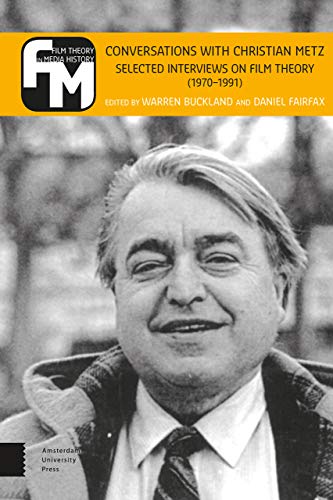
Synopsis
From 1968 to 1991 the acclaimed film theorist Christian Metz wrote several remarkable books on film theory: Essais sur la signification au cinema, tome 1 et 2; Langage et cinéma; Le signifiant imaginaire; and L'Enonciation impersonnelle. These books set the agenda of academic film studies during its formative period. Metz's ideas were taken up, digested, refined, reinterpreted, criticized, and sometimes dismissed, but rarely ignored.
This volume collects and translates into English for the first time a series of interviews with Metz, who offers readable summaries, elaborations, and explanations of his sometimes complex and demanding theories of film. He speaks informally of the most fundamental concepts that constitute the heart of film theory as an academic discipline - concepts borrowed from linguistics, semiotics, rhetoric, narratology, and psychoanalysis.
Within the colloquial language of the interview, we witness Metz's initial formation, development, and application of these concepts. The interviewers act as curious readers who pose probing questions to Metz about his books, and seek clarification and elaboration of his key concepts. Metz also reveals a series of curious and unusual insights, including the contents of his unpublished (and now apparently 'lost') manuscript, the social networks operative in the French intellectual community during the 1970s and 1980s, Metz's relation to the Filmology movement, and his views on Gilles Deleuze's film theory.
Les informations fournies dans la section « Synopsis » peuvent faire référence à une autre édition de ce titre.
À propos de l'auteur
Warren Bucklandis Reader in Film Studies at Oxford Brookes University. He is the author/editor of ten books, including The Routledge Encyclopedia of Film Theory (with Edward Branigan, 2013), Film Theory: Rational Reconstructions (2012), and The Cognitive Semiotics of Film (2000).
Daniel Fairfax is a doctoral candidate in Film Studies and Comparative Literature at Yale University and a regular contributor to Senses of Cinema.
À propos de la quatrième de couverture
From 1968 to 1991 the acclaimed film theorist Christian Metz wrote several remarkable books on film theory: Essais sur la signification au cinema, tome 1 et 2; Langage et cinéma; Le signifiant imaginaire; and L'Enonciation impersonnelle. These books set the agenda of academic film studies during its formative period. Metz's ideas were taken up, digested, refined, reinterpreted, criticized, and sometimes dismissed, but rarely ignored.
This volume collects and translates into English for the first time a series of interviews with Metz, who offers readable summaries, elaborations, and explanations of his sometimes complex and demanding theories of film. He speaks informally of the most fundamental concepts that constitute the heart of film theory as an academic discipline - concepts borrowed from linguistics, semiotics, rhetoric, narratology, and psychoanalysis.
Within the colloquial language of the interview, we witness Metz's initial formation, development, and application of these concepts. The interviewers act as curious readers who pose probing questions to Metz about his books, and seek clarification and elaboration of his key concepts. Metz also reveals a series of curious and unusual insights, including the contents of his unpublished (and now apparently 'lost') manuscript, the social networks operative in the French intellectual community during the 1970s and 1980s, Metz's relation to the Filmology movement, and his views on Gilles Deleuze's film theory.
À propos de la deuxième de couverture
From 1968 to 1991 the acclaimed film theorist Christian Metz wrote several remarkable books on film theory: Essais sur la signification au cinema, tome 1 et 2; Langage et cinéma; Le signifiant imaginaire; and L'Enonciation impersonnelle. These books set the agenda of academic film studies during its formative period. Metz's ideas were taken up, digested, refined, reinterpreted, criticized, and sometimes dismissed, but rarely ignored. This volume collects and translates into English for the first time a series of interviews with Metz, who offers readable summaries, elaborations, and explanations of his sometimes complex and demanding theories of film. He speaks informally of the most fundamental concepts that constitute the heart of film theory as an academic discipline - concepts borrowed from linguistics, semiotics, rhetoric, narratology, and psychoanalysis. Within the colloquial language of the interview, we witness Metz's initial formation, development, and application of these concepts. The interviewers act as curious readers who pose probing questions to Metz about his books, and seek clarification and elaboration of his key concepts. Metz also reveals a series of curious and unusual insights, including the contents of his unpublished (and now apparently 'lost') manuscript, the social networks operative in the French intellectual community during the 1970s and 1980s, Metz's relation to the Filmology movement, and his views on Gilles Deleuze's film theory.
Les informations fournies dans la section « A propos du livre » peuvent faire référence à une autre édition de ce titre.
Résultats de recherche pour Conversations with Christian Metz

Image d'archives
Conversations with Christian Metz: Selected Interviews on Film Theory (1970-1991) (Film Theory in Media History)
Edité par
Amsterdam University Press, 2017
ISBN 10 : 9089648259
ISBN 13 : 9789089648259
Ancien ou d'occasion
Paperback
Vendeur : Midtown Scholar Bookstore, Harrisburg, PA, Etats-Unis
Évaluation du vendeur 5 sur 5 étoiles

Paperback. Etat : Good. Good - Bumped and creased book with tears to the extremities, but not affecting the text block, may have remainder mark or previous owner's name - GOOD Standard-sized. N° de réf. du vendeur M9089648259Z3
Acheter D'occasion
EUR 13,32
Expédition à EUR 5,35
Expédition nationale : Etats-Unis
Expédition nationale : Etats-Unis
Quantité disponible : 6 disponible(s)
Image d'archives
Conversations with Christian Metz : Selected Interviews on Film Theory (1970-1991)
Edité par
Amsterdam University Press, 2017
ISBN 10 : 9089648259
ISBN 13 : 9789089648259
Ancien ou d'occasion
Couverture souple
Vendeur : Better World Books Ltd, Dunfermline, Royaume-Uni
Évaluation du vendeur 5 sur 5 étoiles
Etat : Very Good. Former library copy. Pages intact with possible writing/highlighting. Binding strong with minor wear. Dust jackets/supplements may not be included. Includes library markings. Stock photo provided. Product includes identifying sticker. Better World Books: Buy Books. Do Good. N° de réf. du vendeur 67661306-20
Acheter D'occasion
EUR 17,56
Expédition à EUR 5,97
Expédition depuis Royaume-Uni vers Etats-Unis
Expédition depuis Royaume-Uni vers Etats-Unis
Quantité disponible : 1 disponible(s)
Image fournie par le vendeur
Conversations with Christian Metz: Selected Interviews on Film Theory (1970-1991) (Film Theory in Media History)
Edité par
Amsterdam University Press, 2017
ISBN 10 : 9089648259
ISBN 13 : 9789089648259
Ancien ou d'occasion
Soft cover
Edition originale
Vendeur : Rosario Beach Rare Books, Lake Stevens, WA, Etats-Unis
Évaluation du vendeur 5 sur 5 étoiles
Soft cover. Etat : As New. 1st Edition. *Veteran-Owned, Family-Run, Small Book Store in the Pacific Northwest* FAST SHIPPING!! / Clean text, no markings, tight binding. N° de réf. du vendeur ABE-1745712537073
Acheter D'occasion
EUR 42,38
Livraison gratuite
Expédition nationale : Etats-Unis
Expédition nationale : Etats-Unis
Quantité disponible : 2 disponible(s)
Image fournie par le vendeur
Conversations With Christian Metz : Selected Interviews on Film Theory (1970-1991)
Vendeur : GreatBookPrices, Columbia, MD, Etats-Unis
Évaluation du vendeur 5 sur 5 étoiles
Etat : New. N° de réf. du vendeur 29534425-n
Acheter neuf
EUR 101,29
Expédition à EUR 2,35
Expédition nationale : Etats-Unis
Expédition nationale : Etats-Unis
Quantité disponible : Plus de 20 disponibles
Image d'archives
Conversations with Christian Metz: Selected Interviews on Film Theory (1970-1991) (Film Theory in Media History)
Vendeur : California Books, Miami, FL, Etats-Unis
Évaluation du vendeur 5 sur 5 étoiles
Etat : New. N° de réf. du vendeur I-9789089648259
Acheter neuf
EUR 103,72
Expédition à EUR 2,67
Expédition nationale : Etats-Unis
Expédition nationale : Etats-Unis
Quantité disponible : Plus de 20 disponibles
Image d'archives
Conversations with Christian Metz
impression à la demandeVendeur : PBShop.store UK, Fairford, GLOS, Royaume-Uni
Évaluation du vendeur 5 sur 5 étoiles
PAP. Etat : New. New Book. Delivered from our UK warehouse in 4 to 14 business days. THIS BOOK IS PRINTED ON DEMAND. Established seller since 2000. N° de réf. du vendeur L0-9789089648259
Acheter neuf
EUR 106,24
Expédition à EUR 6
Expédition depuis Royaume-Uni vers Etats-Unis
Expédition depuis Royaume-Uni vers Etats-Unis
Quantité disponible : Plus de 20 disponibles
Image fournie par le vendeur
Conversations With Christian Metz : Selected Interviews on Film Theory (1970-1991)
Edité par
Routledge, 2017
ISBN 10 : 9089648259
ISBN 13 : 9789089648259
Ancien ou d'occasion
Couverture souple
Vendeur : GreatBookPrices, Columbia, MD, Etats-Unis
Évaluation du vendeur 5 sur 5 étoiles
Etat : As New. Unread book in perfect condition. N° de réf. du vendeur 29534425
Acheter D'occasion
EUR 113,73
Expédition à EUR 2,35
Expédition nationale : Etats-Unis
Expédition nationale : Etats-Unis
Quantité disponible : Plus de 20 disponibles
Image d'archives
Conversations with Christian Metz: Selected Interviews on Film Theory (1970-1991) (Film Theory in Media History)
Edité par
Amsterdam University Press, 2017
ISBN 10 : 9089648259
ISBN 13 : 9789089648259
Neuf
Couverture souple
Vendeur : Kennys Bookshop and Art Galleries Ltd., Galway, GY, Irlande
Évaluation du vendeur 5 sur 5 étoiles
Etat : New. 2017. 0th Edition. Paperback. . . . . . N° de réf. du vendeur V9789089648259
Acheter neuf
EUR 109,90
Expédition à EUR 9,50
Expédition depuis Irlande vers Etats-Unis
Expédition depuis Irlande vers Etats-Unis
Quantité disponible : Plus de 20 disponibles
Image d'archives
Conversations With Christian Metz : Selected Interviews on Film Theory (1970-1991)
Vendeur : GreatBookPricesUK, Woodford Green, Royaume-Uni
Évaluation du vendeur 5 sur 5 étoiles
Etat : New. N° de réf. du vendeur 29534425-n
Acheter neuf
EUR 103,68
Expédition à EUR 17,92
Expédition depuis Royaume-Uni vers Etats-Unis
Expédition depuis Royaume-Uni vers Etats-Unis
Quantité disponible : Plus de 20 disponibles
Image fournie par le vendeur
Conversations with Christian Metz
Edité par
Taylor & Francis, 2017
ISBN 10 : 9089648259
ISBN 13 : 9789089648259
Neuf
Kartoniert / Broschiert
Vendeur : moluna, Greven, Allemagne
Évaluation du vendeur 5 sur 5 étoiles
Kartoniert / Broschiert. Etat : New. Dieser Artikel ist ein Print on Demand Artikel und wird nach Ihrer Bestellung fuer Sie gedruckt. Warren Buckland is Reader in Film Studies at Oxford Brookes University. He is the author/editor of ten books, including > (with Edward Branigan, 2013), >The Routledge Encyclopedia of Film Theory>, >Film Theory: Rational Reconstructions> . N° de réf. du vendeur 599125923
Acheter neuf
EUR 73,20
Expédition à EUR 48,99
Expédition depuis Allemagne vers Etats-Unis
Expédition depuis Allemagne vers Etats-Unis
Quantité disponible : Plus de 20 disponibles