
Articles liés à A Comprehensive Guide to Transit-Oriented Development...
Synopsis
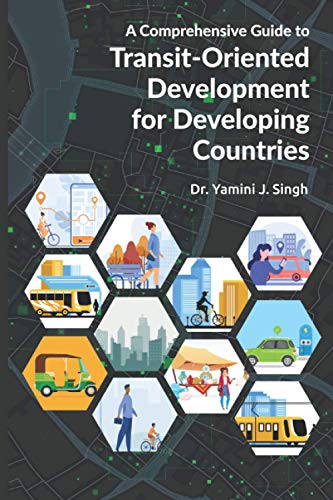
The book is intended to be a comprehensive guidebook or a manual on Transit-Oriented Development (TOD) for readers, especially from developing countries. The author argues that even though TOD started in the developed countries, we need to understand the concept of TOD from the perspective of developing countries that are culturally, demographically and economically different. The book works on that principle and explains the characteristics of TOD, discusses selected case studies to learn from, clarifies various misconceptions related to TOD, brings together various technical methods to plan for TOD and explains their advantages and disadvantages. In the end, it throws light on validity of TOD in the fast-changing urban scape of smart cities and smart mobility.Table of Contents1. An Introduction to Transit-Oriented Development 1.1 Introduction 1.2 TOD and its objectives 1.3 Characteristics of Transit-Oriented Development 1.3.1 Density 1.3.2 Diversity 1.3.3 Design 1.4 Does transit type influence the success or efficacy of TOD plans? 1.5 At which scale is TOD planned? 1.6 Defining TOD area 1.7 TOD and car parking 1.8 Can TOD exist without transit? 1.9 Pricing the public transport 2. Learning from Examples 2.1 Introduction 2.2 Goals and objectives 2.3 Existing TOD case studies 2.3.1 Perth, Western Australia 2.3.2 Portland region, Oregon State, the USA 2.3.3 Subiaco, near Perth, Western Australia 2.3.4 Hong Kong Special Administrative Region, People’s Republic of China 2.3.5 Singapore city, Republic of Singapore 2.3.6 Curitiba, Brazil2.3.7 Guangzhou, China 2.3.8 Seoul, Republic of Korea 2.3.9 Tokyo, Japan 2.4 Conclusions 3. Transit-Oriented Development in Developing Countries 3.1 Introduction 3.2 Need for TOD in developing countries 3.3 What does TOD mean for developing countries? 3.4 Gentrification of TOD areas and displacement of poor3.4.1 Gentrification and its causes 3.4.2 Managing gentrification 3.5 Conclusions 4. Planning for Transit-Oriented Development: The Methods 4.1 Introduction 4.2 Evaluation vs. Assessment 4.3 Evaluation of TOD plans 4.4 Assessment of TOD characteristics 4.5 Methods of assessment and planning for TOD 4.5.1 Node-Place Model 4.5.2 Enhanced node-place model 4.5.3 The Butterfly Model 4.5.4 Cluster analysis 4.5.5 TOD Standard (2013) 4.5.6 TOD Index – Local scale 4.5.7 TOD Index – Regional scale 4.6 Conclusions 5. Transit-Oriented Development and Smart Mobility 5.1 Introduction 5.2 Smart cities5.3 Smart mobility 5.3.1 Shared (smart) mobility 5.3.2 Electric vehicles (EVs) 5.3.3 Autonomous vehicles (AVs) 5.4 Smart and sustainable? 5.4.1 Environmental impacts of smart mobility 5.4.2 Social impacts of smart mobility 5.5 Smart mobility and TOD Appendix I: Equity vs. EqualityAppendix II: The Multi-Criteria Assessment (MCA)
Les informations fournies dans la section « Synopsis » peuvent faire référence à une autre édition de ce titre.
Résultats de recherche pour A Comprehensive Guide to Transit-Oriented Development...

Image d'archives
A Comprehensive Guide to Transit-Oriented Development for Developing Countries
Vendeur : Vedams eBooks (P) Ltd, New Delhi, Inde
Évaluation du vendeur 4 sur 5 étoiles

Soft cover. Etat : New. The book is intended to be a comprehensive guidebook or a manual on Transit-Oriented Development (TOD) for readers, especially from developing countries. The author argues that even though TOD started in the developed countries, we need to understand the concept of TOD from the perspective of developing countries that are culturally, demographically and economically different. The book works on that principle and explains the characteristics of TOD, discusses selected case studies to learn from, clarifies various misconceptions related to TOD, brings together various technical methods to plan for TOD and explains their advantages and disadvantages. In the end, it throws light on validity of TOD in the fast-changing urban scape of smart cities and smart mobility.Table of Contents1. An Introduction to Transit-Oriented Development 1.1 Introduction 1.2 TOD and its objectives 1.3 Characteristics of Transit-Oriented Development 1.3.1 Density 1.3.2 Diversity 1.3.3 Design 1.4 Does transit type influence the success or efficacy of TOD plans? 1.5 At which scale is TOD planned? 1.6 Defining TOD area 1.7 TOD and car parking 1.8 Can TOD exist without transit? 1.9 Pricing the public transport 2. Learning from Examples 2.1 Introduction 2.2 Goals and objectives 2.3 Existing TOD case studies 2.3.1 Perth, Western Australia 2.3.2 Portland region, Oregon State, the USA 2.3.3 Subiaco, near Perth, Western Australia 2.3.4 Hong Kong Special Administrative Region, People's Republic of China 2.3.5 Singapore city, Republic of Singapore 2.3.6 Curitiba, Brazil2.3.7 Guangzhou, China 2.3.8 Seoul, Republic of Korea 2.3.9 Tokyo, Japan 2.4 Conclusions 3. Transit-Oriented Development in Developing Countries 3.1 Introduction 3.2 Need for TOD in developing countries 3.3 What does TOD mean for developing countries? 3.4 Gentrification of TOD areas and displacement of poor3.4.1 Gentrification and its causes 3.4.2 Managing gentrification 3.5 Conclusions 4. Planning for Transit-Oriented Development: The Methods 4.1 Introduction 4.2 Evaluation vs. Assessment 4.3 Evaluation of TOD plans 4.4 Assessment of TOD characteristics 4.5 Methods of assessment and planning for TOD 4.5.1 Node-Place Model 4.5.2 Enhanced node-place model 4.5.3 The Butterfly Model 4.5.4 Cluster analysis 4.5.5 TOD Standard (2013) 4.5.6 TOD Index - Local scale 4.5.7 TOD Index - Regional scale 4.6 Conclusions 5. Transit-Oriented Development and Smart Mobility 5.1 Introduction 5.2 Smart cities5.3 Smart mobility 5.3.1 Shared (smart) mobility 5.3.2 Electric vehicles (EVs) 5.3.3 Autonomous vehicles (AVs) 5.4 Smart and sustainable? 5.4.1 Environmental impacts of smart mobility 5.4.2 Social impacts of smart mobility 5.5 Smart mobility and TOD Appendix I: Equity vs. EqualityAppendix II: The Multi-Criteria Assessment (MCA). N° de réf. du vendeur 139435
Acheter neuf
EUR 18,10
Expédition à EUR 17,50
Expédition depuis Inde vers Etats-Unis
Expédition depuis Inde vers Etats-Unis
Quantité disponible : 5 disponible(s)
Image d'archives
A Comprehensive Guide to Transit-Oriented Development for Developing Countries
Edité par
COPAL Publishing Group, 2021
ISBN 10 : 9383419989
ISBN 13 : 9789383419982
Neuf
Couverture souple
Vendeur : GreatBookPrices, Columbia, MD, Etats-Unis
Évaluation du vendeur 5 sur 5 étoiles

Etat : New. N° de réf. du vendeur 43482462-n
Acheter neuf
EUR 33,75
Expédition à EUR 2,32
Expédition nationale : Etats-Unis
Expédition nationale : Etats-Unis
Quantité disponible : Plus de 20 disponibles
Image fournie par le vendeur
A Comprehensive Guide to Transit-Oriented Development for Developing Countries (Paperback or Softback)
Edité par
Copal Publishing Group 1/7/2021, 2021
ISBN 10 : 9383419989
ISBN 13 : 9789383419982
Neuf
Paperback or Softback
Vendeur : BargainBookStores, Grand Rapids, MI, Etats-Unis
Évaluation du vendeur 5 sur 5 étoiles
Paperback or Softback. Etat : New. A Comprehensive Guide to Transit-Oriented Development for Developing Countries. Book. N° de réf. du vendeur BBS-9789383419982
Acheter neuf
EUR 37,34
Livraison gratuite
Expédition nationale : Etats-Unis
Expédition nationale : Etats-Unis
Quantité disponible : 5 disponible(s)
Image d'archives
A Comprehensive Guide to Transit-Oriented Development for Developing Countries
Edité par
COPAL Publishing Group, 2021
ISBN 10 : 9383419989
ISBN 13 : 9789383419982
Neuf
Couverture souple
Vendeur : California Books, Miami, FL, Etats-Unis
Évaluation du vendeur 5 sur 5 étoiles
Etat : New. N° de réf. du vendeur I-9789383419982
Acheter neuf
EUR 38,02
Livraison gratuite
Expédition nationale : Etats-Unis
Expédition nationale : Etats-Unis
Quantité disponible : Plus de 20 disponibles
Image d'archives
A Comprehensive Guide to Transit-Oriented Development for Developing Countries
Edité par
COPAL Publishing Group, 2021
ISBN 10 : 9383419989
ISBN 13 : 9789383419982
Ancien ou d'occasion
Couverture souple
Vendeur : GreatBookPrices, Columbia, MD, Etats-Unis
Évaluation du vendeur 5 sur 5 étoiles
Etat : As New. Unread book in perfect condition. N° de réf. du vendeur 43482462
Acheter D'occasion
EUR 39,34
Expédition à EUR 2,32
Expédition nationale : Etats-Unis
Expédition nationale : Etats-Unis
Quantité disponible : Plus de 20 disponibles
Image d'archives
A Comprehensive Guide to Transit-Oriented Development for Developing Countries
Edité par
COPAL Publishing Group, 2021
ISBN 10 : 9383419989
ISBN 13 : 9789383419982
Neuf
Couverture souple
Vendeur : GreatBookPricesUK, Woodford Green, Royaume-Uni
Évaluation du vendeur 5 sur 5 étoiles
Etat : New. N° de réf. du vendeur 43482462-n
Acheter neuf
EUR 41,08
Expédition à EUR 17,44
Expédition depuis Royaume-Uni vers Etats-Unis
Expédition depuis Royaume-Uni vers Etats-Unis
Quantité disponible : Plus de 20 disponibles
Image d'archives
A Comprehensive Guide to Transit-Oriented Development for Developing Countries
Edité par
COPAL Publishing Group, 2021
ISBN 10 : 9383419989
ISBN 13 : 9789383419982
Ancien ou d'occasion
Couverture souple
Vendeur : GreatBookPricesUK, Woodford Green, Royaume-Uni
Évaluation du vendeur 5 sur 5 étoiles
Etat : As New. Unread book in perfect condition. N° de réf. du vendeur 43482462
Acheter D'occasion
EUR 46,66
Expédition à EUR 17,44
Expédition depuis Royaume-Uni vers Etats-Unis
Expédition depuis Royaume-Uni vers Etats-Unis
Quantité disponible : Plus de 20 disponibles
Image fournie par le vendeur
A Comprehensive Guide to Transit-Oriented Development for Developing Countries
Vendeur : moluna, Greven, Allemagne
Évaluation du vendeur 5 sur 5 étoiles
Etat : New. N° de réf. du vendeur 909583189
Acheter neuf
EUR 40,89
Expédition à EUR 48,99
Expédition depuis Allemagne vers Etats-Unis
Expédition depuis Allemagne vers Etats-Unis
Quantité disponible : Plus de 20 disponibles