
Articles liés à Life Science Ethics
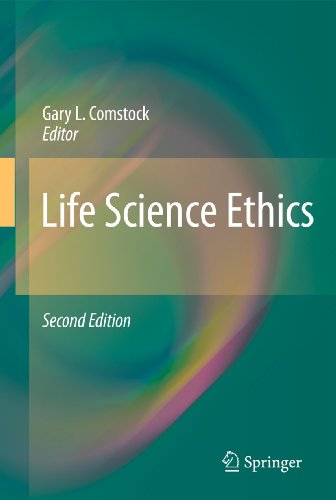
Synopsis
Does nature have intrinsic value? Should we be doing more to save wilderness and ocean ecosystems? What are our duties to future generations of humans? Do animals have rights? This revised edition of "Life Science Ethics" introduces these questions using narrative case studies on genetically modified foods, use of animals in research, nanotechnology, and global climate change, and then explores them in detail using essays written by nationally-recognized experts in the ethics field.
Part I introduces ethics, the relationship of religion to ethics, how we assess ethical arguments, and a method ethicists use to reason about ethical theories. Part II demonstrates the relevance of ethical reasoning to the environment, land, farms, food, biotechnology, genetically modified foods, animals in agriculture and research, climate change, and nanotechnology. Part III presents case studies for the topics found in Part II.
Les informations fournies dans la section « Synopsis » peuvent faire référence à une autre édition de ce titre.
À propos de l'auteur
Gary L. Comstock is Professor of Philosophy at North Carolina State University, author of Vexing Nature? On the Ethical Case against Agricultural Biotechnology (Kluwer, 2000), and Editor-in-chief of On the Human at the National Humanities Center.
À propos de la quatrième de couverture
This second edition of Life Science Ethics includes four essays not found in the first edition:· Richard Haynes on “Animals in Research”· Stephen M. Gardiner on “Climate Change”· Christopher Kelty on “Nanotechnology”· Gary Comstock on “Genetically Modified Foods” and a revised and expanded version of the chapter on “Farms” in which Stephen Carpenter joins Charles Taliaferro as author. In addition, Part III has been thoroughly revised with the goal of focusing attention on salient examples. Three new case studies have been added: · Robert Streiffer and Sara Gavrell Ortiz on “Enviropigs”· Donald F. Boesch, et al. on “Coastal Dead Zones”· Deb Bennett-Woods on “Nanotechnology and Human Enhancement” The first edition was praised for providing instructors with a stimulating text that will help students hone their critical thinking skills. That text is here enhanced with treatments of critical new issues, including global warming, nanotechnology, and the possibility that bioengineering may be able to change human nature. The new edition includes classroom discussion questions for use in provoking and guiding in-class discussions. Part I introduces ethics, the relationship of religion to ethics, how we assess ethical arguments, and a method ethicists use to reason about ethical theories. Part II demonstrates the relevance of ethical reasoning to the environment, land, farms, food, biotechnology, genetically modified foods, animals in agriculture and research, climate change, and nanotechnology. Part III presents case studies for the topics found in Part II. Two appendices include exercises to help students learn systematic ways of thinking through ethical dilemmas and notes for instructors using the book as a text. "...cleverly designed...scholarly and readable...the approach should help capture the attention of today's undergraduates." - Agricultural Economics Gary L. Comstock is Professor of Philosophy at North Carolina State University, author of Vexing Nature? On the Ethical Case against Agricultural Biotechnology (Kluwer, 2000), and Editor-in-chief of On the Human at the National Humanities Center.
Les informations fournies dans la section « A propos du livre » peuvent faire référence à une autre édition de ce titre.
Résultats de recherche pour Life Science Ethics

Image fournie par le vendeur
Life Science Ethics
Edité par
Springer Netherlands Nov 2014, 2014
ISBN 10 : 9400793200
ISBN 13 : 9789400793200
Neuf
Taschenbuch
Vendeur : BuchWeltWeit Ludwig Meier e.K., Bergisch Gladbach, Allemagne
Évaluation du vendeur 5 sur 5 étoiles

Taschenbuch. Etat : Neu. This item is printed on demand - it takes 3-4 days longer - Neuware -Does nature have intrinsic value Should we be doing more to save wilderness and ocean ecosystems What are our duties to future generations of humans Do animals have rights This revised edition of 'Life Science Ethics' introduces these questions using narrative case studies on genetically modified foods, use of animals in research, nanotechnology, and global climate change, and then explores them in detail using essays written by nationally-recognized experts in the ethics field.Part I introduces ethics, the relationship of religion to ethics, how we assess ethical arguments, and a method ethicists use to reason about ethical theories. Part II demonstrates the relevance of ethical reasoning to the environment, land, farms, food, biotechnology, genetically modified foods, animals in agriculture and research, climate change, and nanotechnology. Part III presents case studies for the topics found in Part II. 512 pp. Englisch. N° de réf. du vendeur 9789400793200
Acheter neuf
EUR 58,80
Expédition à EUR 23
Expédition depuis Allemagne vers Etats-Unis
Expédition depuis Allemagne vers Etats-Unis
Quantité disponible : 2 disponible(s)
Image fournie par le vendeur
Life Science Ethics
Vendeur : GreatBookPrices, Columbia, MD, Etats-Unis
Évaluation du vendeur 5 sur 5 étoiles
Etat : New. N° de réf. du vendeur 22262067-n
Acheter neuf
EUR 83,36
Expédition à EUR 2,36
Expédition nationale : Etats-Unis
Expédition nationale : Etats-Unis
Quantité disponible : Plus de 20 disponibles
Image d'archives
Life Science Ethics (eng)
impression à la demandeVendeur : Brook Bookstore On Demand, Napoli, NA, Italie
Évaluation du vendeur 5 sur 5 étoiles
Etat : new. Questo è un articolo print on demand. N° de réf. du vendeur G7ARVGGFNN
Acheter neuf
EUR 78,24
Expédition à EUR 8
Expédition depuis Italie vers Etats-Unis
Expédition depuis Italie vers Etats-Unis
Quantité disponible : Plus de 20 disponibles
Image d'archives
Life Science Ethics
impression à la demandeVendeur : Chiron Media, Wallingford, Royaume-Uni
Évaluation du vendeur 5 sur 5 étoiles
PF. Etat : New. This item is printed on demand. Brand new book, sourced directly from publisher. Dispatch time is 6-7 days from our warehouse. Book will be sent in robust, secure packaging to ensure it reaches you securely. N° de réf. du vendeur 6666-IUK-9789400793200
Acheter neuf
EUR 84,96
Expédition à EUR 7,78
Expédition depuis Royaume-Uni vers Etats-Unis
Expédition depuis Royaume-Uni vers Etats-Unis
Quantité disponible : 20 disponible(s)
Image fournie par le vendeur
Life Science Ethics
Vendeur : GreatBookPricesUK, Woodford Green, Royaume-Uni
Évaluation du vendeur 5 sur 5 étoiles
Etat : New. N° de réf. du vendeur 22262067-n
Acheter neuf
EUR 85,70
Expédition à EUR 17,97
Expédition depuis Royaume-Uni vers Etats-Unis
Expédition depuis Royaume-Uni vers Etats-Unis
Quantité disponible : Plus de 20 disponibles
Image fournie par le vendeur
Life Science Ethics
Vendeur : Rarewaves.com USA, London, LONDO, Royaume-Uni
Évaluation du vendeur 5 sur 5 étoiles
Paperback. Etat : New. 2nd ed. 2010. Does nature have intrinsic value? Should we be doing more to save wilderness and ocean ecosystems? What are our duties to future generations of humans? Do animals have rights? This revised edition of "Life Science Ethics" introduces these questions using narrative case studies on genetically modified foods, use of animals in research, nanotechnology, and global climate change, and then explores them in detail using essays written by nationally-recognized experts in the ethics field.Part I introduces ethics, the relationship of religion to ethics, how we assess ethical arguments, and a method ethicists use to reason about ethical theories. Part II demonstrates the relevance of ethical reasoning to the environment, land, farms, food, biotechnology, genetically modified foods, animals in agriculture and research, climate change, and nanotechnology. Part III presents case studies for the topics found in Part II. N° de réf. du vendeur LU-9789400793200
Acheter neuf
EUR 113,58
Livraison gratuite
Expédition depuis Royaume-Uni vers Etats-Unis
Expédition depuis Royaume-Uni vers Etats-Unis
Quantité disponible : Plus de 20 disponibles
Image fournie par le vendeur
Life Science Ethics
Edité par
Springer Netherlands, 2014
ISBN 10 : 9400793200
ISBN 13 : 9789400793200
Neuf
Couverture souple
Vendeur : moluna, Greven, Allemagne
Évaluation du vendeur 5 sur 5 étoiles
Etat : New. Dieser Artikel ist ein Print on Demand Artikel und wird nach Ihrer Bestellung fuer Sie gedruckt. Features new essays and case studies on genetically modified foods, use of animals in research, nanotechnology, and global climate changeExpertly deploys narratives, argument analysis, case studies, essays and classroom discussion questions. N° de réf. du vendeur 11511192
Acheter neuf
EUR 83,50
Expédition à EUR 48,99
Expédition depuis Allemagne vers Etats-Unis
Expédition depuis Allemagne vers Etats-Unis
Quantité disponible : Plus de 20 disponibles
Image fournie par le vendeur
Life Science Ethics
Vendeur : AHA-BUCH GmbH, Einbeck, Allemagne
Évaluation du vendeur 5 sur 5 étoiles
Taschenbuch. Etat : Neu. Druck auf Anfrage Neuware - Printed after ordering - Does nature have intrinsic value Should we be doing more to save wilderness and ocean ecosystems What are our duties to future generations of humans Do animals have rights This revised edition of 'Life Science Ethics' introduces these questions using narrative case studies on genetically modified foods, use of animals in research, nanotechnology, and global climate change, and then explores them in detail using essays written by nationally-recognized experts in the ethics field.Part I introduces ethics, the relationship of religion to ethics, how we assess ethical arguments, and a method ethicists use to reason about ethical theories. Part II demonstrates the relevance of ethical reasoning to the environment, land, farms, food, biotechnology, genetically modified foods, animals in agriculture and research, climate change, and nanotechnology. Part III presents case studies for the topics found in Part II. N° de réf. du vendeur 9789400793200
Acheter neuf
EUR 113,16
Expédition à EUR 35
Expédition depuis Allemagne vers Etats-Unis
Expédition depuis Allemagne vers Etats-Unis
Quantité disponible : 1 disponible(s)
Image d'archives
Life Science Ethics
Vendeur : Books Puddle, Woodside, NY, Etats-Unis
Évaluation du vendeur 4 sur 5 étoiles

Etat : New. pp. 482. N° de réf. du vendeur 26359480183
Acheter neuf
EUR 150,07
Expédition à EUR 3,57
Expédition nationale : Etats-Unis
Expédition nationale : Etats-Unis
Quantité disponible : 4 disponible(s)
Image fournie par le vendeur
Life Science Ethics
Edité par
Springer, Springer Nov 2014, 2014
ISBN 10 : 9400793200
ISBN 13 : 9789400793200
Neuf
Taschenbuch
Vendeur : buchversandmimpf2000, Emtmannsberg, BAYE, Allemagne
Évaluation du vendeur 5 sur 5 étoiles
Taschenbuch. Etat : Neu. This item is printed on demand - Print on Demand Titel. Neuware -Does nature have intrinsic value Should we be doing more to save wilderness and ocean ecosystems What are our duties to future generations of humans Do animals have rights This revised edition of 'Life Science Ethics' introduces these questions using narrative case studies on genetically modified foods, use of animals in research, nanotechnology, and global climate change, and then explores them in detail using essays written by nationally-recognized experts in the ethics field.Part I introduces ethics, the relationship of religion to ethics, how we assess ethical arguments, and a method ethicists use to reason about ethical theories. Part II demonstrates the relevance of ethical reasoning to the environment, land, farms, food, biotechnology, genetically modified foods, animals in agriculture and research, climate change, and nanotechnology. Part III presents case studies for the topics found in Part II.Springer-Verlag KG, Sachsenplatz 4-6, 1201 Wien 512 pp. Englisch. N° de réf. du vendeur 9789400793200
Acheter neuf
EUR 96,29
Expédition à EUR 60
Expédition depuis Allemagne vers Etats-Unis
Expédition depuis Allemagne vers Etats-Unis
Quantité disponible : 1 disponible(s)