
Articles liés à Naturally-Produced Organohalogens
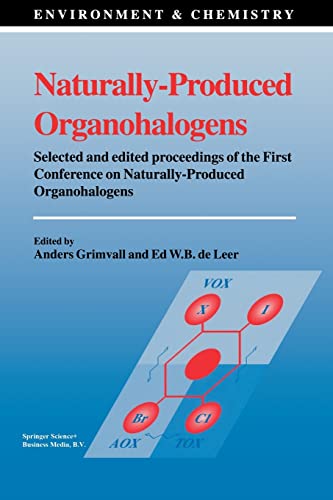
Synopsis
Should the production and use of chlorine and all chlorinated organic compounds be halted, in view of their adverse effects on the environment and human health?
Those in favour argue that certain chlorinated compounds (PCBs, DDT, CFCs, etc.) have large negative environmental effects. The use of chlorine in disinfectants leads to the production of chloroform, while bulk products (PVC) contribute to the production of chlorinated dibenzo-p-dioxins and dibenzofurans when they are burned.
Those against argue that chlorine and many chlorinated compounds are essential in the control of human health (the prevention of disease transmitted through drinking water that has not been disinfected), and that chlorinated compounds are indispensable intermediates in many production processes, representing a vast economic value.
But such discussions often ignore the fact that Nature contributes significantly to the production of chlorinated organic compounds. More than 1000 such compounds are known, and their contribution to the biogeochemical cycling of chlorine is underestimated. Chlorine is organically bound in large quantities to humic materials, and natural production mechanisms are known for low molecular weight compounds (methyl chloride, chloroform, chlorinated dibenzo-p-dioxins and dibenzofurans). The role of these compounds in the environment is largely unknown.
Naturally-Produced Organohalogens gives a complete overview of the present state of knowledge on the subject, giving a much needed balance to the argument sketched out above.
Les informations fournies dans la section « Synopsis » peuvent faire référence à une autre édition de ce titre.
Résultats de recherche pour Naturally-Produced Organohalogens

Image d'archives
Naturally-Produced Organohalogens (eng)
impression à la demandeVendeur : Brook Bookstore On Demand, Napoli, NA, Italie
Évaluation du vendeur 5 sur 5 étoiles

Etat : new. Questo è un articolo print on demand. N° de réf. du vendeur WMNDO6XZHU
Acheter neuf
EUR 126,26
Expédition à EUR 6,80
Expédition depuis Italie vers Etats-Unis
Expédition depuis Italie vers Etats-Unis
Quantité disponible : Plus de 20 disponibles
Image fournie par le vendeur
Naturally-Produced Organohalogens
Edité par
Springer Netherlands, Springer Netherlands Nov 2012, 2012
ISBN 10 : 940104032X
ISBN 13 : 9789401040327
Neuf
Taschenbuch
Vendeur : BuchWeltWeit Ludwig Meier e.K., Bergisch Gladbach, Allemagne
Évaluation du vendeur 5 sur 5 étoiles
Taschenbuch. Etat : Neu. This item is printed on demand - it takes 3-4 days longer - Neuware -Should the production and use of chlorine and all chlorinated organic compounds be halted, in view of their adverse effects on the environment and human health Those in favour argue that certain chlorinated compounds (PCBs, DDT, CFCs, etc.) have large negative environmental effects. The use of chlorine in disinfectants leads to the production of chloroform, while bulk products (PVC) contribute to the production of chlorinated dibenzo-p-dioxins and dibenzofurans when they are burned. Those against argue that chlorine and many chlorinated compounds are essential in the control of human health (the prevention of disease transmitted through drinking water that has not been disinfected), and that chlorinated compounds are indispensable intermediates in many production processes, representing a vast economic value. But such discussions often ignore the fact that Nature contributes significantly to the production of chlorinated organic compounds. More than 1000 such compounds are known, and their contribution to the biogeochemical cycling of chlorine is underestimated. Chlorine is organically bound in large quantities to humic materials, and natural production mechanisms are known for low molecular weight compounds (methyl chloride, chloroform, chlorinated dibenzo-p-dioxins and dibenzofurans). The role of these compounds in the environment is largely unknown. Naturally-Produced Organohalogens gives a complete overview of the present state of knowledge on the subject, giving a much needed balance to the argument sketched out above. 452 pp. Englisch. N° de réf. du vendeur 9789401040327
Acheter neuf
EUR 160,49
Expédition à EUR 23
Expédition depuis Allemagne vers Etats-Unis
Expédition depuis Allemagne vers Etats-Unis
Quantité disponible : 2 disponible(s)
Image fournie par le vendeur
Naturally-Produced Organohalogens
Edité par
Springer Netherlands, 2012
ISBN 10 : 940104032X
ISBN 13 : 9789401040327
Neuf
Couverture souple
Vendeur : moluna, Greven, Allemagne
Évaluation du vendeur 5 sur 5 étoiles
Etat : New. Dieser Artikel ist ein Print on Demand Artikel und wird nach Ihrer Bestellung fuer Sie gedruckt. Selected and edited proceedings of the First Conference on Naturally-Produced Organohalogens Should the production and use of chlorine and all chlorinated organic compounds be halted, in view of their adverse effects on the environment and human heal. N° de réf. du vendeur 5830828
Acheter neuf
EUR 136,16
Expédition à EUR 48,99
Expédition depuis Allemagne vers Etats-Unis
Expédition depuis Allemagne vers Etats-Unis
Quantité disponible : Plus de 20 disponibles
Image fournie par le vendeur
Naturally-Produced Organohalogens
Edité par
Springer, 2012
ISBN 10 : 940104032X
ISBN 13 : 9789401040327
Ancien ou d'occasion
Couverture souple
Vendeur : GreatBookPrices, Columbia, MD, Etats-Unis
Évaluation du vendeur 5 sur 5 étoiles
Etat : As New. Unread book in perfect condition. N° de réf. du vendeur 19492917
Acheter D'occasion
EUR 183,20
Expédition à EUR 2,33
Expédition nationale : Etats-Unis
Expédition nationale : Etats-Unis
Quantité disponible : Plus de 20 disponibles
Image fournie par le vendeur
Naturally-Produced Organohalogens
Vendeur : GreatBookPricesUK, Woodford Green, Royaume-Uni
Évaluation du vendeur 5 sur 5 étoiles
Etat : New. N° de réf. du vendeur 19492917-n
Acheter neuf
EUR 171,39
Expédition à EUR 17,57
Expédition depuis Royaume-Uni vers Etats-Unis
Expédition depuis Royaume-Uni vers Etats-Unis
Quantité disponible : Plus de 20 disponibles
Image fournie par le vendeur
Naturally-Produced Organohalogens
Vendeur : GreatBookPrices, Columbia, MD, Etats-Unis
Évaluation du vendeur 5 sur 5 étoiles
Etat : New. N° de réf. du vendeur 19492917-n
Acheter neuf
EUR 191,77
Expédition à EUR 2,33
Expédition nationale : Etats-Unis
Expédition nationale : Etats-Unis
Quantité disponible : Plus de 20 disponibles
Image d'archives
Naturally-Produced Organohalogens (Environment & Chemistry, 1)
Vendeur : Ria Christie Collections, Uxbridge, Royaume-Uni
Évaluation du vendeur 5 sur 5 étoiles
Etat : New. In English. N° de réf. du vendeur ria9789401040327_new
Acheter neuf
EUR 183,07
Expédition à EUR 13,22
Expédition depuis Royaume-Uni vers Etats-Unis
Expédition depuis Royaume-Uni vers Etats-Unis
Quantité disponible : Plus de 20 disponibles
Image fournie par le vendeur
Naturally-Produced Organohalogens
Edité par
Springer, 2012
ISBN 10 : 940104032X
ISBN 13 : 9789401040327
Ancien ou d'occasion
Couverture souple
Vendeur : GreatBookPricesUK, Woodford Green, Royaume-Uni
Évaluation du vendeur 5 sur 5 étoiles
Etat : As New. Unread book in perfect condition. N° de réf. du vendeur 19492917
Acheter D'occasion
EUR 184,66
Expédition à EUR 17,57
Expédition depuis Royaume-Uni vers Etats-Unis
Expédition depuis Royaume-Uni vers Etats-Unis
Quantité disponible : Plus de 20 disponibles
Image fournie par le vendeur
Naturally-Produced Organohalogens
Vendeur : AHA-BUCH GmbH, Einbeck, Allemagne
Évaluation du vendeur 5 sur 5 étoiles
Taschenbuch. Etat : Neu. Druck auf Anfrage Neuware - Printed after ordering - Should the production and use of chlorine and all chlorinated organic compounds be halted, in view of their adverse effects on the environment and human health Those in favour argue that certain chlorinated compounds (PCBs, DDT, CFCs, etc.) have large negative environmental effects. The use of chlorine in disinfectants leads to the production of chloroform, while bulk products (PVC) contribute to the production of chlorinated dibenzo-p-dioxins and dibenzofurans when they are burned. Those against argue that chlorine and many chlorinated compounds are essential in the control of human health (the prevention of disease transmitted through drinking water that has not been disinfected), and that chlorinated compounds are indispensable intermediates in many production processes, representing a vast economic value. But such discussions often ignore the fact that Nature contributes significantly to the production of chlorinated organic compounds. More than 1000 such compounds are known, and their contribution to the biogeochemical cycling of chlorine is underestimated. Chlorine is organically bound in large quantities to humic materials, and natural production mechanisms are known for low molecular weight compounds (methyl chloride, chloroform, chlorinated dibenzo-p-dioxins and dibenzofurans). The role of these compounds in the environment is largely unknown. Naturally-Produced Organohalogens gives a complete overview of the present state of knowledge on the subject, giving a much needed balance to the argument sketched out above. N° de réf. du vendeur 9789401040327
Acheter neuf
EUR 174,36
Expédition à EUR 35
Expédition depuis Allemagne vers Etats-Unis
Expédition depuis Allemagne vers Etats-Unis
Quantité disponible : 1 disponible(s)
Image fournie par le vendeur
Naturally-Produced Organohalogens
Edité par
Springer Netherlands, Springer Nov 2012, 2012
ISBN 10 : 940104032X
ISBN 13 : 9789401040327
Neuf
Taschenbuch
Vendeur : buchversandmimpf2000, Emtmannsberg, BAYE, Allemagne
Évaluation du vendeur 5 sur 5 étoiles
Taschenbuch. Etat : Neu. This item is printed on demand - Print on Demand Titel. Neuware -Should the production and use of chlorine and all chlorinated organic compounds be halted, in view of their adverse effects on the environment and human health Those in favour argue that certain chlorinated compounds (PCBs, DDT, CFCs, etc.) have large negative environmental effects. The use of chlorine in disinfectants leads to the production of chloroform, while bulk products (PVC) contribute to the production of chlorinated dibenzo-p-dioxins and dibenzofurans when they are burned.Those against argue that chlorine and many chlorinated compounds are essential in the control of human health (the prevention of disease transmitted through drinking water that has not been disinfected), and that chlorinated compounds are indispensable intermediates in many production processes, representing a vast economic value.But such discussions often ignore the fact that Nature contributes significantly to the production of chlorinated organic compounds. More than 1000 such compounds are known, and their contribution to the biogeochemical cycling of chlorine is underestimated. Chlorine is organically bound in large quantities to humic materials, and natural production mechanisms are known for low molecular weight compounds (methyl chloride, chloroform, chlorinated dibenzo-p-dioxins and dibenzofurans). The role of these compounds in the environment is largely unknown.Naturally-Produced Organohalogens gives a complete overview of the present state of knowledge on the subject, giving a much needed balance to the argument sketched out above.Springer-Verlag GmbH, Tiergartenstr. 17, 69121 Heidelberg 452 pp. Englisch. N° de réf. du vendeur 9789401040327
Acheter neuf
EUR 160,49
Expédition à EUR 60
Expédition depuis Allemagne vers Etats-Unis
Expédition depuis Allemagne vers Etats-Unis
Quantité disponible : 1 disponible(s)