
Articles liés à Requiem Por Un Campesino Espanol
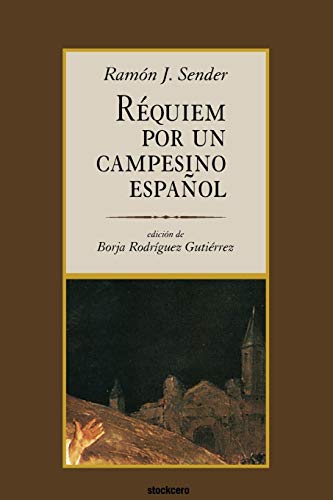
Synopsis
Réquiem por un campesino español, a short, elegant and moving account of the tragic effects of the Spanish Civil War on a small Aragonese population, is often called Ramón J. Sender's greatest masterpiece. It was the author's own favorite book and -in his own words- of all his novels it is "the simplest, and the most universal". This characteristic of "universality" flows through all Sender's writings, while he manages to still be the most Spanish of the generation that began to write just before the onset of the Spanish Civil War of 1936-39. As a journalist who allied himself with the Republican side in the Spanish civil war, Sender (1901-82) was a privileged eyewitness to Spain's struggle, suffering and defeat, a situation he continued to write about after he left Spain in 1938. While his texts are considered essential source material by historians of this era, at the same time, the anguish and pain, losses and victories of the profoundly Spanish characters are portrayed as universal emotions and experiences that continue to move readers of all nationalities. Within Hispanic literature, Réquiem por un campesino español (first published in Mexico in 1953, banned in Spain for many years) is considered to stand on a par with Hemingway's The Old Man and the Sea within North American literature. Both are brief and profound, and recount intense, dramatic stories that initially seem uncomplicated. They are both important novels that in their brevity and apparent simplicity continue to resonate with essential truths. Three qualities of the novel are emphasized in the essay by Prof. Borja Rodríguez Gutiérrez that introduces this edition: the story's meticulous, mathematical structure devised by a self aware writer; its use of reiteration of certain key elements; and the carefully structured allegory with which it transmits its denunciation of the injustice and treachery that underlie history. The careful lexicographic notes included will help the modern reader grasp the plot in all its dramatic, Spanish, intensity.
Les informations fournies dans la section « Synopsis » peuvent faire référence à une autre édition de ce titre.
Présentation de l'éditeur
Réquiem por un campesino español recoge un dramático episodio de la guerra civil en un pueblecito aragonés. Mosén Millán se dispone a ofrecer una misa en sufragio del alma de un joven a quien había querido como a un hijo. Mientras aguarda a los asistentes, el cura reconstruye los hechos: el fracaso de su mediación, con la que creyó poder salvar al joven, pero que sólo sirvió para entregarlo a sus ejecutores. El relato es de una perfecta sobriedad y de una sencillez no por ello menos profunda y estremecedora. La narración sobrecoge por su ajustado realismo, por la eficacia de sus símbolos y por el profundo conocimiento de los mecanismos de la conciencia, puesto de manifiesto a través de la evocación del sacerdote. Sin duda, Réquiem por un campesino español es una de las mejores obras de Ramón J. Sender y un libro definitivo sobre nuestra guerra civil, alejado de cualquier panfletarismo.
Biographie de l'auteur
Ramón J. Sender es uno de los más importantes narradores contemporáneos en lengua castellana. En 1935 le fue otorgado el Premio Nacional de Literatura por Mr. Witt en el Cantón. Al finalizar la guerra civil española se exilió y desde 1948 residió en Estados Unidos, donde ejerció como profesor de literatura en diversas universidades. Entre sus obras hay que mencionar especialmente: El lugar de un hombre (1939), Epitalamio del Prieto Trinidad (1942), La esfera (1947), El rey y la reina (1949), Carolus Rex (1963), Las criaturas saturnianas (1967) y Nocturno de los catorce (1971). Su obra más extensa y quizá la más conocida es la serie Crónica del alba (1942-1966).
Les informations fournies dans la section « A propos du livre » peuvent faire référence à une autre édition de ce titre.
Résultats de recherche pour Requiem Por Un Campesino Espanol

Image d'archives
Requiem Por Un Campesino Espanol
Edité par
StockCERO, 2006
ISBN 10 : 987113648X
ISBN 13 : 9789871136483
Ancien ou d'occasion
Paperback
Vendeur : World of Books (was SecondSale), Montgomery, IL, Etats-Unis
Évaluation du vendeur 5 sur 5 étoiles

Paperback. Etat : Good. R quiem por un Campesino Espa ol was first published under the title Mosen Millan in Coleccion Aquelarre, Mexico, 1953. The present text follows the first Spanish edition published by Destino, Barcelona, 1974, which bears a few minor variants, mainly in paragraph structure. It has been reprinted a number of times and translated into many languages and is one of the most widely read Spanish texts in the 20th century. This edition is aimed primarily at sixth-formers and university undergraduates and the introduction and notes have been compiled in the light of recent socio-politial topic-based syllabuses and communication studies courses. The inclusion in the introduction of a substantial section on the now out-of-print Contraataque (1937), the wartime narrative which contains the germ of the post-war novel, is intended to provide the student with a context for the study of the process in Sender's writing inspired by the Civil War - from explicit militant propaganda penned in the heat of battle to implicit poetic parable, historical emotion recollected in the comparative tranquillity and distance of exile. It is hoped that such a juxtaposition will illuminate both the content and literary achievement of Requiem. N° de réf. du vendeur 00110223765
Acheter D'occasion
EUR 8,05
Livraison gratuite
Expédition nationale : Etats-Unis
Expédition nationale : Etats-Unis
Quantité disponible : 1 disponible(s)
Image d'archives
RàQuiem Por un Campesino EspañOl
Edité par
Stockcero, 2006
ISBN 10 : 987113648X
ISBN 13 : 9789871136483
Ancien ou d'occasion
Couverture souple
Vendeur : Better World Books: West, Reno, NV, Etats-Unis
Évaluation du vendeur 5 sur 5 étoiles
Etat : Good. Pages intact with minimal writing/highlighting. The binding may be loose and creased. Dust jackets/supplements are not included. Stock photo provided. Product includes identifying sticker. Better World Books: Buy Books. Do Good. N° de réf. du vendeur 4056102-6
Acheter D'occasion
EUR 8,24
Livraison gratuite
Expédition nationale : Etats-Unis
Expédition nationale : Etats-Unis
Quantité disponible : 1 disponible(s)
Image d'archives
Rà Quiem Por un Campesino EspañOl
Edité par
Stockcero, 2006
ISBN 10 : 987113648X
ISBN 13 : 9789871136483
Ancien ou d'occasion
Couverture souple
Vendeur : Better World Books, Mishawaka, IN, Etats-Unis
Évaluation du vendeur 5 sur 5 étoiles
Etat : Good. Pages intact with minimal writing/highlighting. The binding may be loose and creased. Dust jackets/supplements are not included. Stock photo provided. Product includes identifying sticker. Better World Books: Buy Books. Do Good. N° de réf. du vendeur 4056102-6
Acheter D'occasion
EUR 8,24
Livraison gratuite
Expédition nationale : Etats-Unis
Expédition nationale : Etats-Unis
Quantité disponible : 2 disponible(s)
Image d'archives
Rà quiem por un campesino español
Edité par
Stockcero, 2006
ISBN 10 : 987113648X
ISBN 13 : 9789871136483
Ancien ou d'occasion
Paperback
Vendeur : ThriftBooks-Dallas, Dallas, TX, Etats-Unis
Évaluation du vendeur 5 sur 5 étoiles
Paperback. Etat : Good. No Jacket. Pages can have notes/highlighting. Spine may show signs of wear. ~ ThriftBooks: Read More, Spend Less. N° de réf. du vendeur G987113648XI3N00
Acheter D'occasion
EUR 11,65
Livraison gratuite
Expédition nationale : Etats-Unis
Expédition nationale : Etats-Unis
Quantité disponible : 1 disponible(s)
Image fournie par le vendeur
Requiem Por Un Campesino Español
Edité par
Stockcero, 2006
ISBN 10 : 987113648X
ISBN 13 : 9789871136483
Ancien ou d'occasion
Couverture souple
Vendeur : Blue Vase Books, Interlochen, MI, Etats-Unis
Évaluation du vendeur 5 sur 5 étoiles
Etat : acceptable. The item is very worn but is perfectly usable. Signs of wear can include aesthetic issues such as scratches, dents, worn and creased covers, folded page corners and minor liquid stains. All pages and the cover are intact, but the dust cover may be missing. Pages may include moderate to heavy amount of notes and highlighting, but the text is not obscured or unreadable. Page edges may have foxing age related spots and browning . May NOT include discs, access code or other supplemental materials. N° de réf. du vendeur BVV.987113648X.A
Acheter D'occasion
EUR 11,68
Livraison gratuite
Expédition nationale : Etats-Unis
Expédition nationale : Etats-Unis
Quantité disponible : 1 disponible(s)
Image d'archives
Requiem Por Un Campesino Espa�ol (Spanish Edition)
Edité par
Stockcero, 2006
ISBN 10 : 987113648X
ISBN 13 : 9789871136483
Ancien ou d'occasion
paperback
Vendeur : Textbooks_Source, Columbia, MO, Etats-Unis
Évaluation du vendeur 5 sur 5 étoiles
paperback. Etat : Good. Ships in a BOX from Central Missouri! May not include working access code. Will not include dust jacket. Has used sticker(s) and some writing or highlighting. UPS shipping for most packages, (Priority Mail for AK/HI/APO/PO Boxes). N° de réf. du vendeur 000839210U
Acheter D'occasion
EUR 14,84
Expédition à EUR 3,50
Expédition nationale : Etats-Unis
Expédition nationale : Etats-Unis
Quantité disponible : 1 disponible(s)
Image d'archives
Requiem Por Un Campesino Español (Spanish Edition)
Edité par
Stockcero, 2006
ISBN 10 : 987113648X
ISBN 13 : 9789871136483
Ancien ou d'occasion
Paperback
Vendeur : Pink Casa Antiques, Frankfort, KY, Etats-Unis
Évaluation du vendeur 5 sur 5 étoiles
Paperback. Etat : Very Good. written in Spanish, tight, uncreased spine, pages clear and bright, shelf and edge wear, cover curl and scratches, corners bumped, packaged in cardboard box for shipment, tracking on U.S. orders. N° de réf. du vendeur 76219
Acheter D'occasion
EUR 14,42
Expédition à EUR 4,38
Expédition nationale : Etats-Unis
Expédition nationale : Etats-Unis
Quantité disponible : 1 disponible(s)
Image fournie par le vendeur
Requiem Por Un Campesino Espanol -Language: spanish
Vendeur : GreatBookPrices, Columbia, MD, Etats-Unis
Évaluation du vendeur 5 sur 5 étoiles
Etat : New. N° de réf. du vendeur 4180989-n
Acheter neuf
EUR 18,19
Expédition à EUR 2,32
Expédition nationale : Etats-Unis
Expédition nationale : Etats-Unis
Quantité disponible : Plus de 20 disponibles
Image fournie par le vendeur
Requiem Por Un Campesino Espanol (Paperback or Softback)
Edité par
Stockcero 2/14/2006, 2006
ISBN 10 : 987113648X
ISBN 13 : 9789871136483
Neuf
Paperback or Softback
Vendeur : BargainBookStores, Grand Rapids, MI, Etats-Unis
Évaluation du vendeur 5 sur 5 étoiles
Paperback or Softback. Etat : New. Requiem Por Un Campesino Espanol. Book. N° de réf. du vendeur BBS-9789871136483
Acheter neuf
EUR 20,59
Livraison gratuite
Expédition nationale : Etats-Unis
Expédition nationale : Etats-Unis
Quantité disponible : 5 disponible(s)
Image fournie par le vendeur
Requiem Por Un Campesino Espanol -Language: spanish
Edité par
Stockcero, 2006
ISBN 10 : 987113648X
ISBN 13 : 9789871136483
Ancien ou d'occasion
Couverture souple
Vendeur : GreatBookPrices, Columbia, MD, Etats-Unis
Évaluation du vendeur 5 sur 5 étoiles
Etat : As New. Unread book in perfect condition. N° de réf. du vendeur 4180989
Acheter D'occasion
EUR 19,30
Expédition à EUR 2,32
Expédition nationale : Etats-Unis
Expédition nationale : Etats-Unis
Quantité disponible : Plus de 20 disponibles