
Articles liés à PURPOSE AND FUNCTION: ARISTOTLE AND THE MODERN WORLD
PURPOSE AND FUNCTION: ARISTOTLE AND THE MODERN WORLD - Couverture souple
Livre 94 sur 149: Philosophical Questions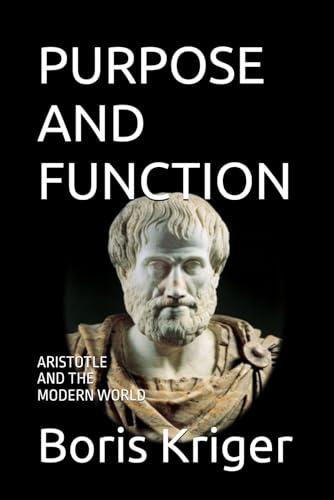
Synopsis
Across two millennia, Aristotle’s thought has shaped the architecture of human understanding. His ideas traveled through Greek, Persian, Islamic, and European traditions, influencing sciences, religions, and political institutions; inspiring breakthroughs and creating obstacles; offering clarity and imposing limits. This book returns to Aristotle not to repeat his legacy, but to examine the deeper intellectual instinct behind it—the human need to build order, purpose, and coherence in a world that rarely provides them.
The chapters trace how Aristotle created the earliest systematic vision of knowledge: his classification of the sciences, his theory of causes, his understanding of purpose in nature, his reflections on the good life, and his vision of political community. With equal attention, the book explores the limits of his thought: the errors born of insufficient data, the traps of teleology, and the weight of tradition that has shaped Western thinking more than we often realize.
By moving between ancient texts and contemporary debates—from biology and ethics to artificial intelligence and the structure of modern explanation—the book shows how Aristotle’s questions persist even where his answers no longer hold. They remain embedded in the way we observe, reason, classify, interpret, and attempt to understand ourselves.
This is not a work of reverence. It is an attempt to see Aristotle clearly: as a mind of extraordinary power working within the constraints of his time, and as a thinker whose influence cannot be fully understood without confronting both his achievements and his limitations. The result is a reflection on the enduring tension between order and uncertainty, structure and freedom, purpose and chance—tensions that define not only Aristotle’s world, but our own.
Keywords
Aristotle, teleology, purpose, causality, ethics, knowledge, modernity
Les informations fournies dans la section « Synopsis » peuvent faire référence à une autre édition de ce titre.
Résultats de recherche pour PURPOSE AND FUNCTION: ARISTOTLE AND THE MODERN WORLD

Image d'archives
Purpose and Function: Aristotle and the Modern World
Vendeur : GreatBookPrices, Columbia, MD, Etats-Unis
Évaluation du vendeur 5 sur 5 étoiles

Etat : New. N° de réf. du vendeur 51837910-n
Acheter neuf
EUR 13,05
Expédition à EUR 2,32
Expédition nationale : Etats-Unis
Expédition nationale : Etats-Unis
Quantité disponible : Plus de 20 disponibles
Image d'archives
Purpose and Function (Paperback)
impression à la demandeVendeur : Grand Eagle Retail, Bensenville, IL, Etats-Unis
Évaluation du vendeur 5 sur 5 étoiles
Paperback. Etat : new. Paperback. Across two millennia, Aristotle's thought has shaped the architecture of human understanding. His ideas traveled through Greek, Persian, Islamic, and European traditions, influencing sciences, religions, and political institutions; inspiring breakthroughs and creating obstacles; offering clarity and imposing limits. This book returns to Aristotle not to repeat his legacy, but to examine the deeper intellectual instinct behind it-the human need to build order, purpose, and coherence in a world that rarely provides them.The chapters trace how Aristotle created the earliest systematic vision of knowledge: his classification of the sciences, his theory of causes, his understanding of purpose in nature, his reflections on the good life, and his vision of political community. With equal attention, the book explores the limits of his thought: the errors born of insufficient data, the traps of teleology, and the weight of tradition that has shaped Western thinking more than we often realize.By moving between ancient texts and contemporary debates-from biology and ethics to artificial intelligence and the structure of modern explanation-the book shows how Aristotle's questions persist even where his answers no longer hold. They remain embedded in the way we observe, reason, classify, interpret, and attempt to understand ourselves.This is not a work of reverence. It is an attempt to see Aristotle clearly: as a mind of extraordinary power working within the constraints of his time, and as a thinker whose influence cannot be fully understood without confronting both his achievements and his limitations. The result is a reflection on the enduring tension between order and uncertainty, structure and freedom, purpose and chance-tensions that define not only Aristotle's world, but our own.KeywordsAristotle, teleology, purpose, causality, ethics, knowledge, modernity This item is printed on demand. Shipping may be from multiple locations in the US or from the UK, depending on stock availability. N° de réf. du vendeur 9798275231663
Acheter neuf
EUR 15,45
Livraison gratuite
Expédition nationale : Etats-Unis
Expédition nationale : Etats-Unis
Quantité disponible : 1 disponible(s)
Image d'archives
Purpose and Function: Aristotle and the Modern World
Edité par
Independently published, 2025
ISBN 13 : 9798275231663
Ancien ou d'occasion
Couverture souple
Vendeur : GreatBookPrices, Columbia, MD, Etats-Unis
Évaluation du vendeur 5 sur 5 étoiles
Etat : As New. Unread book in perfect condition. N° de réf. du vendeur 51837910
Acheter D'occasion
EUR 13,44
Expédition à EUR 2,32
Expédition nationale : Etats-Unis
Expédition nationale : Etats-Unis
Quantité disponible : Plus de 20 disponibles
Image d'archives
PURPOSE AND FUNCTION: ARISTOTLE AND THE MODERN WORLD (Philosophical Questions)
impression à la demandeVendeur : California Books, Miami, FL, Etats-Unis
Évaluation du vendeur 4 sur 5 étoiles

Etat : New. Print on Demand. N° de réf. du vendeur I-9798275231663
Acheter neuf
EUR 16,29
Livraison gratuite
Expédition nationale : Etats-Unis
Expédition nationale : Etats-Unis
Quantité disponible : Plus de 20 disponibles
Image d'archives
Purpose and Function
Vendeur : PBShop.store UK, Fairford, GLOS, Royaume-Uni
Évaluation du vendeur 5 sur 5 étoiles
PAP. Etat : New. New Book. Shipped from UK. Established seller since 2000. N° de réf. du vendeur L2-9798275231663
Acheter neuf
EUR 15,23
Expédition à EUR 3,83
Expédition depuis Royaume-Uni vers Etats-Unis
Expédition depuis Royaume-Uni vers Etats-Unis
Quantité disponible : Plus de 20 disponibles
Image d'archives
Purpose and Function: Aristotle and the Modern World
Vendeur : GreatBookPricesUK, Woodford Green, Royaume-Uni
Évaluation du vendeur 5 sur 5 étoiles
Etat : New. N° de réf. du vendeur 51837910-n
Acheter neuf
EUR 15,22
Expédition à EUR 17,44
Expédition depuis Royaume-Uni vers Etats-Unis
Expédition depuis Royaume-Uni vers Etats-Unis
Quantité disponible : Plus de 20 disponibles
Image d'archives
Purpose and Function: Aristotle and the Modern World
Edité par
Independently published, 2025
ISBN 13 : 9798275231663
Ancien ou d'occasion
Couverture souple
Vendeur : GreatBookPricesUK, Woodford Green, Royaume-Uni
Évaluation du vendeur 5 sur 5 étoiles
Etat : As New. Unread book in perfect condition. N° de réf. du vendeur 51837910
Acheter D'occasion
EUR 15,95
Expédition à EUR 17,44
Expédition depuis Royaume-Uni vers Etats-Unis
Expédition depuis Royaume-Uni vers Etats-Unis
Quantité disponible : Plus de 20 disponibles
Image d'archives
Purpose and Function (Paperback)
impression à la demandeVendeur : CitiRetail, Stevenage, Royaume-Uni
Évaluation du vendeur 5 sur 5 étoiles
Paperback. Etat : new. Paperback. Across two millennia, Aristotle's thought has shaped the architecture of human understanding. His ideas traveled through Greek, Persian, Islamic, and European traditions, influencing sciences, religions, and political institutions; inspiring breakthroughs and creating obstacles; offering clarity and imposing limits. This book returns to Aristotle not to repeat his legacy, but to examine the deeper intellectual instinct behind it-the human need to build order, purpose, and coherence in a world that rarely provides them.The chapters trace how Aristotle created the earliest systematic vision of knowledge: his classification of the sciences, his theory of causes, his understanding of purpose in nature, his reflections on the good life, and his vision of political community. With equal attention, the book explores the limits of his thought: the errors born of insufficient data, the traps of teleology, and the weight of tradition that has shaped Western thinking more than we often realize.By moving between ancient texts and contemporary debates-from biology and ethics to artificial intelligence and the structure of modern explanation-the book shows how Aristotle's questions persist even where his answers no longer hold. They remain embedded in the way we observe, reason, classify, interpret, and attempt to understand ourselves.This is not a work of reverence. It is an attempt to see Aristotle clearly: as a mind of extraordinary power working within the constraints of his time, and as a thinker whose influence cannot be fully understood without confronting both his achievements and his limitations. The result is a reflection on the enduring tension between order and uncertainty, structure and freedom, purpose and chance-tensions that define not only Aristotle's world, but our own.KeywordsAristotle, teleology, purpose, causality, ethics, knowledge, modernity This item is printed on demand. Shipping may be from our UK warehouse or from our Australian or US warehouses, depending on stock availability. N° de réf. du vendeur 9798275231663
Acheter neuf
EUR 18,54
Expédition à EUR 43,02
Expédition depuis Royaume-Uni vers Etats-Unis
Expédition depuis Royaume-Uni vers Etats-Unis
Quantité disponible : 1 disponible(s)
Image d'archives
Purpose and Function
Vendeur : PBShop.store US, Wood Dale, IL, Etats-Unis
Évaluation du vendeur 5 sur 5 étoiles
PAP. Etat : New. New Book. Shipped from UK. Established seller since 2000. N° de réf. du vendeur L2-9798275231663
Acheter neuf
EUR 1 623,26
Livraison gratuite
Expédition nationale : Etats-Unis
Expédition nationale : Etats-Unis
Quantité disponible : Plus de 20 disponibles