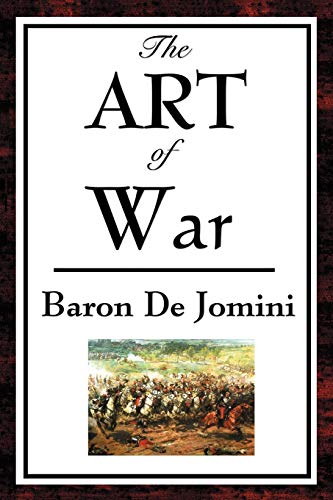
A landmark work of military theory, The Art of War by Baron de Jomini is one of the classic nineteenth-century studies of strategy, command, logistics, and the principles of successful warfare.
Drawing on the campaigns of Napoleon and the great European armies of his age, Jomini examines the structure and conduct of war with a practical eye. He discusses strategic lines, bases of operation, decisive points, marches, supply, terrain, offensive and defensive action, and the relationship between political objectives and military execution. His purpose is not merely to describe battles, but to identify the principles that allow commanders to move armies effectively and bring force to bear at the critical moment.
First published in its mature form in the nineteenth century, The Art of War became one of the most influential military texts of the modern era. Jomini’s ideas shaped military education in Europe and the United States and were studied by generations of officers seeking a systematic understanding of strategy. For readers interested in military history, Napoleonic warfare, command theory, and the development of modern strategic thought, this book remains an essential companion to the works of Clausewitz and other great theorists of war.
About the Author
Baron Antoine-Henri Jomini (1779–1869) was a Swiss-born military officer, historian, and theorist whose writings had a major influence on nineteenth-century military thought. He served in the armies of both France and Russia and observed many of the great campaigns of the Napoleonic era. His experience as a staff officer, combined with his analytical temperament, led him to write works that attempted to reduce the conduct of war to clear principles and practical rules.
Jomini’s best-known works include Traité des grandes opérations militaires and Précis de l’Art de la Guerre, commonly known in English as The Art of War. Unlike Clausewitz, whose writing often emphasized the uncertainty, politics, and moral forces of war, Jomini focused on geometry, movement, lines of operation, decisive points, and the practical management of armies in the field. His clarity and apparent system made him especially influential in military academies.
During the nineteenth century, Jomini became one of the most widely read military theorists in the world. His ideas helped shape officer education before and during the American Civil War and remained important in discussions of strategy, logistics, and operational art. Though later generations revised or challenged many of his conclusions, his work remains central to the history of military theory and the study of how modern armies learned to think about war.
Baron Antoine-Henri de Jomini (1779-1869) was a Swiss officer and military theorist who served in both the French and Russian armies. His writings on strategy, particularly The Art of War, have had a lasting influence on the study of military science and the professional education of officers.