Synopsis
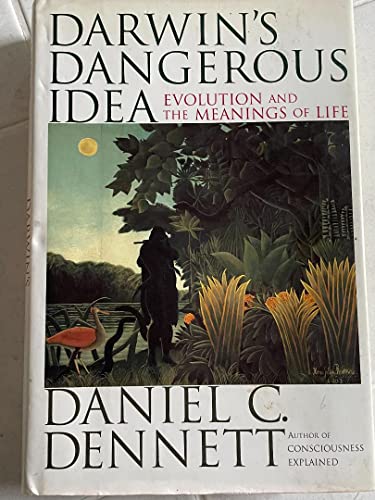
Book by Dennett Daniel
Extrait
Chapter 1
Tell Me Why
1. Is Nothing Sacred?
We used to sing a lot when I was a child, around the campfire at summer camp, at school and Sunday school, or gathered around the piano at home. One of my favorite songs was "Tell Me Why." (For those whose personal memories don't already embrace this little treasure, the music is provided in the appendix. The simple melody and easy harmony line are surprisingly beautiful.)
Tell me why the stars do shine,
Tell me why the ivy twines,
Tell me why the sky's so blue.
Then I will tell you just why I love you.
Because God made the stars to shine,
Because God made the ivy twine,
Because God made the sky so blue.
Because God made you, that's why I love you.
This straightforward, sentimental declaration still brings a lump to my throat -- so sweet, so innocent, so reassuring a vision of life!
And then along comes Darwin and spoils the picnic. Or does he? That is the topic of this book. From the moment of the publication of Origin of Species in 1859, Charles Darwin's fundamental idea has inspired intense reactions ranging from ferocious condemnation to ecstatic allegiance, sometimes tantamount to religious zeal. Darwin's theory has been abused and misrepresented by friend and foe alike. It has been misappropriated to lend scientific respectability to appalling political and social doctrines. It has been pilloried in caricature by opponents, some of whom would have it compete in our children's schools with "creation science," a pathetic hodgepodge of pious pseudo-science.
Almost no one is indifferent to Darwin, and no one should be. The Darwinian theory is a scientific theory, and a great one, but that is not all it is. The creationists who oppose it so bitterly are right about one thing: Darwin's dangerous idea cuts much deeper into the fabric of our most fundamental beliefs than many of its sophisticated apologists have yet admitted, even to themselves.
The sweet, simple vision of the song, taken literally, is one that most of us have outgrown, however fondly we may recall it. The kindly God who lovingly fashioned each and every one of us (all creatures great and small) and sprinkled the sky with shining stars for our delight -- that God is, like Santa Claus, a myth of childhood, not anything a sane, undeluded adult could literally believe in. That God must either be turned into a symbol for something less concrete or abandoned altogether.
Not all scientists and philosophers are atheists, and many who are believers declare that their idea of God can live in peaceful coexistence with, or even find support from, the Darwinian framework of ideas. Theirs is not an anthropomorphic Handicrafter God, but still a God worthy of worship in their eyes, capable of giving consolation and meaning to their lives. Others ground their highest concerns in entirely secular philosophies, views of the meaning of life that stave oft despair without the aid of any concept of a Supreme Being -- other than the Universe itself. Something is sacred to these thinkers, but they do not call it God; they call it, perhaps, Life, or Love, or Goodness, or Intelligence, or Beauty, or Humanity. What both groups share, in spite of the differences in their deepest creeds, is a conviction that life does have meaning, that goodness matters.
But can any version of this attitude of wonder and purpose be sustained in the face of Darwinism? From the outset, there have been those who thought they saw Darwin letting the worst possible cat out of the bag: nihilism. They thought that if Darwin was right, the implication would be that nothing could be sacred. To put it bluntly, nothing could have any point. Is this just an overreaction? What exactly are the implications of Darwin's idea -- and, in any case, has it been scientifically proven or is it still "just a theory"?
Perhaps, you may think, we could make a useful division: there are the parts of Darwin's idea that really are established beyond any reasonable doubt, and then there are the speculative extensions of the scientifically irresistible parts. Then -- if we were lucky -- perhaps the rock-solid scientific facts would have no stunning implications about religion, or human nature, or the meaning of life, while the parts of Darwin's idea that get people all upset could be put into quarantine as highly controversial extensions of, or mere interpretations of, the scientifically irresistible parts. That would be reassuring.
But alas, that is just about backwards. There are vigorous controversies swirling around in evolutionary theory, but those who feel threatened by Darwinism should not take heart from this fact. Most -- if not quite all -- of the controversies concern issues that are "just science"; no matter which side wins, the outcome will not undo the basic Darwinian idea. That idea, which is about as secure as any in science, really does have far-reaching implications for our vision of what the meaning of life is or could be.
In 1543, Copernicus proposed that the Earth was not the center of the universe but in fact revolved around the Sun. It took over a century for the idea to sink in, a gradual and actually rather painless transformation. (The religious reformer Philipp Melanchthon, a collaborator of Martin Luther, opined that "some Christian prince" should suppress this madman, but aside from a few such salvos, the world was not particularly shaken by Copernicus himself.) The Copernican Revolution did eventually have its own "shot heard round the world": Galileo's Dialogue Concerning the Two Chief World Systems, but it was not published until 1632, when the issue was no longer controversial among scientists. Galileo's projectile provoked an infamous response by the Roman Catholic Church, setting up a shock wave whose reverberations are only now dying out. But in spite of the drama of that epic confrontation, the idea that our planet is not the center of creation has sat rather lightly in people's minds. Every schoolchild today accepts this as the matter of fact it is, without tears or terror.
In due course, the Darwinian Revolution will come to occupy a similarly secure and untroubled place in the minds -- and hearts -- of every educated person on the globe, but today, more than a century after Darwin's death, we still have not come to terms with its mind-boggling implications. Unlike the Copernican Revolution, which did not engage widespread public attention until the scientific details had been largely sorted out, the Darwinian Revolution has had anxious lay spectators and cheerleaders taking sides from the outset, tugging at the sleeves of the participants and encouraging grandstanding. The scientists themselves have been moved by the same hopes and fears, so it is not surprising that the relatively narrow conflicts among theorists have often been not just blown up out of proportion by their adherents, but seriously distorted in the process. Everybody has seen, dimly, that a lot is at stake.
Moreover, although Darwin's own articulation of his theory was monumental, and its powers were immediately recognized by many of the scientists and other thinkers of his day, there really were large gaps in his theory that have only recently begun to be properly filled in. The biggest gap looks almost comical in retrospect. In all his brilliant musings, Darwin never hit upon the central concept, without which the theory of evolution is hopeless: the concept of a gene. Darwin had no proper unit of heredity, and so his account of the process of natural selection was plagued with entirely reasonable doubts about whether it would work. Darwin supposed that offspring would always exhibit a sort of blend or average of their parents' features. Wouldn't such "blending inheritance" always simply average out all differences, turning everything into uniform gray? How could diversity survive such relentless averaging? Darwin recognized the seriousness of this challenge, and neither he nor his many ardent supporters succeeded in responding with a description of a convincing and well-documented mechanism of heredity that could combine traits of parents while maintaining an underlying and unchanged identity. The idea they needed was right at hand, uncovered ("formulated" would be too strong) by the monk Gregor Mendel and published in a relatively obscure Austrian journal in 1865, but, in the best-savored irony in the history of science, it lay there unnoticed until its importance was appreciated (at first dimly) around 1900. Its triumphant establishment at the heart of the "Modern Synthesis" (in effect, the synthesis of Mendel and Darwin) was eventually made secure in the 1940s, thanks to the work of Theodosius Dobzhansky, Julian Huxley, Ernst Mayr, and others. It has taken another half-century to iron out most of the wrinkles of that new fabric.
The fundamental core of contemporary Darwinism, the theory of DNA-based reproduction and evolution, is now beyond dispute among scientists. It demonstrates its power every day, contributing crucially to the explanation of planet-sized facts of geology and meteorology, through middle-sized facts of ecology and agronomy, down to the latest microscopic facts of genetic engineering. It unifies all of biology and the history of our planet into a single grand story. Like Gulliver tied down in Lilliput, it is unbudgeable, not because of some one or two huge chains of argument that might -- hope against hope -- have weak links in them, but because it is securely tied by hundreds of thousands of threads of evidence anchoring it to virtually every other area of human knowledge. New discoveries may conceivably lead to dramatic, even "revolutionary" shifts in the Darwinian theory, but. the hope that it will be "refuted" by some shattering breakthrough is about as reasonable as the hope that we will return to a geocentric vision and discard Copernicus.
Still, the theory is embroiled in remarkably hot-tempered controversy, and one of the reasons for this incandescence is that these debates about scientific matters are usually distorted by fears that the "wrong" answer would have intolerable moral implications. So great are these fears that they are carefully left unarticulated, displaced from attention by several layers of distracting rebuttal and counter-rebuttal. The disputants are forever changing the subject slightly, conveniently keeping the bogeys in the shadows. It is this misdirection that is mainly responsible for postponing the day when we can all live as comfortably with our new biological perspective as we do with the astronomical perspective Copernicus gave us.
Whenever Darwinism is the topic, the temperature rises, because more is at stake than just the empirical facts about how life on Earth evolved, or the correct logic of the theory that accounts for those facts. One of the precious things that is at stake is a vision of what it means to ask, and answer, the question "Why?" Darwin's new perspective turns several traditional assumptions upside down, undermining our standard ideas about what ought to count as satisfying answers to this ancient and inescapable question. Here science and philosophy get completely intertwined. Scientists sometimes deceive themselves into thinking that philosophical ideas are only, at best, decorations or parasitic commentaries on the hard, objective triumphs of science, and that they themselves are immune to the confusions that philosophers devote their lives to dissolving. But there is no such thing as philosophy-free science; there is only science whose philosophical baggage is taken on board without examination.
The Darwinian Revolution is both a scientific and a philosophical revolution, and neither revolution could have occurred without the other. As we shall see, it was the philosophical prejudices of the scientists, more than their lack of scientific evidence, that prevented them from seeing how the theory could actually work, but those philosophical prejudices that had to be overthrown were too deeply entrenched to be dislodged by mere philosophical brilliance. It took an irresistible parade of hard-won scientific facts to force thinkers to take seriously the weird new outlook that Darwin proposed. Those who are still ill-acquainted with that beautiful procession can be forgiven their continued allegiance to the pre-Darwinian ideas. And the battle is not yet over; even among the scientists, there are pockets of resistance.
Let me lay my cards on the table. If I were to give an award for the single best idea anyone has ever had, I'd give it to Darwin, ahead of Newton and Einstein and everyone else. In a single stroke, the idea of evolution by natural selection unifies the realm of life, meaning, and purpose with the realm of space and time, cause and effect, mechanism and physical law. But it is not just a wonderful scientific idea. It is a dangerous idea. My admiration for Darwin's magnificent idea is unbounded, but I, too, cherish many of the ideas and ideals that it seems to challenge, and want to protect them. For instance, I want to protect the campfire song, and what is beautiful and true in it, for my little grandson and his friends, and for their children when they grow up. There are many more magnificent ideas that are also jeopardized, it seems, by Darwin's idea, and they, too, may need protection. The only good way to do this -- the only way that has a chance in the long run -- is to cut through the smokescreens and look at the idea as unflinchingly, as dispassionately, as possible.
On this occasion, we are not going to settle for "There, there, it will all come out all right." Our examination will take a certain amount of nerve. Feelings may get hurt. Writers on evolution usually steer clear of this apparent clash between science and religion. Fools rush in, Alexander Pope said, where angels fear to tread. Do you want to follow me? Don't you really want to know what survives this confrontation? What if it turns out that the sweet vision -- or a better one -- survives intact, strengthened and deepened by the encounter? Wouldn't it be a shame to forgo the opportunity for a strengthened, renewed creed, settling instead for a fragile, sickbed faith that you mistakenly supposed must not be disturbed?
There is no future in a sacred myth. Why not? Because of our curiosity. Because, as the song reminds us, we want to know why. We may have outgrown the song's answer, but we will never outgrow the question. Whatever we hold precious, we cannot protect it from our curiosity, because being who we are, one of the things we deem precious is the truth. Our love of truth is surely a central element in the meaning we find in our lives. In any case, the idea that we might preserve meaning by kidding ourselves is a more pessimistic, more nihilistic idea than I for one can stomach. If that were the best that could be done, I would conclude that nothing mattered after all.
This book, then, is for those who agree that the only meaning of life worth caring about is one that can withstand our best efforts to examine it. Others are advised to close the book now and tiptoe away.
For those who stay, here is the plan. Part I of the book locates the Darwinian Revolution in the larger scheme of things, showing how it can transform the world-view of those who know its details. This first chapter sets out the background of philosophical ideas that dominated our thought before Darwin. Chapter 2 introduces Darwin's central idea in a somewhat new guise, as the idea of evolution as an algorithmic process, and clears up some common misunderstandings of it. Chapter 3 shows how this idea overturn...
Les informations fournies dans la section « A propos du livre » peuvent faire référence à une autre édition de ce titre.