Synopsis
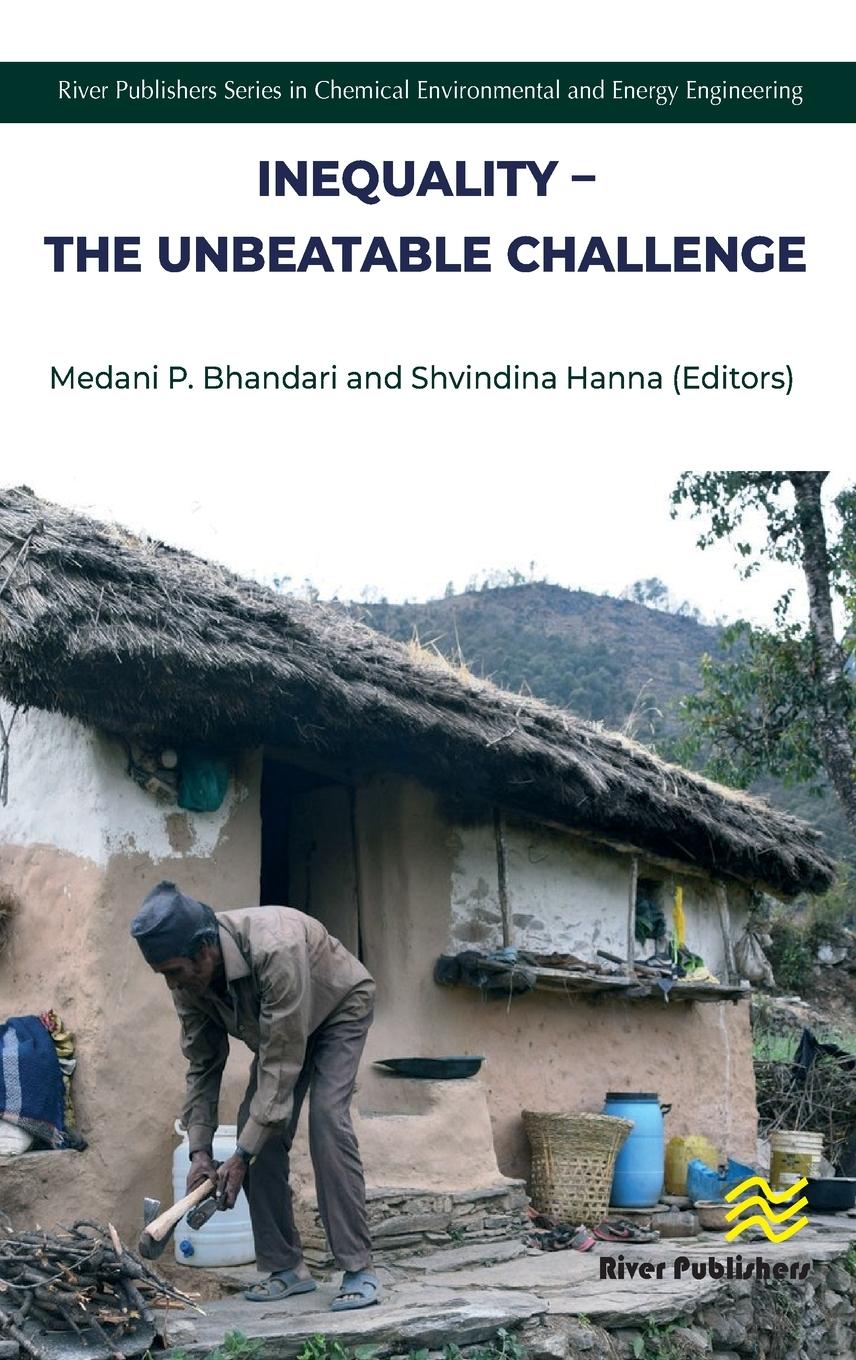
This edited book presents some unexplored issues of economic inequality, including case studies of various countries. Inequality is a chronic and divisive factor of society. Inequality exists as an integral attribute of human development. Communities, nations, and systems are not evolving at the same speed and rate and thus require different resources in different amounts. However, the distribution of winnings is also uneven due to the multidimensionality of influencing factors.
When we talk about inequality, it is not just inequality of income or wealth; it is first, inequality in access to priorities and human needs - to shelter, to clean water, air, health care, and also to appropriate vaccination systems and assistance, security systems and safety guarantees for the future. Past financial crises and the current pandemic shock has revealed bugs in the system, shaking it and changing our perception of the norms.
We may have no doubts that inequality is an unsolved problem, but now we need to find out - is it unbeatable? There is still lack of knowledge around how inequality has been grounded throughout human civilization, why society is stratified and classified, economically, politically, socially, and religiously; and why the discrimination due to gender, sexual orientation, country of origin, language differences, immigration status, caste, race and ethnicity? This book addresses these issues in a holistic way as well as including case studies of various countries. It tries to find out why inequality has been unbeatable and what would be the best policies to overcome this challenge.
Technical topics discussed in the book include:
Inequality the problems of all times, an unbeatable challenge.
Problems and consequences inequality
Gender Inequality
Covid Pandemic the boaster of inequality
Inequalities in Education / Healthcare / Food Supply
Inequality due to gender, age, origin, ethnicity, disability, sexual orientation, class, refugee status and religion.
Social exclusion is consumption patterns- economic patterns
À propos des auteurs
Prof. Bhandari is a well-known humanitarian, author, editor, co-editor of several books and authors of hundreds of scholarly papers on social and environmental sciences: a poet, essayist, environment, and social activist etc. He is a true educator, who advocates that education should not be only for education shake and for employment (get position, earn money, etc.) but should bring meaningful change in students' lives, which could provide the inner peace in life and be able to face any kind of challenges. Prof. Bhandari is also motivational speaker - life skill coach (how to remain in peace and calm when situation is not in our control, with application of Basudhaiva Kutumbakam principles)- and in writings and teaching, he exemplifies how studies of scientific theories can be enjoyable and applicable in day-to-day life. As such the epistemology of knowledge which is the basis of theory building is considered not fun subject for everybody; however, Prof. Bhandari's works show that, there is always lucid and attractive side in difficult subject. Dr. Medani P. Bhandari has been serving as a Professor of inter-disciplinary Department of Natural Resource & Environment / Sustainability Studies, at the Akamai University, USA and Professor at the Department of Finance, Innovation and Entrepreneurship, Sumy State University (SSU), Ukraine. Dr. Bhandari is also serving as Editor in Chief of International Journal - The Strategic Planning for Energy and the Environment (SPEE), Denmark, The Netherlands, USA- ISSN: 1546-0126 (Online Version), ISSN: 1048-4236 (Print Version) https: //www.journal.riverpublishers.com/index.php/SPEE/about He is also serving as managing editor at the Asia Environment Daily, (the largest environmental journal of the world)- https: //asiaenvdaily.com/index.php/editorials-2/2-uncategorised/29760-about-asia-environmental-daily Dr. Bhandari has spent most of his career focusing on the Social Innovation, Sociological Theories; Environmental Sustainability; Social Inclusion, Climate Change Mitigation and Adaptation; Environmental Health Hazard; Environmental Management; Social Innovation; Developing along the way expertise in Global and International Environmental Politics, Environmental Institutions and Natural Resources Governance; Climate Change Policy and Implementation, Environmental Justice, Sustainable Development; Theory of Natural Resources Governance; Impact Evaluation of Rural Livelihood; International Organizations; Public/ Social Policy; The Non-Profit Sector; Low Carbon Mechanism; Good Governance; Climate Adaptation; REDD Plus; Carbon Financing; Green Economy and Renewable Energy; Nature, Culture and Power.
Hanna Shvindina graduated from Sumy State University (M.S. in "Management of Organizations, Ph.D. in "Environmental Economics and Natural Resources Protection", Dr.Sci. in "Economics & Management at the Enterprises"). She was awarded several individual scholarships and was a Post-Doc researcher in France in the US (University of Montpellier, Purdue University) in "Business Studies and Management", Fulbright Alumna (2018-2019), won ERASMUS MUNDUS scholarships (2014, 2015). Currently, she works as a Head of the department and Associate Professor at the Department of Management at Sumy State University (Ukraine). She is a member of CENA community, Researchers' excellence network (RENET), Ukrainian Association for Management Development and Business Education. She is a member of editorial boards of several scientific journals (Ukraine, Poland, Switzerland), invited reviewer for the international conferences (Poland, Germany, Ukraine). She is the author of more than 90 papers. Scientific interests include Coopetition Paradox, Strategies and Innovations, Change Management, Organizational Development, Civic Education and Leadership. She is an activist and is a CEO at NGO "Lifelong learning centre", where provides courses on Leadership and Communications, organizes the program on empowerment for the local community, and offers advisory services.
Les informations fournies dans la section « A propos du livre » peuvent faire référence à une autre édition de ce titre.