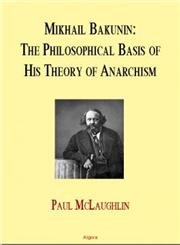
Mikhail Bakunin: The First English-Language Philosophical Study” offers a groundbreaking exploration of the philosophical foundations laid by Mikhail Bakunin, one of the most influential figures in political philosophy and revolutionary thought. This book is the first comprehensive study in English that delves deeply into Bakunin’s contributions to political theory, social movements, and revolutionary ideologies.
Mikhail Bakunin, a key Russian revolutionary and philosopher, is renowned for his profound impact on anarchist theory and anti-authoritarian movements. His works challenge established norms and provide significant insights into the nature of power, authority, and freedom. This study explores Bakunin’s critiques of the state, capitalism, and organized religion, and examines his vision for a society grounded in mutual aid and cooperation.
The author meticulously investigates Bakunin’s revolutionary theories and political activism, shining a light on his pivotal role in 19th-century revolutionary movements. Through a detailed analysis of his writings, speeches, and correspondence, the book uncovers the subtleties of Bakunin’s thought and its enduring influence on contemporary political philosophy. The study also examines Bakunin’s interactions with other prominent figures of his time, such as Karl Marx and Pierre-Joseph Proudhon, offering a comparative perspective on their differing ideological viewpoints.
Bakunin’s philosophy is deeply rooted in a critique of centralized power and hierarchical structures. His advocacy for decentralized governance and grassroots democracy forms a central theme in this study. The book delves into Bakunin’s ideas on anarchism, his vision for a stateless society, and his critique of authoritarianism.
The book provides an in-depth analysis of Bakunin’s major works, including “God and the State,” “The Basic Principles of Anarchism,” and “The Revolution and the State.” These texts are examined within Bakunin’s broader philosophical and political framework, highlighting their relevance to contemporary debates on political theory and social organization. The study also traces Bakunin’s influence on subsequent anarchist thinkers and movements, exploring how his ideas have evolved and impacted modern political thought.
The study also examines Bakunin’s lasting legacy and the relevance of his ideas in today’s political discourse. Engaging with current debates on anarchism, social justice, and political authority, the book underscores Bakunin’s continuing influence on political philosophy. The analysis extends to how Bakunin’s principles are applied in modern social movements and grassroots organizations, showing the ongoing significance of his thought in addressing contemporary challenges.
Meticulously researched and thoughtfully analyzed, this book is an essential resource for scholars, students, and enthusiasts of political philosophy. Through a detailed and accessible examination of Bakunin’s thought, the study deepens our understanding of his contributions to anarchist theory and revolutionary politics. The book’s thorough approach ensures that readers gain a full appreciation of Bakunin’s philosophical legacy and its relevance to today’s political discussions.
In conclusion, “Mikhail Bakunin: The First English-Language Philosophical Study” offers a groundbreaking examination of one of the most significant figures in political philosophy. By providing a detailed analysis of Bakunin’s philosophical foundations, revolutionary activities, and lasting legacy, this book offers valuable insights into his contributions to anarchist theory and political thought. This comprehensive study is a vital resource for anyone interested in understanding the complexities of Bakunin’s philosophy and its impact on modern political discourse.