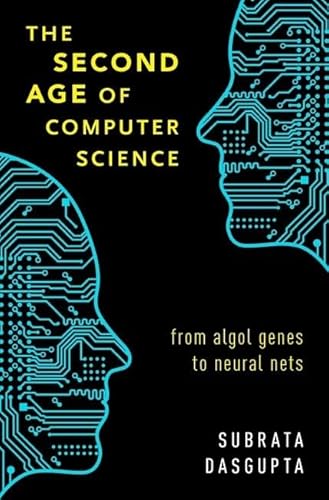
Second Age of Computer Science: From ALGOL Genes to Neural Nets
Dasgupta, Subrata
ISBN 10: 0190843861 ISBN 13: 9780190843861
Edité par Oxford Univ PR, 2018
Ancien(s) ou d'occasion
Hardcover
Vendeur
ThriftBooks-Dallas, Dallas, TX, Etats-Unis
Évaluation du vendeur 5 sur 5 étoiles

Vendeur AbeBooks depuis 2 juillet 2009
Cet article spécifique n'est plus disponible.
A propos de cet article
Description :
Former library book; May have limited writing in cover pages. Pages are unmarked. ~ ThriftBooks: Read More, Spend Less. N° de réf. du vendeur G0190843861I4N10
Synopsis :
By the end of the 1960s, a new discipline named computer science had come into being. A new scientific paradigm--the 'computational paradigm'--was in place, suggesting that computer science had reached a certain level of maturity. Yet as a science it was still precociously young. New forces, some technological, some socio-economic, some cognitive impinged upon it, the outcome of which was that new kinds of computational problems arose over the next two decades. Indeed, by the beginning of the 1990's the structure of the computational paradigm looked markedly different in many important respects from how it was at the end of the 1960s. Author Subrata Dasgupta named the two decades from 1970 to 1990 as the second age of computer science to distinguish it from the preceding genesis of the science and the age of the Internet/World Wide Web that followed.
This book describes the evolution of computer science in this second age in the form of seven overlapping, intermingling, parallel histories that unfold concurrently in the course of the two decades. Certain themes characteristic of this second age thread through this narrative: the desire for a genuine science of computing; the realization that computing is as much a human experience as it is a technological one; the search for a unified theory of intelligence spanning machines and mind; the desire to liberate the computational mind from the shackles of sequentiality; and, most ambitiously, a quest to subvert the very core of the computational paradigm itself. We see how the computer scientists of the second age address these desires and challenges, in what manner they succeed or fail and how, along the way, the shape of computational paradigm was altered.
And to complete this history, the author asks and seeks to answer the question of how computer science shows evidence of progress over the course of its second age.
À propos de l?auteur:
Subrata Dasgupta is a scholar, teacher and writer. He holds the Computer Science Trust Fund Eminent Scholar Chair in the School of Computing & Informatics at the University of Louisiana at Lafayette. For the past thirty years he has studied and written on the historical, philosophical, and cognitive nature of creativity in various fields including computer science, design, technology, art, natural science, and intellectual movements. He is the author of fifteen previous book including, most recently, It Began with Babbage (2014) and Computer Science: A Very Short Introduction (2016).
Les informations fournies dans la section « A propos du livre » peuvent faire référence à une autre édition de ce titre.
Détails bibliographiques
Titre : Second Age of Computer Science: From ALGOL ...
Éditeur : Oxford Univ PR
Date d'édition : 2018
Reliure : Hardcover
Etat : Very Good
Etat de la jaquette : No Jacket
Meilleurs résultats de recherche sur AbeBooks

Image fournie par le vendeur
Second Age of Computer Science : From Algol Genes to Neural Nets
Edité par
Oxford University Press, 2018
ISBN 10 : 0190843861
ISBN 13 : 9780190843861
Neuf
Couverture rigide
Vendeur : GreatBookPricesUK, Woodford Green, Royaume-Uni
Évaluation du vendeur 5 sur 5 étoiles
Etat : New. N° de réf. du vendeur 30563500-n
Acheter neuf
EUR 42,85
EUR 17,20 shipping
Expédition depuis Royaume-Uni vers Etats-Unis
Expédition depuis Royaume-Uni vers Etats-Unis
Quantité disponible : Plus de 20 disponibles
Image d'archives
The Second Age of Computer Science: From Algol Genes to Neural Nets
Edité par
Oxford University Press, 2018
ISBN 10 : 0190843861
ISBN 13 : 9780190843861
Neuf
Couverture rigide
Vendeur : Ria Christie Collections, Uxbridge, Royaume-Uni
Évaluation du vendeur 5 sur 5 étoiles
Etat : New. In. N° de réf. du vendeur ria9780190843861_new
Acheter neuf
EUR 42,86
EUR 13,73 shipping
Expédition depuis Royaume-Uni vers Etats-Unis
Expédition depuis Royaume-Uni vers Etats-Unis
Quantité disponible : Plus de 20 disponibles
Image fournie par le vendeur
Second Age of Computer Science : From Algol Genes to Neural Nets
Edité par
Oxford University Press, 2018
ISBN 10 : 0190843861
ISBN 13 : 9780190843861
Ancien ou d'occasion
Couverture rigide
Vendeur : GreatBookPrices, Columbia, MD, Etats-Unis
Évaluation du vendeur 5 sur 5 étoiles
Etat : As New. Unread book in perfect condition. N° de réf. du vendeur 30563500
Acheter D'occasion
EUR 46,86
EUR 2,24 shipping
Expédition nationale : Etats-Unis
Expédition nationale : Etats-Unis
Quantité disponible : Plus de 20 disponibles
Image fournie par le vendeur
Second Age of Computer Science : From Algol Genes to Neural Nets
Edité par
Oxford University Press, 2018
ISBN 10 : 0190843861
ISBN 13 : 9780190843861
Ancien ou d'occasion
Couverture rigide
Vendeur : GreatBookPricesUK, Woodford Green, Royaume-Uni
Évaluation du vendeur 5 sur 5 étoiles
Etat : As New. Unread book in perfect condition. N° de réf. du vendeur 30563500
Acheter D'occasion
EUR 47,84
EUR 17,20 shipping
Expédition depuis Royaume-Uni vers Etats-Unis
Expédition depuis Royaume-Uni vers Etats-Unis
Quantité disponible : Plus de 20 disponibles
Image d'archives
The Second Age of Computer Science: From Algol Genes to Neural Nets
Edité par
Oxford University Press Inc, 2018
ISBN 10 : 0190843861
ISBN 13 : 9780190843861
Neuf
Couverture rigide
Vendeur : THE SAINT BOOKSTORE, Southport, Royaume-Uni
Évaluation du vendeur 5 sur 5 étoiles
Hardback. Etat : New. This item is printed on demand. New copy - Usually dispatched within 5-9 working days 713. N° de réf. du vendeur C9780190843861
Acheter neuf
EUR 48,39
EUR 20,50 shipping
Expédition depuis Royaume-Uni vers Etats-Unis
Expédition depuis Royaume-Uni vers Etats-Unis
Quantité disponible : Plus de 20 disponibles
Image d'archives
The Second Age of Computer Science (Hardcover)
Edité par
Oxford University Press Inc, New York, 2018
ISBN 10 : 0190843861
ISBN 13 : 9780190843861
Neuf
Couverture rigide
Vendeur : CitiRetail, Stevenage, Royaume-Uni
Évaluation du vendeur 5 sur 5 étoiles
Hardcover. Etat : new. Hardcover. By the end of the 1960s, a new discipline named computer science had come into being. A new scientific paradigm--the 'computational paradigm'--was in place, suggesting that computer science had reached a certain level of maturity. Yet as a science it was still precociously young. New forces, some technological, some socio-economic, some cognitive impinged upon it, the outcome of which was that new kinds of computational problems arose over the next two decades.Indeed, by the beginning of the 1990's the structure of the computational paradigm looked markedly different in many important respects from how it was at the end of the 1960s. Author Subrata Dasguptanamed the two decades from 1970 to 1990 as the second age of computer science to distinguish it from the preceding genesis of the science and the age of the Internet/World Wide Web that followed.This book describes the evolution of computer science in this second age in the form of seven overlapping, intermingling, parallel histories that unfold concurrently in the course of the two decades. Certain themes characteristic of this second age thread through this narrative:the desire for a genuine science of computing; the realization that computing is as much a human experience as it is a technological one; the search for a unified theory of intelligence spanning machinesand mind; the desire to liberate the computational mind from the shackles of sequentiality; and, most ambitiously, a quest to subvert the very core of the computational paradigm itself. We see how the computer scientists of the second age address these desires and challenges, in what manner they succeed or fail and how, along the way, the shape of computational paradigm was altered.And to complete this history, the author asks and seeks to answer the question of howcomputer science shows evidence of progress over the course of its second age. Between the genesis of computer science in the 1960s and the advent of the World Wide Web around 1990, computer science evolved in significant ways. The author has termed this period the "second age of computer science." This book describes its evolution in the form of several interconnected parallel histories. This item is printed on demand. Shipping may be from our UK warehouse or from our Australian or US warehouses, depending on stock availability. N° de réf. du vendeur 9780190843861
Acheter neuf
EUR 48,99
EUR 42,42 shipping
Expédition depuis Royaume-Uni vers Etats-Unis
Expédition depuis Royaume-Uni vers Etats-Unis
Quantité disponible : 1 disponible(s)
Image fournie par le vendeur
The Second Age of Computer Science
Edité par
Oxford University Press Inc, US, 2018
ISBN 10 : 0190843861
ISBN 13 : 9780190843861
Neuf
Couverture rigide
Vendeur : Rarewaves.com UK, London, Royaume-Uni
Évaluation du vendeur 5 sur 5 étoiles
Hardback. Etat : New. By the end of the 1960s, a new discipline named computer science had come into being. A new scientific paradigm--the 'computational paradigm'--was in place, suggesting that computer science had reached a certain level of maturity. Yet as a science it was still precociously young. New forces, some technological, some socio-economic, some cognitive impinged upon it, the outcome of which was that new kinds of computational problems arose over the next two decades. Indeed, by the beginning of the 1990's the structure of the computational paradigm looked markedly different in many important respects from how it was at the end of the 1960s. Author Subrata Dasgupta named the two decades from 1970 to 1990 as the second age of computer science to distinguish it from the preceding genesis of the science and the age of the Internet/World Wide Web that followed.This book describes the evolution of computer science in this second age in the form of seven overlapping, intermingling, parallel histories that unfold concurrently in the course of the two decades. Certain themes characteristic of this second age thread through this narrative: the desire for a genuine science of computing; the realization that computing is as much a human experience as it is a technological one; the search for a unified theory of intelligence spanning machines and mind; the desire to liberate the computational mind from the shackles of sequentiality; and, most ambitiously, a quest to subvert the very core of the computational paradigm itself. We see how the computer scientists of the second age address these desires and challenges, in what manner they succeed or fail and how, along the way, the shape of computational paradigm was altered.And to complete this history, the author asks and seeks to answer the question of how computer science shows evidence of progress over the course of its second age. N° de réf. du vendeur LU-9780190843861
Acheter neuf
EUR 52,56
EUR 74,52 shipping
Expédition depuis Royaume-Uni vers Etats-Unis
Expédition depuis Royaume-Uni vers Etats-Unis
Quantité disponible : Plus de 20 disponibles
Image fournie par le vendeur
Second Age of Computer Science : From Algol Genes to Neural Nets
Edité par
Oxford University Press, 2018
ISBN 10 : 0190843861
ISBN 13 : 9780190843861
Neuf
Couverture rigide
Vendeur : GreatBookPrices, Columbia, MD, Etats-Unis
Évaluation du vendeur 5 sur 5 étoiles
Etat : New. N° de réf. du vendeur 30563500-n
Acheter neuf
EUR 53,96
EUR 2,24 shipping
Expédition nationale : Etats-Unis
Expédition nationale : Etats-Unis
Quantité disponible : Plus de 20 disponibles
Image d'archives
The Second Age of Computer Science: From Algol Genes to Neural Nets
Vendeur : Revaluation Books, Exeter, Royaume-Uni
Évaluation du vendeur 5 sur 5 étoiles
Hardcover. Etat : Brand New. 326 pages. 9.50x6.50x1.00 inches. In Stock. N° de réf. du vendeur __0190843861
Acheter neuf
EUR 54,40
EUR 14,33 shipping
Expédition depuis Royaume-Uni vers Etats-Unis
Expédition depuis Royaume-Uni vers Etats-Unis
Quantité disponible : 1 disponible(s)
Image fournie par le vendeur
The Second Age of Computer Science
Edité par
Oxford University Press Inc, US, 2018
ISBN 10 : 0190843861
ISBN 13 : 9780190843861
Neuf
Couverture rigide
Vendeur : Rarewaves.com USA, London, LONDO, Royaume-Uni
Évaluation du vendeur 5 sur 5 étoiles
Hardback. Etat : New. By the end of the 1960s, a new discipline named computer science had come into being. A new scientific paradigm--the 'computational paradigm'--was in place, suggesting that computer science had reached a certain level of maturity. Yet as a science it was still precociously young. New forces, some technological, some socio-economic, some cognitive impinged upon it, the outcome of which was that new kinds of computational problems arose over the next two decades. Indeed, by the beginning of the 1990's the structure of the computational paradigm looked markedly different in many important respects from how it was at the end of the 1960s. Author Subrata Dasgupta named the two decades from 1970 to 1990 as the second age of computer science to distinguish it from the preceding genesis of the science and the age of the Internet/World Wide Web that followed.This book describes the evolution of computer science in this second age in the form of seven overlapping, intermingling, parallel histories that unfold concurrently in the course of the two decades. Certain themes characteristic of this second age thread through this narrative: the desire for a genuine science of computing; the realization that computing is as much a human experience as it is a technological one; the search for a unified theory of intelligence spanning machines and mind; the desire to liberate the computational mind from the shackles of sequentiality; and, most ambitiously, a quest to subvert the very core of the computational paradigm itself. We see how the computer scientists of the second age address these desires and challenges, in what manner they succeed or fail and how, along the way, the shape of computational paradigm was altered.And to complete this history, the author asks and seeks to answer the question of how computer science shows evidence of progress over the course of its second age. N° de réf. du vendeur LU-9780190843861
Acheter neuf
EUR 56,28
Livraison gratuite
Expédition depuis Royaume-Uni vers Etats-Unis
Expédition depuis Royaume-Uni vers Etats-Unis
Quantité disponible : Plus de 20 disponibles