Synopsis
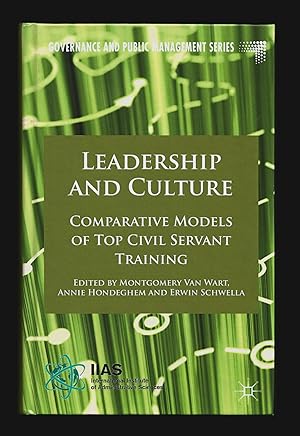
The success and fate of governments around the globe is not only based on the success of political leaders, but also on the top civil servants who lead the apparatus of government. Given the enormous tasks of leading society and changing the culture of government itself, the training and retraining of top civil servants is vital. This important collection is a one-of-a-kind study that not only provides information about the where, what, and how of the training of top civil servants around the world, but also offers up-to-date cultural, political, economic background on both larger countries such as the United States, United Kingdom, and Germany, and also smaller countries such as Colombia, Namibia, and Belgium. It explores in detail the factors that result in different country perceptions of the importance of executive training, and the reasons for the variations in its quality and robustness.
À propos de l'auteur
Claudia N Avellaneda, Indiana University, USA Bente Bjørnholt, Danish Institute for Local and Regional Government Research, Denmark Denita Cepiku, University of Rome Tor Vergata, Italy Michael Conteh, Namibian Institute of Public Administration and Management (NIPAM), Namibia Alexandra Couston, Aix Marseille Université, France Christian de Visscher, Catholic University of Louvain, Belgium Isabell Egger-Peitler, WU Vienna, Austria Robert Fouchet, Aix Marseille Université, France Peter E. Franks, University of Stellenbosch, South Africa Mark Gal, Corvinus University of Budapest, Hungary and Babes Bolyai University, Romania Marton Gellen, National University of Public Service, Hungary Heather Getha-Taylor, University of Kansas, USA John Halligan, University of Canberra, Australia Morten Balle Hansen, Aalborg University, Denmark Alessandro Hinna, University of Rome Tor Vergata, Italy Cristina Hintea, Babes-Bolyai University, Romania Sylvia Horton, Honorary Principal Lecturer, University of Portsmouth, UK Werner Jann, University of Potsdam, Germany Sangmook Kim, Seoul National University of Science and Technology, South Korea Monika Knassmüller, WU Vienna, Austria Peter Leisink, Utrecht University, the Netherlands Joyce Liddle, Aix Marseille Université, France Sandro Mameli, National School of Administration, Italy Yrika Maritz, Namibian Institute of PublicAdministration and Management (NIPAM), Namibia Merilin Metsma, Tallinn University of Technology, Estonia Renate E. Meyer, WU Vienna, Austria Elsie Nghikembua, Namibian Institute of Public Administration and Management (NIPAM), Namibia Maxime Petit Jean, Catholic University of Louvain, Belgium Tiina Randma-Liiv, Professor, Tallinn University of Technology, Estonia Adrian Ritz, Professor, University of Bern, Switzerland Silke Ruebens, PhD candidate, KU Leuven, Belgium Pablo Sanabria, Universidad de los Andes, Colombia Külli Sarapuu, Tallinn University of Technology, Estonia Leonie Schüssler, University of Bern, Switzerland Trui Steen, Leiden University, the Netherlands and Catholic University of Leuven, Belgium Tudor Ticlau, Babes-Bolyai University, Romania Caspar van den Berg, Leiden University, the Netherlands Sylvia Veit, University of Potsdam, Germany Annika Uudelepp, Praxis Centre for Policy Studies, Estonia Turo Virtanen, University of Helsinki, Finland
Les informations fournies dans la section « A propos du livre » peuvent faire référence à une autre édition de ce titre.