Synopsis
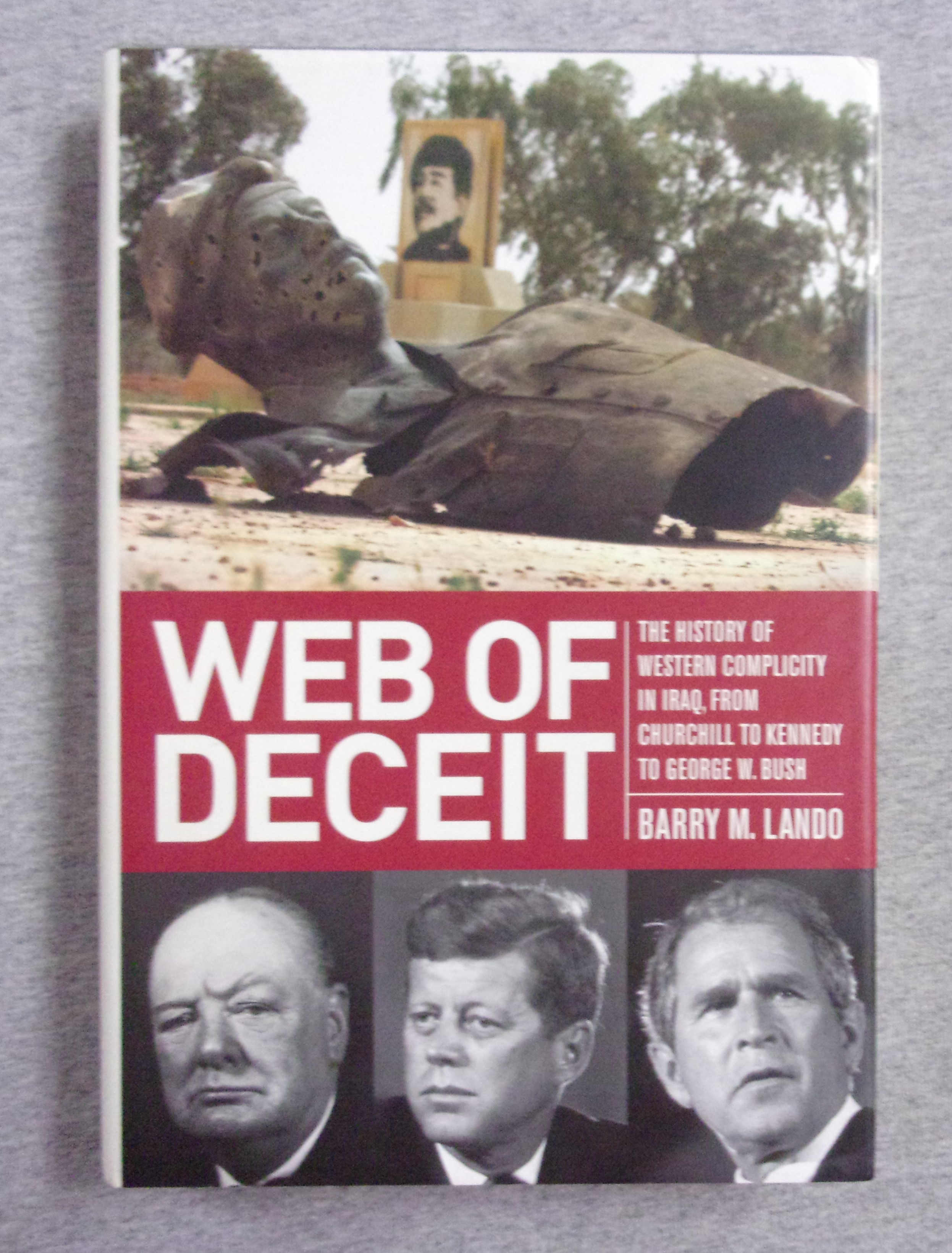
Book by Lando Barry M
Revue de presse
Kirkus Reviews
STARRED REVIEWA former 60 Minutes producer exposes 85 years of Western recklessness and fecklessness in Iraq.... Plenty of ammunition here for those who believe a "campaign of lies and distortion" accounts for the U.S. presence in Iraq
Publishers Weekly
Lando, a 60 Minutes investigative producer and filmmaker, carefully arranges all the threads of modern Iraqi political history and liberally doles out the guilt....Through extensive quotes from politicians, statesmen and official documents, Lando exposes the duplicity and ulterior motives that have pervaded the West's dealings Iraq. From the CIA's artificial prolonging of the Iran-Iraq War to the legendary betrayals of the Kurds and Shiites, the result has been death and destruction on a massive scale....his book offers readers a grasp of the country America has broken more than perhaps any other.
Booklist
A former investigative journalist with 60 Minutes, Lando here presents a scathing account of the American role in creating, misleading, starving, and ultimately destroying Saddam Hussein's Iraq.... Lando is no apologist for Saddam Hussein, and this account certainly does not whitewash Iraq's aggressive foreign policy. Fast-paced and thick with realpolitik, this account is sure to draw attention.
The Oregonian Debra Gwartney
...it's staggering to encounter a sweep of history regarding this troubled corner of the Middle East in one volume. Page after page, Lando gives us evidence that means to prove that from "the time of the establishment of the modern nation of Iraq, foreign powers consistently prevented Iraqis from taking responsibility for their own destiny."...reminiscent of the newsiest of 60 Minutes segments for which Lando was a producer for years, the author is relentless in battering readers with his case: that even though Saddam Hussein was responsible for some of the planet's worst atrocities (documented in full detail), the U.S. and other major powers are equally responsible, if not more so, for the terror Iraqi citizens have lived with for decades.
The Nation Stanley Kulter
While We Slept
Where was our attention for the decade following the Gulf War in 1991? Were we so consumed by the companionable travesties of Bill Clinton and Monica Lewinsky, as well as by the Republicans' effort to impeach Clinton? Did we fully understand the Clinton Administration's doings in Bosnia and Kosovo? Did we properly take note of the rending of our political fabric when the Contract With (or was it on?) America was launched in 1994?
And what attention did we give to the thirteen-year campaign of sanctions and bombings of Iraq? For Barry Lando, in his useful new book Web of Deceit: The History of Western Complicity in Iraq, From Churchill to Kennedy to George W. Bush, sanctions were the weapon of mass destruction used against the Iraqi people to starve and reduce them to a Third World level of poverty. Lando's work opens our eyes to one of the most tragic episodes in the lengthy, sorry history of "Western" dealings with Iraq. He offers a well-researched account of Iraq's external (and, to a lesser extent, internal) history since the British carved that unlikely state out of the moribund Ottoman Empire in 1919. History doesn't change much as he invokes Col. T.E. Lawrence's well-known injunction of that moment: "The people of England have been led in Mesopotamia into a trap from which it will be hard to escape with dignity and honour.... We are today not far from disaster." The British preferred Winston Churchill's imperial ambitions. We chose Bushes, a Clinton and their respective entourages. Either way, disaster was not far behind.
Iraq floats on a sea of oil, reputedly with the world's third-largest reserves. The Great Powers naturally have been drawn to it, but they have cared nothing for the country that might nominally exist. Churchill, Allen Dulles and the CIA, Donald Rumsfeld, our two George Bushes: All assisted the Sunni minority's oppression of the Shiite majority; they imposed a "royal" family of dubious lineage that never really had popular support; and they financed and encouraged a ruthless dictator who (among his other crimes) most assuredly gassed his own people and tens of thousands of Iranians. The iconic image of Rumsfeld in the 1980s embracing and supporting Saddam Hussein speaks well of American complicity.
The sanctions and bombings of the 1990s are directly linked to Bush's determination to invade Iraq in 2003 and attempt to remake it--again, in our image. History illuminates the present, and we would do well to absorb Lando's narration.
The United Nations imposed sanctions on Iraq as part of the run-up to the first Gulf War. The Security Council severed all imports and exports between Iraq and the world--from food and vaccines to hospital equipment and medical journals. Iraq imported 70 percent of its food, largely paid for by oil exports. The UN's writ is not meaningless--not when the United States and Great Britain rigorously enforced the sanctions. And to underline for the Iraqis where the muscle was, the two powers regularly bombed the country.
We estimate between 500,00 to 1 million Iraqis died in the 1990s, a very large proportion being children. To what end? Not, Lando maintains, to destroy Saddam Hussein's WMDs but to force him out. Bush I wisely listened to his military counselors and stopped short of occupying Iraq. His momentary good sense has inflated his reputation; make no mistake, he was passionately committed to Saddam's overthrow--whatever the cost. On his watch, the United States encouraged revolts by the Kurds and Shiites. Then Bush abandoned both and allowed Saddam to exact a terrible revenge on both groups. Yet all the while, he insisted that there would be no "normalized relations with the United States...until Saddam Hussein is out of there." And thus American policy took a new, more disastrous direction with Bush II's invasion of Iraq in March 2003.
The CIA badly miscalculated that sanctions, coupled with Iraq's devastating defeat, would result in a military coup, toppling Saddam. Anything but. The sanctions and Saddam's heightened repression insured his survival--much to the frustration of Western leaders.
During that first war, Secretary of State James Baker told the Iraqi foreign minister that "we will return you to the pre-industrial age." Baker's words were prophetic. The American-led coalition delivered 88,000 tons of bombs, equivalent, Lando notes, to seven Hiroshima-sized atomic bombs. The bombing unquestionably set out to destroy the civilian infrastructure, leveling oil refineries, electrical plants and transportation networks. And all this, Lando emphasizes, resulted in further civilian suffering. Seventeen of twenty electrical generating plants were seriously bombed, and eleven totally destroyed.
After one plant near Basra had been demolished early on, American bombers returned another dozen times. "We're not going to tolerate Saddam Hussein," one Air Force planner said, and the bombing sent a message: "Fix that [Saddam], and we'll fix your electricity." Three-fourths of Iraq's population lived in cities, dependent on electricity for their factories, homes, water treatment plants and sewage treatment facilities. Defense Secretary Dick Cheney vigorously defended the "perfectly legitimate" bombing action. "If I had to do it over again, I would do exactly the same thing," he said. Clearly, Cheney means what he says.
The sanctions worked only as partly intended: They imposed untold suffering on the population. Americans at the UN blocked a request to ship baby food because adults might use it. They vetoed sending a heart pill that contained a milligram of cyanide because tens of thousands of such pills could become a lethal weapon. The banned list included filters for water treatment plants, vaccines, cotton swabs and gauze, children's clothes, funeral shrouds. Somehow, even Vietnamese pingpong balls found their way to the proscribed list.
Sanctions devastated the country's medical system, once one of the best in the region. Sanctions insured that malnutrition would morph into virtual death sentences, as Lando notes. Babies died in incubators because of power failures; others were crippled with cerebral palsy because of insufficient oxygen supplies. As early as May 1991, a visiting Harvard medical team concluded that Iraq had a public health catastrophe.
Meanwhile, Bush's strategy of playing for a coup miserably failed. Conditions dramatically deteriorated. Streetcorners became barter bazaars, with people selling their possessions for food and medicine. Crime, prostitution, smuggling and kickbacks flourished. People merely wanted survival; political paralysis, not a coup, was the result. And Americans knew it. Lando quotes the ubiquitous "senior US official" who privately admitted that any popular uprising "is the least likely alternative." And yet the sanctions persisted.
Iraqis hoped for a better day with the new President, Bill Clinton. Alas! Clinton's background and his political calculus determined that he had to establish his macho credentials and his credibility with the right. He authorized a Tomahawk missile attack against Baghdad, supposedly in retaliation for Saddam's alleged plot to assassinate former President Bush. (The Kuwaiti-provided evidence, many believe, is quite tenuous.) In any event, Clinton's attack went off track and killed eight civilians, including a gifted artist. His UN Ambassador, Madeleine Albright, carefully monitored the ever-tightening sanctions. In late 1994 the New York Times reported on children in filthy hospitals, dying with diarrhea and pneumonia, people desperately seeking food, and Iraq's inability to sell its oil--the country faced "famine and economic collapse." Without doubt, the sanctions consolidated Saddam's power. UN Administrato...
Les informations fournies dans la section « A propos du livre » peuvent faire référence à une autre édition de ce titre.