


Yukichi Watabe: A Criminal Investigation (First Edition)
WATABE, Yukichi
ISBN 10: 2915173826 ISBN 13: 9782915173826
Edité par Xavier Barral / LE BAL, Paris, 2011
Neuf(s)
Hardcover
Vendeur
Vincent Borrelli, Bookseller, Albuquerque, NM, Etats-Unis
Évaluation du vendeur 5 sur 5 étoiles

Vendeur AbeBooks depuis 22 février 2001
Cet article spécifique n'est plus disponible.
A propos de cet article
Description :
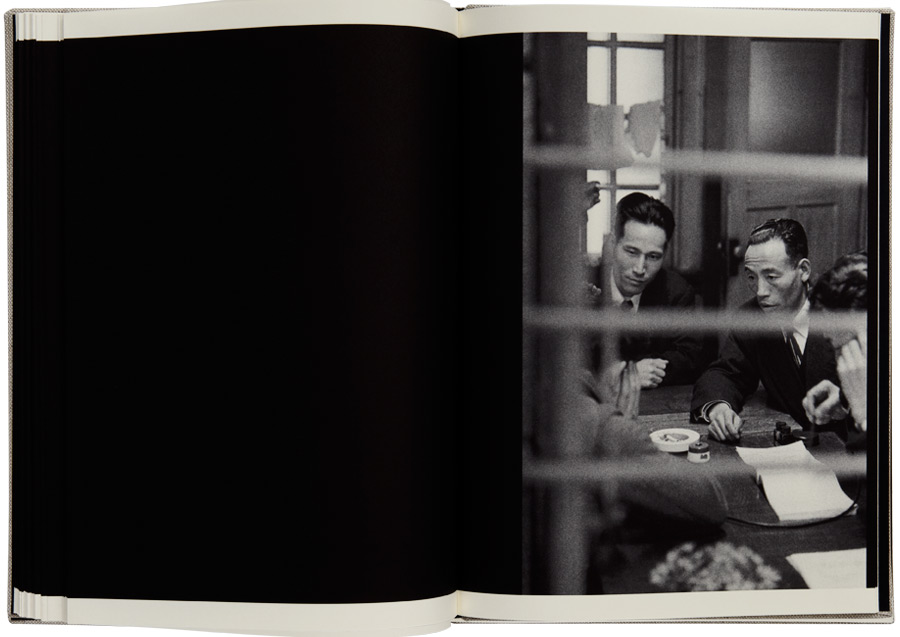
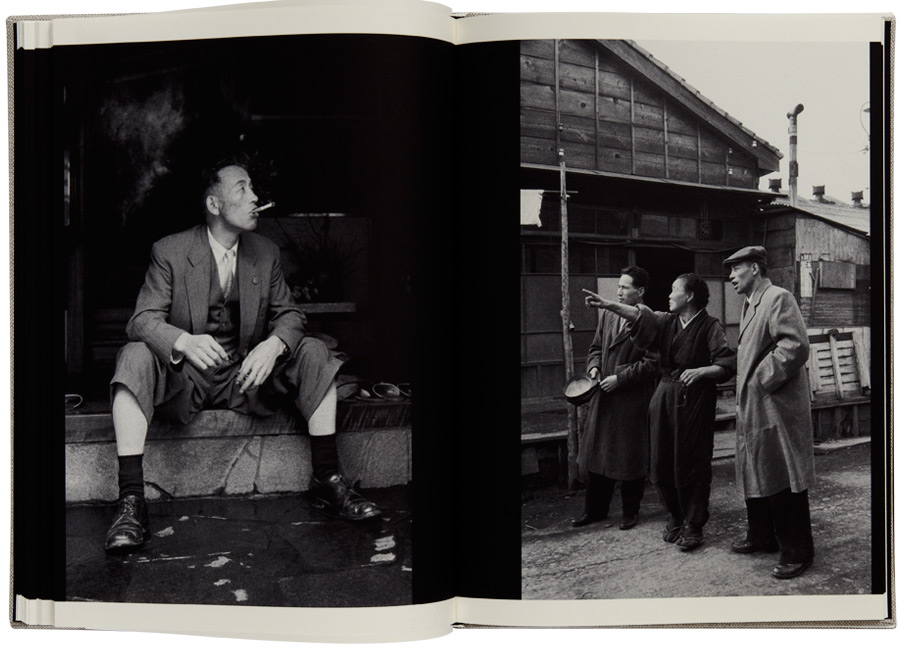
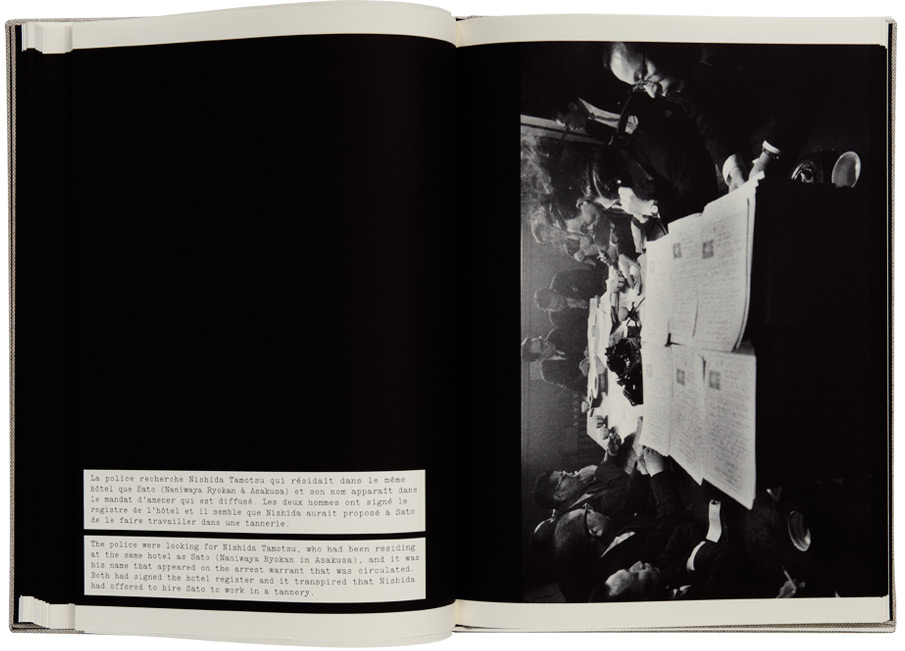
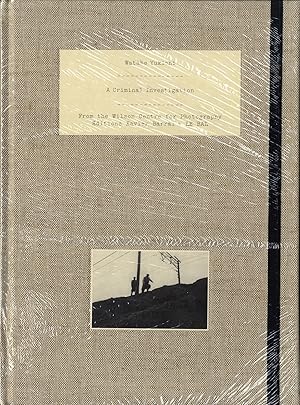
First edition, first printing. Hardcover (Japanese binding). Canvas cloth-covered boards with tipped-in title and black-and-white plate on cover and title stamped in black on spine; with black elastic band; no dust jacket as issued. Photographs by Yukichi Watabe. Text in French and English. 100 pp., with black-and-white plates throughout. 11-3/4 x 8-1/2 inches. [Cited in Martin Parr and Gerry Badger, The Photobook: A History, Volume III. (London and New York: Phaidon, 2014)]. New in publisher's shrink wrap. From the publisher: "On 14 January 1958, the disfigured and amputated body of a man was discovered near Lake Sembako in Japan. Two investigators from Tokyo came to help out the local police in order to resolve what at first appeared to be a banal case, but which proved to be more complex. For the first time, a photographer was authorised to accompany the police to document the investigation. Watabe followed the inspector as he questioned witnesses (workers in a tannery factory, local police officers etc.) and pounded the streets of the most insalubrious neighbourhoods in Tokyo--its bars, bridges, alleyways and hospitals--in search of the killer. Watabe's images record much more than simply a police investigation, they reveal Tokyo in the 1950s in a way that has rarely been shown.". N° de réf. du vendeur 112010
Synopsis :
Le 14 janvier 1958, le corps défiguré et amputé d'un homme est découvert près du lac Sembako au Japon. Deux enquêteurs de Tokyo viennent prêter main forte à la police locale pour résoudre ce qui semble à première vue une affaire banale. Ce ne sera pas le cas.
À propos de l?auteur: Watabe Yukichi (1924-1993) est né à Sakata (préfecture de Yamagata). Après avoir obtenu son diplôme d'études secondaires, il se rend à Tokyo en 1941 où il travaille dans une usine au montage de projecteurs Bell 16mm. C'est certainement cette expérience qui le pousse à s'intéresser au cinéma et à la photographie. Deux ans après, il est engagé par Tokyo Koga-sha, un éditeur reconnu pour la grande qualité de ses magazines photo et de ses ouvrages. C'est là qu'il se forme au métier de photographe. En 1945, il est incorporé dans les forces aériennes pendant deux mois. En 1946, il publie sa première série de photographies, intitulée "Repatriate Train", dans le Sun Photo News, qui remporte un franc succès. La série montre le retour des vétérans de guerre et des réfugiés japonais dans leur ville natale de Sakata. L'année suivante, il travaille comme assistant pour le photographe Tamura Shigeru (1909-1987) et publie ses photographies dans des magazines tels que Fujin Gaho et Sekai Gaho. En 1950, il s'installe à son compte et vend ses photographies à plusieurs magazines spécialisés, notamment Gendai, Bungei Shunju et Chuo Koron. Les années 1950 constituent le point d'orgue de sa carrière. Comme reporter photographe, il couvre la plupart des grands événements historiques et politiques se déroulant à Tokyo. En 1951, les écrivains Abe Kobo et Shimao Toshio lui demandent de participer à leur magazine Gendai. En 1958 il se voit accorder l'autorisation exceptionnelle de documenter l'enquête menée par la police municipale de Tokyo relative à "l'affaire du corps coupé". Il publie une sélection d'images dans le numéro de juin 1958 du magazine Nippon, qui sera reprise dans le recueil d'images Tokyo (Asahi Shimbunsha, 1961) réalisé par des membres de la Société des photographes professionnels japonais (Nihon Shashinka Kyokai). Dans les années 1960, ses travaux en couleur sont marqués par de nombreux voyages en Afrique et en Europe.
Les informations fournies dans la section « A propos du livre » peuvent faire référence à une autre édition de ce titre.
Détails bibliographiques
Titre : Yukichi Watabe: A Criminal Investigation (...
Éditeur : Xavier Barral / LE BAL, Paris
Date d'édition : 2011
Reliure : Hardcover
Etat : New
Etat de la jaquette : No dust jacket as issued
Edition : 1st Edition.
Meilleurs résultats de recherche sur AbeBooks
Watabe Yukichi: A Criminal Investigation
Edité par
Editions Xavier Barral, 2012
ISBN 10 : 2915173826
ISBN 13 : 9782915173826
Ancien ou d'occasion
Couverture rigide
Vendeur : Salish Sea Books, Bellingham, WA, Etats-Unis
Évaluation du vendeur 5 sur 5 étoiles
Etat : Fair. Acceptable/Fair; Hardcover; Very light wear to the covers; Unblemished textblock edges; There are heavy creases to the top right corner of about the last 2/3 of the text pages; Pages are otherwise clean and readable, and usability is not affected; Good binding; This book will be shipped in a sturdy cardboard box with foam padding; Large Format (Quatro, 10.75" - 11.75" tall); 1.9 lbs; Tan cloth covers with title in black lettering on a white background; 2012, Editions Xavier Barral; 200 pages; "Watabe Yukichi: A Criminal Investigation," by Watabe Yukichi, et al. N° de réf. du vendeur SKU-0722AA02205055
Acheter D'occasion
EUR 131,84
Expédition à EUR 4,33
Expédition nationale : Etats-Unis
Expédition nationale : Etats-Unis
Quantité disponible : 1 disponible(s)

Image d'archives
Watabe Yukichi: A Criminal Investigation
Edité par
Editions Xavier Barral, 2012
ISBN 10 : 2915173826
ISBN 13 : 9782915173826
Ancien ou d'occasion
Couverture rigide
Vendeur : Stephen Bulger Gallery, Toronto, ON, Canada
Évaluation du vendeur 2 sur 5 étoiles

Hardcover. Etat : Fine. Signed by Klein. N° de réf. du vendeur ABE-1565974655533
Acheter D'occasion
EUR 141,11
Expédition à EUR 30,37
Expédition depuis Canada vers Etats-Unis
Expédition depuis Canada vers Etats-Unis
Quantité disponible : 1 disponible(s)
Watabe Yukichi: A Criminal Investigation
Edité par
Editions Xavier Barral, LE BAL, Paris, 2012
ISBN 10 : 2915173826
ISBN 13 : 9782915173826
Neuf
Couverture rigide
Vendeur : Minetta Editions, Toronto, ON, Canada
Évaluation du vendeur 5 sur 5 étoiles
Hardcover. Etat : New. Watabe Yukichi's A Criminal Investigation | Published by Editions Xavier Barral - LE BAL, Paris in 2012 - SOLD OUT and now OUT OF PRINT | RARE! NEW, UNOPENED and SEALED in publisher's original shrinkwrap. | Note: All images are of the actual item for sale. | On 14 January 1958, the disfigured and amputated body of a man was discovered near Lake Sembako in Japan. Two investigators from Tokyo came to help out the local police in order to resolve what at first appeared to be a banal case, but which proved to be more complex. For the first time, a photographer, Yukichi Watabe, was authorized to accompany the police to document the investigation. Watabe followed the inspector as he questioned witnesses (workers in a tannery factory, local police officers, etc.) and pounded the streets of the most insalubrious neighbourhoods in Tokyo its bars, bridges, alleyways and hospitals in search of the killer. Watabe's images record much more than simply a police investigation, they reveal Tokyo in the 1950s in a way that has rarely been shown. A Criminal Investigation documents an intermediate situation - neither the moment of the murder, nor that of the arrest akin to a search for identity. By following the scattered clues, Watabe embraces this subtle turning-point, when the detective puts himself in the killer s shoes so as to adopt his way of thinking. And when the man dissolves, there surfaces a Japan that is still hesitating between its pre-war geography and a new, urban visage, symbol of its spectacular recovery. Following the extended metaphor of troubled identity, the codes no longer belong to photography only but also to cinema: a sequential logic, a certain linearity and a completely narrative framing: images unfold and involve the onlooker. Shot after shot, the mystery is engulfing those in charge of solving it. | Japanese binding Canvas with elastic strap, 21 × 29 cm ( 8.25 x 11.4 inches), 100 pages B&W photographs, English, French, ISBN 10: 2915173826, ISBN 13: 9782915173826. N° de réf. du vendeur ABE-1755015022206
Acheter neuf
EUR 224,49
Expédition à EUR 5,21
Expédition depuis Canada vers Etats-Unis
Expédition depuis Canada vers Etats-Unis
Quantité disponible : 1 disponible(s)