
Articles liés à Pesticide Resistance in Arthropods
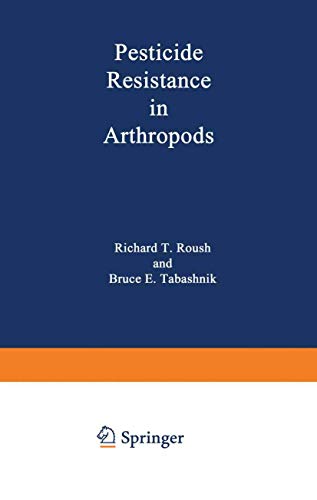
Synopsis
Bruce E. Tabashnik and Richard T. Roush Pesticide resistance is an increasingly urgent worldwide problem. Resistance to one or more pesticides has been documented in more than 440 species of insects and mites. Resistance in vectors of human dise8se, particularly malaria-transmit- ting mosquitoes, is a serious threat to public health in many nations. Agricultural productivity is jeopardized because of widespread resistance in crop and livestock pests. Serious resistance problems are also evident in pests of the urban environ- ment, most notably cockroaches. Better understanding of pesticide resistance is needed to devise techniques for managing resistance (Le., slowing, preventing, or reversing development of resistance in pests and promoting it in beneficial natural enemies). At the same time, resistance is a dramatic example of evolution. Knowledge of resistance can thus provide fundamental insights into evolution, genetics, physiology, and ecology. Resistance management can help toreduce the harmful effects of pesticides by decreasing rates of pesticide use and prolonging the efficacy of environmentally safe pesticides. In response to resistance problems, the concentration or frequency of pesticide applications is often increased. Effective resistance management would reduce this type of increased pesticide use. Improved monitoring of resis- tance would also decrease the number of ineffective pesticide applications that are made when a resistance problem exists but has not been diagnosed. Resistance often leads to replacement of one pesticide with another that is more expensive and less compatible with alternative controls.
Les informations fournies dans la section « Synopsis » peuvent faire référence à une autre édition de ce titre.
Résultats de recherche pour Pesticide Resistance in Arthropods

Image d'archives
Pesticide Resistance in Arthropods (eng)
impression à la demandeVendeur : Brook Bookstore On Demand, Napoli, NA, Italie
Évaluation du vendeur 5 sur 5 étoiles

Etat : new. Questo è un articolo print on demand. N° de réf. du vendeur 1IIBILELZI
Acheter neuf
EUR 86,24
Expédition à EUR 6,80
Expédition depuis Italie vers Etats-Unis
Expédition depuis Italie vers Etats-Unis
Quantité disponible : Plus de 20 disponibles
Image fournie par le vendeur
Pesticide Resistance in Arthropods
Edité par
Springer, 2012
ISBN 10 : 1468464310
ISBN 13 : 9781468464313
Ancien ou d'occasion
Couverture souple
Vendeur : GreatBookPrices, Columbia, MD, Etats-Unis
Évaluation du vendeur 5 sur 5 étoiles
Etat : As New. Unread book in perfect condition. N° de réf. du vendeur 20182496
Acheter D'occasion
EUR 127,10
Expédition à EUR 2,36
Expédition nationale : Etats-Unis
Expédition nationale : Etats-Unis
Quantité disponible : 15 disponible(s)
Image fournie par le vendeur
Pesticide Resistance in Arthropods
impression à la demandeVendeur : BuchWeltWeit Ludwig Meier e.K., Bergisch Gladbach, Allemagne
Évaluation du vendeur 5 sur 5 étoiles
Taschenbuch. Etat : Neu. This item is printed on demand - it takes 3-4 days longer - Neuware -Bruce E. Tabashnik and Richard T. Roush Pesticide resistance is an increasingly urgent worldwide problem. Resistance to one or more pesticides has been documented in more than 440 species of insects and mites. Resistance in vectors of human dise8se, particularly malaria-transmit ting mosquitoes, is a serious threat to public health in many nations. Agricultural productivity is jeopardized because of widespread resistance in crop and livestock pests. Serious resistance problems are also evident in pests of the urban environ ment, most notably cockroaches. Better understanding of pesticide resistance is needed to devise techniques for managing resistance (Le. , slowing, preventing, or reversing development of resistance in pests and promoting it in beneficial natural enemies). At the same time, resistance is a dramatic example of evolution. Knowledge of resistance can thus provide fundamental insights into evolution, genetics, physiology, and ecology. Resistance management can help to reduce the harmful effects of pesticides by decreasing rates of pesticide use and prolonging the efficacy of environmentally safe pesticides. In response to resistance problems, the concentration or frequency of pesticide applications is often increased. Effective resistance management would reduce this type of increased pesticide use. Improved monitoring of resis tance would also decrease the number of ineffective pesticide applications that are made when a resistance problem exists but has not been diagnosed. Resistance often leads to replacement of one pesticide with another that is more expensive and less compatible with alternative controls. 316 pp. Englisch. N° de réf. du vendeur 9781468464313
Acheter neuf
EUR 106,99
Expédition à EUR 23
Expédition depuis Allemagne vers Etats-Unis
Expédition depuis Allemagne vers Etats-Unis
Quantité disponible : 2 disponible(s)
Image fournie par le vendeur
Pesticide Resistance in Arthropods
Vendeur : GreatBookPrices, Columbia, MD, Etats-Unis
Évaluation du vendeur 5 sur 5 étoiles
Etat : New. N° de réf. du vendeur 20182496-n
Acheter neuf
EUR 134,35
Expédition à EUR 2,36
Expédition nationale : Etats-Unis
Expédition nationale : Etats-Unis
Quantité disponible : 15 disponible(s)
Image fournie par le vendeur
Pesticide Resistance in Arthropods
impression à la demandeVendeur : moluna, Greven, Allemagne
Évaluation du vendeur 5 sur 5 étoiles
Etat : New. Dieser Artikel ist ein Print on Demand Artikel und wird nach Ihrer Bestellung fuer Sie gedruckt. Bruce E. Tabashnik and Richard T. Roush Pesticide resistance is an increasingly urgent worldwide problem. Resistance to one or more pesticides has been documented in more than 440 species of insects and mites. Resistance in vectors of human dise8se, particu. N° de réf. du vendeur 4204488
Acheter neuf
EUR 92,27
Expédition à EUR 48,99
Expédition depuis Allemagne vers Etats-Unis
Expédition depuis Allemagne vers Etats-Unis
Quantité disponible : Plus de 20 disponibles
Image fournie par le vendeur
Pesticide Resistance in Arthropods
impression à la demandeVendeur : AHA-BUCH GmbH, Einbeck, Allemagne
Évaluation du vendeur 5 sur 5 étoiles
Taschenbuch. Etat : Neu. nach der Bestellung gedruckt Neuware - Printed after ordering - Bruce E. Tabashnik and Richard T. Roush Pesticide resistance is an increasingly urgent worldwide problem. Resistance to one or more pesticides has been documented in more than 440 species of insects and mites. Resistance in vectors of human dise8se, particularly malaria-transmit ting mosquitoes, is a serious threat to public health in many nations. Agricultural productivity is jeopardized because of widespread resistance in crop and livestock pests. Serious resistance problems are also evident in pests of the urban environ ment, most notably cockroaches. Better understanding of pesticide resistance is needed to devise techniques for managing resistance (Le. , slowing, preventing, or reversing development of resistance in pests and promoting it in beneficial natural enemies). At the same time, resistance is a dramatic example of evolution. Knowledge of resistance can thus provide fundamental insights into evolution, genetics, physiology, and ecology. Resistance management can help toreduce the harmful effects of pesticides by decreasing rates of pesticide use and prolonging the efficacy of environmentally safe pesticides. In response to resistance problems, the concentration or frequency of pesticide applications is often increased. Effective resistance management would reduce this type of increased pesticide use. Improved monitoring of resis tance would also decrease the number of ineffective pesticide applications that are made when a resistance problem exists but has not been diagnosed. Resistance often leads to replacement of one pesticide with another that is more expensive and less compatible with alternative controls. N° de réf. du vendeur 9781468464313
Acheter neuf
EUR 124,85
Expédition à EUR 35
Expédition depuis Allemagne vers Etats-Unis
Expédition depuis Allemagne vers Etats-Unis
Quantité disponible : 1 disponible(s)
Image d'archives
Pesticide Resistance in Arthropods
Vendeur : Books Puddle, Woodside, NY, Etats-Unis
Évaluation du vendeur 4 sur 5 étoiles

Etat : New. pp. 316. N° de réf. du vendeur 2697854440
Acheter neuf
EUR 161,33
Expédition à EUR 3,57
Expédition nationale : Etats-Unis
Expédition nationale : Etats-Unis
Quantité disponible : 4 disponible(s)
Image fournie par le vendeur
Pesticide Resistance in Arthropods
Vendeur : preigu, Osnabrück, Allemagne
Évaluation du vendeur 5 sur 5 étoiles
Taschenbuch. Etat : Neu. Pesticide Resistance in Arthropods | Bruce E. Tabashnik (u. a.) | Taschenbuch | 352 S. | Englisch | 2012 | Springer US | EAN 9781468464313 | Verantwortliche Person für die EU: Springer Verlag GmbH, Tiergartenstr. 17, 69121 Heidelberg, juergen[dot]hartmann[at]springer[dot]com | Anbieter: preigu. N° de réf. du vendeur 105627747
Acheter neuf
EUR 95,50
Expédition à EUR 70
Expédition depuis Allemagne vers Etats-Unis
Expédition depuis Allemagne vers Etats-Unis
Quantité disponible : 5 disponible(s)
Image fournie par le vendeur
Pesticide Resistance in Arthropods
Edité par
Springer US, Springer New York Jun 2012, 2012
ISBN 10 : 1468464310
ISBN 13 : 9781468464313
Neuf
Taschenbuch
Vendeur : buchversandmimpf2000, Emtmannsberg, BAYE, Allemagne
Évaluation du vendeur 5 sur 5 étoiles
Taschenbuch. Etat : Neu. This item is printed on demand - Print on Demand Titel. Neuware -Bruce E. Tabashnik and Richard T. Roush Pesticide resistance is an increasingly urgent worldwide problem. Resistance to one or more pesticides has been documented in more than 440 species of insects and mites. Resistance in vectors of human dise8se, particularly malaria-transmit ting mosquitoes, is a serious threat to public health in many nations. Agricultural productivity is jeopardized because of widespread resistance in crop and livestock pests. Serious resistance problems are also evident in pests of the urban environ ment, most notably cockroaches. Better understanding of pesticide resistance is needed to devise techniques for managing resistance (Le. , slowing, preventing, or reversing development of resistance in pests and promoting it in beneficial natural enemies). At the same time, resistance is a dramatic example of evolution. Knowledge of resistance can thus provide fundamental insights into evolution, genetics, physiology, and ecology. Resistance management can help toreduce the harmful effects of pesticides by decreasing rates of pesticide use and prolonging the efficacy of environmentally safe pesticides. In response to resistance problems, the concentration or frequency of pesticide applications is often increased. Effective resistance management would reduce this type of increased pesticide use. Improved monitoring of resis tance would also decrease the number of ineffective pesticide applications that are made when a resistance problem exists but has not been diagnosed. Resistance often leads to replacement of one pesticide with another that is more expensive and less compatible with alternative controls.Springer Verlag GmbH, Tiergartenstr. 17, 69121 Heidelberg 316 pp. Englisch. N° de réf. du vendeur 9781468464313
Acheter neuf
EUR 106,99
Expédition à EUR 60
Expédition depuis Allemagne vers Etats-Unis
Expédition depuis Allemagne vers Etats-Unis
Quantité disponible : 1 disponible(s)
Image d'archives
Pesticide Resistance in Arthropods
impression à la demandeVendeur : Majestic Books, Hounslow, Royaume-Uni
Évaluation du vendeur 4 sur 5 étoiles
Etat : New. Print on Demand pp. 316 66:B&W 7 x 10 in or 254 x 178 mm Perfect Bound on White w/Gloss Lam. N° de réf. du vendeur 94542903
Acheter neuf
EUR 168,35
Expédition à EUR 7,79
Expédition depuis Royaume-Uni vers Etats-Unis
Expédition depuis Royaume-Uni vers Etats-Unis
Quantité disponible : 4 disponible(s)