
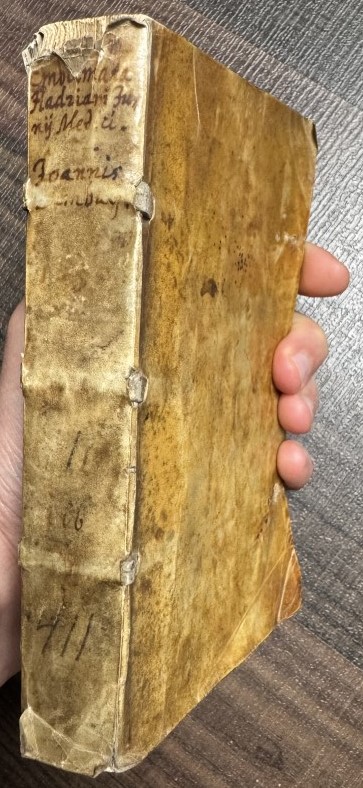
Emblemata (Two Emblemata Works in One)
Hadrianus Iunius (Junius) - Sambuc[us], Ioann[e]s
Edité par Christophorum Plantinum, Antverpiae, 1564
Ancien(s) ou d'occasion
Soft cover
Vendeur
Abauj Antique Bookshop, Kistokaj, H, Hongrie
Évaluation du vendeur 5 sur 5 étoiles

Vendeur AbeBooks depuis 15 novembre 2022
Nous sommes désolés, ce livre n'est plus disponible. AbeBooks référence des millions de livres. Veuillez saisir des termes de recherche ci-dessous pour identifier des exemplaires similaires.
A propos de cet article
Description :
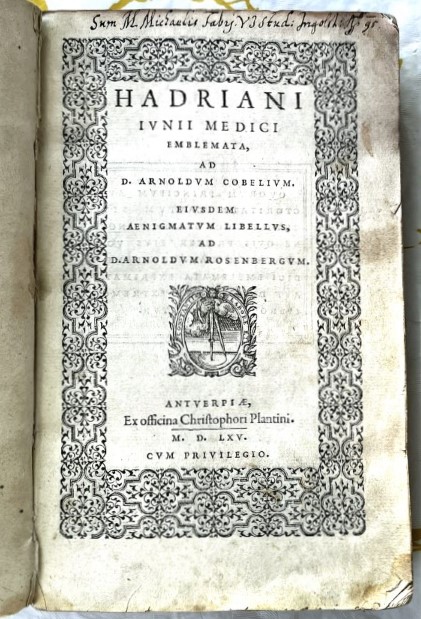
Hadrianus Iunius (Junius): Hadriani Iunii medici Emblemata ad D. Arnoldum Cobelium. Eiusdem Aenigmatum libellus ad Arnoldum Rosenbergum
Antverpiae, 1565. Christophorum Plantinum. [25] 149 p. 58 woodcuts with emblem. First edition.
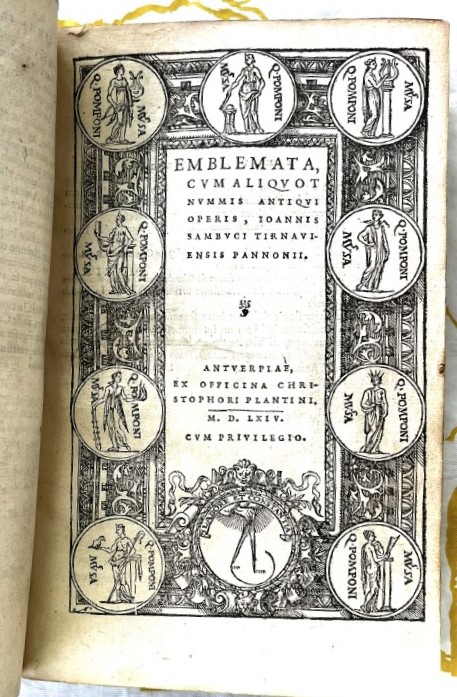
[Zsámboky János] Sambuc[us], Ioann[e]s: Emblemata, cum aliquot nummis antiqui operis, Ioannis Sambuci Tirnaviensis Pannoniii
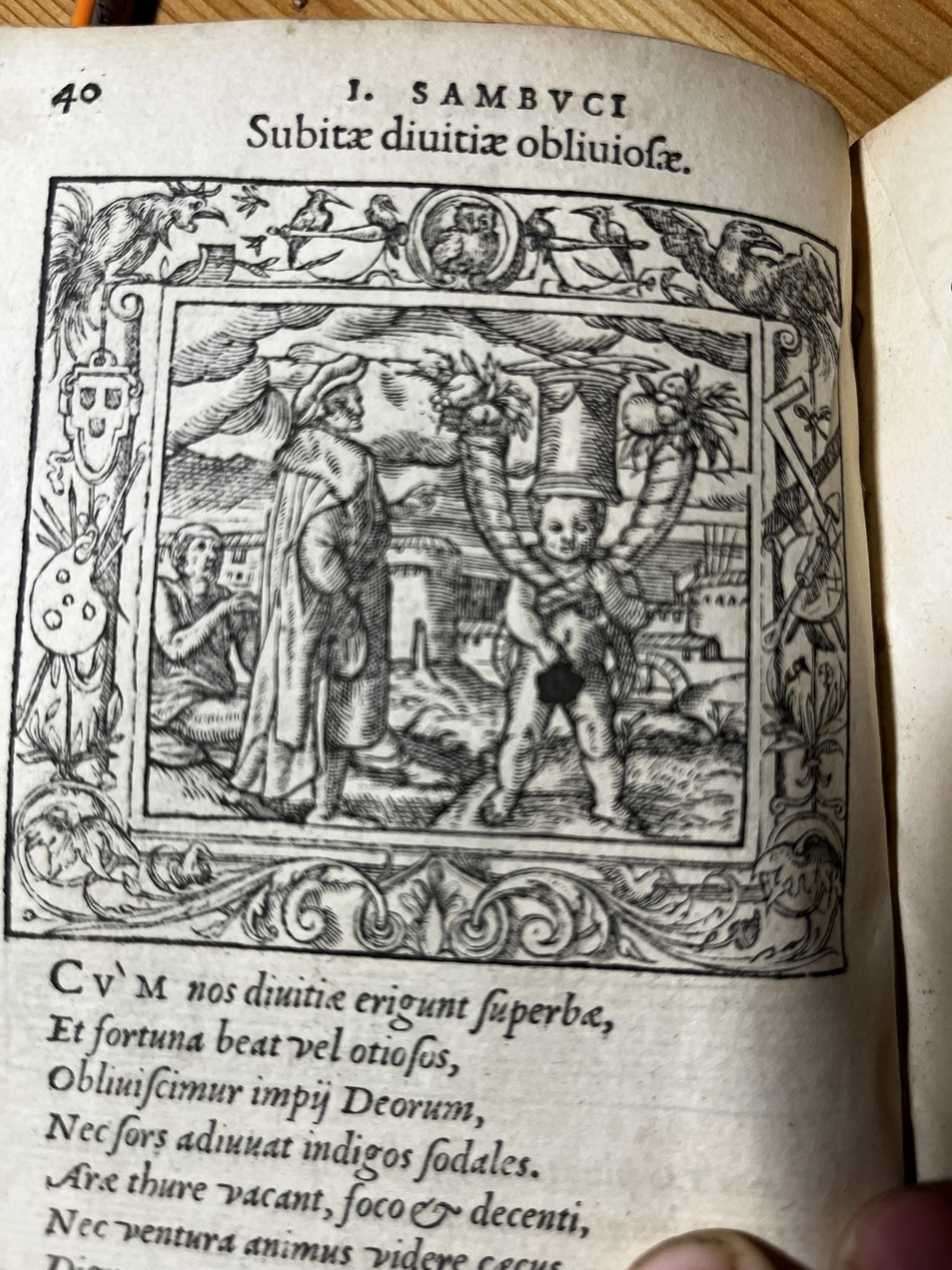
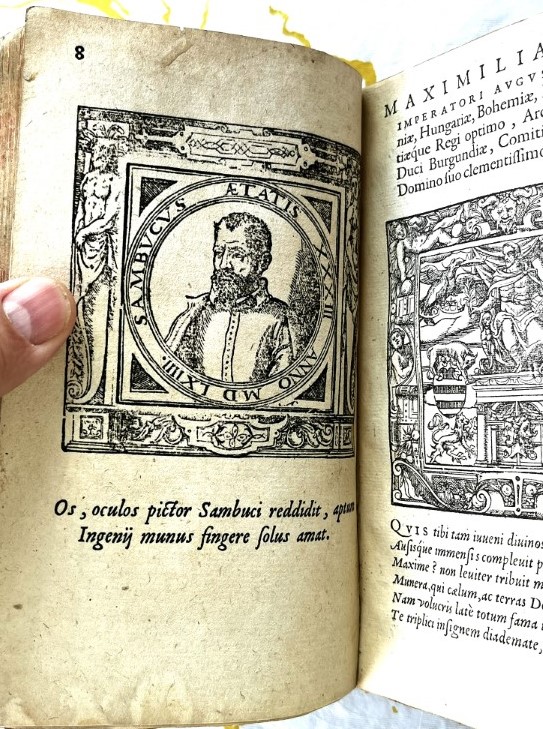
Antverpiae, 1564. Christophorum Plantinum. 240 p. 167 half-page woodcut with emblem and woodcut of several coins. 1 sheet [the 7-8 p.] facsimile copy replaced. 4 images have the nude part recolored. First edition.
(RMK III 526.; Apponyi 380.) Contemporary full vellum binding. (bound together)
Germany was an important stage in Sambucus' eventful life. Sambucus arrived in Germany from Italy in 1563. Sambucus travelled to the Low Countries to publish some of his manuscripts and his Emblemata, where he met Hadrianus Junius (1511-1575), a Dutch physician, classical humanist scholar and author of Emblemata, who was revered by his contemporaries as the new Erasmus. His book Emblemata was printed by Christophel Plantin, as was Hadrian's Emblemata a year later. Sambucus's book, after Andrea Alciato's Emblematum liber (1531), is considered one of the most successful works of the genre. The first edition in Latin (1564) was followed by five others, but translations into Dutch (1566), French (1567) and even English (1567) are known. In addition to its importance for the history of art and other aspects of the Emblemata, it is also of great importance for us in other respects. Given the date of 1 January 1564 of Sambucus's preface, it is the first time that we have precise evidence of his friendship with Junius. Sambucus is the author of the volume Neglecta virescunt. Ad Hadrianum lunium, medicum clarissimum is dedicated to the humanist from the German Low Countries. In his epigram, Sambucus compares Junius, in whom he celebrates a great scholar blessed with wisdom and talent, to a vine that grows and develops without the help of human hands. The most important work of János Zsámboky [1531-1584]. The two works are particularly significant because they contributed to the iconographic and symbolic tradition of the Renaissance, combining classical knowledge with the visual culture of the time. Both works are an extraordinary testimony to the proliferation of Renaissance emblems, an art form that intertwined images, writing and symbolism to convey moral and philosophical values. The typographical quality of the volumes, the numerous illustrations and the careful choice of subject matter make these texts an important reference for scholars of art, literature and philosophy of the period.
( O,O )
/)__)
,, ,, N° de réf. du vendeur 392
Détails bibliographiques
Titre : Emblemata (Two Emblemata Works in One)
Éditeur : Christophorum Plantinum, Antverpiae
Date d'édition : 1564
Reliure : Soft cover
Etat : Good
Edition : 1st Edition
AbeBooks vous offre des millions de livres anciens, neufs, d'occasion et épuisés proposés par des milliers de vendeurs du monde entier. Acheter sur AbeBooks est simple, sûr et 100% sécurisé - effectuez votre recherche, passez commande sur notre site sécurisé et recevez votre ouvrage directement expédié par le vendeur.
Cherchez parmi des millions de livres proposés par des milliers de vendeurs
Livres anciens et de collection
Livres rares, manuscrits, incunables ou livres signés, découvrez notre page consacrée aux livres anciens et de collection.
Editions originales
Tirages limités, éditions spéciales ou numérotées, retrouvez notre sélection d'éditions originales.
Livres d'occasion

Meilleures ventes, idées lecture et lauréats à prix réduits, faites des économies grâce à nos bonnes affaires et à la livraison gratuite.