

Montant total (1 article articles) :
Destination de la commande :

DANIEL J RIGDEN (12 résultats)
Passer aux résultats principaux de la recherche
Filtres de recherche
Type d'article
- Tous les types de produits
- Livres (12)
- Magazines & Périodiques (Aucun autre résultat ne correspond à ces critères)
- Bandes dessinées (Aucun autre résultat ne correspond à ces critères)
- Partitions de musique (Aucun autre résultat ne correspond à ces critères)
- Art, Affiches et Gravures (Aucun autre résultat ne correspond à ces critères)
- Photographies (Aucun autre résultat ne correspond à ces critères)
- Cartes (Aucun autre résultat ne correspond à ces critères)
- Manuscrits & Papiers anciens (Aucun autre résultat ne correspond à ces critères)
Etat En savoir plus
- Neuf (11)
- Comme neuf, Très bon ou Bon (Aucun autre résultat ne correspond à ces critères)
- Assez bon ou satisfaisant (1)
- Moyen ou mauvais (Aucun autre résultat ne correspond à ces critères)
- Conformément à la description (Aucun autre résultat ne correspond à ces critères)
Particularités
- Ed. originale (1)
- Signé (Aucun autre résultat ne correspond à ces critères)
- Jaquette (Aucun autre résultat ne correspond à ces critères)
- Avec images (10)
- Sans impressions à la demande (4)
Langue (1)
Prix
- Tous les prix
- Moins de EUR 20 (Aucun autre résultat ne correspond à ces critères)
- EUR 20 à EUR 45
- Plus de EUR 45
Livraison gratuite
- Livraison gratuite à destination de Etats-Unis (Aucun autre résultat ne correspond à ces critères)
Pays
Evaluation du vendeur
-

"Most Of The Good Stuff:" Memories Of Richard Feynman
Langue: anglais
Edité par American Institute of Physics, 1993
ISBN 10 : 0883188708 ISBN 13 : 9780883188705
Vendeur : Arroyo Seco Books, Pasadena, Member IOBA, Pasadena, CA, Etats-Unis
Membre d'association : IOBA
Évaluation du vendeur 4 sur 5 étoiles

Edition originale
EUR 25,98
Expédition à EUR 6,89
Expédition nationale : Etats-UnisQuantité disponible : 1 disponible(s)
Ajouter au panierHardcover. Etat : Very Good. 1st Edition. 181 Pp. Hardcover. Gift Inscription. First Printing (No Later Printing Indicated, No Number Line). Color Faded On Spine But Lettering Clear. Small Fray At Lower Front Tip.
-

EUR 274,55
Expédition à EUR 70
Expédition depuis Allemagne vers Etats-UnisQuantité disponible : 5 disponible(s)
Ajouter au panierTaschenbuch. Etat : Neu. From Protein Structure to Function with Bioinformatics | Daniel J. Rigden | Taschenbuch | xv | Englisch | 2018 | Springer | EAN 9789402414820 | Verantwortliche Person für die EU: Springer Verlag GmbH, Tiergartenstr. 17, 69121 Heidelberg, juergen[dot]hartmann[at]springer[dot]com | Anbieter: preigu.
-

From Protein Structure to Function with Bioinformatics
Langue: anglais
Edité par Springer Netherlands, Springer Netherlands, 2018
ISBN 10 : 9402414827 ISBN 13 : 9789402414820
Vendeur : AHA-BUCH GmbH, Einbeck, Allemagne
Évaluation du vendeur 5 sur 5 étoiles

EUR 324,84
Expédition à EUR 64,37
Expédition depuis Allemagne vers Etats-UnisQuantité disponible : 1 disponible(s)
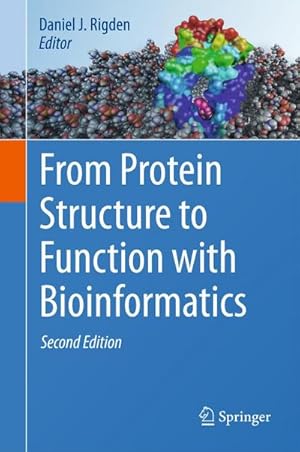
Ajouter au panierTaschenbuch. Etat : Neu. Druck auf Anfrage Neuware - Printed after ordering - This book is about protein structural bioinformatics and how it can help understand and predict protein function. It covers structure-based methods that can assign and explain protein function based on overall folds, characteristics of protein surfaces, occurrence of small 3D motifs, protein-protein interactions and on dynamic properties. Such methods help extract maximum value from new experimental structures, but can often be applied to protein models. The book also, therefore, provides comprehensive coverage of methods for predicting or inferring protein structure, covering all structural classes from globular proteins and their membrane-resident counterparts to amyloid structures and intrinsically disordered proteins. The book is split into two broad sections, the first covering methods to generate or infer protein structure, the second dealing with structure-based function annotation. Each chapter is written by world experts in the field. The first section covers methods ranging from traditional homology modelling and fold recognition to fragment-based ab initio methods, and includes a chapter, new for the second edition, on structure prediction using evolutionary covariance. Membrane proteins and intrinsically disordered proteins are each assigned chapters, while two new chapters deal with amyloid structures and means to predict modes of protein-protein interaction. The second section includes chapters covering functional diversity within protein folds and means to assign function based on surface properties and recurring motifs. Further chapters cover the key roles of protein dynamics in protein function and use of automated servers for function inference. The book concludes with two chapters covering case studies of structure prediction, based respectively on crystal structures and protein models, providing numerous examples of real-world usage of the methods mentioned previously.This book is targeted at postgraduate students and academic researchers. It is most obviously of interest to protein bioinformaticians and structural biologists, but should also serve as a guide to biologists more broadly by highlighting the insights that structural bioinformatics can provide into proteins of their interest.
-
From Protein Structure to Function with Bioinformatics
Vendeur : AHA-BUCH GmbH, Einbeck, Allemagne
Évaluation du vendeur 5 sur 5 étoiles
EUR 333,77
Expédition à EUR 65,17
Expédition depuis Allemagne vers Etats-UnisQuantité disponible : 1 disponible(s)
Ajouter au panierBuch. Etat : Neu. Druck auf Anfrage Neuware - Printed after ordering - This book is about protein structural bioinformatics and how it can help understand and predict protein function. It covers structure-based methods that can assign and explain protein function based on overall folds, characteristics of protein surfaces, occurrence of small 3D motifs, protein-protein interactions and on dynamic properties. Such methods help extract maximum value from new experimental structures, but can often be applied to protein models. The book also, therefore, provides comprehensive coverage of methods for predicting or inferring protein structure, covering all structural classes from globular proteins and their membrane-resident counterparts to amyloid structures and intrinsically disordered proteins. The book is split into two broad sections, the first covering methods to generate or infer protein structure, the second dealing with structure-based function annotation. Each chapter is written by world experts in the field. The first section covers methods ranging from traditional homology modelling and fold recognition to fragment-based ab initio methods, and includes a chapter, new for the second edition, on structure prediction using evolutionary covariance. Membrane proteins and intrinsically disordered proteins are each assigned chapters, while two new chapters deal with amyloid structures and means to predict modes of protein-protein interaction. The second section includes chapters covering functional diversity within protein folds and means to assign function based on surface properties and recurring motifs. Further chapters cover the key roles of protein dynamics in protein function and use of automated servers for function inference. The book concludes with two chapters covering case studies of structure prediction, based respectively on crystal structures and protein models, providing numerous examples of real-world usage of the methods mentioned previously.This book is targeted at postgraduate students and academic researchers. It is most obviously of interest to protein bioinformaticians and structural biologists, but should also serve as a guide to biologists more broadly by highlighting the insights that structural bioinformatics can provide into proteins of their interest.
-

From Protein Structure to Function with Bioinformatics (eng)
Vendeur : Brook Bookstore On Demand, Napoli, NA, Italie
Évaluation du vendeur 4 sur 5 étoiles
EUR 246,33
Expédition à EUR 51
Expédition depuis Italie vers Etats-UnisQuantité disponible : Plus de 20 disponibles
Ajouter au panierEtat : new. Questo è un articolo print on demand.
-

From Protein Structure to Function with Bioinformatics (eng)
Vendeur : Brook Bookstore On Demand, Napoli, NA, Italie
Évaluation du vendeur 4 sur 5 étoiles
EUR 246,33
Expédition à EUR 55
Expédition depuis Italie vers Etats-UnisQuantité disponible : Plus de 20 disponibles
Ajouter au panierEtat : new. Questo è un articolo print on demand.
-
EUR 267,86
Expédition à EUR 48,99
Expédition depuis Allemagne vers Etats-UnisQuantité disponible : Plus de 20 disponibles
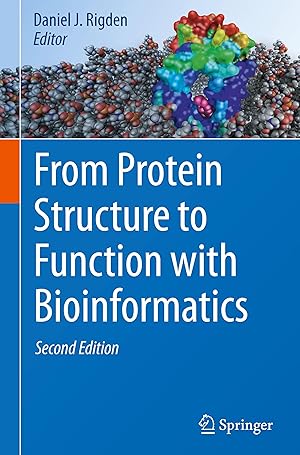
Ajouter au panierGebunden. Etat : New. Dieser Artikel ist ein Print on Demand Artikel und wird nach Ihrer Bestellung fuer Sie gedruckt. Comprehensively covers all recent developments in structure-based function prediction of proteinsContains abundant links to publicly available resourcesGenuinely world class roster of authorsIncludes full coverage of .
-

EUR 267,86
Expédition à EUR 48,99
Expédition depuis Allemagne vers Etats-UnisQuantité disponible : Plus de 20 disponibles
Ajouter au panierEtat : New. Dieser Artikel ist ein Print on Demand Artikel und wird nach Ihrer Bestellung fuer Sie gedruckt. Comprehensively covers all recent developments in structure-based function prediction of proteinsContains abundant links to publicly available resourcesGenuinely world class roster of authorsIncludes full coverage of .
-

From Protein Structure to Function with Bioinformatics
Langue: anglais
Edité par Springer Netherlands Jul 2018, 2018
ISBN 10 : 9402414827 ISBN 13 : 9789402414820
Vendeur : BuchWeltWeit Ludwig Meier e.K., Bergisch Gladbach, Allemagne
Évaluation du vendeur 5 sur 5 étoiles
EUR 320,99
Expédition à EUR 23
Expédition depuis Allemagne vers Etats-UnisQuantité disponible : 2 disponible(s)
Ajouter au panierTaschenbuch. Etat : Neu. This item is printed on demand - it takes 3-4 days longer - Neuware -This book is about protein structural bioinformatics and how it can help understand and predict protein function. It covers structure-based methods that can assign and explain protein function based on overall folds, characteristics of protein surfaces, occurrence of small 3D motifs, protein-protein interactions and on dynamic properties. Such methods help extract maximum value from new experimental structures, but can often be applied to protein models. The book also, therefore, provides comprehensive coverage of methods for predicting or inferring protein structure, covering all structural classes from globular proteins and their membrane-resident counterparts to amyloid structures and intrinsically disordered proteins. The book is split into two broad sections, the first covering methods to generate or infer protein structure, the second dealing with structure-based function annotation. Each chapter is written by world experts in the field. The first section covers methods ranging from traditional homology modelling and fold recognition to fragment-based ab initio methods, and includes a chapter, new for the second edition, on structure prediction using evolutionary covariance. Membrane proteins and intrinsically disordered proteins are each assigned chapters, while two new chapters deal with amyloid structures and means to predict modes of protein-protein interaction. The second section includes chapters covering functional diversity within protein folds and means to assign function based on surface properties and recurring motifs. Further chapters cover the key roles of protein dynamics in protein function and use of automated servers for function inference. The book concludes with two chapters covering case studies of structure prediction, based respectively on crystal structures and protein models, providing numerous examples of real-world usage of the methods mentioned previously.This book is targeted at postgraduate students and academic researchers. It is most obviously of interest to protein bioinformaticians and structural biologists, but should also serve as a guide to biologists more broadly by highlighting the insights that structural bioinformatics can provide into proteins of their interest. 520 pp. Englisch.
-

From Protein Structure to Function with Bioinformatics
Langue: anglais
Edité par Springer Netherlands Apr 2017, 2017
ISBN 10 : 9402410678 ISBN 13 : 9789402410679
Vendeur : BuchWeltWeit Ludwig Meier e.K., Bergisch Gladbach, Allemagne
Évaluation du vendeur 5 sur 5 étoiles
EUR 320,99
Expédition à EUR 23
Expédition depuis Allemagne vers Etats-UnisQuantité disponible : 2 disponible(s)
Ajouter au panierBuch. Etat : Neu. This item is printed on demand - it takes 3-4 days longer - Neuware -This book is about protein structural bioinformatics and how it can help understand and predict protein function. It covers structure-based methods that can assign and explain protein function based on overall folds, characteristics of protein surfaces, occurrence of small 3D motifs, protein-protein interactions and on dynamic properties. Such methods help extract maximum value from new experimental structures, but can often be applied to protein models. The book also, therefore, provides comprehensive coverage of methods for predicting or inferring protein structure, covering all structural classes from globular proteins and their membrane-resident counterparts to amyloid structures and intrinsically disordered proteins. The book is split into two broad sections, the first covering methods to generate or infer protein structure, the second dealing with structure-based function annotation. Each chapter is written by world experts in the field. The first section covers methods ranging from traditional homology modelling and fold recognition to fragment-based ab initio methods, and includes a chapter, new for the second edition, on structure prediction using evolutionary covariance. Membrane proteins and intrinsically disordered proteins are each assigned chapters, while two new chapters deal with amyloid structures and means to predict modes of protein-protein interaction. The second section includes chapters covering functional diversity within protein folds and means to assign function based on surface properties and recurring motifs. Further chapters cover the key roles of protein dynamics in protein function and use of automated servers for function inference. The book concludes with two chapters covering case studies of structure prediction, based respectively on crystal structures and protein models, providing numerous examples of real-world usage of the methods mentioned previously.This book is targeted at postgraduate students and academic researchers. It is most obviously of interest to protein bioinformaticians and structural biologists, but should also serve as a guide to biologists more broadly by highlighting the insights that structural bioinformatics can provide into proteins of their interest. 520 pp. Englisch.
-

From Protein Structure to Function with Bioinformatics
Langue: anglais
Edité par Springer, Springer Jul 2018, 2018
ISBN 10 : 9402414827 ISBN 13 : 9789402414820
Vendeur : buchversandmimpf2000, Emtmannsberg, BAYE, Allemagne
Évaluation du vendeur 5 sur 5 étoiles
EUR 320,99
Expédition à EUR 60
Expédition depuis Allemagne vers Etats-UnisQuantité disponible : 1 disponible(s)
Ajouter au panierTaschenbuch. Etat : Neu. This item is printed on demand - Print on Demand Titel. Neuware -This book is about protein structural bioinformatics and how it can help understand and predict protein function. It covers structure-based methods that can assign and explain protein function based on overall folds, characteristics of protein surfaces, occurrence of small 3D motifs, protein-protein interactions and on dynamic properties. Such methods help extract maximum value from new experimental structures, but can often be applied to protein models. The book also, therefore, provides comprehensive coverage of methods for predicting or inferring protein structure, covering all structural classes from globular proteins and their membrane-resident counterparts to amyloid structures and intrinsically disordered proteins.The book is split into two broad sections, the first covering methods to generate or infer protein structure, the second dealing with structure-based function annotation. Each chapter is written by world experts in the field. The first section covers methods ranging from traditional homology modelling and fold recognition to fragment-based ab initio methods, and includes a chapter, new for the second edition, on structure prediction using evolutionary covariance. Membrane proteins and intrinsically disordered proteins are each assigned chapters, while two new chapters deal with amyloid structures and means to predict modes of protein-protein interaction. The second section includes chapters covering functional diversity within protein folds and means to assign function based on surface properties and recurring motifs. Further chapters cover the key roles of protein dynamics in protein function and use of automated servers for function inference. The book concludes with two chapters covering case studies of structure prediction, based respectively on crystal structures and protein models, providing numerous examples of real-world usage of the methods mentioned previously.This book is targeted at postgraduate students and academic researchers. It is most obviously of interest to protein bioinformaticians and structural biologists, but should also serve as a guide to biologists more broadly by highlighting the insights that structural bioinformatics can provide into proteins of their interest.Springer-Verlag KG, Sachsenplatz 4-6, 1201 Wien 520 pp. Englisch.
-

From Protein Structure to Function with Bioinformatics
Langue: anglais
Edité par Springer, Springer Apr 2017, 2017
ISBN 10 : 9402410678 ISBN 13 : 9789402410679
Vendeur : buchversandmimpf2000, Emtmannsberg, BAYE, Allemagne
Évaluation du vendeur 5 sur 5 étoiles
EUR 320,99
Expédition à EUR 60
Expédition depuis Allemagne vers Etats-UnisQuantité disponible : 1 disponible(s)
Ajouter au panierBuch. Etat : Neu. This item is printed on demand - Print on Demand Titel. Neuware -This book is about protein structural bioinformatics and how it can help understand and predict protein function. It covers structure-based methods that can assign and explain protein function based on overall folds, characteristics of protein surfaces, occurrence of small 3D motifs, protein-protein interactions and on dynamic properties. Such methods help extract maximum value from new experimental structures, but can often be applied to protein models. The book also, therefore, provides comprehensive coverage of methods for predicting or inferring protein structure, covering all structural classes from globular proteins and their membrane-resident counterparts to amyloid structures and intrinsically disordered proteins.The book is split into two broad sections, the first covering methods to generate or infer protein structure, the second dealing with structure-based function annotation. Each chapter is written by world experts in the field. The first section covers methods ranging from traditional homology modelling and fold recognition to fragment-based ab initio methods, and includes a chapter, new for the second edition, on structure prediction using evolutionary covariance. Membrane proteins and intrinsically disordered proteins are each assigned chapters, while two new chapters deal with amyloid structures and means to predict modes of protein-protein interaction. The second section includes chapters covering functional diversity within protein folds and means to assign function based on surface properties and recurring motifs. Further chapters cover the key roles of protein dynamics in protein function and use of automated servers for function inference. The book concludes with two chapters covering case studies of structure prediction, based respectively on crystal structures and protein models, providing numerous examples of real-world usage of the methods mentioned previously.This book is targeted at postgraduate students and academic researchers. It is most obviously of interest to protein bioinformaticians and structural biologists, but should also serve as a guide to biologists more broadly by highlighting the insights that structural bioinformatics can provide into proteins of their interest.Springer-Verlag KG, Sachsenplatz 4-6, 1201 Wien 520 pp. Englisch.

