

Montant total (1 article articles) :
Destination de la commande :

konecci eugene (6 résultats)
Passer aux résultats principaux de la recherche
Filtres de recherche
Type d'article
- Tous les types de produits
- Livres (6)
- Magazines & Périodiques (Aucun autre résultat ne correspond à ces critères)
- Bandes dessinées (Aucun autre résultat ne correspond à ces critères)
- Partitions de musique (Aucun autre résultat ne correspond à ces critères)
- Art, Affiches et Gravures (Aucun autre résultat ne correspond à ces critères)
- Photographies (Aucun autre résultat ne correspond à ces critères)
- Cartes (Aucun autre résultat ne correspond à ces critères)
- Manuscrits & Papiers anciens (Aucun autre résultat ne correspond à ces critères)
Etat En savoir plus
- Neuf (Aucun autre résultat ne correspond à ces critères)
- Comme neuf, Très bon ou Bon (1)
- Assez bon ou satisfaisant (2)
- Moyen ou mauvais (Aucun autre résultat ne correspond à ces critères)
- Conformément à la description (3)
Particularités
- Ed. originale (3)
- Signé (Aucun autre résultat ne correspond à ces critères)
- Jaquette (1)
- Avec images (2)
- Sans impressions à la demande (6)
Langue (2)
Prix
- Tous les prix
- Moins de EUR 20 (Aucun autre résultat ne correspond à ces critères)
- EUR 20 à EUR 45
- Plus de EUR 45
Livraison gratuite
- Livraison gratuite à destination de Etats-Unis (Aucun autre résultat ne correspond à ces critères)
Pays
Evaluation du vendeur
-

Technology Venturing: American Innovation and Risk-Taking
Vendeur : Bookmonger.Ltd, HILLSIDE, NJ, Etats-Unis
Évaluation du vendeur 5 sur 5 étoiles

EUR 30,01
Expédition à EUR 3,43
Expédition nationale : Etats-UnisQuantité disponible : 1 disponible(s)
Ajouter au panierHardcover. Etat : Fine.
-

Technology Venturing: American Innovation and Risk-Taking
Vendeur : Ground Zero Books, Ltd., Silver Spring, MD, Etats-Unis
Évaluation du vendeur 4 sur 5 étoiles

Edition originale
EUR 39,70
Expédition à EUR 4,28
Expédition nationale : Etats-UnisQuantité disponible : 1 disponible(s)
Ajouter au panierHardcover. Etat : Good. Etat de la jaquette : good. Presumed First Edition/First Printing. 251 pages. Illus., references, index. Name of previous owner present. DJ taped to boards, tape scuff inside fr board, some tape residue on DJ. Praeger special studies. Praeger scientific. Derived from a conference held at the University of Texas at Dallas, February 5-7, 1984, and sponsored by the ICP'2 s Institute and the RGK Foundation.
-

Health Care Systems Conference, Nov. 21-22, 1972, Dallas, Tx (Science & Technology Ser) Konecci, Eugene B.
Vendeur : GridFreed, San Diego, CA, Etats-Unis
Évaluation du vendeur 5 sur 5 étoiles
EUR 38,74
Expédition à EUR 5,95
Expédition nationale : Etats-UnisQuantité disponible : 1 disponible(s)
Ajouter au panierEtat : Good. Good condition with wear and markings. Ex-library.
-
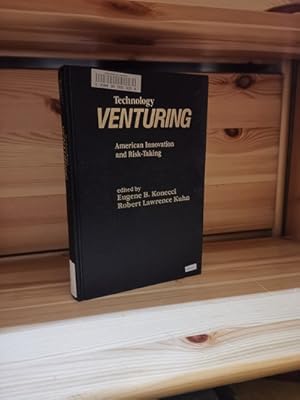
Technology Venturing: American Innovation and Risk-Training.
Langue: anglais
Edité par New York Praeger, 1985
Vendeur : Antiquariat Liber Antiqua, Krems an der Donau, Autriche
Évaluation du vendeur 5 sur 5 étoiles
EUR 52,50
Expédition à EUR 44,50
Expédition depuis Autriche vers Etats-UnisQuantité disponible : 1 disponible(s)
Ajouter au paniergebundene Ausgabe. abgegriffen, abgerieben, einige Etiketten, Kanten und Ecken bestossen, Seiten gebräunt, leicht wellig, guter Zustand, in Englisch Sprache: Englisch.
-

Space Age in Fiscal Year 2001
Edité par American Astronautical Soc, Washington, DC, 1967
Vendeur : Ground Zero Books, Ltd., Silver Spring, MD, Etats-Unis
Évaluation du vendeur 4 sur 5 étoiles
Edition originale
EUR 79,40
Expédition à EUR 4,28
Expédition nationale : Etats-UnisQuantité disponible : 1 disponible(s)
Ajouter au panierEtat : good, ex-lib. First? Edition. First? Printing. 446, illus., diagrams, few library markings, pencil erasure on front endpaper, ink tick on table of contents. Proceedings of the Fourth AAS Goddard Memorial Symposium, 15-16 March 1966, Washington, DC. Volume 10 of the AAS Science and Technology Series: A Supplement to Advances in the Astronautical Sciences.
-
Early Manned Space Cabin Systems (1959): Rare Douglas Aircraft Engineering Report on Human Factors and Life Support in Early Spaceflight
Date d'édition : 1959
Vendeur : Max Rambod Inc, Woodland Hills, CA, Etats-Unis
Membre d'association : ABAA ILAB
Évaluation du vendeur 5 sur 5 étoiles
Edition originale
EUR 3 970,12
Expédition à EUR 8,57
Expédition nationale : Etats-UnisQuantité disponible : 1 disponible(s)
Ajouter au panier[Space and Aviation][Technology and Engineering] Konecci, Eugene B. Manned Space Cabin Systems (1959), a Cold War engineering study produced at the threshold of American manned spaceflight. Issued June 1, 1959one year after the founding of NASA and months before Project Mercury's formal initiationthe report addresses integrating biological tolerances, psychological resilience, and mechanical reliability into spacecraft design. Authored by Dr. Eugene B. Konecci, then head of Life Sciences at Douglas Aircraft Company's Missiles and Space Systems Engineering Division. The work articulates the structural concepts required to sustain human life beyond Earth. The report documents a multidisciplinary transition from missile technology to crewed space systems during the intensifying U.S.Soviet technological rivalry. Konecci, Eugene B. Manned Space Cabin Systems. Santa Monica: Douglas Aircraft Company, Inc., 1959. Internal Engineering Paper No. 673. First edition. The 129-page mimeographed report, illustrated throughout with technical tables and diagrams, is presented in original printed wraps bearing the Douglas Aircraft "Missiles and Space Systems" insignia. Chapters include "The Human Factor," addressing physiological and psychological tolerances in confined pressurized environments, and technical analyses of "The Sealed Compartment Concept," atmospheric composition, acceleration and weightlessness, radiation, and acoustical energy. Tables model projected survival on limited water supplies and reliability calculations based on equipment mean time to failure, while Table XI presents theoretical "Examples of Earth-to-Mars Trips in a Nuclear Powered Vehicle," incorporating propulsion metrics that predate the Apollo program. The report references contemporaneous high-altitude animal recovery tests conducted by the U.S. Air Force and Soviet space experiments, reflecting the empirical groundwork for human orbital flight. Konecci's introduction underscores both scientific ambition and collaborative necessity, asserting that numerous disciplines would be required to solve the complex problems inherent in space cabin systems. Quarto. 129 pages. Illustrated with technical tables throughout. Mimeographed text in original printed wraps. Light chipping to spine ends and minor toning to cover edges; internal pages clean and legible without markings. Overall very good. Produced during the decisive preparatory phase of the American space program and within a principal aerospace contractor to NASA, this engineering paper documents the integration of human factors science into spacecraft design at the dawn of crewed space exploration.


