

Montant total (1 article articles) :
Destination de la commande :

dm books toronto (3 résultats)
Passer aux résultats principaux de la recherche
Filtres de recherche
Type d'article
- Tous les types de produits
- Livres (3)
- Magazines & Périodiques (Aucun autre résultat ne correspond à ces critères)
- Bandes dessinées (Aucun autre résultat ne correspond à ces critères)
- Partitions de musique (Aucun autre résultat ne correspond à ces critères)
- Art, Affiches et Gravures (Aucun autre résultat ne correspond à ces critères)
- Photographies (Aucun autre résultat ne correspond à ces critères)
- Cartes (Aucun autre résultat ne correspond à ces critères)
- Manuscrits & Papiers anciens (Aucun autre résultat ne correspond à ces critères)
Etat En savoir plus
- Neuf (Aucun autre résultat ne correspond à ces critères)
- Comme neuf, Très bon ou Bon (Aucun autre résultat ne correspond à ces critères)
- Assez bon ou satisfaisant (3)
- Moyen ou mauvais (Aucun autre résultat ne correspond à ces critères)
- Conformément à la description (Aucun autre résultat ne correspond à ces critères)
Reliure
- Toutes
- Couverture rigide (3)
- Couverture souple (Aucun autre résultat ne correspond à ces critères)
Particularités
- Ed. originale (1)
- Signé (Aucun autre résultat ne correspond à ces critères)
- Jaquette (Aucun autre résultat ne correspond à ces critères)
- Avec images (2)
- Sans impressions à la demande (3)
Langue (1)
Prix
- Tous les prix
- Moins de EUR 20
- EUR 20 à EUR 40
- Plus de EUR 40 (Aucun autre résultat ne correspond à ces critères)
Livraison gratuite
- Livraison gratuite à destination de Etats-Unis (Aucun autre résultat ne correspond à ces critères)
Pays
Evaluation du vendeur
-

Tim Scott
Langue: anglais
Edité par DM Books, Toronto, Canada, 2008
ISBN 10 : 096907591X ISBN 13 : 9780969075912
Vendeur : Conover Books, Martinsville, VA, Etats-Unis
Évaluation du vendeur 5 sur 5 étoiles

Edition originale
EUR 10,49
Expédition à EUR 4,24
Expédition nationale : Etats-UnisQuantité disponible : 1 disponible(s)
Ajouter au panierHardcover. Etat : Good. No Jacket. 1st Edition. Minor edge and corner wear; lightly scuffed and scratched; corners are gently bumped and rubbed; some light shelf wear; ex-library with the usual library markings; overall a nice used copy! Full-color pictorial boards with silver and red lettering. Decorative endpapers. 128 historical and artistic pages nicely enhanced by black and white and full-color photographs and illustrations! "In the 1950s Tim Scott studied architecture, and simultaneously, attended the St. Martin's School of Art studying sculpture part-time. His early work was heavily influenced by his teacher, Anthony Caro. Scott moved to Paris to work aAtelier Le Corbusier-Wogenscky, an architectural firm and while there, he discovered photographs of the work of American sculptor David Smith. Smith was to have a strong influence on a generation of British sculptors in the 1960s. Scott returned to London in 1961. Encouraged by Anthony Caro, he, along with other students at the St. Martin's school, rejected traditional methods and began to work abstractly. For an exhibition at the Whitechapel Art Gallery in 1965, they were dubbed the 'New Generation'. While Caro and a few other students began using industrial steel, Scott chose instead to work with fibre-glass, a relatively new material for sculpture. By the mid-sixties, Scott was experimenting with different kinds of plastics and bold volumetric shapes of bright colour. The sculptural works in the book and in the current exhibition at Pacart are from this period. From the foreword: The roots of abstract painting and sculpture reach back to the beginning of the 20th Century. In those roots was the start of a new language. At times painting seemed to spill into sculpture. In the decade between 1910 and 1920 Jacques Lipchitz, Henri Laurens, Elie Nadelman, Pablo Picasso and the Russian Constructivists all made coloured sculpture. By the early 1960s, the optimism that pervaded the Art World once more supercharged the dialogue between painting and sculpture. It was thought that sculpture could take the lead from painting and that colour would become three dimensional. Tim Scott introduced colour and new materials and was very much part of what animated this idea. Kenneth Noland's circle paintings were transformed by David Smith into painted steel sculpture, while Anthony Caro took weight away from sculpture and floated colour space.".
-
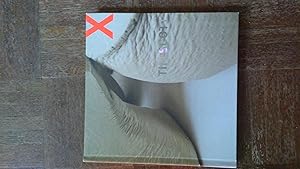
TIM SCOTT: X
Vendeur : Paraphernalia Books 'N' Stuff, Belleville, ON, Canada
Évaluation du vendeur 4 sur 5 étoiles

EUR 13,12
Expédition à EUR 18,68
Expédition depuis Canada vers Etats-UnisQuantité disponible : 1 disponible(s)
Ajouter au panierHardcover. Etat : Very Good. No Jacket. First. Large square shaped book with illist.matt boards; Near fine copy, clean, sound & unmarked, slight edgewear on corners and spine ends; Fully illust.throughout by full page colour photos; Highlights two exhibitions of this Canadian sculpturers work done in 2008; The 1960's & The House of Clay; Foreword by David Mirvish; 128 pages. May require extra postage due to weigh & size.
-
Tim Scott
Vendeur : Mullen Books, ABAA, Marietta, PA, Etats-Unis
Membre d'association : ABAA ILAB
Évaluation du vendeur 4 sur 5 étoiles
EUR 30,61
Expédition à EUR 11,03
Expédition nationale : Etats-UnisQuantité disponible : 1 disponible(s)
Ajouter au panierHardcover. Etat : VG-. Color-illustrated boards with irridescent lettering. 128 pp. Mainly color illustrations. Published in conjunction with the exhibitions, "The 60s, when colour was sculpture," held at David Mirvish Warehouse at Pacart, Toronto, Nov. 2, 2008-Apr. 19, 2009 and, "House of clay 2008", held at Corkin Gallery, Toronto, Nov. 2-Dec. 20, 2008.


