
Montant total (1 article articles) :
Destination de la commande :

explosives detection sensors electronic (27 résultats)
Passer aux résultats principaux de la recherche
Filtres de recherche
Type d'article
- Tous les types de produits
- Livres (27)
- Magazines & Périodiques (Aucun autre résultat ne correspond à ces critères)
- Bandes dessinées (Aucun autre résultat ne correspond à ces critères)
- Partitions de musique (Aucun autre résultat ne correspond à ces critères)
- Art, Affiches et Gravures (Aucun autre résultat ne correspond à ces critères)
- Photographies (Aucun autre résultat ne correspond à ces critères)
- Cartes (Aucun autre résultat ne correspond à ces critères)
- Manuscrits & Papiers anciens (Aucun autre résultat ne correspond à ces critères)
Etat En savoir plus
- Neuf (24)
- Comme neuf, Très bon ou Bon (1)
- Assez bon ou satisfaisant (2)
- Moyen ou mauvais (Aucun autre résultat ne correspond à ces critères)
- Conformément à la description (Aucun autre résultat ne correspond à ces critères)
Particularités
- Ed. originale (Aucun autre résultat ne correspond à ces critères)
- Signé (Aucun autre résultat ne correspond à ces critères)
- Jaquette (Aucun autre résultat ne correspond à ces critères)
- Avec images (9)
- Sans impressions à la demande (20)
Langue (1)
Prix
- Tous les prix
- Moins de EUR 20 (Aucun autre résultat ne correspond à ces critères)
- EUR 20 à EUR 45 (Aucun autre résultat ne correspond à ces critères)
- Plus de EUR 45
Livraison gratuite
Pays
Evaluation du vendeur
-

Electronic Noses & Sensors for the Detection of Explosives (NATO Science Series II: Mathematics, Physics and Chemistry, 159)
Vendeur : Phatpocket Limited, Waltham Abbey, HERTS, Royaume-Uni
Évaluation du vendeur 5 sur 5 étoiles

EUR 133,99
EUR 12,18 shipping
Ships from Royaume-Uni to Etats-UnisQuantité disponible : 1 disponible(s)
Ajouter au panierEtat : Good. Your purchase helps support Sri Lankan Children's Charity 'The Rainbow Centre'. Ex-library, so some stamps and wear, but in good overall condition. Our donations to The Rainbow Centre have helped provide an education and a safe haven to hundreds of children who live in appalling conditions.
-

Explosives Detection: Sensors, Electronic Systems and Data Processing (NATO Science for Peace and Security Series B: Physics and Biophysics)
Vendeur : Lucky's Textbooks, Dallas, TX, Etats-Unis
Évaluation du vendeur 5 sur 5 étoiles
EUR 157,96
EUR 3,43 shipping
Ships within Etats-UnisQuantité disponible : Plus de 20 disponibles
Ajouter au panierEtat : New.
-

Explosives Detection: Sensors, Electronic Systems and Data Processing (NATO Science for Peace and Security Series B: Physics and Biophysics)
Vendeur : Lucky's Textbooks, Dallas, TX, Etats-Unis
Évaluation du vendeur 5 sur 5 étoiles
EUR 158,36
EUR 3,43 shipping
Ships within Etats-UnisQuantité disponible : Plus de 20 disponibles
Ajouter au panierEtat : New.
-
Explosives Detection: Sensors, Electronic Systems and Data Processing (NATO Science for Peace and Security Series B: Physics and Biophysics)
Vendeur : Ria Christie Collections, Uxbridge, Royaume-Uni
Évaluation du vendeur 5 sur 5 étoiles
EUR 158,35
EUR 13,71 shipping
Ships from Royaume-Uni to Etats-UnisQuantité disponible : Plus de 20 disponibles
Ajouter au panierEtat : New. In.
-
Explosives Detection: Sensors, Electronic Systems and Data Processing (NATO Science for Peace and Security Series B: Physics and Biophysics)
Vendeur : Ria Christie Collections, Uxbridge, Royaume-Uni
Évaluation du vendeur 5 sur 5 étoiles
EUR 158,35
EUR 13,71 shipping
Ships from Royaume-Uni to Etats-UnisQuantité disponible : Plus de 20 disponibles
Ajouter au panierEtat : New. In.
-
Explosives Detection: Sensors, Electronic Systems and Data Processing (NATO Science for Peace and Security Series B: Physics and Biophysics)
Vendeur : Books Puddle, New York, NY, Etats-Unis
Évaluation du vendeur 4 sur 5 étoiles

EUR 188,80
EUR 3,43 shipping
Ships within Etats-UnisQuantité disponible : 4 disponible(s)
Ajouter au panierEtat : New.
-
Explosives Detection: Sensors, Electronic Systems and Data Processing (NATO Science for Peace and Security Series B: Physics and Biophysics)
Vendeur : California Books, Miami, FL, Etats-Unis
Évaluation du vendeur 5 sur 5 étoiles
EUR 194,67
Livraison gratuite
Ships within Etats-UnisQuantité disponible : Plus de 20 disponibles
Ajouter au panierEtat : New.
-
Explosives Detection: Sensors, Electronic Systems and Data Processing (NATO Science for Peace and Security Series B: Physics and Biophysics)
Vendeur : Books Puddle, New York, NY, Etats-Unis
Évaluation du vendeur 4 sur 5 étoiles
EUR 199,26
EUR 3,43 shipping
Ships within Etats-UnisQuantité disponible : 4 disponible(s)
Ajouter au panierEtat : New. pp. 344.
-

Explosives Detection : Sensors, Electronic Systems and Data Processing
Vendeur : AHA-BUCH GmbH, Einbeck, Allemagne
Évaluation du vendeur 5 sur 5 étoiles
EUR 166,62
EUR 62,64 shipping
Ships from Allemagne to Etats-UnisQuantité disponible : 1 disponible(s)
Ajouter au panierTaschenbuch. Etat : Neu. Druck auf Anfrage Neuware - Printed after ordering - This volume presents selected contributions from the 'Advanced Research Workshop on Explosives Detection' hosted by the Department of Information Engineering of the University of Florence, Italy in 2018. The main goal of the workshop was to find out how Science for Peace and Security projects in the field of Explosives Detection contribute to the development and/or refinement of scientific and technical knowledge and competencies. The findings of the workshop, presented in the last section of the book, determine future actions and direction of the SPS Programme in the field of explosives detection and management.The NATO Science for Peace and Security (SPS) Programme, promotes dialogue and practical cooperation between NATO member states and partner nations based on scientific research, technological innovation and knowledge exchange. Several initiatives were launched in the field of explosive detection and clearance, as part of NATO's enhanced role in the international fight against terrorism. Experts and scientists from NATO members and partner countries have been brought together in multi-year projects, within the framework of the SPS Programme, to cooperate in the scientific research in explosive detection field, developing new technologies and methods to be implemented in order to detect explosive substances in different contexts.
-

Explosives Detection : Sensors, Electronic Systems and Data Processing
Edité par Springer Netherlands, Springer Netherlands, 2020
ISBN 10 : 9402417281 ISBN 13 : 9789402417289
Langue: anglais
Vendeur : AHA-BUCH GmbH, Einbeck, Allemagne
Évaluation du vendeur 5 sur 5 étoiles
EUR 166,62
EUR 63,44 shipping
Ships from Allemagne to Etats-UnisQuantité disponible : 1 disponible(s)
Ajouter au panierBuch. Etat : Neu. Druck auf Anfrage Neuware - Printed after ordering - This volume presents selected contributions from the 'Advanced Research Workshop on Explosives Detection' hosted by the Department of Information Engineering of the University of Florence, Italy in 2018. The main goal of the workshop was to find out how Science for Peace and Security projects in the field of Explosives Detection contribute to the development and/or refinement of scientific and technical knowledge and competencies. The findings of the workshop, presented in the last section of the book, determine future actions and direction of the SPS Programme in the field of explosives detection and management.The NATO Science for Peace and Security (SPS) Programme, promotes dialogue and practical cooperation between NATO member states and partner nations based on scientific research, technological innovation and knowledge exchange. Several initiatives were launched in the field of explosive detection and clearance, as part of NATO's enhanced role in the international fight against terrorism. Experts and scientists from NATO members and partner countries have been brought together in multi-year projects, within the framework of the SPS Programme, to cooperate in the scientific research in explosive detection field, developing new technologies and methods to be implemented in order to detect explosive substances in different contexts.
-
Explosives Detection: Sensors, Electronic Systems and Data Processing
Vendeur : Revaluation Books, Exeter, Royaume-Uni
Évaluation du vendeur 5 sur 5 étoiles
EUR 232,27
EUR 11,45 shipping
Ships from Royaume-Uni to Etats-UnisQuantité disponible : 2 disponible(s)
Ajouter au panierPaperback. Etat : Brand New. 344 pages. 9.25x6.10x0.82 inches. In Stock.
-
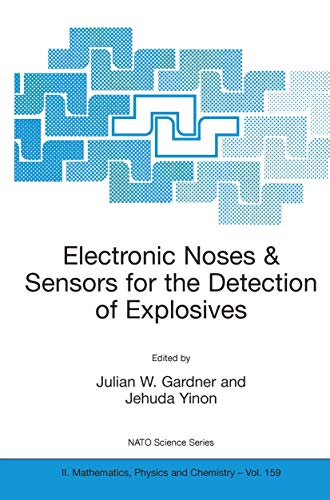
Electronic Noses & Sensors for the Detection of Explosives (NATO Science Series II: Mathematics, Physics and Chemistry, 159)
Vendeur : HPB-Red, Dallas, TX, Etats-Unis
Évaluation du vendeur 5 sur 5 étoiles
EUR 243,02
EUR 3,22 shipping
Ships within Etats-UnisQuantité disponible : 1 disponible(s)
Ajouter au panierpaperback. Etat : Good. Connecting readers with great books since 1972! Used textbooks may not include companion materials such as access codes, etc. May have some wear or writing/highlighting. We ship orders daily and Customer Service is our top priority!
-
Explosives Detection: Sensors, Electronic Systems and Data Processing
Vendeur : Revaluation Books, Exeter, Royaume-Uni
Évaluation du vendeur 5 sur 5 étoiles
EUR 234,27
EUR 14,31 shipping
Ships from Royaume-Uni to Etats-UnisQuantité disponible : 2 disponible(s)
Ajouter au panierHardcover. Etat : Brand New. 348 pages. 9.25x6.10x0.94 inches. In Stock.
-
Electronic Noses and Sensors for the Detection of Explosives (Nato Science Series II: Mathematics, Physics and Chemistry)
Vendeur : Mispah books, Redhill, SURRE, Royaume-Uni
Évaluation du vendeur 4 sur 5 étoiles
EUR 279,44
EUR 28,62 shipping
Ships from Royaume-Uni to Etats-UnisQuantité disponible : 1 disponible(s)
Ajouter au panierPaperback. Etat : Like New. Like New. book.
-
Electronic Noses & Sensors for the Detection of Explosives (NATO Science Series II: Mathematics, Physics and Chemistry, 159)
Vendeur : Ria Christie Collections, Uxbridge, Royaume-Uni
Évaluation du vendeur 5 sur 5 étoiles
EUR 299,84
EUR 13,71 shipping
Ships from Royaume-Uni to Etats-UnisQuantité disponible : Plus de 20 disponibles
Ajouter au panierEtat : New. In.
-
Electronic Noses & Sensors for the Detection of Explosives (NATO Science Series II: Mathematics, Physics and Chemistry, 159)
Vendeur : Ria Christie Collections, Uxbridge, Royaume-Uni
Évaluation du vendeur 5 sur 5 étoiles
EUR 299,84
EUR 13,71 shipping
Ships from Royaume-Uni to Etats-UnisQuantité disponible : Plus de 20 disponibles
Ajouter au panierEtat : New. In.
-
EUR 277,75
EUR 70 shipping
Ships from Allemagne to Etats-UnisQuantité disponible : 5 disponible(s)
Ajouter au panierTaschenbuch. Etat : Neu. Electronic Noses & Sensors for the Detection of Explosives | Jehuda Yinon (u. a.) | Taschenbuch | xviii | Englisch | 2004 | Springer Netherland | EAN 9781402023187 | Verantwortliche Person für die EU: Springer Verlag GmbH, Tiergartenstr. 17, 69121 Heidelberg, juergen[dot]hartmann[at]springer[dot]com | Anbieter: preigu.
-
EUR 336,82
EUR 48,99 shipping
Ships from Allemagne to Etats-UnisQuantité disponible : Plus de 20 disponibles
Ajouter au panierEtat : New. Proceedings of the NATO Advanced Research Workshop, held in Warwick, Coventry, U.K., 30 September-3 October 2003 This book examines both the potential application of electronic nose technology, and the current state of development of chemical sensors.
-
Electronic Noses & Sensors for the Detection of Explosives
Edité par Springer Netherlands, Springer Netherlands, 2004
ISBN 10 : 1402023189 ISBN 13 : 9781402023187
Langue: anglais
Vendeur : AHA-BUCH GmbH, Einbeck, Allemagne
Évaluation du vendeur 5 sur 5 étoiles
EUR 331,86
EUR 62,50 shipping
Ships from Allemagne to Etats-UnisQuantité disponible : 1 disponible(s)
Ajouter au panierTaschenbuch. Etat : Neu. Druck auf Anfrage Neuware - Printed after ordering - This book examines both the potential application of electronic nose technology, and the current state of development of chemical sensors for the detection of vapours from explosives, such as those used in landmines. The two fields have developed, somewhat in parallel, over the past decade and so one of the purposes of this workshop, on which the book is based, was to bring together scientists from the two fields in order to challenge the two communities and, mutually, stimulate both fields.It begins with a review of the basic principles of an electronic nose and explores possible ways in which the detection limit of conventional electronic nose technology can be reduced to the level required for the trace levels observed for many explosive materials. Next are reviews of the use of several different types of solid-state chemical sensors: polymer-based sensors, i.e. chemiluminescent, fluorescent and optical, to detect explosive materials; metal oxide semiconducting resistive sensors; and then electrochemical sensors. Next, different pattern recognition techniques are presented to enhance the performance of chemical sensors. Then biological systems are considered as a possible blue-print for chemical sensing. The biology can be employed either to understand the way insects locate odorant sources, or to understand the signal processing neural pathways. Next is a discussion of some of the new types of electronic noses; namely, a fast GC column with a SAW detector and a micromechanical sensor. Finally, the important issues of sampling technologies and the design of the microfluidic systems are considered. In particular, the use of pre-concentrators and solid phase micro extractors to boost the vapour concentration before it is introduced to the chemical sensor or electronic nose.
-

Electronic Noses & Sensors for the Detection of Explosives
Vendeur : AHA-BUCH GmbH, Einbeck, Allemagne
Évaluation du vendeur 5 sur 5 étoiles
EUR 474,63
EUR 63,15 shipping
Ships from Allemagne to Etats-UnisQuantité disponible : 2 disponible(s)
Ajouter au panierBuch. Etat : Neu. Neuware - This book examines both the potential application of electronic nose technology, and the current state of development of chemical sensors for the detection of vapours from explosives, such as those used in landmines. The two fields have developed, somewhat in parallel, over the past decade and so one of the purposes of this workshop, on which the book is based, was to bring together scientists from the two fields in order to challenge the two communities and, mutually, stimulate both fields.It begins with a review of the basic principles of an electronic nose and explores possible ways in which the detection limit of conventional electronic nose technology can be reduced to the level required for the trace levels observed for many explosive materials. Next are reviews of the use of several different types of solid-state chemical sensors: polymer-based sensors, i.e. chemiluminescent, fluorescent and optical, to detect explosive materials; metal oxide semiconducting resistive sensors; and then electrochemical sensors. Next, different pattern recognition techniques are presented to enhance the performance of chemical sensors. Then biological systems are considered as a possible blue-print for chemical sensing. The biology can be employed either to understand the way insects locate odorant sources, or to understand the signal processing neural pathways. Next is a discussion of some of the new types of electronic noses; namely, a fast GC column with a SAW detector and a micromechanical sensor. Finally, the important issues of sampling technologies and the design of the microfluidic systems are considered. In particular, the use of pre-concentrators and solid phase micro extractors to boost the vapour concentration before it is introduced to the chemical sensor or electronic nose.
-
Electronic Noses & Sensors for the Detection of Explosives
Edité par Springer Netherlands Aug 2004, 2004
ISBN 10 : 1402023189 ISBN 13 : 9781402023187
Langue: anglais
Vendeur : BuchWeltWeit Ludwig Meier e.K., Bergisch Gladbach, Allemagne
Évaluation du vendeur 5 sur 5 étoiles
EUR 112,34
EUR 23 shipping
Ships from Allemagne to Etats-UnisQuantité disponible : 2 disponible(s)
Ajouter au panierTaschenbuch. Etat : Neu. This item is printed on demand - it takes 3-4 days longer - Neuware -This book examines both the potential application of electronic nose technology, and the current state of development of chemical sensors for the detection of vapours from explosives, such as those used in landmines. The two fields have developed, somewhat in parallel, over the past decade and so one of the purposes of this workshop, on which the book is based, was to bring together scientists from the two fields in order to challenge the two communities and, mutually, stimulate both fields.It begins with a review of the basic principles of an electronic nose and explores possible ways in which the detection limit of conventional electronic nose technology can be reduced to the level required for the trace levels observed for many explosive materials. Next are reviews of the use of several different types of solid-state chemical sensors: polymer-based sensors, i.e. chemiluminescent, fluorescent and optical, to detect explosive materials; metal oxide semiconducting resistive sensors; and then electrochemical sensors. Next, different pattern recognition techniques are presented to enhance the performance of chemical sensors. Then biological systems are considered as a possible blue-print for chemical sensing. The biology can be employed either to understand the way insects locate odorant sources, or to understand the signal processing neural pathways. Next is a discussion of some of the new types of electronic noses; namely, a fast GC column with a SAW detector and a micromechanical sensor. Finally, the important issues of sampling technologies and the design of the microfluidic systems are considered. In particular, the use of pre-concentrators and solid phase micro extractors to boost the vapour concentration before it is introduced to the chemical sensor or electronic nose. 328 pp. Englisch.
-
Explosives Detection: Sensors, Electronic Systems and Data Processing (NATO Science for Peace and Security Series B: Physics and Biophysics)
Vendeur : Majestic Books, Hounslow, Royaume-Uni
Évaluation du vendeur 4 sur 5 étoiles
EUR 201,10
EUR 7,44 shipping
Ships from Royaume-Uni to Etats-UnisQuantité disponible : 4 disponible(s)
Ajouter au panierEtat : New. Print on Demand.
-
Explosives Detection: Sensors, Electronic Systems and Data Processing (NATO Science for Peace and Security Series B: Physics and Biophysics)
Vendeur : Biblios, Frankfurt am main, HESSE, Allemagne
Évaluation du vendeur 4 sur 5 étoiles
EUR 202,59
EUR 9,95 shipping
Ships from Allemagne to Etats-UnisQuantité disponible : 4 disponible(s)
Ajouter au panierEtat : New. PRINT ON DEMAND.
-
Explosives Detection: Sensors, Electronic Systems and Data Processing (NATO Science for Peace and Security Series B: Physics and Biophysics)
Vendeur : Majestic Books, Hounslow, Royaume-Uni
Évaluation du vendeur 4 sur 5 étoiles
EUR 211,52
EUR 7,44 shipping
Ships from Royaume-Uni to Etats-UnisQuantité disponible : 4 disponible(s)
Ajouter au panierEtat : New. Print on Demand pp. 344.
-
Explosives Detection: Sensors, Electronic Systems and Data Processing (NATO Science for Peace and Security Series B: Physics and Biophysics)
Vendeur : Biblios, Frankfurt am main, HESSE, Allemagne
Évaluation du vendeur 4 sur 5 étoiles
EUR 216,77
EUR 9,95 shipping
Ships from Allemagne to Etats-UnisQuantité disponible : 4 disponible(s)
Ajouter au panierEtat : New. PRINT ON DEMAND pp. 344.
-
EUR 267,86
EUR 48,99 shipping
Ships from Allemagne to Etats-UnisQuantité disponible : Plus de 20 disponibles
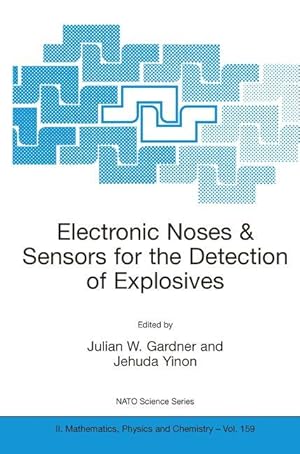
Ajouter au panierEtat : New. Dieser Artikel ist ein Print on Demand Artikel und wird nach Ihrer Bestellung fuer Sie gedruckt. Proceedings of the NATO Advanced Research Workshop, held in Warwick, Coventry, U.K., 30 September-3 October 2003 This book examines both the potential application of electronic nose technology, and the current state of development of chemical sensors.
-

Electronic Noses & Sensors for the Detection of Explosives
Edité par Springer Netherlands, Springer Netherlands Aug 2004, 2004
ISBN 10 : 1402023189 ISBN 13 : 9781402023187
Langue: anglais
Vendeur : buchversandmimpf2000, Emtmannsberg, BAYE, Allemagne
Évaluation du vendeur 5 sur 5 étoiles
EUR 320,99
EUR 60 shipping
Ships from Allemagne to Etats-UnisQuantité disponible : 1 disponible(s)
Ajouter au panierTaschenbuch. Etat : Neu. This item is printed on demand - Print on Demand Titel. Neuware -This book examines both the potential application of electronic nose technology, and the current state of development of chemical sensors for the detection of vapours from explosives, such as those used in landmines. The two fields have developed, somewhat in parallel, over the past decade and so one of the purposes of this workshop, on which the book is based, was to bring together scientists from the two fields in order to challenge the two communities and, mutually, stimulate both fields. It begins with a review of the basic principles of an electronic nose and explores possible ways in which the detection limit of conventional electronic nose technology can be reduced to the level required for the trace levels observed for many explosive materials. Next are reviews of the use of several different types of solid-state chemical sensors: polymer-based sensors, i.e. chemiluminescent, fluorescent and optical, to detect explosive materials; metal oxide semiconducting resistive sensors; and then electrochemical sensors. Next, different pattern recognition techniques are presented to enhance the performance of chemical sensors. Then biological systems are considered as a possible blue-print for chemical sensing. The biology can be employed either to understand the way insects locate odorant sources, or to understand the signal processing neural pathways. Next is a discussion of some of the new types of electronic noses; namely, a fast GC column with a SAW detector and a micromechanical sensor. Finally, the important issues of sampling technologies and the design of the microfluidic systems are considered. In particular, the use of pre-concentrators and solid phase micro extractors to boost the vapour concentration before it is introduced to the chemical sensor or electronic nose.Springer Verlag GmbH, Tiergartenstr. 17, 69121 Heidelberg 328 pp. Englisch.


