

Montant total (1 article articles) :
Destination de la commande :

forest development cold climates (14 résultats)
Passer aux résultats principaux de la recherche
Filtres de recherche
Type d'article
- Tous les types de produits
- Livres (14)
- Magazines & Périodiques (Aucun autre résultat ne correspond à ces critères)
- Bandes dessinées (Aucun autre résultat ne correspond à ces critères)
- Partitions de musique (Aucun autre résultat ne correspond à ces critères)
- Art, Affiches et Gravures (Aucun autre résultat ne correspond à ces critères)
- Photographies (Aucun autre résultat ne correspond à ces critères)
- Cartes (Aucun autre résultat ne correspond à ces critères)
- Manuscrits & Papiers anciens (Aucun autre résultat ne correspond à ces critères)
Etat En savoir plus
- Neuf (13)
- Comme neuf, Très bon ou Bon (1)
- Assez bon ou satisfaisant (Aucun autre résultat ne correspond à ces critères)
- Moyen ou mauvais (Aucun autre résultat ne correspond à ces critères)
- Conformément à la description (Aucun autre résultat ne correspond à ces critères)
Particularités
- Ed. originale (Aucun autre résultat ne correspond à ces critères)
- Signé (Aucun autre résultat ne correspond à ces critères)
- Jaquette (Aucun autre résultat ne correspond à ces critères)
- Avec images (9)
- Sans impressions à la demande (8)
Langue (1)
Prix
- Tous les prix
- Moins de EUR 20 (Aucun autre résultat ne correspond à ces critères)
- EUR 20 à EUR 45 (Aucun autre résultat ne correspond à ces critères)
- Plus de EUR 45
Livraison gratuite
- Livraison gratuite à destination de Etats-Unis (Aucun autre résultat ne correspond à ces critères)
Pays
Evaluation du vendeur
-

Forest Development in Cold Climates (NATO Science Series A:, 244)
Vendeur : Ria Christie Collections, Uxbridge, Royaume-Uni
Évaluation du vendeur 5 sur 5 étoiles

EUR 220,07
Expédition à EUR 13,89
Expédition depuis Royaume-Uni vers Etats-UnisQuantité disponible : Plus de 20 disponibles
Ajouter au panierEtat : New. In.
-

Forest Development in Cold Climates: (Closed)) (NATO Science Series A:)
Vendeur : Ria Christie Collections, Uxbridge, Royaume-Uni
Évaluation du vendeur 5 sur 5 étoiles
EUR 220,07
Expédition à EUR 13,89
Expédition depuis Royaume-Uni vers Etats-UnisQuantité disponible : Plus de 20 disponibles
Ajouter au panierEtat : New. In.
-

EUR 186,70
Expédition à EUR 70
Expédition depuis Allemagne vers Etats-UnisQuantité disponible : 5 disponible(s)
Ajouter au panierTaschenbuch. Etat : Neu. Forest Development in Cold Climates | John Alden (u. a.) | Taschenbuch | XIV | Englisch | 2013 | Springer | EAN 9781489916020 | Verantwortliche Person für die EU: Springer Verlag GmbH, Tiergartenstr. 17, 69121 Heidelberg, juergen[dot]hartmann[at]springer[dot]com | Anbieter: preigu.
-

Forest Development in Cold Climates
Langue: anglais
Edité par Springer US, Springer US Jun 1993, 1993
ISBN 10 : 0306444801 ISBN 13 : 9780306444807
Vendeur : buchversandmimpf2000, Emtmannsberg, BAYE, Allemagne
Évaluation du vendeur 5 sur 5 étoiles
EUR 213,99
Expédition à EUR 60
Expédition depuis Allemagne vers Etats-UnisQuantité disponible : 2 disponible(s)
Ajouter au panierBuch. Etat : Neu. Neuware -As forests decline in temperate and tropical climates, highly-developed countries and those striving for greater economic and social benefits are beginning to utilize marginal forests of high-latitude and mountainous regions for resources to satisfy human needs. The benefits of marginal forests range from purely aesthetic to providing resources for producing many goods and services demanded by a growing world population. Increased demands for forest resources and amenities and recent warming of high latitude climates have generated interest in reforestation and afforestation of marginal habitats in cold regions. Afforestation of treeless landscapes improves the environment for human habitation and provides for land use and economic prosperity. Trees are frequently planted in cold climates to rehabilitate denuded sites, for the amenity of homes and villages, and for wind shelter, recreation, agroforestry, and industrial uses. In addition, forests in cold climates reduce the albedo of the earth's surface in winter, and in summer they are small but significant long-lived sinks for atmospheric carbon dioxide. Finally, growth and reproductive success of forests at their geographic limits are sensitive indices of climatic change. As efforts to adapt forests to cold climates increase, however, new afforestation problems arise and old ones intensify. Austral, northern, and altitudinal tree limits are determined by many different factors. Current hypotheses for high-latitude tree limits are based on low growing-season temperatures that inhibit plant development and reproduction.Springer Verlag GmbH, Tiergartenstr. 17, 69121 Heidelberg 584 pp. Englisch.
-

Forest Development in Cold Climates
Vendeur : AHA-BUCH GmbH, Einbeck, Allemagne
Évaluation du vendeur 5 sur 5 étoiles
EUR 223,11
Expédition à EUR 64,37
Expédition depuis Allemagne vers Etats-UnisQuantité disponible : 1 disponible(s)
Ajouter au panierTaschenbuch. Etat : Neu. Druck auf Anfrage Neuware - Printed after ordering - As forests decline in temperate and tropical climates, highly-developed countries and those striving for greater economic and social benefits are beginning to utilize marginal forests of high-latitude and mountainous regions for resources to satisfy human needs. The benefits of marginal forests range from purely aesthetic to providing resources for producing many goods and services demanded by a growing world population. Increased demands for forest resources and amenities and recent warming of high latitude climates have generated interest in reforestation and afforestation of marginal habitats in cold regions. Afforestation of treeless landscapes improves the environment for human habitation and provides for land use and economic prosperity. Trees are frequently planted in cold climates to rehabilitate denuded sites, for the amenity of homes and villages, and for wind shelter, recreation, agroforestry, and industrial uses. In addition, forests in cold climates reduce the albedo of the earth's surface in winter, and in summer they are small but significant long-lived sinks for atmospheric carbon dioxide. Finally, growth and reproductive success of forests at their geographic limits are sensitive indices of climatic change. As efforts to adapt forests to cold climates increase, however, new afforestation problems arise and old ones intensify. Austral, northern, and altitudinal tree limits are determined by many different factors. Current hypotheses for high-latitude tree limits are based on low growing-season temperatures that inhibit plant development and reproduction.
-
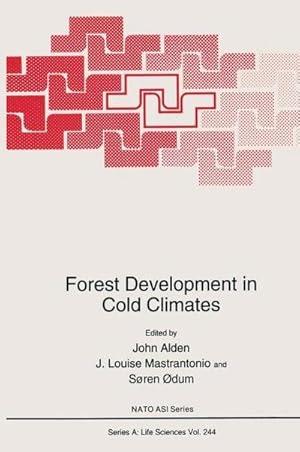
Forest Development in Cold Climates
Langue: anglais
Edité par Springer US, Springer US, 1993
ISBN 10 : 0306444801 ISBN 13 : 9780306444807
Vendeur : AHA-BUCH GmbH, Einbeck, Allemagne
Évaluation du vendeur 5 sur 5 étoiles
EUR 225,03
Expédition à EUR 65,17
Expédition depuis Allemagne vers Etats-UnisQuantité disponible : 1 disponible(s)
Ajouter au panierBuch. Etat : Neu. Druck auf Anfrage Neuware - Printed after ordering - As forests decline in temperate and tropical climates, highly-developed countries and those striving for greater economic and social benefits are beginning to utilize marginal forests of high-latitude and mountainous regions for resources to satisfy human needs. The benefits of marginal forests range from purely aesthetic to providing resources for producing many goods and services demanded by a growing world population. Increased demands for forest resources and amenities and recent warming of high latitude climates have generated interest in reforestation and afforestation of marginal habitats in cold regions. Afforestation of treeless landscapes improves the environment for human habitation and provides for land use and economic prosperity. Trees are frequently planted in cold climates to rehabilitate denuded sites, for the amenity of homes and villages, and for wind shelter, recreation, agroforestry, and industrial uses. In addition, forests in cold climates reduce the albedo of the earth's surface in winter, and in summer they are small but significant long-lived sinks for atmospheric carbon dioxide. Finally, growth and reproductive success of forests at their geographic limits are sensitive indices of climatic change. As efforts to adapt forests to cold climates increase, however, new afforestation problems arise and old ones intensify. Austral, northern, and altitudinal tree limits are determined by many different factors. Current hypotheses for high-latitude tree limits are based on low growing-season temperatures that inhibit plant development and reproduction.
-
Forest Development in Cold Climates (Nato Science Series A: (closed))
Vendeur : Revaluation Books, Exeter, Royaume-Uni
Évaluation du vendeur 5 sur 5 étoiles
EUR 304,54
Expédition à EUR 14,49
Expédition depuis Royaume-Uni vers Etats-UnisQuantité disponible : 2 disponible(s)
Ajouter au panierPaperback. Etat : Brand New. reprint edition. 580 pages. 9.26x6.11x1.32 inches. In Stock.
-
Forest Development in Cold Climates (Nato Science Series A: (244))
Vendeur : Mispah books, Redhill, SURRE, Royaume-Uni
Évaluation du vendeur 4 sur 5 étoiles

EUR 294,94
Expédition à EUR 28,98
Expédition depuis Royaume-Uni vers Etats-UnisQuantité disponible : 1 disponible(s)
Ajouter au panierHardcover. Etat : Like New. LIKE NEW. SHIPS FROM MULTIPLE LOCATIONS. book.
-
Forest Development in Cold Climates (eng)
Vendeur : Brook Bookstore On Demand, Napoli, NA, Italie
Évaluation du vendeur 4 sur 5 étoiles
EUR 166,29
Expédition à EUR 8
Expédition depuis Italie vers Etats-UnisQuantité disponible : Plus de 20 disponibles
Ajouter au panierEtat : new. Questo è un articolo print on demand.
-

EUR 180,07
Expédition à EUR 48,99
Expédition depuis Allemagne vers Etats-UnisQuantité disponible : Plus de 20 disponibles
Ajouter au panierEtat : New. Dieser Artikel ist ein Print on Demand Artikel und wird nach Ihrer Bestellung fuer Sie gedruckt. Proceedings of a NATO ARW held in Laugarvatn, Iceland, June 18-23, 1991 As forests decline in temperate and tropical climates, highly-developed countries and those striving for greater economic and social benefits are beginning to utilize marginal fore.
-

EUR 180,07
Expédition à EUR 48,99
Expédition depuis Allemagne vers Etats-UnisQuantité disponible : Plus de 20 disponibles
Ajouter au panierGebunden. Etat : New. Dieser Artikel ist ein Print on Demand Artikel und wird nach Ihrer Bestellung fuer Sie gedruckt. Proceedings of a NATO ARW held in Laugarvatn, Iceland, June 18-23, 1991 As forests decline in temperate and tropical climates, highly-developed countries and those striving for greater economic and social benefits are beginning to utilize marginal fore.
-

Forest Development in Cold Climates
Vendeur : BuchWeltWeit Ludwig Meier e.K., Bergisch Gladbach, Allemagne
Évaluation du vendeur 5 sur 5 étoiles
EUR 213,99
Expédition à EUR 23
Expédition depuis Allemagne vers Etats-UnisQuantité disponible : 2 disponible(s)
Ajouter au panierBuch. Etat : Neu. This item is printed on demand - it takes 3-4 days longer - Neuware -As forests decline in temperate and tropical climates, highly-developed countries and those striving for greater economic and social benefits are beginning to utilize marginal forests of high-latitude and mountainous regions for resources to satisfy human needs. The benefits of marginal forests range from purely aesthetic to providing resources for producing many goods and services demanded by a growing world population. Increased demands for forest resources and amenities and recent warming of high latitude climates have generated interest in reforestation and afforestation of marginal habitats in cold regions. Afforestation of treeless landscapes improves the environment for human habitation and provides for land use and economic prosperity. Trees are frequently planted in cold climates to rehabilitate denuded sites, for the amenity of homes and villages, and for wind shelter, recreation, agroforestry, and industrial uses. In addition, forests in cold climates reduce the albedo of the earth's surface in winter, and in summer they are small but significant long-lived sinks for atmospheric carbon dioxide. Finally, growth and reproductive success of forests at their geographic limits are sensitive indices of climatic change. As efforts to adapt forests to cold climates increase, however, new afforestation problems arise and old ones intensify. Austral, northern, and altitudinal tree limits are determined by many different factors. Current hypotheses for high-latitude tree limits are based on low growing-season temperatures that inhibit plant development and reproduction. 580 pp. Englisch.
-

Forest Development in Cold Climates
Langue: anglais
Edité par Springer US, Springer US Jun 2013, 2013
ISBN 10 : 1489916024 ISBN 13 : 9781489916020
Vendeur : buchversandmimpf2000, Emtmannsberg, BAYE, Allemagne
Évaluation du vendeur 5 sur 5 étoiles
EUR 213,99
Expédition à EUR 60
Expédition depuis Allemagne vers Etats-UnisQuantité disponible : 1 disponible(s)
Ajouter au panierTaschenbuch. Etat : Neu. This item is printed on demand - Print on Demand Titel. Neuware -As forests decline in temperate and tropical climates, highly-developed countries and those striving for greater economic and social benefits are beginning to utilize marginal forests of high-latitude and mountainous regions for resources to satisfy human needs. The benefits of marginal forests range from purely aesthetic to providing resources for producing many goods and services demanded by a growing world population. Increased demands for forest resources and amenities and recent warming of high latitude climates have generated interest in reforestation and afforestation of marginal habitats in cold regions. Afforestation of treeless landscapes improves the environment for human habitation and provides for land use and economic prosperity. Trees are frequently planted in cold climates to rehabilitate denuded sites, for the amenity of homes and villages, and for wind shelter, recreation, agroforestry, and industrial uses. In addition, forests in cold climates reduce the albedo of the earth's surface in winter, and in summer they are small but significant long-lived sinks for atmospheric carbon dioxide. Finally, growth and reproductive success of forests at their geographic limits are sensitive indices of climatic change. As efforts to adapt forests to cold climates increase, however, new afforestation problems arise and old ones intensify. Austral, northern, and altitudinal tree limits are determined by many different factors. Current hypotheses for high-latitude tree limits are based on low growing-season temperatures that inhibit plant development and reproduction.Springer Verlag GmbH, Tiergartenstr. 17, 69121 Heidelberg 584 pp. Englisch.
-

Forest Development in Cold Climates
Vendeur : BuchWeltWeit Ludwig Meier e.K., Bergisch Gladbach, Allemagne
Évaluation du vendeur 5 sur 5 étoiles
EUR 319,93
Expédition à EUR 23
Expédition depuis Allemagne vers Etats-UnisQuantité disponible : 2 disponible(s)
Ajouter au panierTaschenbuch. Etat : Neu. This item is printed on demand - it takes 3-4 days longer - Neuware -As forests decline in temperate and tropical climates, highly-developed countries and those striving for greater economic and social benefits are beginning to utilize marginal forests of high-latitude and mountainous regions for resources to satisfy human needs. The benefits of marginal forests range from purely aesthetic to providing resources for producing many goods and services demanded by a growing world population. Increased demands for forest resources and amenities and recent warming of high latitude climates have generated interest in reforestation and afforestation of marginal habitats in cold regions. Afforestation of treeless landscapes improves the environment for human habitation and provides for land use and economic prosperity. Trees are frequently planted in cold climates to rehabilitate denuded sites, for the amenity of homes and villages, and for wind shelter, recreation, agroforestry, and industrial uses. In addition, forests in cold climates reduce the albedo of the earth's surface in winter, and in summer they are small but significant long-lived sinks for atmospheric carbon dioxide. Finally, growth and reproductive success of forests at their geographic limits are sensitive indices of climatic change. As efforts to adapt forests to cold climates increase, however, new afforestation problems arise and old ones intensify. Austral, northern, and altitudinal tree limits are determined by many different factors. Current hypotheses for high-latitude tree limits are based on low growing-season temperatures that inhibit plant development and reproduction. 584 pp. Englisch.

