
Montant total (1 article articles) :
Destination de la commande :

quest theseus de ward anne w r connor ruth (6 résultats)
Passer aux résultats principaux de la recherche
Filtres de recherche
Type d'article
- Tous les types de produits
- Livres (6)
- Magazines & Périodiques (Aucun autre résultat ne correspond à ces critères)
- Bandes dessinées (Aucun autre résultat ne correspond à ces critères)
- Partitions de musique (Aucun autre résultat ne correspond à ces critères)
- Art, Affiches et Gravures (Aucun autre résultat ne correspond à ces critères)
- Photographies (Aucun autre résultat ne correspond à ces critères)
- Cartes (Aucun autre résultat ne correspond à ces critères)
- Manuscrits & Papiers anciens (Aucun autre résultat ne correspond à ces critères)
Etat En savoir plus
- Neuf (Aucun autre résultat ne correspond à ces critères)
- Comme neuf, Très bon ou Bon (Aucun autre résultat ne correspond à ces critères)
- Assez bon ou satisfaisant (5)
- Moyen ou mauvais (Aucun autre résultat ne correspond à ces critères)
- Conformément à la description (1)
Reliure
- Toutes
- Couverture rigide (6)
- Couverture souple (Aucun autre résultat ne correspond à ces critères)
Particularités
- Ed. originale (2)
- Signé (Aucun autre résultat ne correspond à ces critères)
- Jaquette (4)
- Avec images (2)
- Sans impressions à la demande (6)
Langue (2)
Prix
- Tous les prix
- Moins de EUR 20
- EUR 20 à EUR 45
- Plus de EUR 45 (Aucun autre résultat ne correspond à ces critères)
Livraison gratuite
- Livraison gratuite à destination de Etats-Unis (Aucun autre résultat ne correspond à ces critères)
Pays
Evaluation du vendeur
-

THE QUEST FOR THESEUS
Edité par Praeger Pub., New York, 1970
Vendeur : Russ States, Oil City, PA, Etats-Unis
Évaluation du vendeur 5 sur 5 étoiles

EUR 6,40
EUR 4,46 shipping
Ships within Etats-UnisQuantité disponible : 1 disponible(s)
Ajouter au panierCloth. Etat : Very Good. Etat de la jaquette : Very Good -. (1970), 281pp, illus., bookplate, some rubbing & slight edgewear to dj, contents clean.
-
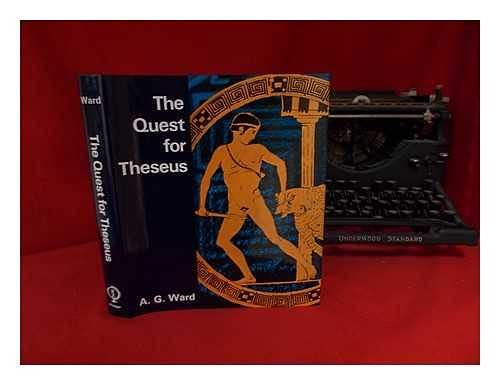
The Quest for Theseus
Vendeur : Rob the Book Man, Vancouver, WA, Etats-Unis
Évaluation du vendeur 5 sur 5 étoiles
EUR 15,89
EUR 5,99 shipping
Ships within Etats-UnisQuantité disponible : 1 disponible(s)
Ajouter au panierHardcover. Etat : Very Good. Etat de la jaquette : Very Good. Large hardback in very good + condition with very good condition dust jacket. Dust jacket is clipped.
-
The Quest for Theseus
Edité par Praeger Publishers, New York, 1970
Vendeur : Browse Awhile Books, Tipp City, OH, Etats-Unis
Évaluation du vendeur 5 sur 5 étoiles
EUR 10,59
EUR 6 shipping
Ships within Etats-UnisQuantité disponible : 1 disponible(s)
Ajouter au panierHard Cover. Etat : Very Good. Etat de la jaquette : DJ Very Good. Size: Small Quarto.
-
The Quest for Theseus
Edité par Praeger Publishers, New York (NY) USA, 1970
Langue: anglais
Vendeur : Sarah Zaluckyj, KINGTON, Royaume-Uni
Évaluation du vendeur 5 sur 5 étoiles
EUR 9,43
EUR 24,03 shipping
Ships from Royaume-Uni to Etats-UnisQuantité disponible : 1 disponible(s)
Ajouter au panierHardcover. Etat : Very Good. Etat de la jaquette : No Dustjacket. 281 pages. Colour plates and B&W illustrations. No dustjacket. Clean dark blue hardback binding with light wear to boards' corners and spine-ends. Pages very clean.
-

The Quest for Theseus
Edité par Praeger Publishers, 1970
Vendeur : Structure, Verses, Agency Books, Spray, OR, Etats-Unis
Membre d'association : CBA IOBA
Évaluation du vendeur 5 sur 5 étoiles
Edition originale
EUR 19,42
EUR 6,21 shipping
Ships within Etats-UnisQuantité disponible : 1 disponible(s)
Ajouter au panierHardcover. Etat : Very Good. First Edition. Sturdy, attractive, tightly bound in hardcover format, blue cloth over boards, gilt lettering to spine, clean of interior, lightly toned at worst, minimal rubbing to extremities. Gilt-stamped design to front cover. 230 illustrations, all in, 23 being in full-color, full-page format. Laid in also are three sets of reviews and e-mail correspondence, as this was in the personal library of the influential Classicist Peter Morris Green. Preface by Reynold Higgins. [6], 1-281 pp.Member, I.O.B.A., C.B.A., and adherent to the highest ethical standards. Additional postage may be required for oversize or especially heavy volumes, and for sets.
-
THE QUEST FOR THESEUS.
Edité par NY/Washington/London. 1970. Praeger Publishers., 1970
Vendeur : Chris Fessler, Bookseller, Howell, MI, Etats-Unis
Évaluation du vendeur 5 sur 5 étoiles
Edition originale
EUR 22,95
EUR 5,10 shipping
Ships within Etats-UnisQuantité disponible : 1 disponible(s)
Ajouter au panierblue & decorative gilt cloth (gold labyrinth on cover) hardbound folio. very large & heavy ("coffee table" size book), int'l or priority shipping will cost extra. dustwrapper in protective plastic. fine cond. binding square & tight. covers clean. edges clean. contents free of all markings. dustwrapper in fine cond. not worn or torn or price clipped. nice clean copy. no library markings, store stamps, stickers, bookplates, no names, inking , underlining, remainder markings etc ~ first edition. first printing ( nap). photo. illustrated title pg. 281p. "With 23 color plates, 176 b&w plates, and 31 maps, charts & line drawings". biblio. list of illustrations & maps. index. ancient history. archaeology. ancient literature. mythology. art history. ancient greece. ancient religion. paganism. ancient crete. minoan & mycenaean age. knossos. ancient mysteries. prehistory. ~ Most people have heard of Theseus, the greatest hero of ancient Athens, and have relegated him to the realm of legend and fairy tale. At first glance, the story of Theseus's adventures, with its bullheaded monsters, Amazons, centaurs, and an expedition to Hades, looks highly unpromising as historical material. However, since Schliemann located Troy by relying upon topographical data in the Homeric poems, archaeologists have been alert to the dangers of rejecting too readily the evidence of legend and tradition. In the case of the Theseus legend, it will be found, paradoxically enough, that it is precisely the most fantastic and unlikely aspects of the story that have the best historical foundations. After a preface by Dr. Reynold Higgins, of the British Museum, and a brief introduction, Dr. Ruth B. Edwards, an experienced classical archaeologist, begins the examination of the "Quest" with an outline of the legend as it was known to the Athenians and the development and variations it underwent up to the end of the classical period. Dr. Anne G. Ward, the editor, then gives a historical survey of the Bronze Age Aegean; she describes the religious and political background and compares the contemporary life and institutions of the mainland with those of Crete. The focus of the book then narrows to the career of Theseus himself, as it follows his steps geographically from Troezen to Scyros and notes the surviving remains that lend support to the historical reality of the hero. The evidence is surprisingly varied and convincing: Well~known examples, such as the palace of the Erechthid kings (of whom Theseus was one) on the Acropolis at Athens and the Labyrinth at Knossos, where evidence of the existence of the famous bull sports can be found, are supplemented by a multitude of minor clues from such sites as Eleusis, Marathon, and Aphidna, which seem to be closely connected with the story. W. R. Connor, Associate Professor of Classics at Princeton University, then carries the story to classical Athens in order to explain what Theseus meant to the Greeks in terms of their daily life. He discusses the religious significance of the hero cult as well as the moral and political implications of the social reforms and unification of Attica that were attributed to Theseus. Simon Tidworth, a specialist on the uses of myth in art, completes the book with a survey of the Theseus legend in Roman, medieval, Renaissance, and modern literature, in music, and in the visual arts. He investigates the ways in which the people of each successive period found something in the legend to suit their own tastes and preoccupations and stressed that element accordingly : From Roman love poets such as Ovid and Catullus to the medieval moralists, the Ariadne story tended to predominate; interest in the more horrific aspects of the Phaedra legend appeared in the Baroque period; and the romantic and neoclassical artists returned to the central figure of Theseus. Many modern writers, painters, and psychologists are intrigued by the strange dualism of the Minotaur, and the legend is still a fruitful source.


