Montant total (1 article articles) :
Destination de la commande :

smit prof (26 résultats)
Passer aux résultats principaux de la recherche
Filtres de recherche
Type d'article
- Tous les types de produits
- Livres (26)
- Magazines & Périodiques (Aucun autre résultat ne correspond à ces critères)
- Bandes dessinées (Aucun autre résultat ne correspond à ces critères)
- Partitions de musique (Aucun autre résultat ne correspond à ces critères)
- Art, Affiches et Gravures (Aucun autre résultat ne correspond à ces critères)
- Photographies (Aucun autre résultat ne correspond à ces critères)
- Cartes (Aucun autre résultat ne correspond à ces critères)
- Manuscrits & Papiers anciens (Aucun autre résultat ne correspond à ces critères)
Etat En savoir plus
- Neuf (12)
- Comme neuf, Très bon ou Bon (Aucun autre résultat ne correspond à ces critères)
- Assez bon ou satisfaisant (7)
- Moyen ou mauvais (2)
- Conformément à la description (5)
Particularités
- Ed. originale (4)
- Signé (Aucun autre résultat ne correspond à ces critères)
- Jaquette (2)
- Avec images (13)
- Sans impressions à la demande (15)
Langue (3)
Livraison gratuite
Pays
Evaluation du vendeur
-

Resurfacing the Submerged Past: Prehistoric Archaeology and Landscapes of the Flevoland Polders, the Netherlands
Vendeur : Books From California, Simi Valley, CA, Etats-Unis
Évaluation du vendeur 4 sur 5 étoiles

EUR 27,86
Expédition à EUR 4,31
Expédition nationale : Etats-UnisQuantité disponible : 1 disponible(s)
Ajouter au panierpaperback. Etat : Very Good.
-
Resurfacing the Submerged Past: Prehistoric Archaeology and Landscapes of the Flevoland Polders, the Netherlands
Vendeur : Biblios, Frankfurt am main, HESSE, Allemagne
Évaluation du vendeur 4 sur 5 étoiles
EUR 39,78
Expédition à EUR 9,95
Expédition depuis Allemagne vers Etats-UnisQuantité disponible : 1 disponible(s)
Ajouter au panierEtat : New.
-

De Susteren van Sanct-Agnetenhuus
Edité par IJsselacademie 1997, 1997
ISBN 10 : 906697088X ISBN 13 : 9789066970885
Vendeur : Antiquariaat Schot, Hendrik-Ido-Ambacht, Pays-Bas
Évaluation du vendeur 5 sur 5 étoiles

EUR 9,20
Expédition à EUR 25
Expédition depuis Pays-Bas vers Etats-UnisQuantité disponible : 2 disponible(s)
Ajouter au panierGeb., hardcover, nette staat, 208 pagina's.
-
De susteren van Sanct-Agnetenhuus. De geschiedenis, materiele cultuur en spiritualiteit van het Kamper Agnietenconvent
Edité par IJsselakademie 1997, 1997
ISBN 10 : 906697088X ISBN 13 : 9789066970885
Vendeur : Antiquariaat Schot, Hendrik-Ido-Ambacht, Pays-Bas
Évaluation du vendeur 5 sur 5 étoiles
EUR 9,20
Expédition à EUR 25
Expédition depuis Pays-Bas vers Etats-UnisQuantité disponible : 1 disponible(s)
Ajouter au panierGeb., hardcover, in nette staat, 208 pagina's.
-

Zuivering van Afvalwater. Methoden en Installaties voor de zuivering van Rioolwater en Industrieel Afvalwater
Edité par N.V. Wed. J. Ahrend en Zoon, Amsterdam, 1937. 180 pp. Met foto's en illustraties in zwart-wit., 1937
Vendeur : Antiquariaat Hortus Conclusus, Bergambacht, Pays-Bas
Évaluation du vendeur 5 sur 5 étoiles
EUR 15
Expédition à EUR 14,50
Expédition depuis Pays-Bas vers Etats-UnisQuantité disponible : 1 disponible(s)
Ajouter au panierOriginele blauw linnen band. Band iets krom, rug geschaafd en aan de uiteinden wat beschadigd, inhoud in (zeer) goede staat. Please see description or ask for photos.
-

Spinoza: Gezamelijke redevoeringen, gehouden bij de Spinoza-herdenking door de afdeeling-Nederlad van de Kant-Gesellschaft op donderdag 29 december 1932 te Amsterdam in de Agnieten-kapel (Atheneum-Illustre)
Edité par De Erven F. Bohn N.V., Haarlem, 1933
Vendeur : Antiquariaat Fenix, Amsterdam, Pays-Bas
Évaluation du vendeur 5 sur 5 étoiles
EUR 7,50
Expédition à EUR 31,50
Expédition depuis Pays-Bas vers Etats-UnisQuantité disponible : 1 disponible(s)
Ajouter au panierEtat : Fair. Redelijk, hardcover, 78 pp., 24,8x16,5x0,8 cm, met noten Naam in pen op schutblad. Gebruikssporen omslag. , wordt verzonden als brievenbuspakket.
-
De Susteren van Sanct-Agnetenhuus. De geschiedenis, materiële cultuur en spiritualiteit van het Kamper Agnietenconvent.
Edité par IJsselakademie, Kampen, 1997
ISBN 10 : 906697088X ISBN 13 : 9789066970885
Vendeur : Erwin Antiquariaat, Kampen, Pays-Bas
Évaluation du vendeur 4 sur 5 étoiles
Edition originale
EUR 15
Expédition à EUR 27
Expédition depuis Pays-Bas vers Etats-UnisQuantité disponible : 1 disponible(s)
Ajouter au panierCardboard / Karton. Etat : Good / Goed. 1ste / 1st. 208 Pagina's. Zwart- wit en Kleurenfoto's, illustraties, tabellen en plattegrondjes. Naam en datum op achterkant eerste schutblad. Size: A5.
-
De susteren van Sanct-Agnetenhuus. De geschiedenis, materiele cultuur en spiritualiteit van het Kamper Agnietenconvent
Edité par IJsselakademie 1997, 1997
ISBN 10 : 906697088X ISBN 13 : 9789066970885
Vendeur : Mooney's bookstore, Den Helder, Pays-Bas
Évaluation du vendeur 4 sur 5 étoiles
EUR 17,65
Expédition à EUR 14,95
Expédition depuis Pays-Bas vers Etats-UnisQuantité disponible : 1 disponible(s)
Ajouter au panierEtat : Very good.
-
Cultuur en Heil
Date d'édition : 1959
Vendeur : Redux Books, Grand Rapids, MI, Etats-Unis
Évaluation du vendeur 5 sur 5 étoiles
EUR 34,22
Livraison gratuite
Expédition nationale : Etats-UnisQuantité disponible : 1 disponible(s)
Ajouter au panierPaperback. Etat : Good. Paperback. Pages are clean and unmarked. Covers show light edge wear.; 100% Satisfaction Guaranteed! Ships same or next business day!
-

Resurfacing the Submerged Past: Prehistoric Archaeology and Landscapes of the Flevoland Polders, the Netherlands
Vendeur : Books From California, Simi Valley, CA, Etats-Unis
Évaluation du vendeur 4 sur 5 étoiles
EUR 97,57
Expédition à EUR 4,31
Expédition nationale : Etats-UnisQuantité disponible : 1 disponible(s)
Ajouter au panierhardcover. Etat : Very Good. Cover and edges may have some wear.
-
De susteren van Sanct-Agnetenhuus. De geschiedenis, materiele cultuur en spiritualiteit van het Kamper Agnietenconvent
Edité par IJsselakademie 1997, 1997
ISBN 10 : 906697088X ISBN 13 : 9789066970885
Vendeur : Mooney's bookstore, Den Helder, Pays-Bas
Évaluation du vendeur 4 sur 5 étoiles
EUR 28,14
Expédition à EUR 14,95
Expédition depuis Pays-Bas vers Etats-UnisQuantité disponible : 1 disponible(s)
Ajouter au panierEtat : Very good.
-
Kamp-Toestanden 1944-'45-'48 Rapport
Langue: allemand
Edité par N. V. Uitgenverij Keizerskroon, Haarlem, 1949
Vendeur : Antiqua U. Braun, Detmold, Allemagne
Évaluation du vendeur 5 sur 5 étoiles
EUR 12
Expédition à EUR 42
Expédition depuis Allemagne vers Etats-UnisQuantité disponible : 1 disponible(s)
Ajouter au panierPriv. Halbleinwandband. Etat : Zustand in der Beschreibung. vierde vermeerderde druk (30e-40e duiz.). 104 Seiten. Buch neu eingebunden. Niederländischsprachiges Exemplar. Seiten leicht gebräunt. Titelblatt mit schwachen Felcken. Ansonsten gutes und sauberes Exemplar.
-

J.H. Pierneef: His Life and his Work
Vendeur : Chapter 1, Johannesburg, GAU, Afrique du sud
Évaluation du vendeur 5 sur 5 étoiles
Edition originale
EUR 169,12
Expédition à EUR 25
Expédition depuis Afrique du sud vers Etats-UnisQuantité disponible : 1 disponible(s)
Ajouter au panierHardcover. Etat : Good. No Jacket. First Edition. The boards are shelf rubbed, edge worn and marked, but they remain strong and sturdy. Internally, there are no markings or inscriptions, and the pages within are neat and complete. The binding is secure. JK. Our orders are shipped using tracked courier delivery services.
-
J.H. Pierneef: His Life and His Work
Vendeur : Chapter 1, Johannesburg, GAU, Afrique du sud
Évaluation du vendeur 5 sur 5 étoiles
Edition originale
EUR 253,67
Expédition à EUR 25
Expédition depuis Afrique du sud vers Etats-UnisQuantité disponible : 1 disponible(s)
Ajouter au panierHardcover. Etat : Fair. Etat de la jaquette : Good. First Edition. 262 pages (complete). A comprehensive overview of the life and works of the remarkable Pierneef (who was able, almost uniquely, captured the light of veld). The dustjacket is neat with some wear to the edges. The faces have scuffing and some rubbing but are otherwise benign. The boards are placid with shelving wear to the edges. Within, the first free page has been removed. The contents have evidence of use throughout, however they are contented and comfortable. The pages are clean, clear; the coloured plates are fresh and elegant and convey the elysian spirit of Pierneef's paintings most affectingly. fk. Our orders are shipped using tracked courier delivery services.
-
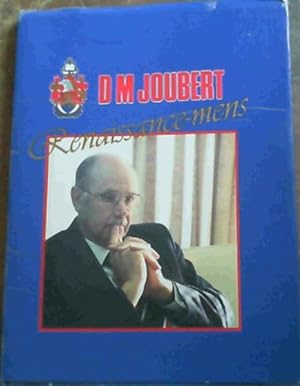
D M Joubert Renaissance-mens
Edité par Universiteit van Pretoria, 1991
ISBN 10 : 0869798286 ISBN 13 : 9780869798287
Vendeur : Chapter 1, Johannesburg, GAU, Afrique du sud
Évaluation du vendeur 5 sur 5 étoiles
Edition originale
EUR 48,95
Expédition à EUR 25
Expédition depuis Afrique du sud vers Etats-UnisQuantité disponible : 1 disponible(s)
Ajouter au panierHardcover. Etat : Good. Etat de la jaquette : Fair. 1st Edition. 101 pages (complete). In Afrikaans throughout. An affectionate illustrated biography of the Vice-Chancellor and Rector the University of Pretoria. In general good condition. The dustjacket is intact, entire and firm. It has lamination bubbling. There is some light wear to the shelving edges and corners. Otherwise the dj is smart and sure. The blue cloth cover is strong. The gold titling is bright. The bottom edges have some bumping and wear. The corners have light wear. Inside, the contents are fresh, bright, clean, clear, genial, assured and firm. fk. Our orders are shipped using tracked courier delivery services.
-

Resurfacing the submerged past
Langue: anglais
Edité par Sidestone Press Nov 2021, 2021
ISBN 10 : 9464260386 ISBN 13 : 9789464260380
Vendeur : BuchWeltWeit Ludwig Meier e.K., Bergisch Gladbach, Allemagne
Évaluation du vendeur 5 sur 5 étoiles
EUR 70
Expédition à EUR 23
Expédition depuis Allemagne vers Etats-UnisQuantité disponible : 2 disponible(s)
Ajouter au panierTaschenbuch. Etat : Neu. This item is printed on demand - it takes 3-4 days longer - Neuware -The Netherlands are internationally renowned for the archaeology of its wetland environments. The reclamation of the Flevoland Polders in the early half of the 20th century not only exposed hundreds of shipwrecks, but also remnants of prehistoric landscapes and traces of human occupation dating to Mesolithic and Neolithic times. Ultimately, this led to the 'discovery' of the Swifterbant Culture in the 1960s-1970s, and which was initially seen as a Dutch equivalent of the Ertebølle Culture.Archaeological investigations conducted by the University of Groningen, and later also the University of Amsterdam, delivered important new data on the nature of the Swifterbant Culture. It became key in the discussion about the adoption of crop cultivation and animal husbandry by hunter-gatherers living in wetland environments. Also, the Swifterbant Culture became central in the debate on the meaning of archaeologically defined 'cultures', questioning relationships between social interaction and material culture. With the increase of urbanisation and infrastructural works, alongside changes in the Dutch Monuments Act, dozens of small and large-scale development-led investigations got initiated at the turn of the century.One project involved the construction of the Hanzelijn railway, crossing one of the polders from West to East. Archaeologists became aware that much of what was known - and unknown - about the prehistoric past of the Flevoland Polders, was not easily accessible. It was therefore decided to bring together, as much as possible, all the information from the many scattered sources, and make it accessible to professionals, both inside and outside the Netherlands. The result is this book, which presents an overview of the most important sites and data, and what these learn us about the nature of the archaeological record, landscape change, prehistoric subsistence, ritual behaviour, as well as socio-cultural developments during the Mesolithic and Neolithic.Previously considered an impossibility, 'fossilised' fields, discovered at Swifterbant, demonstrate crop cultivation in wetland environments in an early stage of the Neolithic. In fact, the prehistory of the Flevoland Polders is tightly connected to the dynamic nature of the extended wetlands that characterised the landscape since the end of the last glacial. Although often regarded as the 'margin' of cultural dynamics in the past, we can now see that the Flevoland Polders were right in the centre of fundamental long-term changes in human existence in NW Europe.ContentsChapter 1 Introduction of the Hanzelijn Archaeological Project (K. E. Waugh ( ), W. Hessing and J. Flamman)Chapter 2 The cradle of the Swifterbant culture: 50 years of archaeological investigations in the province of Flevoland (D.C.M Raemaekers and J.H.M. Peeters)Chapter 3 Hidden landscapes: mapping and evaluating deeply buried remains of human activity (J.H.M. Peeters and B.I. Smit)Chapter 4 Exploiting a changing landscape: subsistence, habitation and skills (J.H.M. Peeters, T. ten Anscher, L.I. Kooistra, L. Kubiak-Martens and J. Zeiler)Chapter 5 People, ritual and meaning (D.C.M Raemaekers)Chapter 6 From land to water: geomorphological, hydrological and ecological developments in Flevoland from the Late Glacial to the end of the Subboreal (L.I. Kooistra and J.H.M. Peeters )Chapter 7 Transformations in a forager and farmer landscape: a cultural biography of prehistoric Flevoland (J.H.M. Peeters, L.I. Kooistra and D.C.M. Raemaekers)Site Atlas: Windows of observation: the quality, nature and context of excavated sites in Flevoland (T.Hamburg and B.I. Smit)Bibliography 286 pp. Englisch.
-

EUR 56,71
Expédition à EUR 48,99
Expédition depuis Allemagne vers Etats-UnisQuantité disponible : Plus de 20 disponibles
Ajouter au panierEtat : New. Dieser Artikel ist ein Print on Demand Artikel und wird nach Ihrer Bestellung fuer Sie gedruckt. The Netherlands are internationally renowned for the archaeology of its wetland environments. The reclamation of the Flevoland Polders in the early half of the 20th century not only exposed hundreds of shipwrecks, but also remnants of prehistoric landscapes.
-

EUR 58,85
Expédition à EUR 70
Expédition depuis Allemagne vers Etats-UnisQuantité disponible : 5 disponible(s)
Ajouter au panierTaschenbuch. Etat : Neu. Resurfacing the submerged past | Hans Peeters (u. a.) | Taschenbuch | Englisch | 2021 | Sidestone Press | EAN 9789464260380 | Verantwortliche Person für die EU: preigu GmbH & Co. KG, Lengericher Landstr. 19, 49078 Osnabrück, mail[at]preigu[dot]de | Anbieter: preigu Print on Demand.
-

Resurfacing the submerged past
Langue: anglais
Edité par Sidestone Press Nov 2021, 2021
ISBN 10 : 9464260386 ISBN 13 : 9789464260380
Vendeur : buchversandmimpf2000, Emtmannsberg, BAYE, Allemagne
Évaluation du vendeur 5 sur 5 étoiles
EUR 70
Expédition à EUR 60
Expédition depuis Allemagne vers Etats-UnisQuantité disponible : 1 disponible(s)
Ajouter au panierTaschenbuch. Etat : Neu. This item is printed on demand - Print on Demand Titel. Neuware -The Netherlands are internationally renowned for the archaeology of its wetland environments. The reclamation of the Flevoland Polders in the early half of the 20th century not only exposed hundreds of shipwrecks, but also remnants of prehistoric landscapes and traces of human occupation dating to Mesolithic and Neolithic times. Ultimately, this led to the ¿discovery¿ of the Swifterbant Culture in the 1960s-1970s, and which was initially seen as a Dutch equivalent of the Ertebølle Culture. Archaeological investigations conducted by the University of Groningen, and later also the University of Amsterdam, delivered important new data on the nature of the Swifterbant Culture. It became key in the discussion about the adoption of crop cultivation and animal husbandry by hunter-gatherers living in wetland environments. Also, the Swifterbant Culture became central in the debate on the meaning of archaeologically defined ¿cultures¿, questioning relationships between social interaction and material culture. With the increase of urbanisation and infrastructural works, alongside changes in the Dutch Monuments Act, dozens of small and large-scale development-led investigations got initiated at the turn of the century. One project involved the construction of the Hanzelijn railway, crossing one of the polders from West to East. Archaeologists became aware that much of what was known ¿ and unknown ¿ about the prehistoric past of the Flevoland Polders, was not easily accessible. It was therefore decided to bring together, as much as possible, all the information from the many scattered sources, and make it accessible to professionals, both inside and outside the Netherlands. The result is this book, which presents an overview of the most important sites and data, and what these learn us about the nature of the archaeological record, landscape change, prehistoric subsistence, ritual behaviour, as well as socio-cultural developments during the Mesolithic and Neolithic. Previously considered an impossibility, ¿fossilised¿ fields, discovered at Swifterbant, demonstrate crop cultivation in wetland environments in an early stage of the Neolithic. In fact, the prehistory of the Flevoland Polders is tightly connected to the dynamic nature of the extended wetlands that characterised the landscape since the end of the last glacial. Although often regarded as the ¿margin¿ of cultural dynamics in the past, we can now see that the Flevoland Polders were right in the centre of fundamental long-term changes in human existence in NW Europe. Contents Chapter 1 Introduction of the Hanzelijn Archaeological Project (K. E. Waugh (¿), W. Hessing and J. Flamman) Chapter 2 The cradle of the Swifterbant culture: 50 years of archaeological investigations in the province of Flevoland (D.C.M Raemaekers and J.H.M. Peeters) Chapter 3 Hidden landscapes: mapping and evaluating deeply buried remains of human activity (J.H.M. Peeters and B.I. Smit) Chapter 4 Exploiting a changing landscape: subsistence, habitation and skills (J.H.M. Peeters, T. ten Anscher, L.I. Kooistra, L. Kubiak-Martens and J. Zeiler) Chapter 5 People, ritual and meaning (D.C.M Raemaekers) Chapter 6 From land to water: geomorphological, hydrological and ecological developments in Flevoland from the Late Glacial to the end of the Subboreal (L.I. Kooistra and J.H.M. Peeters ) Chapter 7 Transformations in a forager and farmer landscape: a cultural biography of prehistoric Flevoland (J.H.M. Peeters, L.I. Kooistra and D.C.M. Raemaekers) Site Atlas: Windows of observation: the quality, nature and context of excavated sites in Flevoland (T.Hamburg and B.I. Smit) BibliographyBooks on Demand GmbH, Überseering 33, 22297 Hamburg 286 pp. Englisch.
-

Resurfacing the submerged past
Vendeur : AHA-BUCH GmbH, Einbeck, Allemagne
Évaluation du vendeur 5 sur 5 étoiles
EUR 72,19
Expédition à EUR 65,22
Expédition depuis Allemagne vers Etats-UnisQuantité disponible : 1 disponible(s)
Ajouter au panierTaschenbuch. Etat : Neu. nach der Bestellung gedruckt Neuware - Printed after ordering - The Netherlands are internationally renowned for the archaeology of its wetland environments. The reclamation of the Flevoland Polders in the early half of the 20th century not only exposed hundreds of shipwrecks, but also remnants of prehistoric landscapes and traces of human occupation dating to Mesolithic and Neolithic times. Ultimately, this led to the 'discovery' of the Swifterbant Culture in the 1960s-1970s, and which was initially seen as a Dutch equivalent of the Ertebølle Culture.Archaeological investigations conducted by the University of Groningen, and later also the University of Amsterdam, delivered important new data on the nature of the Swifterbant Culture. It became key in the discussion about the adoption of crop cultivation and animal husbandry by hunter-gatherers living in wetland environments. Also, the Swifterbant Culture became central in the debate on the meaning of archaeologically defined 'cultures', questioning relationships between social interaction and material culture. With the increase of urbanisation and infrastructural works, alongside changes in the Dutch Monuments Act, dozens of small and large-scale development-led investigations got initiated at the turn of the century.One project involved the construction of the Hanzelijn railway, crossing one of the polders from West to East. Archaeologists became aware that much of what was known - and unknown - about the prehistoric past of the Flevoland Polders, was not easily accessible. It was therefore decided to bring together, as much as possible, all the information from the many scattered sources, and make it accessible to professionals, both inside and outside the Netherlands. The result is this book, which presents an overview of the most important sites and data, and what these learn us about the nature of the archaeological record, landscape change, prehistoric subsistence, ritual behaviour, as well as socio-cultural developments during the Mesolithic and Neolithic.Previously considered an impossibility, 'fossilised' fields, discovered at Swifterbant, demonstrate crop cultivation in wetland environments in an early stage of the Neolithic. In fact, the prehistory of the Flevoland Polders is tightly connected to the dynamic nature of the extended wetlands that characterised the landscape since the end of the last glacial. Although often regarded as the 'margin' of cultural dynamics in the past, we can now see that the Flevoland Polders were right in the centre of fundamental long-term changes in human existence in NW Europe.ContentsChapter 1 Introduction of the Hanzelijn Archaeological Project (K. E. Waugh ( ), W. Hessing and J. Flamman)Chapter 2 The cradle of the Swifterbant culture: 50 years of archaeological investigations in the province of Flevoland (D.C.M Raemaekers and J.H.M. Peeters)Chapter 3 Hidden landscapes: mapping and evaluating deeply buried remains of human activity (J.H.M. Peeters and B.I. Smit)Chapter 4 Exploiting a changing landscape: subsistence, habitation and skills (J.H.M. Peeters, T. ten Anscher, L.I. Kooistra, L. Kubiak-Martens and J. Zeiler)Chapter 5 People, ritual and meaning (D.C.M Raemaekers)Chapter 6 From land to water: geomorphological, hydrological and ecological developments in Flevoland from the Late Glacial to the end of the Subboreal (L.I. Kooistra and J.H.M. Peeters )Chapter 7 Transformations in a forager and farmer landscape: a cultural biography of prehistoric Flevoland (J.H.M. Peeters, L.I. Kooistra and D.C.M. Raemaekers)Site Atlas: Windows of observation: the quality, nature and context of excavated sites in Flevoland (T.Hamburg and B.I. Smit)Bibliography.
-

EUR 138,76
Expédition à EUR 48,99
Expédition depuis Allemagne vers Etats-UnisQuantité disponible : Plus de 20 disponibles
Ajouter au panierEtat : New. Dieser Artikel ist ein Print on Demand Artikel und wird nach Ihrer Bestellung fuer Sie gedruckt. The Netherlands are internationally renowned for the archaeology of its wetland environments. The reclamation of the Flevoland Polders in the early half of the 20th century not only exposed hundreds of shipwrecks, but also remnants of prehistoric landscapes.
-

EUR 143,90
Expédition à EUR 70
Expédition depuis Allemagne vers Etats-UnisQuantité disponible : 5 disponible(s)
Ajouter au panierBuch. Etat : Neu. Resurfacing the submerged past | Hans Peeters (u. a.) | Buch | HC gerader Rücken kaschiert | Englisch | 2021 | Sidestone Press | EAN 9789464260397 | Verantwortliche Person für die EU: preigu GmbH & Co. KG, Lengericher Landstr. 19, 49078 Osnabrück, mail[at]preigu[dot]de | Anbieter: preigu Print on Demand.
-
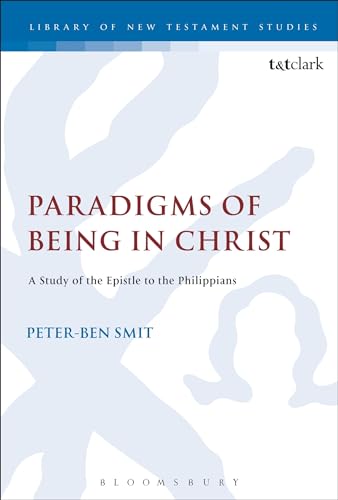
Paradigms of Being in Christ (Hardcover)
Langue: anglais
Edité par Bloomsbury Publishing PLC, Edinburgh, 2013
ISBN 10 : 0567271625 ISBN 13 : 9780567271624
Vendeur : CitiRetail, Stevenage, Royaume-Uni
Évaluation du vendeur 5 sur 5 étoiles
EUR 189,13
Expédition à EUR 42,87
Expédition depuis Royaume-Uni vers Etats-UnisQuantité disponible : 1 disponible(s)
Ajouter au panierHardcover. Etat : new. Hardcover. In his Epistle to the Philippians, Paul positions himself as an example of 'being in Christ'. The way in which he does this points out that he consciously positions himself in the tradition of classical rhetoric, where the use of paradigms (exempla) was a standard element in deliberative arguing. Paul describes his life as coloured by Christ in such a way that he represents Christ to the Philippians, and theresponse he hopes to evoke in their congregation is that of similar behaviour.The analysis of Smit combines observations on classical rhetoric, exegetical analyses of Philippians, and views from the perspective of gender and masculinity studies into a new and fresh analysis of the material. He shows that ancient ideals of deliberative rhetoric have influenced Philippians in much the same way in which they appear in e.g. Aristotle, Plutarch, and (also) 2 Maccabees. This study both positions Paul in the cultural context of his day and indicates the newness of his enterprise. In his Epistle to the Philippians, Paul positions himself as an example of 'being in Christ'. The way in which he does this points out that he consciously positions himself in the tradition of classical rhetoric, where the use of paradigms (exempla) was a standard element in deliberative arguing. Paul describes his life as coloured by Christ in such a way that he represents Christ to the Philippians, and the response he hopes to evoke in their congregation is that of similar behaviour. The analysis of Smit combines observations on classical rhetoric, exegetical analyses of Philippians, and views from the perspective of gender and masculinity studies into a new and fresh analysis of the material. He shows that ancient ideals of deliberative rhetoric have influenced Philippians in much the same way in which they appear in e.g. Aristotle, Plutarch, and (also) 2 Maccabees. This study both positions Paul in the cultural context of his day and indicates the newness of his enterprise. This item is printed on demand. Shipping may be from our UK warehouse or from our Australian or US warehouses, depending on stock availability.
-
Paradigms of Being in Christ (Hardcover)
Langue: anglais
Edité par Bloomsbury Publishing PLC, Edinburgh, 2013
ISBN 10 : 0567271625 ISBN 13 : 9780567271624
Vendeur : Grand Eagle Retail, Bensenville, IL, Etats-Unis
Évaluation du vendeur 5 sur 5 étoiles
EUR 234,45
Livraison gratuite
Expédition nationale : Etats-UnisQuantité disponible : 1 disponible(s)
Ajouter au panierHardcover. Etat : new. Hardcover. In his Epistle to the Philippians, Paul positions himself as an example of 'being in Christ'. The way in which he does this points out that he consciously positions himself in the tradition of classical rhetoric, where the use of paradigms (exempla) was a standard element in deliberative arguing. Paul describes his life as coloured by Christ in such a way that he represents Christ to the Philippians, and theresponse he hopes to evoke in their congregation is that of similar behaviour.The analysis of Smit combines observations on classical rhetoric, exegetical analyses of Philippians, and views from the perspective of gender and masculinity studies into a new and fresh analysis of the material. He shows that ancient ideals of deliberative rhetoric have influenced Philippians in much the same way in which they appear in e.g. Aristotle, Plutarch, and (also) 2 Maccabees. This study both positions Paul in the cultural context of his day and indicates the newness of his enterprise. In his Epistle to the Philippians, Paul positions himself as an example of 'being in Christ'. The way in which he does this points out that he consciously positions himself in the tradition of classical rhetoric, where the use of paradigms (exempla) was a standard element in deliberative arguing. Paul describes his life as coloured by Christ in such a way that he represents Christ to the Philippians, and the response he hopes to evoke in their congregation is that of similar behaviour. The analysis of Smit combines observations on classical rhetoric, exegetical analyses of Philippians, and views from the perspective of gender and masculinity studies into a new and fresh analysis of the material. He shows that ancient ideals of deliberative rhetoric have influenced Philippians in much the same way in which they appear in e.g. Aristotle, Plutarch, and (also) 2 Maccabees. This study both positions Paul in the cultural context of his day and indicates the newness of his enterprise. This item is printed on demand. Shipping may be from multiple locations in the US or from the UK, depending on stock availability.
-

Resurfacing the submerged past
Langue: anglais
Edité par Sidestone Press Nov 2021, 2021
ISBN 10 : 9464260394 ISBN 13 : 9789464260397
Vendeur : buchversandmimpf2000, Emtmannsberg, BAYE, Allemagne
Évaluation du vendeur 5 sur 5 étoiles
EUR 180
Expédition à EUR 60
Expédition depuis Allemagne vers Etats-UnisQuantité disponible : 1 disponible(s)
Ajouter au panierBuch. Etat : Neu. This item is printed on demand - Print on Demand Titel. Neuware -The Netherlands are internationally renowned for the archaeology of its wetland environments. The reclamation of the Flevoland Polders in the early half of the 20th century not only exposed hundreds of shipwrecks, but also remnants of prehistoric landscapes and traces of human occupation dating to Mesolithic and Neolithic times. Ultimately, this led to the ¿discovery¿ of the Swifterbant Culture in the 1960s-1970s, and which was initially seen as a Dutch equivalent of the Ertebølle Culture.Archaeological investigations conducted by the University of Groningen, and later also the University of Amsterdam, delivered important new data on the nature of the Swifterbant Culture. It became key in the discussion about the adoption of crop cultivation and animal husbandry by hunter-gatherers living in wetland environments. Also, the Swifterbant Culture became central in the debate on the meaning of archaeologically defined ¿cultures¿, questioning relationships between social interaction and material culture. With the increase of urbanisation and infrastructural works, alongside changes in the Dutch Monuments Act, dozens of small and large-scale development-led investigations got initiated at the turn of the century.One project involved the construction of the Hanzelijn railway, crossing one of the polders from West to East. Archaeologists became aware that much of what was known ¿ and unknown ¿ about the prehistoric past of the Flevoland Polders, was not easily accessible. It was therefore decided to bring together, as much as possible, all the information from the many scattered sources, and make it accessible to professionals, both inside and outside the Netherlands. The result is this book, which presents an overview of the most important sites and data, and what these learn us about the nature of the archaeological record, landscape change, prehistoric subsistence, ritual behaviour, as well as socio-cultural developments during the Mesolithic and Neolithic.Previously considered an impossibility, ¿fossilised¿ fields, discovered at Swifterbant, demonstrate crop cultivation in wetland environments in an early stage of the Neolithic. In fact, the prehistory of the Flevoland Polders is tightly connected to the dynamic nature of the extended wetlands that characterised the landscape since the end of the last glacial. Although often regarded as the ¿margin¿ of cultural dynamics in the past, we can now see that the Flevoland Polders were right in the centre of fundamental long-term changes in human existence in NW Europe.ContentsChapter 1 Introduction of the Hanzelijn Archaeological Project (K. E. Waugh (¿), W. Hessing and J. Flamman)Chapter 2 The cradle of the Swifterbant culture: 50 years of archaeological investigations in the province of Flevoland (D.C.M Raemaekers and J.H.M. Peeters)Chapter 3 Hidden landscapes: mapping and evaluating deeply buried remains of human activity (J.H.M. Peeters and B.I. Smit)Chapter 4 Exploiting a changing landscape: subsistence, habitation and skills (J.H.M. Peeters, T. ten Anscher, L.I. Kooistra, L. Kubiak-Martens and J. Zeiler)Chapter 5 People, ritual and meaning (D.C.M Raemaekers)Chapter 6 From land to water: geomorphological, hydrological and ecological developments in Flevoland from the Late Glacial to the end of the Subboreal (L.I. Kooistra and J.H.M. Peeters )Chapter 7 Transformations in a forager and farmer landscape: a cultural biography of prehistoric Flevoland (J.H.M. Peeters, L.I. Kooistra and D.C.M. Raemaekers)Site Atlas: Windows of observation: the quality, nature and context of excavated sites in Flevoland (T.Hamburg and B.I. Smit)BibliographyBooks on Demand GmbH, Überseering 33, 22297 Hamburg 286 pp. Englisch.
-

Resurfacing the submerged past
Vendeur : AHA-BUCH GmbH, Einbeck, Allemagne
Évaluation du vendeur 5 sur 5 étoiles
EUR 182,16
Expédition à EUR 66,49
Expédition depuis Allemagne vers Etats-UnisQuantité disponible : 1 disponible(s)
Ajouter au panierBuch. Etat : Neu. nach der Bestellung gedruckt Neuware - Printed after ordering - The Netherlands are internationally renowned for the archaeology of its wetland environments. The reclamation of the Flevoland Polders in the early half of the 20th century not only exposed hundreds of shipwrecks, but also remnants of prehistoric landscapes and traces of human occupation dating to Mesolithic and Neolithic times. Ultimately, this led to the 'discovery' of the Swifterbant Culture in the 1960s-1970s, and which was initially seen as a Dutch equivalent of the Ertebølle Culture.Archaeological investigations conducted by the University of Groningen, and later also the University of Amsterdam, delivered important new data on the nature of the Swifterbant Culture. It became key in the discussion about the adoption of crop cultivation and animal husbandry by hunter-gatherers living in wetland environments. Also, the Swifterbant Culture became central in the debate on the meaning of archaeologically defined 'cultures', questioning relationships between social interaction and material culture. With the increase of urbanisation and infrastructural works, alongside changes in the Dutch Monuments Act, dozens of small and large-scale development-led investigations got initiated at the turn of the century.One project involved the construction of the Hanzelijn railway, crossing one of the polders from West to East. Archaeologists became aware that much of what was known - and unknown - about the prehistoric past of the Flevoland Polders, was not easily accessible. It was therefore decided to bring together, as much as possible, all the information from the many scattered sources, and make it accessible to professionals, both inside and outside the Netherlands. The result is this book, which presents an overview of the most important sites and data, and what these learn us about the nature of the archaeological record, landscape change, prehistoric subsistence, ritual behaviour, as well as socio-cultural developments during the Mesolithic and Neolithic.Previously considered an impossibility, 'fossilised' fields, discovered at Swifterbant, demonstrate crop cultivation in wetland environments in an early stage of the Neolithic. In fact, the prehistory of the Flevoland Polders is tightly connected to the dynamic nature of the extended wetlands that characterised the landscape since the end of the last glacial. Although often regarded as the 'margin' of cultural dynamics in the past, we can now see that the Flevoland Polders were right in the centre of fundamental long-term changes in human existence in NW Europe.ContentsChapter 1 Introduction of the Hanzelijn Archaeological Project (K. E. Waugh ( ), W. Hessing and J. Flamman)Chapter 2 The cradle of the Swifterbant culture: 50 years of archaeological investigations in the province of Flevoland (D.C.M Raemaekers and J.H.M. Peeters)Chapter 3 Hidden landscapes: mapping and evaluating deeply buried remains of human activity (J.H.M. Peeters and B.I. Smit)Chapter 4 Exploiting a changing landscape: subsistence, habitation and skills (J.H.M. Peeters, T. ten Anscher, L.I. Kooistra, L. Kubiak-Martens and J. Zeiler)Chapter 5 People, ritual and meaning (D.C.M Raemaekers)Chapter 6 From land to water: geomorphological, hydrological and ecological developments in Flevoland from the Late Glacial to the end of the Subboreal (L.I. Kooistra and J.H.M. Peeters )Chapter 7 Transformations in a forager and farmer landscape: a cultural biography of prehistoric Flevoland (J.H.M. Peeters, L.I. Kooistra and D.C.M. Raemaekers)Site Atlas: Windows of observation: the quality, nature and context of excavated sites in Flevoland (T.Hamburg and B.I. Smit)Bibliography.